

On Monday, we looked at why Nike stock has collapsed.
Naturally, I got a lot of questions asking if the stock is finally cheap enough to buy.
So I decided to look at what else is trading around the same multiple, but growing faster.
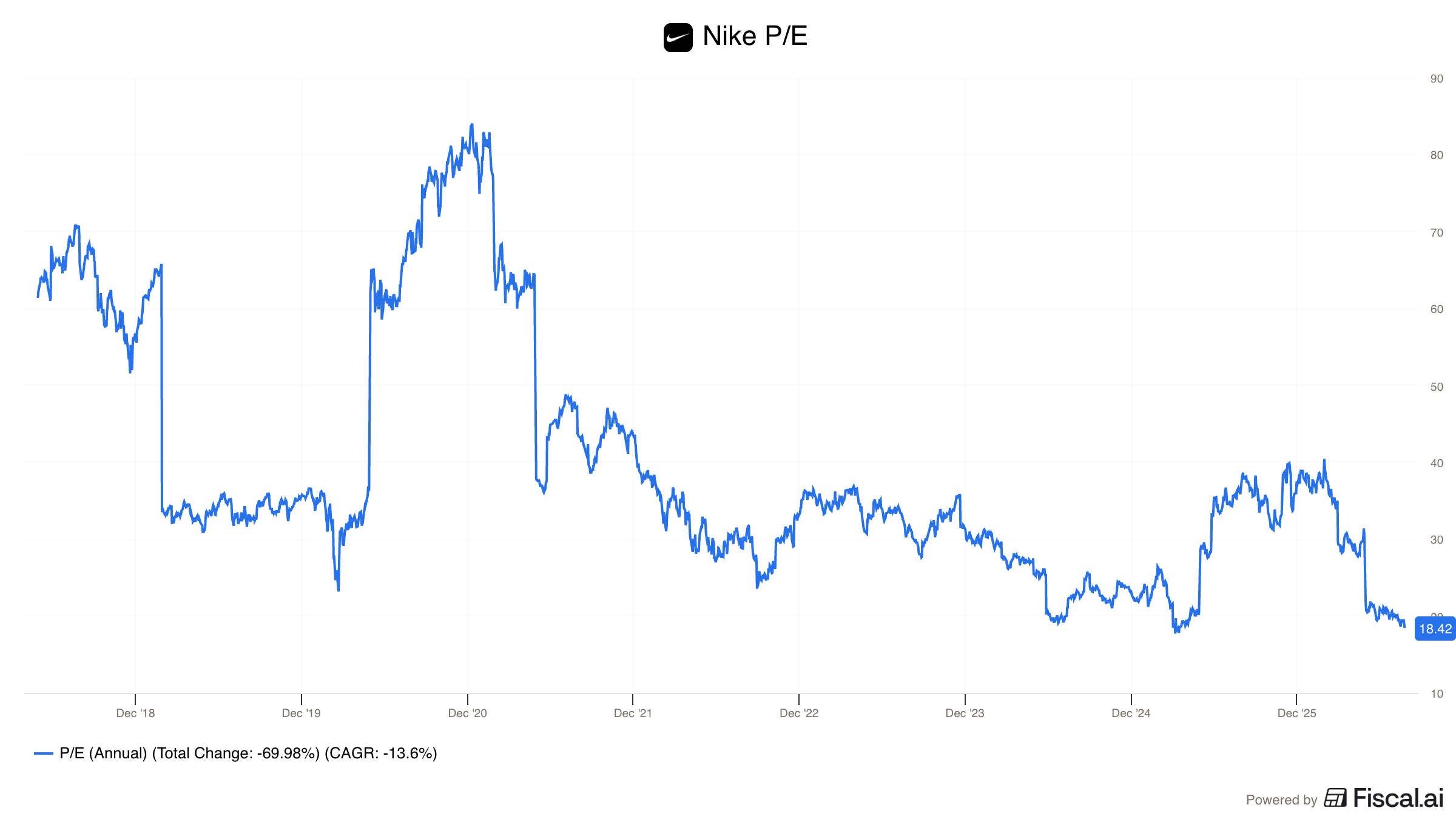
On Monday, we looked at how the market had priced Nike at 50x earnings for a business that was growing at less than 10% per year.
Today, that multiple has crashed down below 19x.
Not long after I hit publish, I got a great question inside Our Community:
“Since Nike has gotten so cheap, is it a great deal now?”
It’s a fair question.
When the stock of one of the world’s best brand falls close to 80%, it certainly feels like a bargain.
But investing is all about opportunity costs.
“I would argue that one filter that’s useful in investing is the simple idea of opportunity cost. If you have one opportunity that you already have available in large quantity, and you like it better than 98 percent of the other things you see, well, you can just screen out the other 98 percent because you already know something better.” —Charlie Munger
You only have so much capital to deploy.
Every dollar you put into one thing is a dollar you can’t invest somewhere else.
So, it got me wondering: What else can we buy in today’s market for the exact same price as Nike, but with much better historical growth?
A Nike Opportunity Cost Screen
I decided to run a screen to find out.
I set it up to look for companies trading at the same valuation as Nike, but generating roughly double the historical growth.
Here were the exact filters I used:
P/E Ratio: 21 or lower (matching Nike’s current neighborhood)
10-Year Revenue CAGR: 12% or higher
10-Year Diluted EPS CAGR: 9.2% or higher
It gave me back 155 companies.
There are plenty of strong, growing businesses out there trading at a similar multiple as Nike.
Let’s look a three businesses from the list to see what I mean:
Amazon (AMZN)
Progressive (PGR)
Copart (CPRT).
Side-by-Side Opportunity Costs
Here is how these three businesses stack up against Nike’s historical baseline.

When you look at it this way, it’s hard to argue that you should pay 18x for Nike, when you could buy the other three businesses at similar valuations.
If you want the full results of the screen, you can see them here:
Let’s look a little deeper into the screen results.
Lowest P/E
Let’s start with the stocks that are growing faster than Nike, but trading at a lower multiple.
Here’s the cheapest companies with positive earnings:

A lot of these are priced so low for good reason, there aren’t a lot of good businesses here.
But if we go to a big higher P/E multiple, we start to see some potentially interesting businesses.

If you want to stay in the apparel world, Lululemon is at half of Nike’s multiple with double the growth rates.
Crocs is also on the list at only 10x earnings.
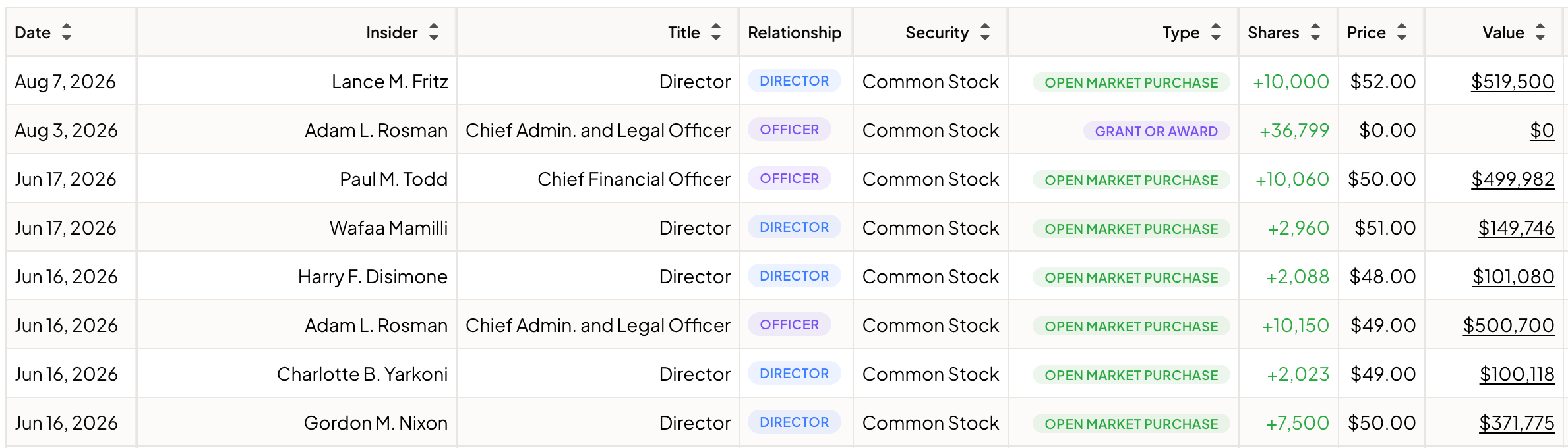
Fiserv is a stock that a lot of professional fund managers have owned, and insiders have been buying.
Green Brick Partners is a top holding of David Einhorn, who’s one of my favorite investors.
Highest Revenue Growth
The companies that have grown their revenue the fastest over the past decade are as follows:

Cheniere Energy stands out as a company with a strong moat.
They own and operate Liquified Natural Gas (LNG) infrastructure, including:
Own the Sabine Pass LNG Terminal in Louisiana
Own the Corpus Christi LNG Terminal in Texas
Own the Creole Trail Pipeline (94-mile natural gas pipeline)
Operate the Corpus Christi Pipeline (21.5-mile natural gas pipeline)
Highest EPS Growth
Here are the companies that have grown their EPS the fastest over the past decade:

Lumentum Holdings is another interesting example of how a company can appear cheap.
It produces Optical Communications products and Commercial Lasers.
It’s one of the companies in the AI supply chain that has seen huge growth, and a run in the share price.
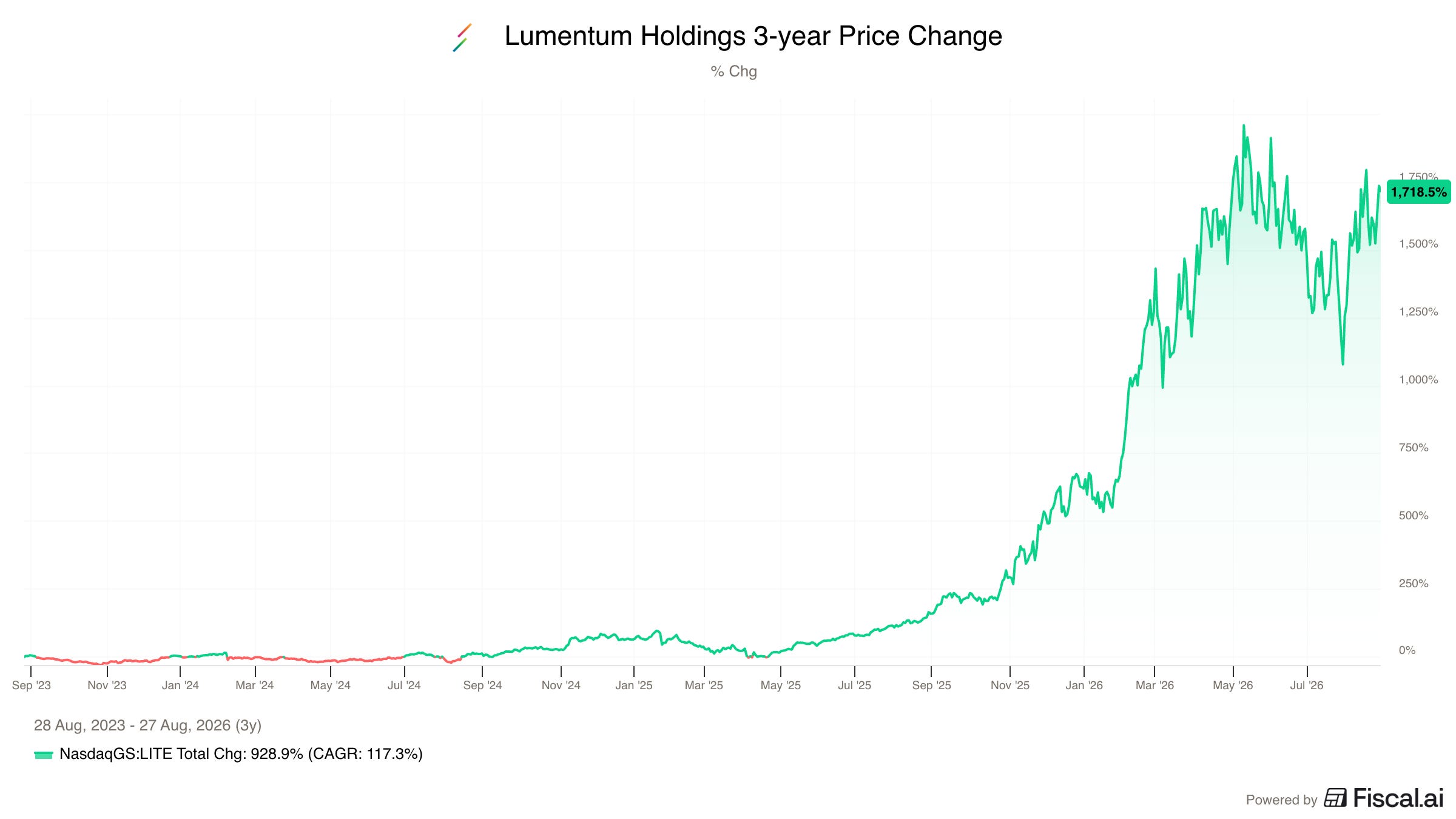
That’s because there’s expected shortages in the components it makes due to the hyperscaler data center build out.
It shows up in our list because of the negative P/E ratio.
Lumentum has negative Net Income, but $500 million in Operating Income.
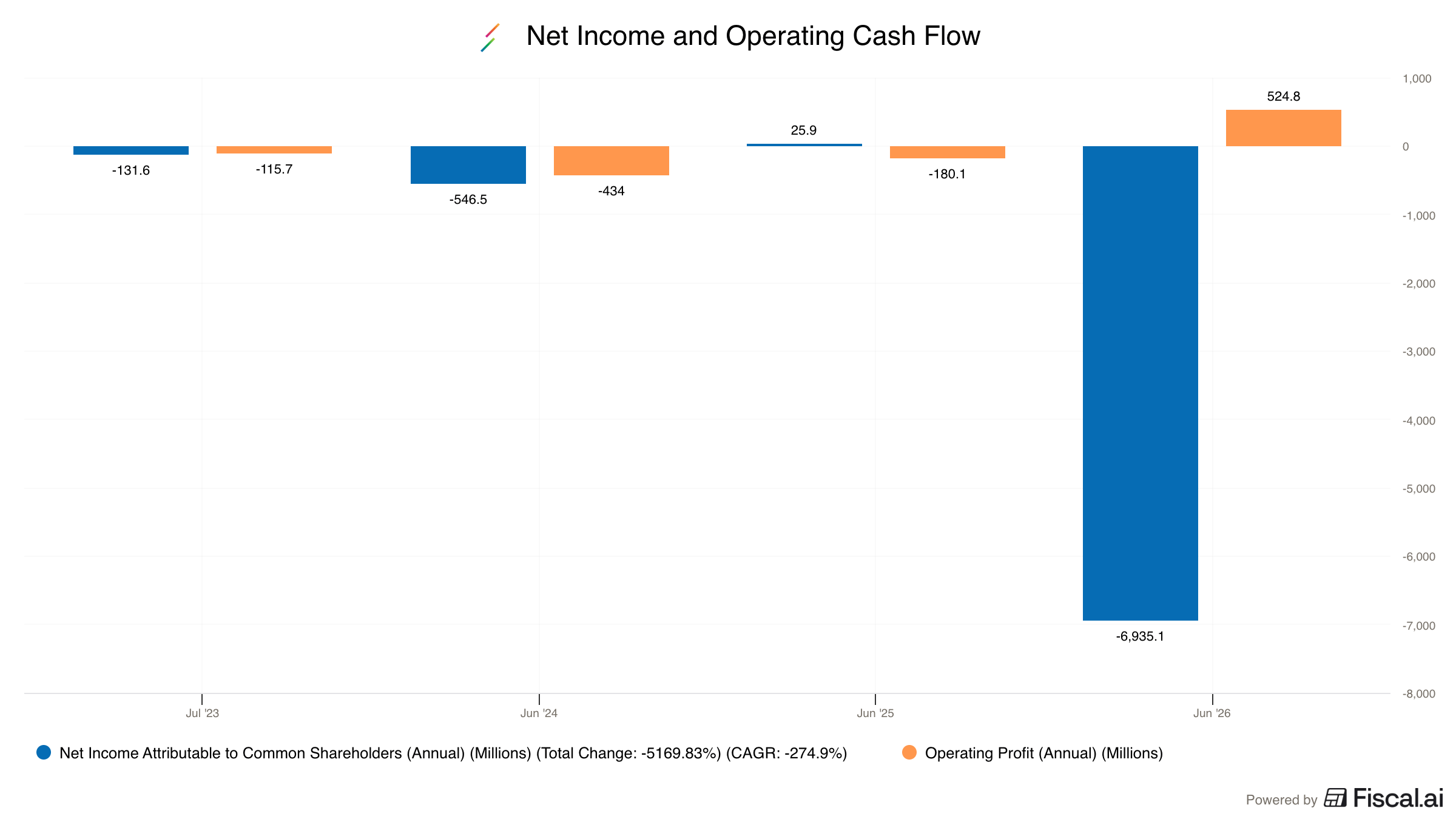
That’s because they issued 10.6 million shares to redeem about $1.1 billion in debt.
Which results in a significant accounting loss.
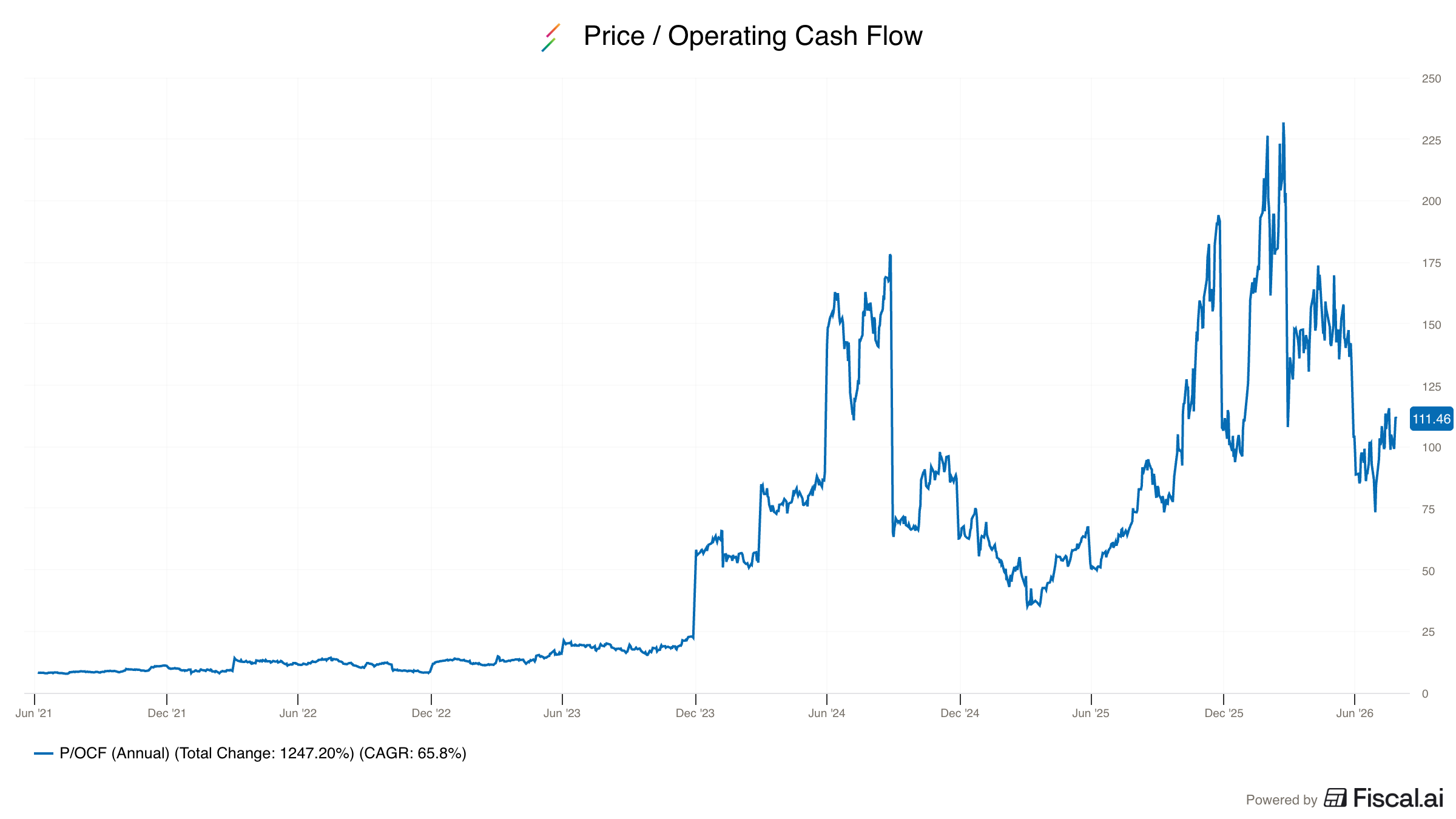
If we use Operating Cash Flow, which doesn’t include the adjustment for the new shares, Lamentum is trading at 111x!
Conclusion
Today we covered three important lessons:
Down doesn’t always mean cheap: Just because a stock has fallen 75% doesn’t mean it’s a bargain
Opportunity cost matters: Every dollar you put into one idea is a dollar you can’t invest in another.
Compare your options: Think of buying a stock like shopping, look around to see if you can find a better business for the same price.
Today, our paid members are also getting this list filtered down to include only dividend paying companies.
Screens like these are great to get some ideas, but buying a great company at a great price takes a lot more research.
Over the next few weeks, we have some exciting things in the pipeline:
A brand-new portfolio addition: A high-quality company we’re getting ready to purchase (and no, it’s not any of the 155 names on today’s screen).
A complete research deep-dive: Breaking down the business model, valuation, and the thesis behind our next buy.
A rare discount: A limited-time opportunity to upgrade your subscription and follow along in real-time.
We’re finalizing the details now.
Make sure to watch your inbox over the next couple of weeks.
One Dividend At A Time,
-TJ
Used sources
Interactive Brokers: Portfolio data and executing all transactions
Fiscal.ai: Financial data
This lines up with something I wrote right after the same reshuffle. The S&P 100 dropping Nike for SanDisk is really just the committee measuring price after the fact, not forecasting either stock. Your opportunity cost framing gets at a similar idea from the valuation side. Piece here if it's useful: https://theregimereport.substack.com/p/7th-sep-2026-the-list-is-written
Nike at 19x after an 80% drop still lost to a screen. You don't need 155 names. You need the few that compound.
https://paretoinvestor.substack.com/p/the-little-principle-that-beats-the-market