

Today is Dividend Day.
The series where I teach you 5 things about dividend investing in less than 5 minutes.
1️⃣ The Spinoff Rule
Do you know about Corporate Spinoffs?
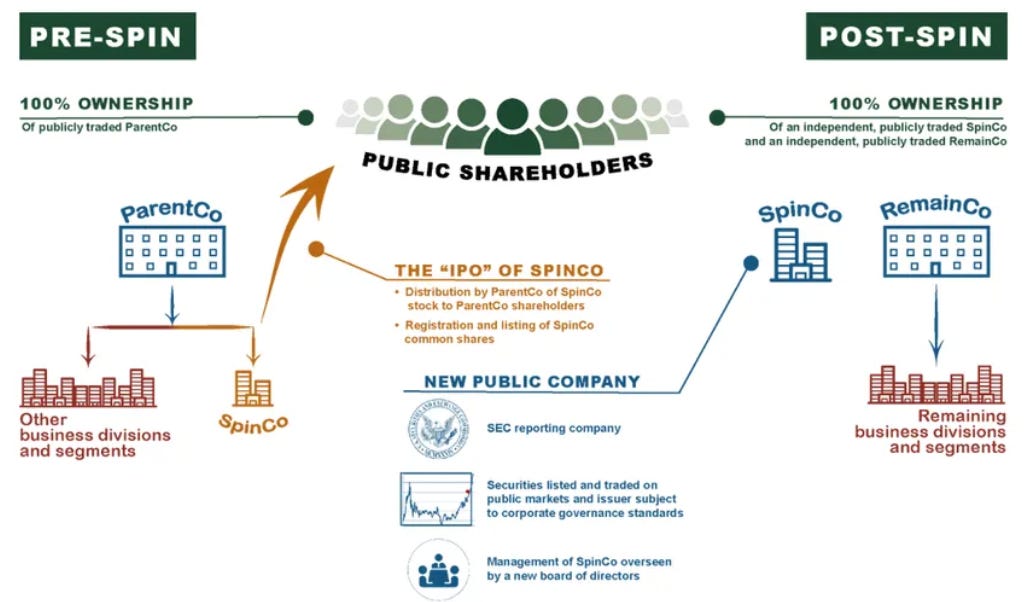
A spinoff is when a large company separates one of its divisions into a brand new, independent business.
When that happens, the newly independent company has one job:
Prove itself to shareholders.
And the fastest way to do that is cash.
To attract serious investors, most spinoffs initiate a dividend almost immediately after listing.
2️⃣ Spinoffs vs The Market
Wall Street often underestimates spinoffs.
When a spinoff begins trading, many institutional investors who owned the parent company quickly sell the new stock.
They did not choose to own the spinoff and often do not want to analyze or hold a smaller, unfamiliar business.
This selling pressure creates an opportunity.
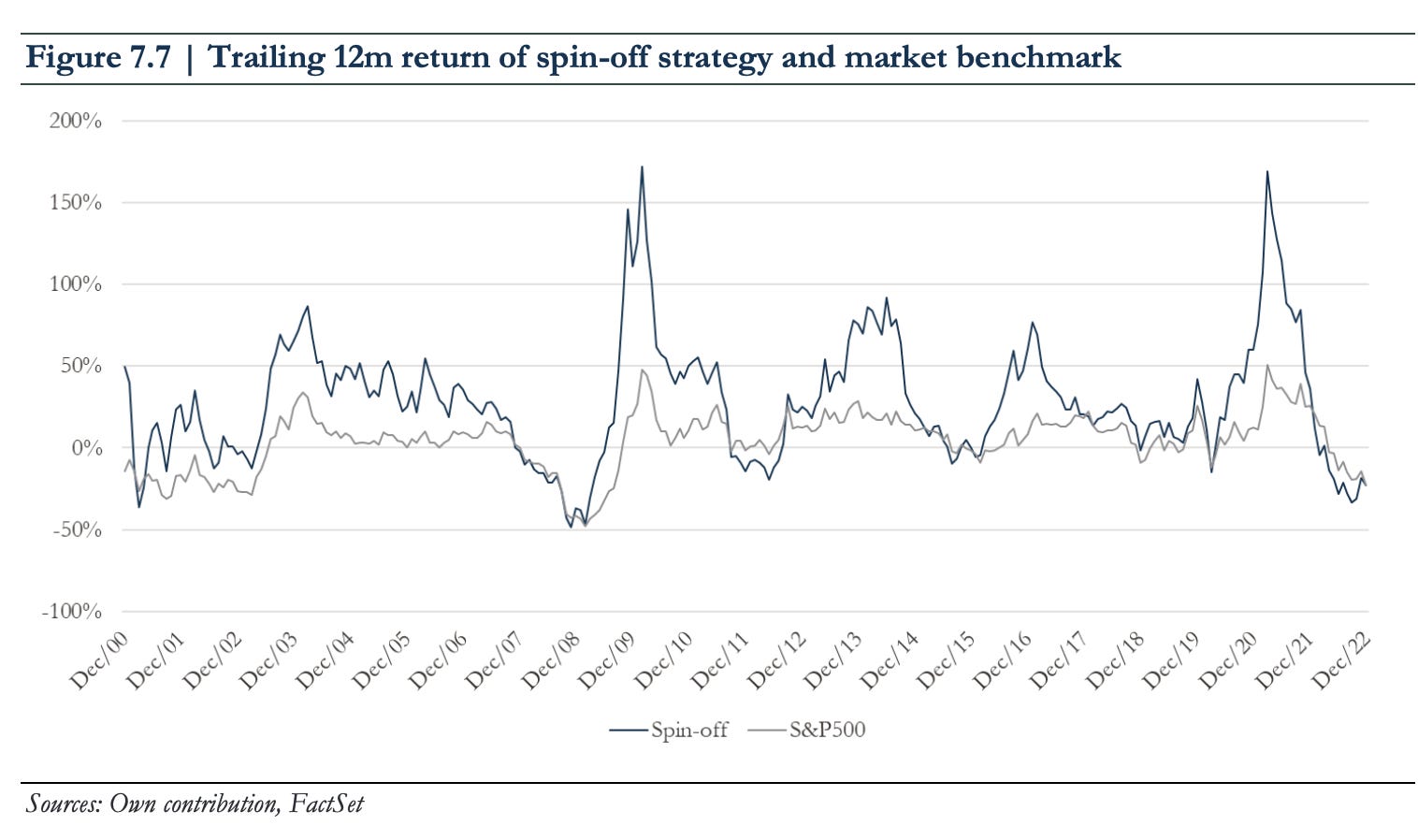
An academic research has shown that corporate spinoffs have historically outperformed the S&P 500 significantly during the first few years after the separation.
3️⃣ An Investing Quote
Spinoffs are one of the few places in the market where a good business can trade below its true value simply because investors aren’t paying attention yet.
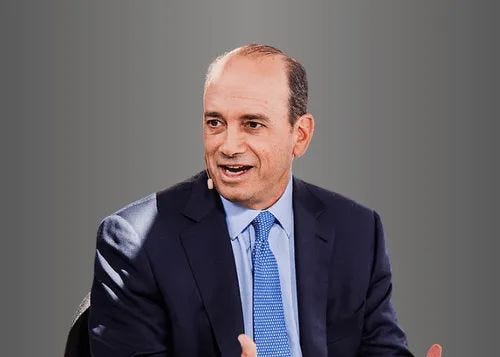
Investors like Joel Greenblatt built much of their early track record by buying spinoffs before the market recognized their value.
“Spinoffs, and the securities created in the spinoff process, represent one of the most consistently profitable investment opportunities available.”
— Joel Greenblatt
🚨 Bonus Resource: 10 Lessons from You Can Be A Stock Market Genius 🚨
Joel Greenblatt’s book highlights spinoffs as a great place to find returns.
Get a visual with 10 lessons from it here.

4️⃣ Corporate Portfolio Simplification
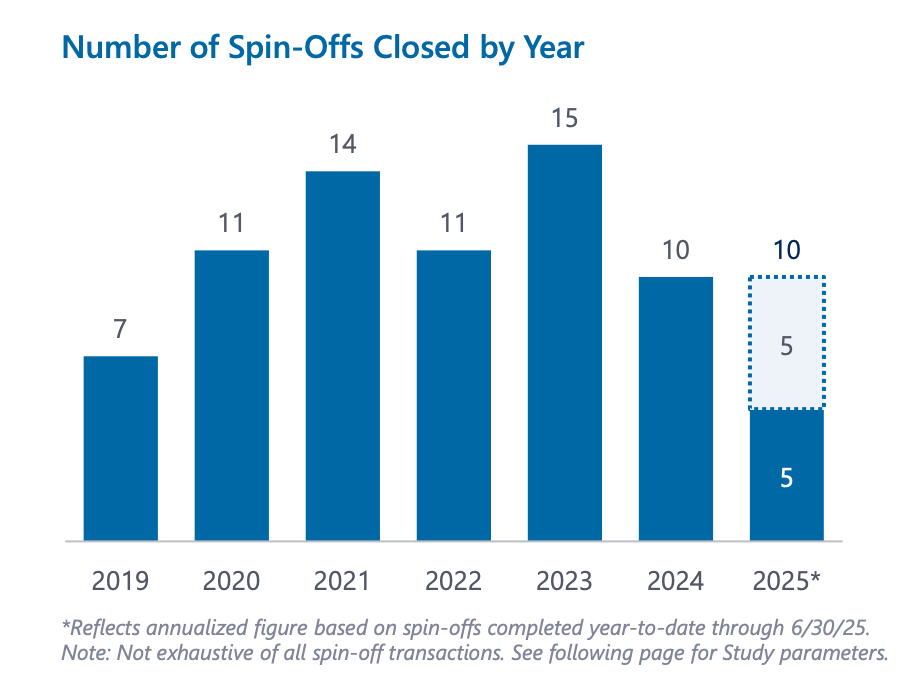
Houlihan Lokey’s studied 73 spinoffs completed between 2019 and 2025.
They found that companies are increasingly using separations to restructure portfolios and unlock shareholder value.
Spinoffs help with this in a few different ways:
Separates businesses with different growth profiles
Management teams of the new companies get independent capital allocation and strategy
Investors often reward the move because focused companies are easier to value
You can access the report here.
5️⃣ Example of a Dividend Stock
Let’s look at Kenvue (KVUE).
Kenvue was formed in 2023 after separating from Johnson & Johnson.
Today, Kenvue owns several of the world’s most recognized consumer health brands, including Tylenol, Neutrogena, Listerine, and Band-Aid.
J&J wanted to focus on pharmaceuticals. So they handed Kenvue its independence along with billions in stable, recurring cash flows.
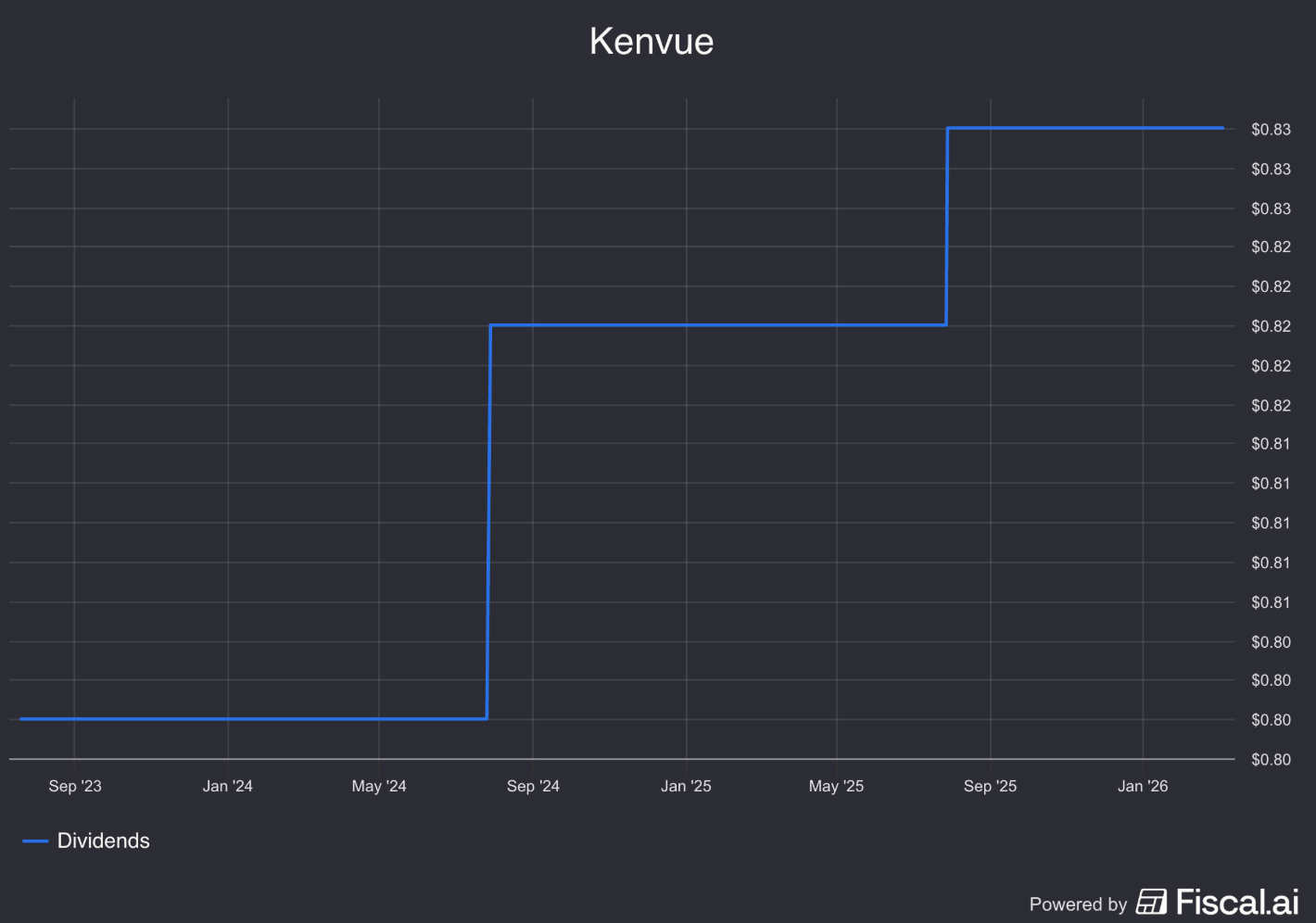
Kenvue initiated a dividend almost immediately after listing.
Key numbers from Fiscal.ai:
Profit Margin: 9.7%
Forward P/E: 16.3x
Dividend Yield: 4.5%
Payout Ratio: 107.6%
Used sources
Interactive Brokers: Portfolio data and executing all transactions
Fiscal.ai: Financial data
Disclaimer
As a reader of Compounding Dividends, you agree with our disclaimer. You can read the full disclaimer here.