

Warren Buffett is the greatest investor ever.
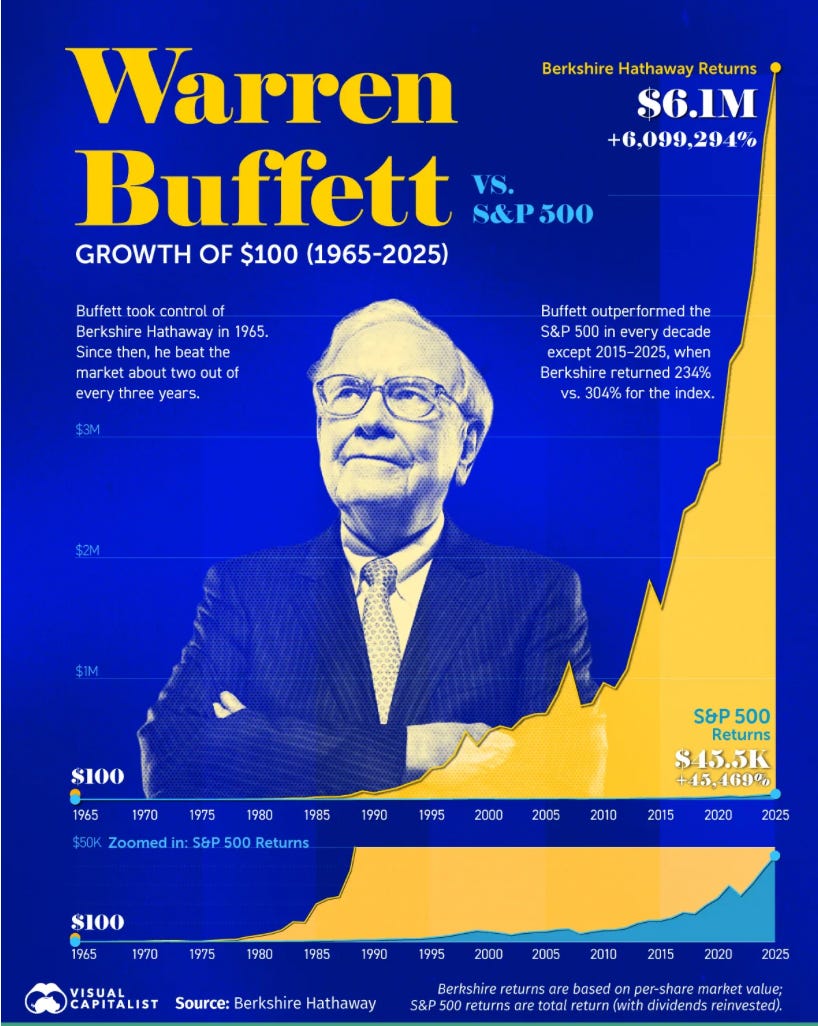
$100 invested in Berkshire in 1965 became more than $6 million (!) at his retirement.
Buffett is known as a value investor, but his top holdings have one thing in common…
Dividends.
In our last article, we looked at the changes that Greg Abel made to the Berkshire portfolio.
Today we’re going to look at the dividend portfolio that Warren Buffett left him.
Here’s all of Buffett’s dividend stocks at his retirement.
Berkshire Hathaway collected 3.45 billion dollars in dividends last year from just 5 stocks
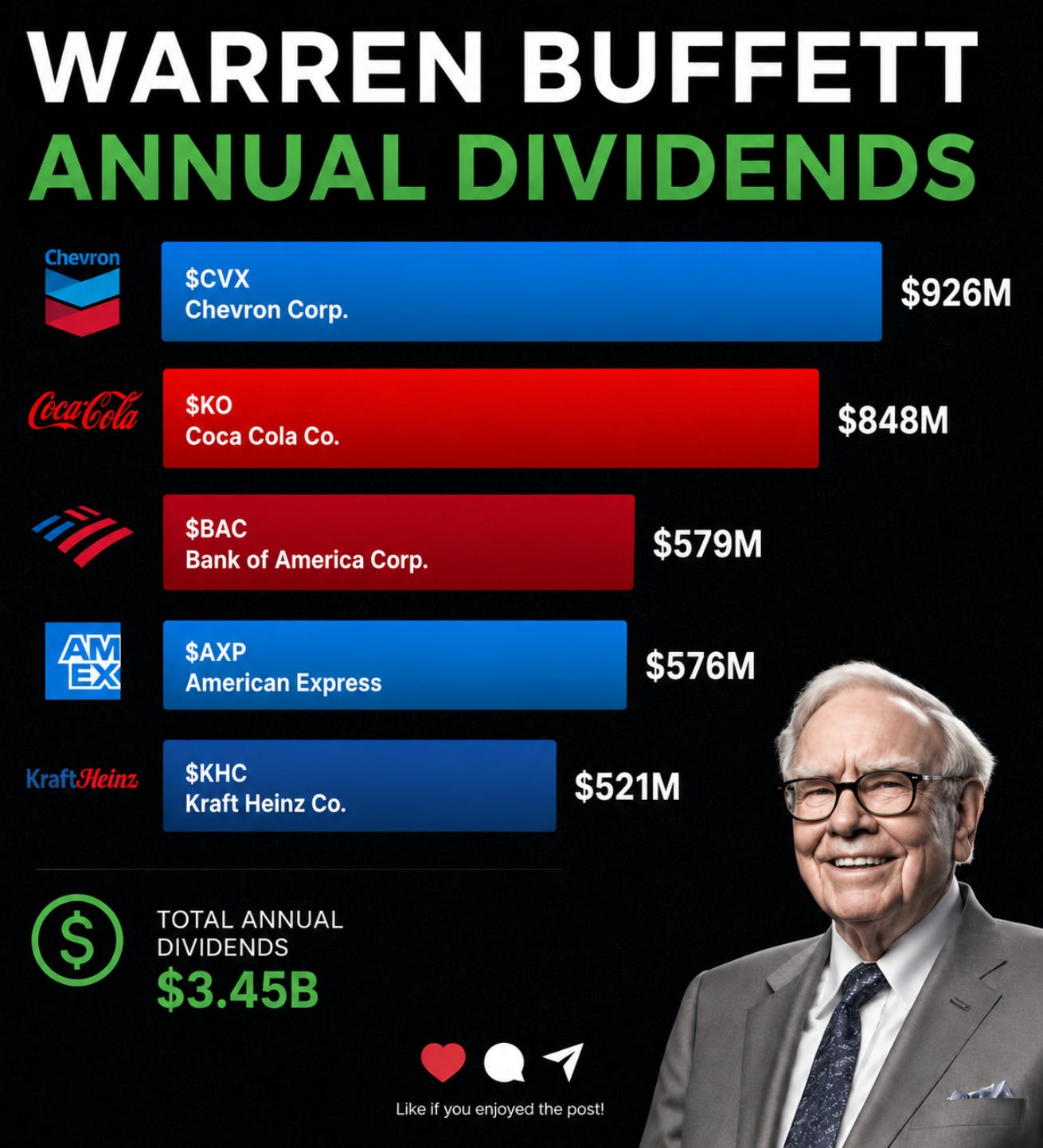
Buffett’s Top Dividend Payers
Let’s look a bit deeper into each of these companies.
1. Chevron Corp. (CVX)
How does the company make money?
Chevron is an integrated oil company.
They handle everything from finding and producing crude oil to transporting it, and refining it into products like the gas you use in your car.
They make money from:
Upstream: They find and pump oil and gas globally. This is their biggest money-maker
Downstream: They turn that oil into gasoline, jet fuel, and chemicals at their refineries
Renewable Energy: They are investing heavily in green hydrogen and renewable fuels to stay relevant for the future
What’s the moat?
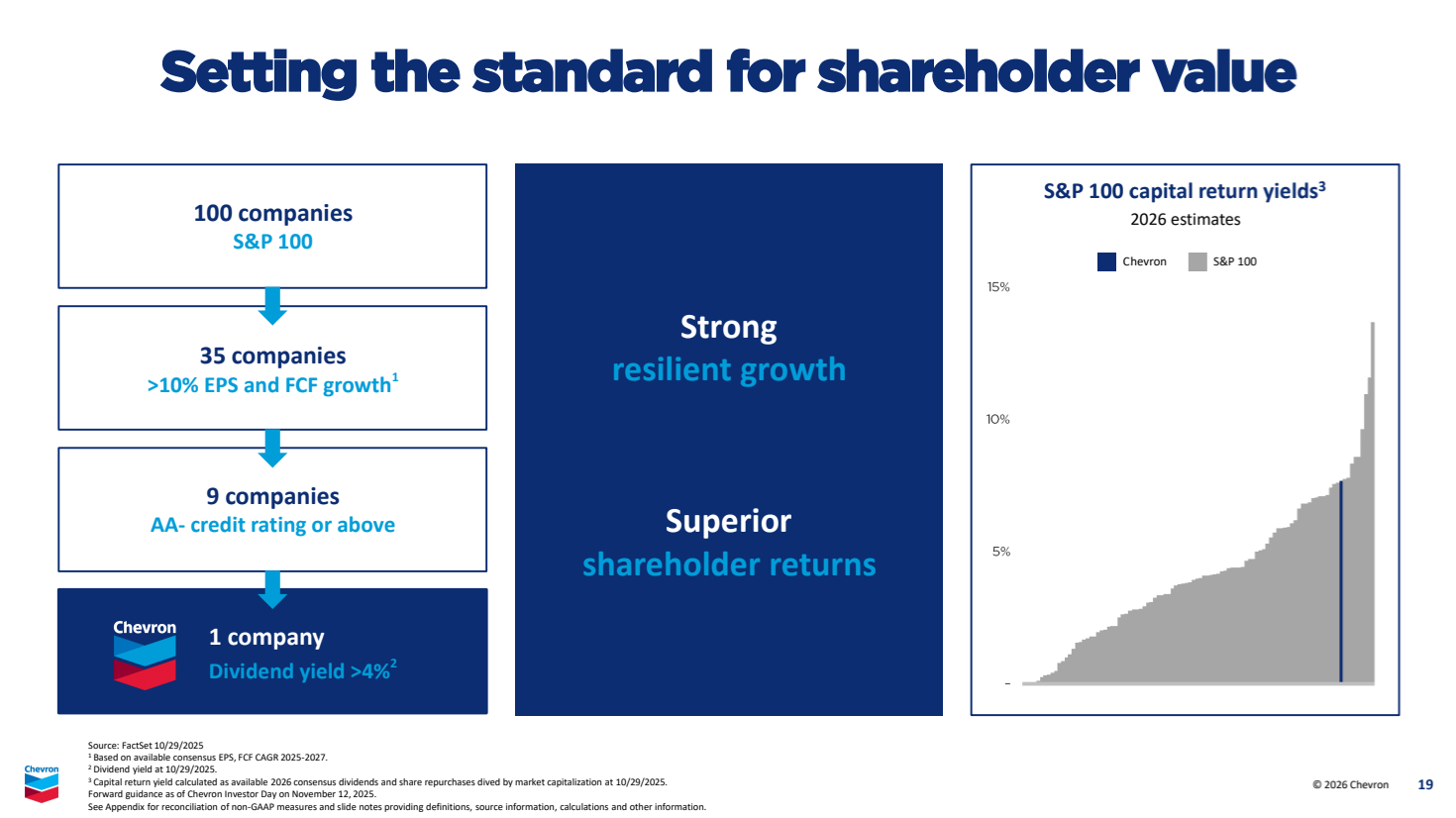
Scale and Integration: Because they own the wells, the pipes, and the refineries, they save money at every step
Advantaged Assets: Their recent acquisition of Hess gives them a huge stake in Guyana, one of the most profitable oil discoveries in decades
Financial Strength: They have one of the strongest balance sheets in the world, allowing them to survive when oil prices drop
Why is it an interesting dividend stock?
Current dividend yield: 3.8%
Payout ratio: 120.7%
2-Year Forward Dividend Growth: 4.2%
2–Year Forward Revenue Growth: 4.7%
2. Coca-Cola Co. (KO)
How does the company make money?
Coca-Cola is one of the world’s most iconic beverage brands.
They make money from:
Selling Syrup: They sell the secret sauce (concentrate) to bottling partners
Licensing: They charge others for the right to use their famous logos and brands
Diversification: They also make money from Costa Coffee, Fairlife milk, and Powerade
What’s the moat?
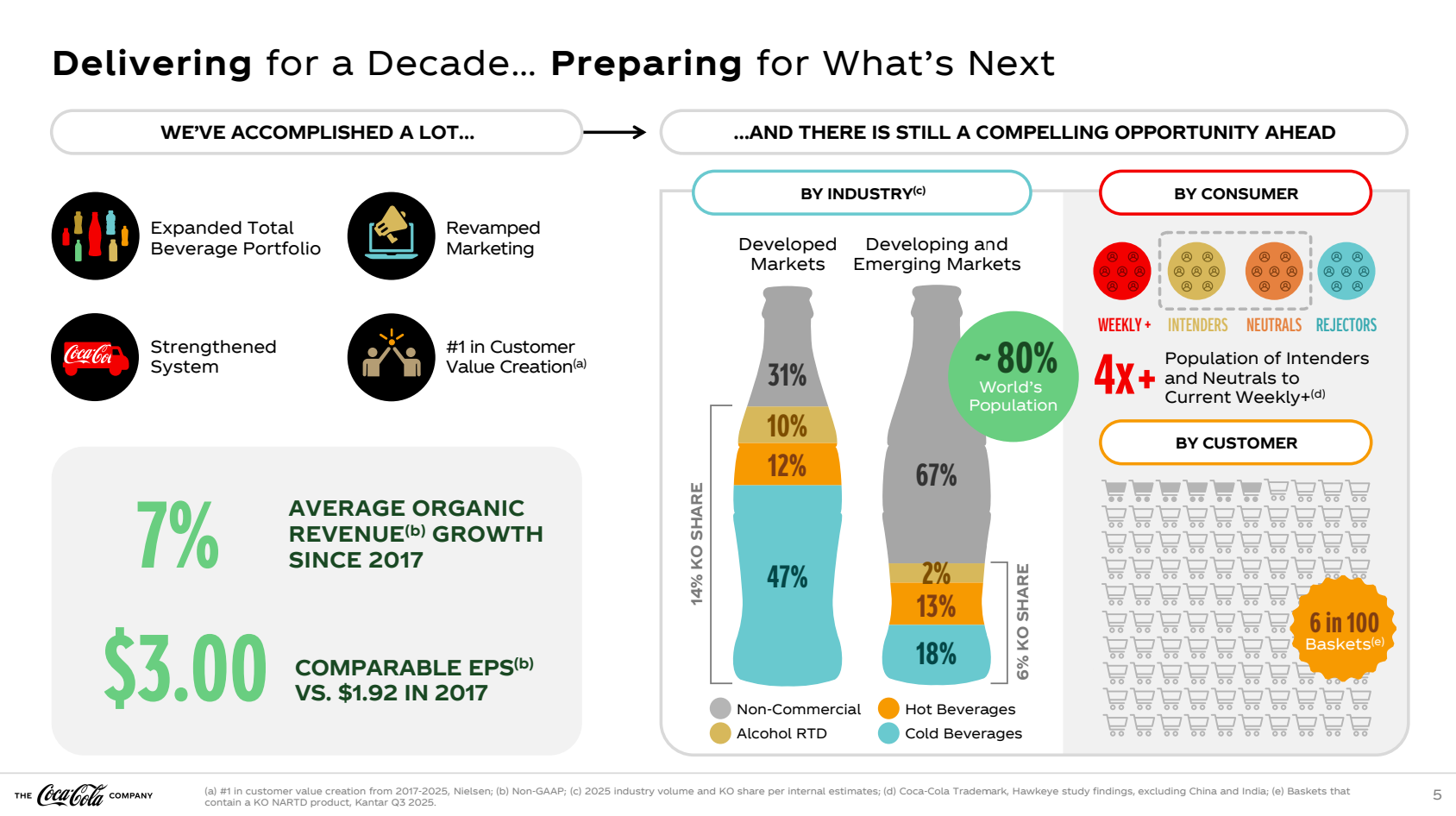
The Brand: Coca-Cola is one of the most recognized words on Earth. This lets them raise prices without losing customers
Distribution: You can find a Coke in almost every village in the world. No competitor can match that Shelf Space dominance
Pricing Power: Even with inflation, people still pay a little extra for their favorite soda
Why is it an interesting dividend stock?
Current dividend yield: 3.2%
Payout ratio: 80.1%
2-Year Forward Dividend Growth: 4.6%
2–Year Forward Revenue Growth: 2.0%
3. American Express (AXP)
How does the company make money?
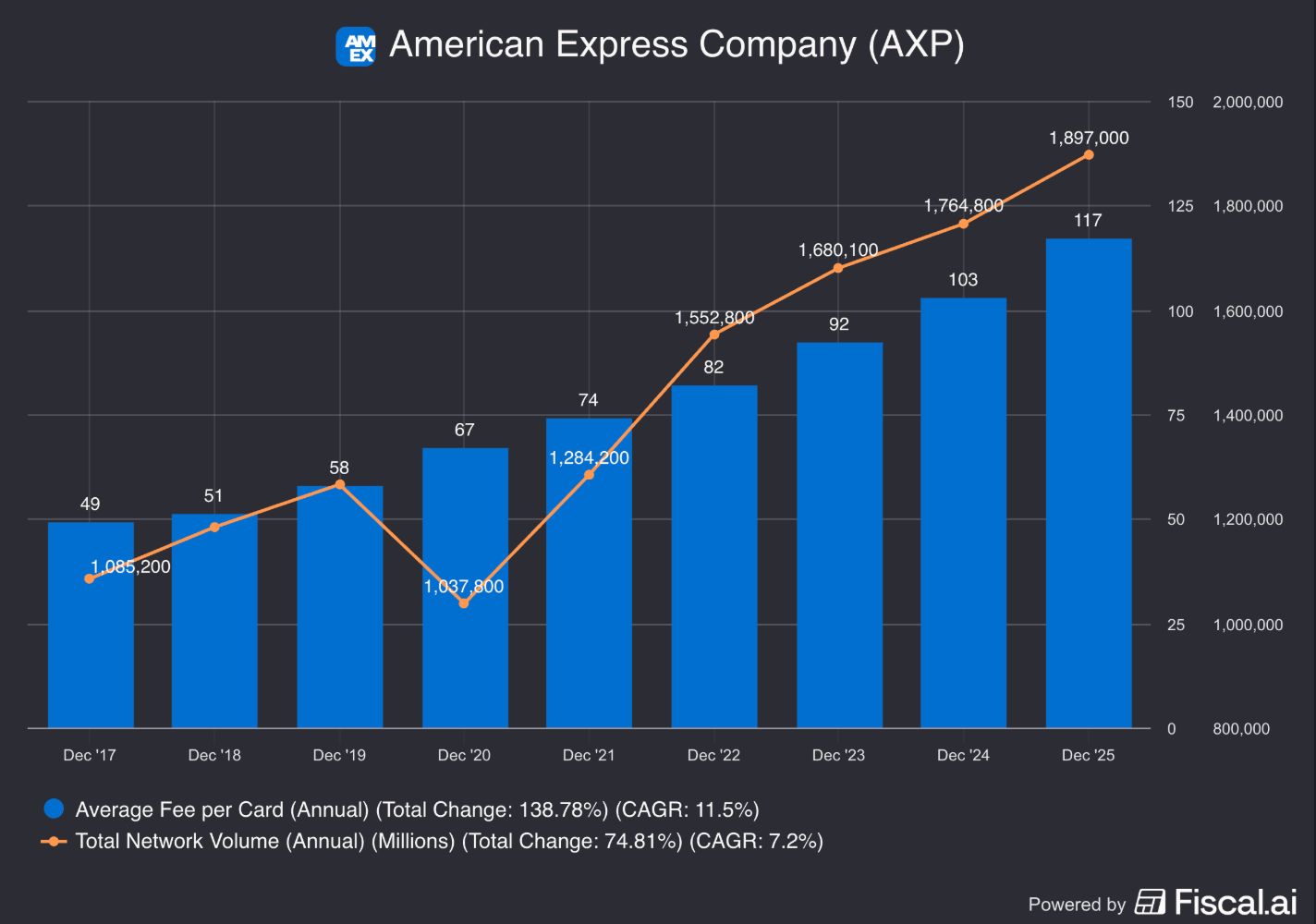
American Express makes money by charging cardholders annual membership fees and charging merchants a swipe fee on every transaction.
Unlike Visa and Mastercard, which only connect banks, Amex operates a closed-loop system, meaning they act as the payment network, the card issuer, and the bank all at once.
This makes them more profitable because they keep the entire merchant fee without splitting it.
They make money from:
Swipe Fees: They take a small cut every time a member swipes their card at a store
Card Fees: Members pay annual fees (like for the Platinum Card) just for the privilege of carrying the card
Interest: They earn interest from cardholders who carry a balance
What’s the moat?
The Country Club Effect: Amex customers are typically wealthier. Merchants pay higher fees to Amex because they want access to these Big Spenders
Closed-Loop Data: Since Amex is both the bank and the network, they see every detail of the transaction, helping them prevent fraud better than anyone else
Customer Loyalty: Their rewards program is so good that people rarely switch to other cards
Why is it an interesting dividend stock?
Current dividend yield: 1.1%
Payout ratio: 20.9%
2-Year Forward Dividend Growth: 13.3%
2–Year Forward Revenue Growth: 9.4%
4. Bank of America (BAC)
How does the company make money?
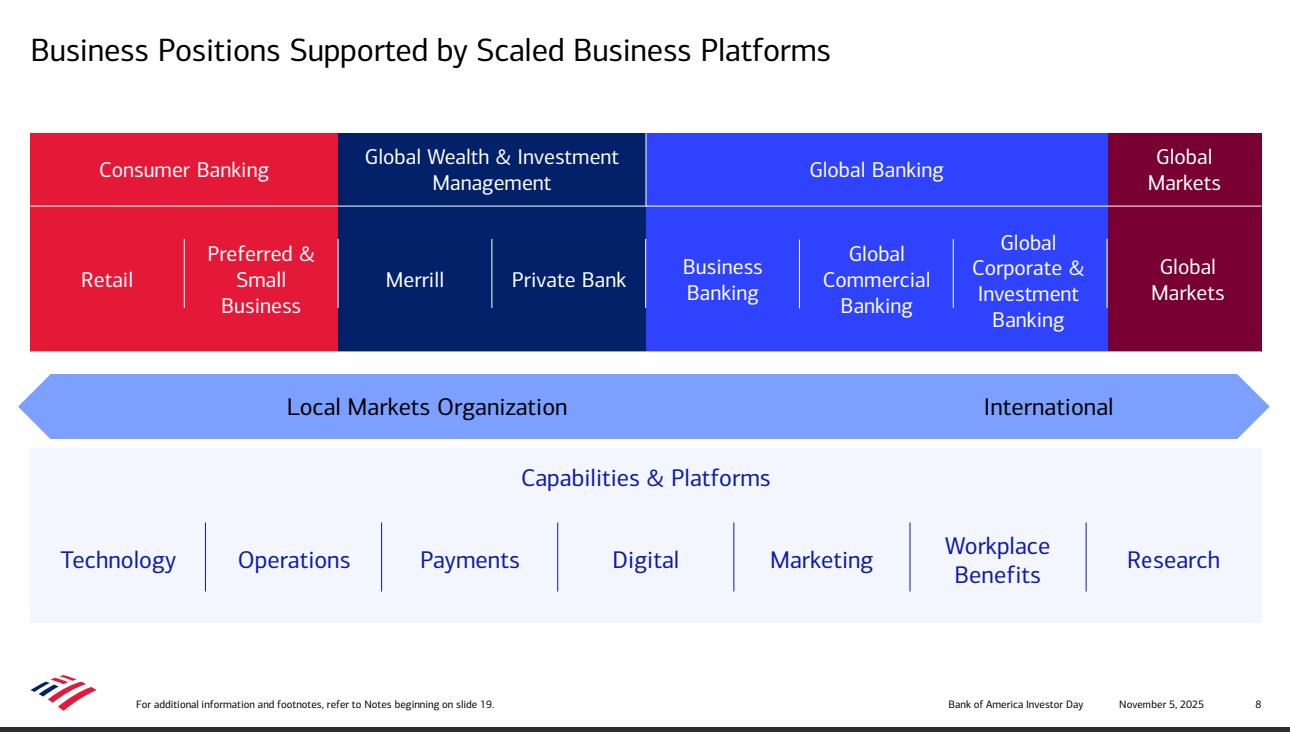
Bank of America is one of the largest banks in the United States. They serve both retail and commercial customers with checking and savings accounts, as well as loan products.
They make money from:
Net Interest Income: They take your deposits (pay you 1%) and lend it out as mortgages (charge 7%). They pocket the difference
Investment Management: They help individuals make and manage investments
Wealth Management: Through Merrill, they manage money for very rich individuals
What’s the moat?
Switching Costs: Once you have your direct deposit, bill pay, and mortgage with one bank, it’s a huge pain to leave
Low-Cost Deposits: They have trillions in sticky deposits, which is like getting free fuel for their lending machine
Technology: Their app is so good that they can close physical branches and save billions in rent
Why is it an interesting dividend stock?
Current dividend yield: 2.2%
Payout ratio: 31.9%
2-Year Forward Dividend Growth: 9.6%
2–Year Forward Revenue Growth: 5.9%
5. Kraft Heinz Co. (KHC)
How does the company make money?
The Kraft Heinz Company owns a large portfolio of consumer food brands.
They make money from:
Condiments: Heinz Ketchup is the global gold standard
Cheese & Dairy: Kraft Mac & Cheese and Philadelphia Cream Cheese
Emerging Markets: They are aggressively selling Ketchup in Asia and Brazil to drive growth
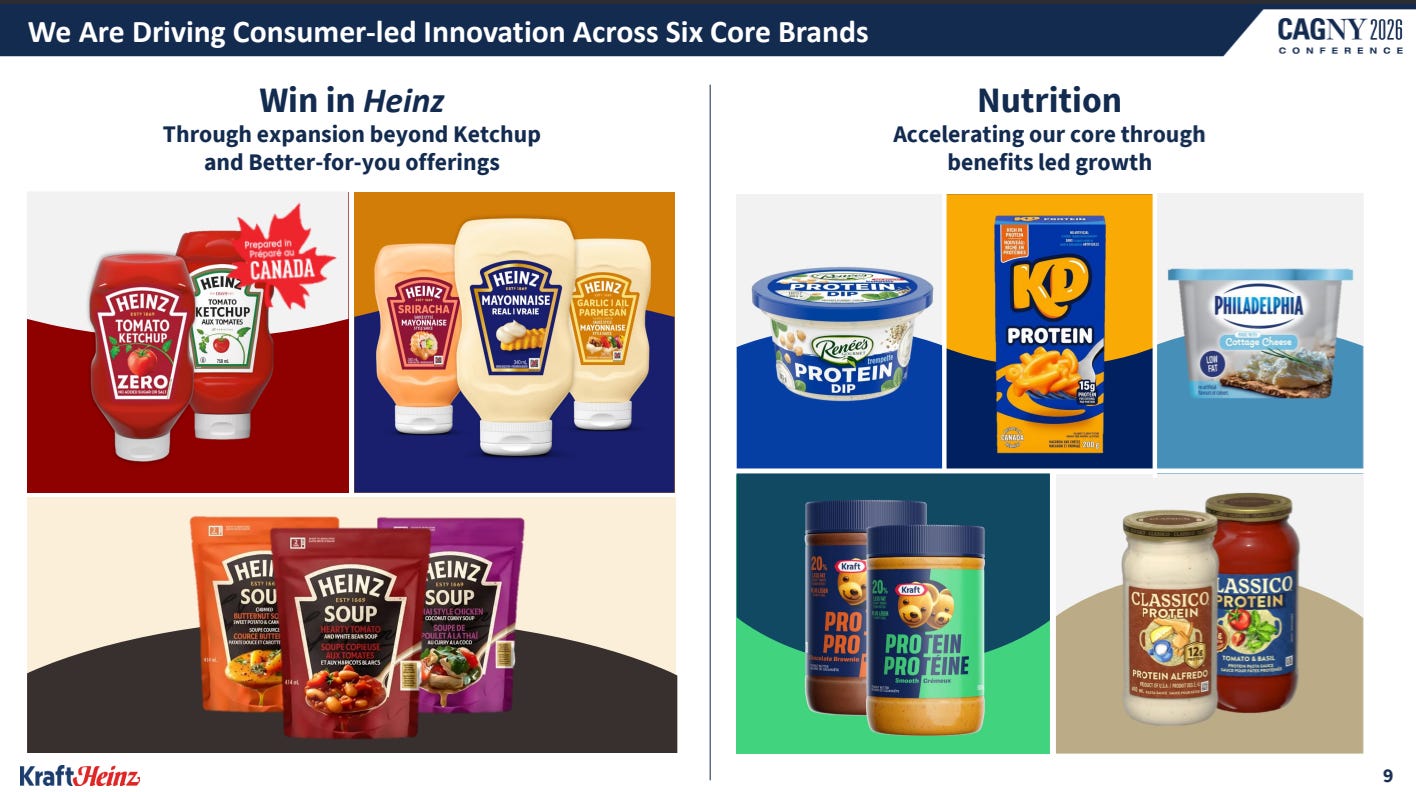
Source: Company Presentation
What’s the moat?
Number 1 or 2: In almost every category they compete in, they are either the first or second-best brand
Cost Efficiency: They have a massive Efficiency Program that saves them $2.5 billion a year, allowing them to keep prices competitive
Innovation: They are launching healthier versions (like high-protein Mac & Cheese) to keep younger parents buying
Why is it an interesting dividend stock?
Current dividend yield: 6.7%
Payout ratio: -32.9%
2-Year Forward Dividend Growth: 0.2%
2–Year Forward Revenue Growth: -0.7%
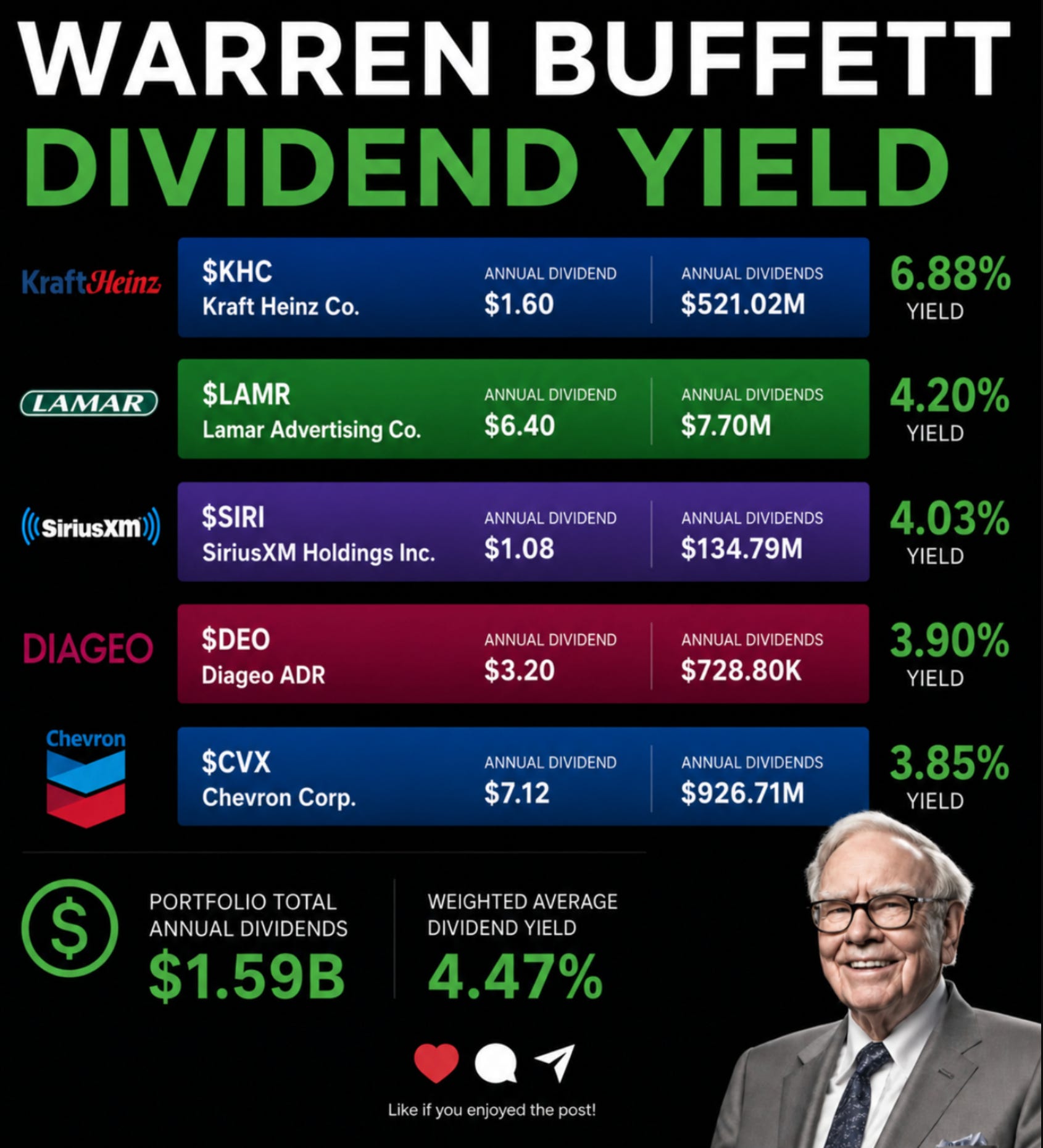
Buffett’s Highest Yielders
Let’s also look at the top 5 highest yielding companies Berkshire owned at Buffett’s retirement.
1. Kraft Heinz Co. (KHC)
Kraft Heinz tops Buffett’s list in Dividend Yield.
Since we just looked into it, we will move on to the next one.
2. Lamar Advertising (LAMR)
How does the company make money?
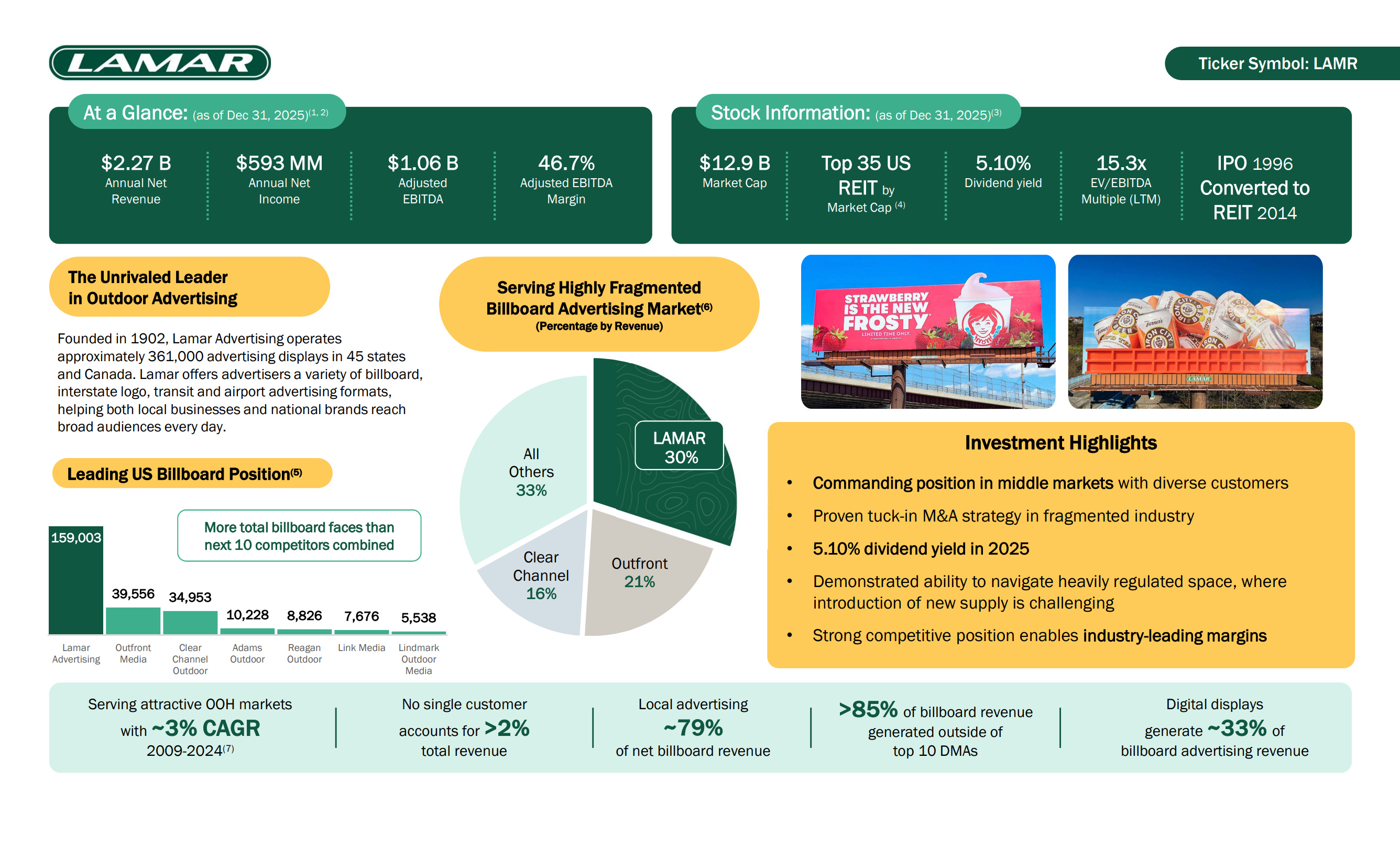
Lamar is one of the largest landlords for outdoor advertising on things like billboards, logo signs, and other outdoor advertisements.
They make money from:
Billboard Rentals: They own over 360,000 billboards across North America. Companies pay them monthly rent to show ads
Logo Signs: They are the largest provider of those Gas/Food/Lodging signs you see on highways
Transit Ads: They place ads on buses, benches, and airport terminals
What’s the moat?
Location, Location, Location: They own the best spots on the busiest highways. In most cities, new billboards are restricted by law, meaning Lamar’s existing spots are irreplaceable
Digital Transformation: They are converting traditional billboards into digital screens. This allows them to sell the same spot to 8 different companies at once, skyrocketing their profit from a single pole
Local Focus: Unlike big tech ads, Lamar focuses on local businesses (lawyers, hospitals, car dealers) who must advertise to people driving by
Why is it an interesting dividend stock?
Current dividend yield: 4.3%
Payout ratio: 120.1%
2-Year Forward Dividend Growth: 4.1%
2–Year Forward Revenue Growth: 4.3%
3. SiriusXM Holdings Inc. (SIRI)
How does the company make money?
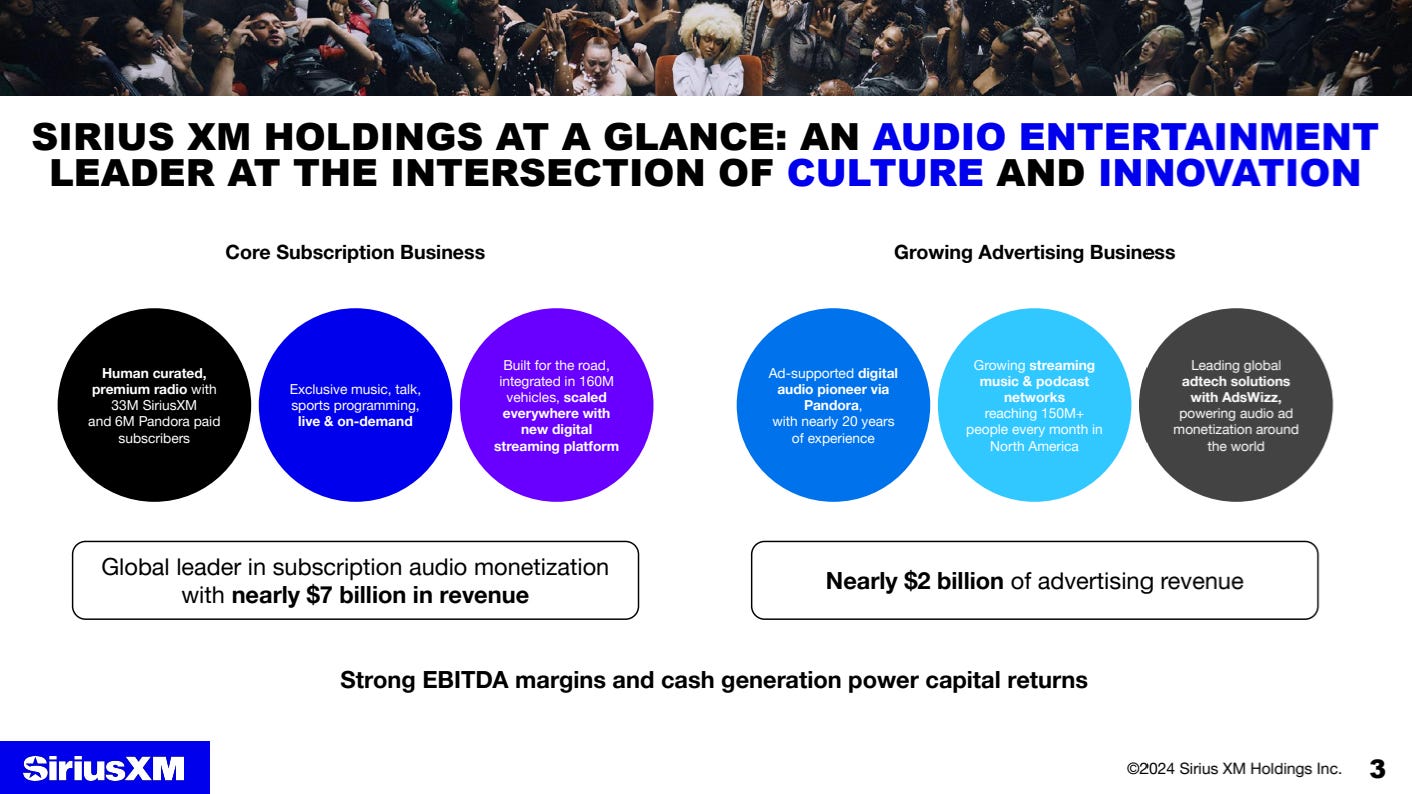
SiriusXM provides satellite radio and music streaming services.
They make money from:
Subscriptions: People pay a monthly fee to listen to ad-free music, Howard Stern, and live sports in their cars
Pandora: They own Pandora, which makes money through ads on its free music streaming service
Advertising: They sell ad spots on their non-music channels (news, talk, and sports)
What’s the moat?
Factory Installation: SiriusXM is built into almost every new car sold in the US. It is the first thing you see when you turn on your dashboard
Exclusive Talent: You can’t get Howard Stern or certain live sports coverage anywhere else. This creates must-have content
Satellite Tech: Unlike Spotify, which needs a cell signal, SiriusXM works in the middle of a desert or a mountain range
Why is it an interesting dividend stock?
Current dividend yield: 4.0%
Payout ratio: -102.5%
2-Year Forward Dividend Growth: 3.8%
2–Year Forward Revenue Growth: 0.7%
4. Diageo ADR (DEO)
How does the company make money?
Diageo owns the Top Shelf of the bar. They sell premium spirits globally.
They make money from:
Scotch & Whiskey: Famous brands like Johnnie Walker and Buchanan’s
Beer: They own Guinness, which is growing fast in Africa and Europe
Premium Spirits: Brands like Don Julio (Tequila) and Tanqueray (Gin)
What’s the moat?
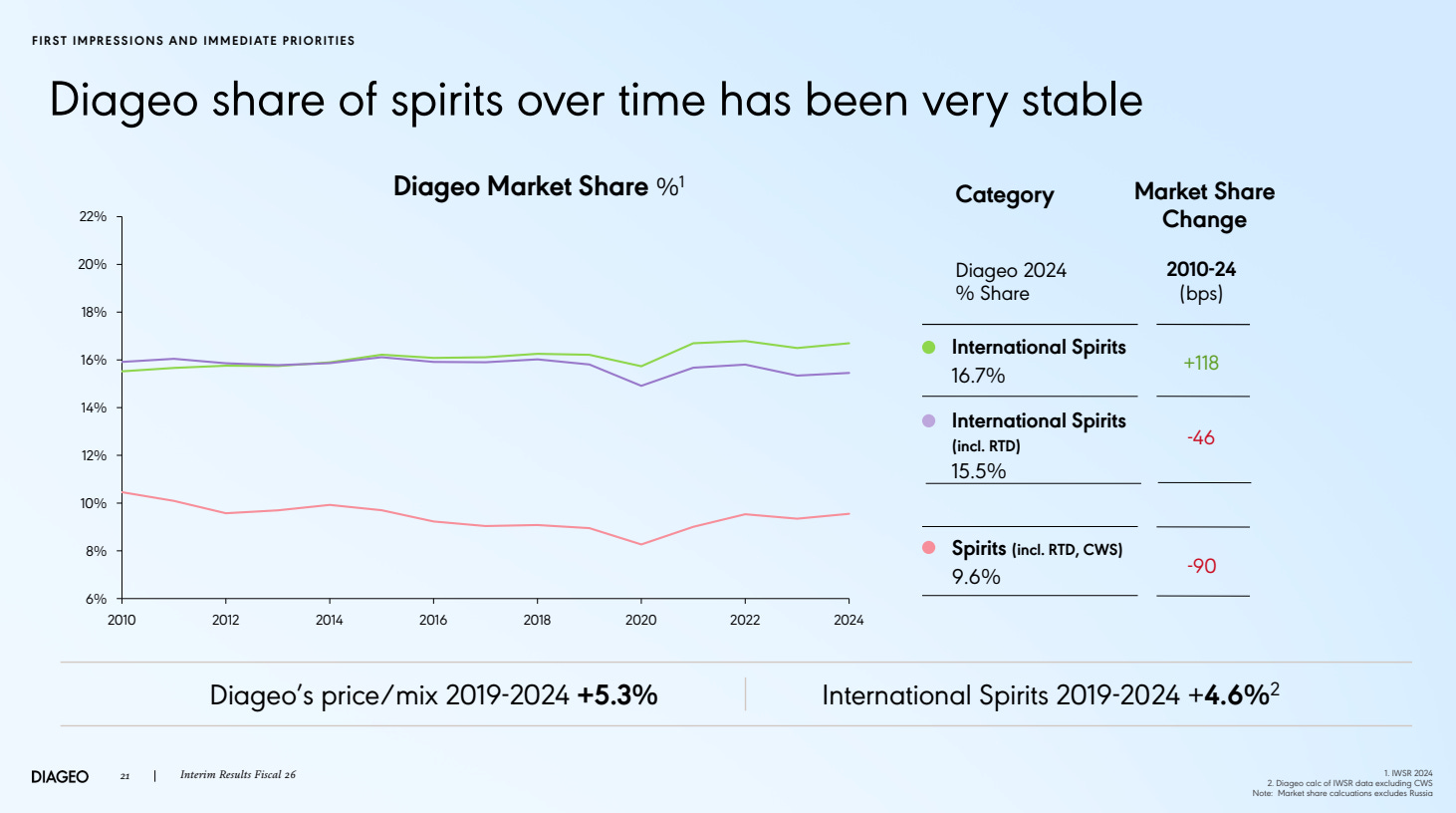
Brand Heritage: You can’t just invent a 200-year-old Scotch. Their brands have Status that people are willing to pay extra for
Global Reach: They sell in 180 countries. If one country has a bad economy, another (like Mexico or India) usually makes up for it
Scale: They have the best distribution. If a new bar opens anywhere in the world, Johnnie Walker is almost guaranteed to be on the shelf
Why is it an interesting dividend stock?
Current dividend yield: 5.0%
Payout ratio: 95.3%
2-Year Forward Dividend Growth: -25.0%
2–Year Forward Revenue Growth: -1.9%
5. Constellation Brands (STZ)
How does the company make money?
They are the King of Mexican Beer in the United States.
They make money from:
Beer: They own the exclusive rights to sell Corona and Modelo in the US
Wine & Spirits: They sell premium wines like The Prisoner and Meiomi
What’s the moat?
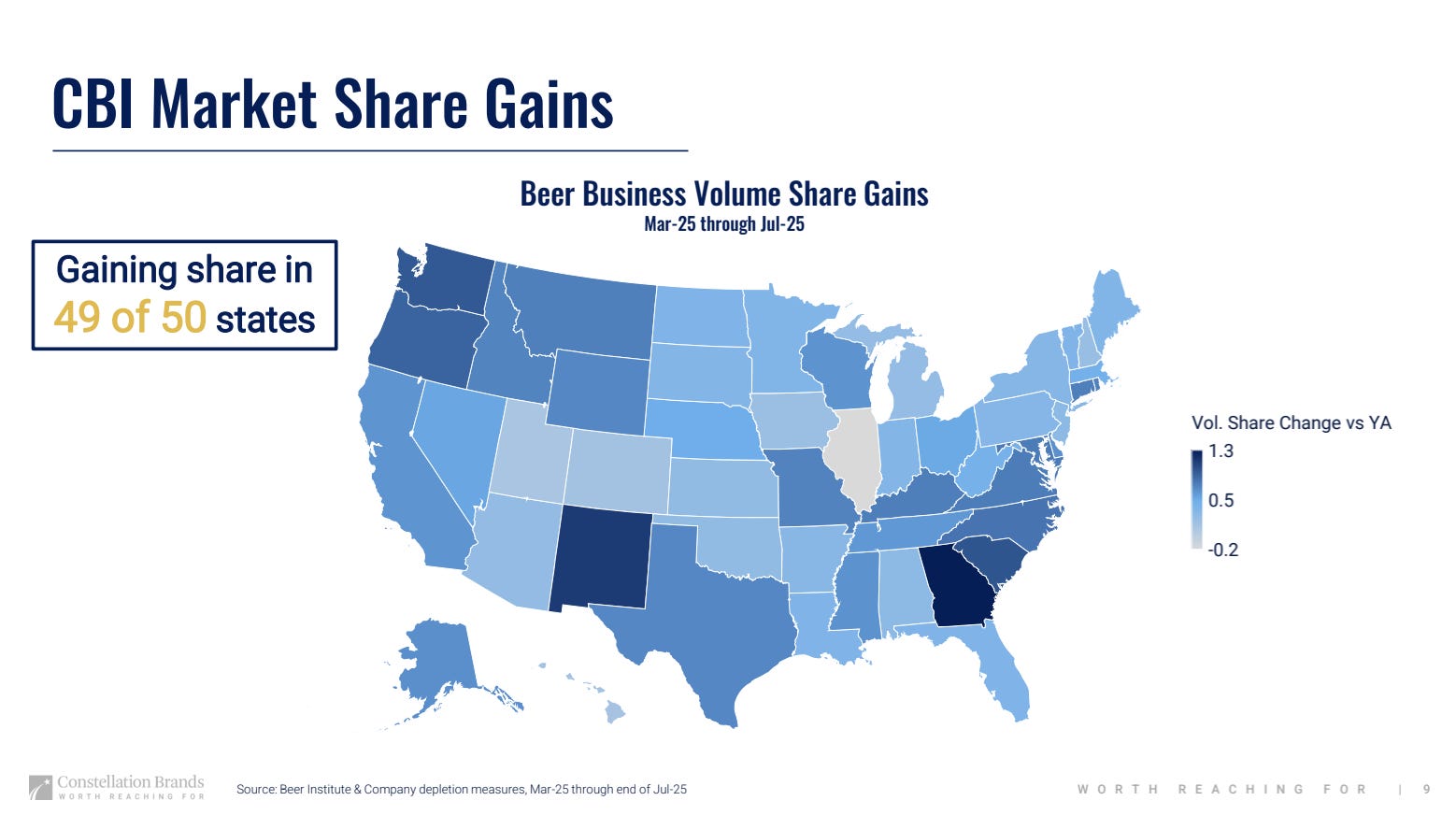
Cultural Tailwinds: The Hispanic population in the US is growing, and Modelo Especial recently became the #1 selling beer in America
Import Exclusivity: No one else can sell Corona or Modelo in the US. This is a legal monopoly on some of the most popular beers
Premiumization: They focus on High-End drinks. People might buy less beer, but they are buying more expensive beer
Why is it an interesting dividend stock?
Current dividend yield: 2.7%
Payout ratio: 42.4%
2-Year Forward Dividend Growth: 4.0%
2–Year Forward Revenue Growth: 0.8%
Conclusion
Warren Buffett spent decades building a cash machine.
Between these dividend payers and the float from Berkshire’s insurance operation, Buffett had a constant stream of income that he could reinvest and compound.
As we discussed in our last article, Greg Abel is already making changes.
He recently sold some of these higher-yielding positions, including Constellation Brands, Lamar Advertising, and Diageo.
But today’s article was strictly about the foundation Buffett left behind.
He built a portfolio focused on one simple thing: owning high-quality businesses with wide moats that pay you to hold them.
It’s a great blueprint for dividend investors like ourselves to follow.
One Dividend At A Time,
-TJ
P.S.
If the high yield stocks from Buffett’s portfolio caught your attention, you’re not going to want to miss what’s coming in June.
We’re doing something special, all about high yield investing.
If you don't want to miss it, get yourself on the High Yield VIP List with the button below.
Used sources
Interactive Brokers: Portfolio data and executing all transactions
Fiscal.ai: Financial data
Good morning. I look at the dividends and payout ratio. I can get my head around Chevron, the 120% payout is a result of non cash expenses which in Oil and Gas is obvious depreciation. Why though would Lamar have a 120% payout?
Curious how much of FCF is being used to cover dividends in both these stocks. That it seems will provide a better measure of dividend safety? Am I thinking about this correctly? Would appreciate any feedback.
Thanks for putting this very through overview of the Buffett portfolio. He has an amazing track record of outperformance just using common sense and long term thinking.