

In the current market, it’s easy to get distracted by huge projected profits from AI bottlenecks, like in semiconductors:
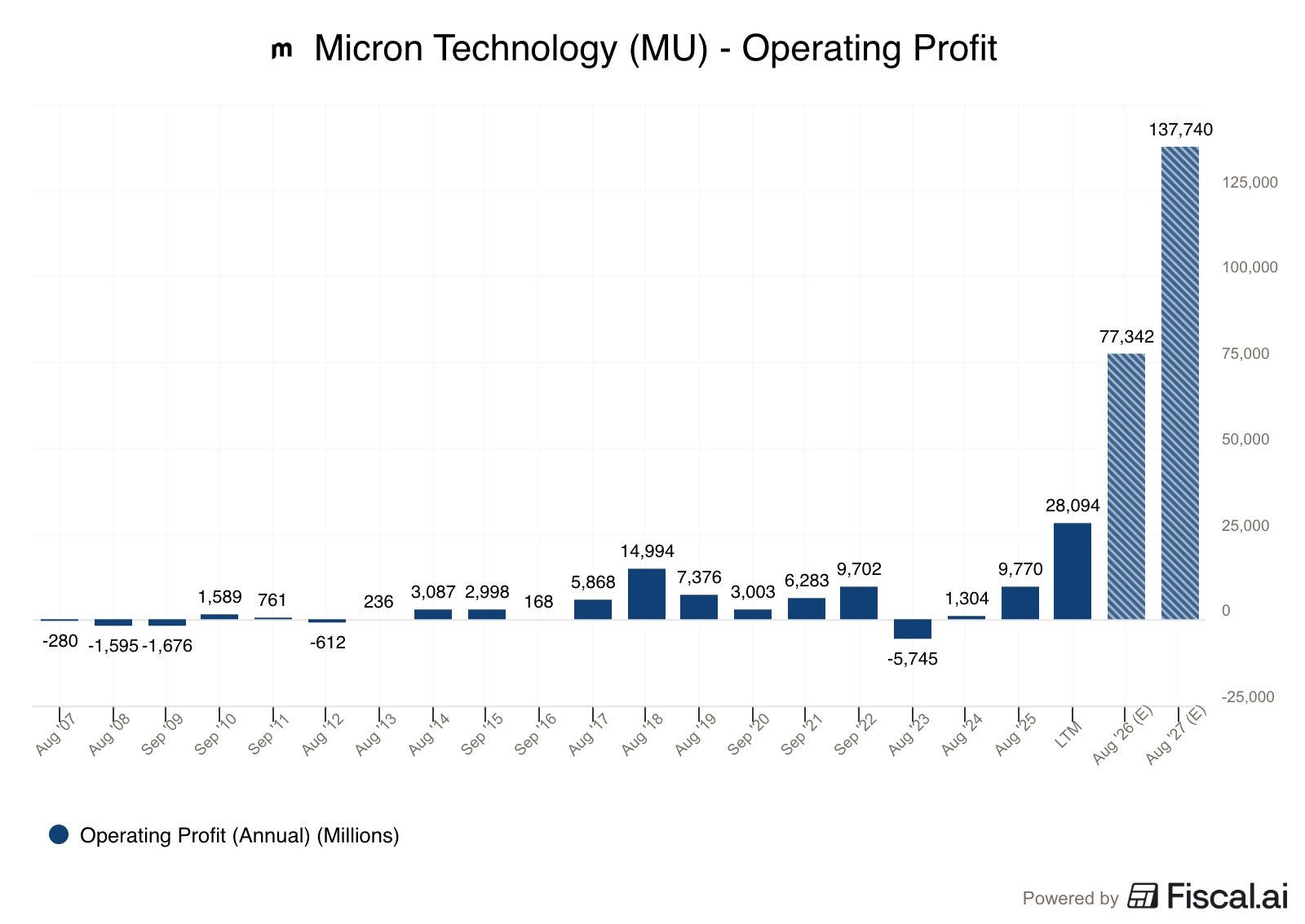
But what drives long-term returns isn’t temporary spikes in profits.
It’s the ability to consistently generate growing cash flow, and then what management does with it.
Remember that management has 5 main choices.
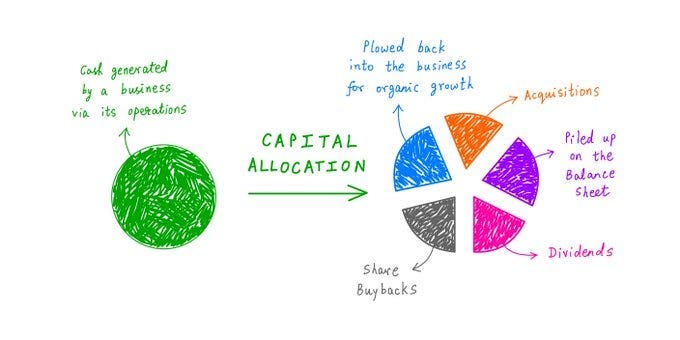
We love when management can reinvest in the business, or make smart acquisitions.
But for large businesses that generate a lot of cash, they can’t usually reinvest everything at attractive rates.
Of course we love dividends, but when the market is underpricing a business, one of the smartest things management can do is buy back their own shares.
This increases your ownership of the business without you spending a single dollar.
It can also lead to very attractive returns.

Today, we’ll look at the earnings reports from two companies that are heavily buying back their own shares.
PayPal (PYPL)
We bought PayPal for the buybacks, but since our initial purchase, they’ve also initiated a dividend.
The market is fairly convinced that this is a dying business.
Let’s look at the Q2 earnings report and see if it’s right.
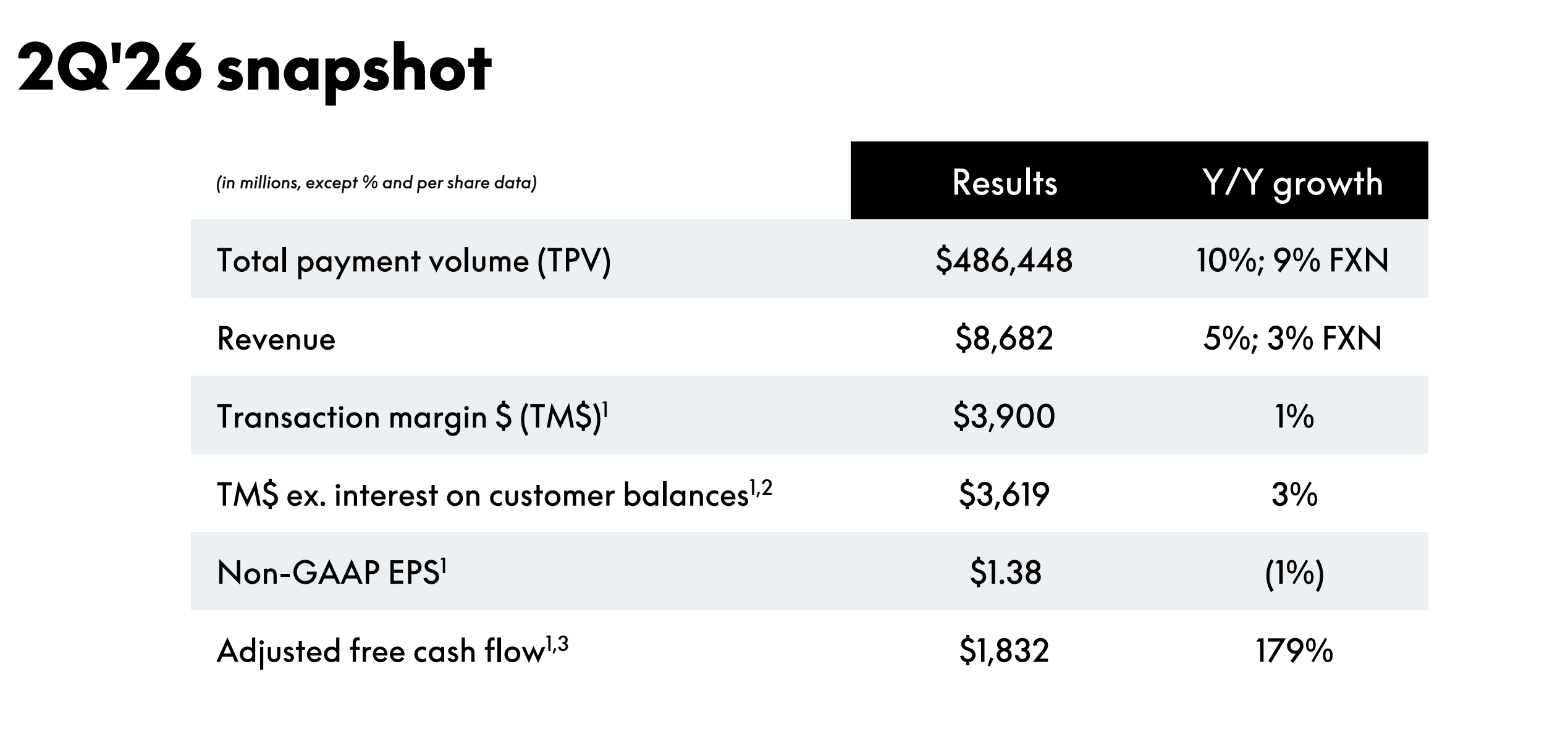
PayPal is growing revenue, processing more payment volume, and earning more from processing that volume.
A few numbers look ugly on the surface, mainly the decline in EPS, Operating Income, and margins.
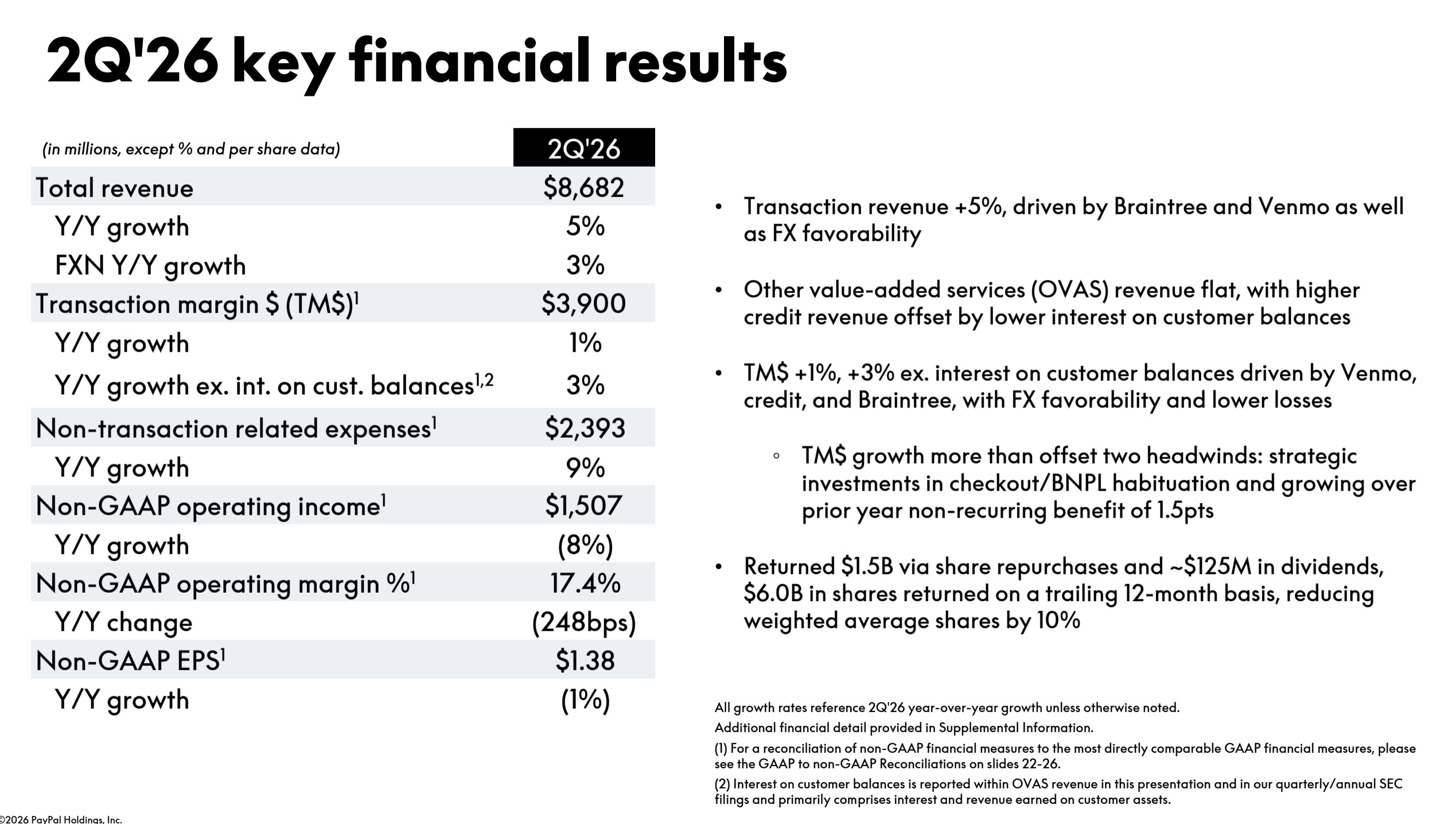
But there’s very good reasons for these.
Why EPS Declined
Investing for the future: PayPal is spending money today to improve its technology, add AI, and upgrade the business for the future.
Investment losses: The company also lost money on some of its investments, including its crypto portfolio, which reduced earnings.
Why Margins Declined
More lower-profit transactions: More customers are using services like Braintree and Venmo, which make less profit than PayPal’s main checkout button.
Higher spending: PayPal is also spending more to improve the business, which is temporarily reducing profit margins.
These numbers actually came in ahead of management’s expectations, and they raised guidance on the call.
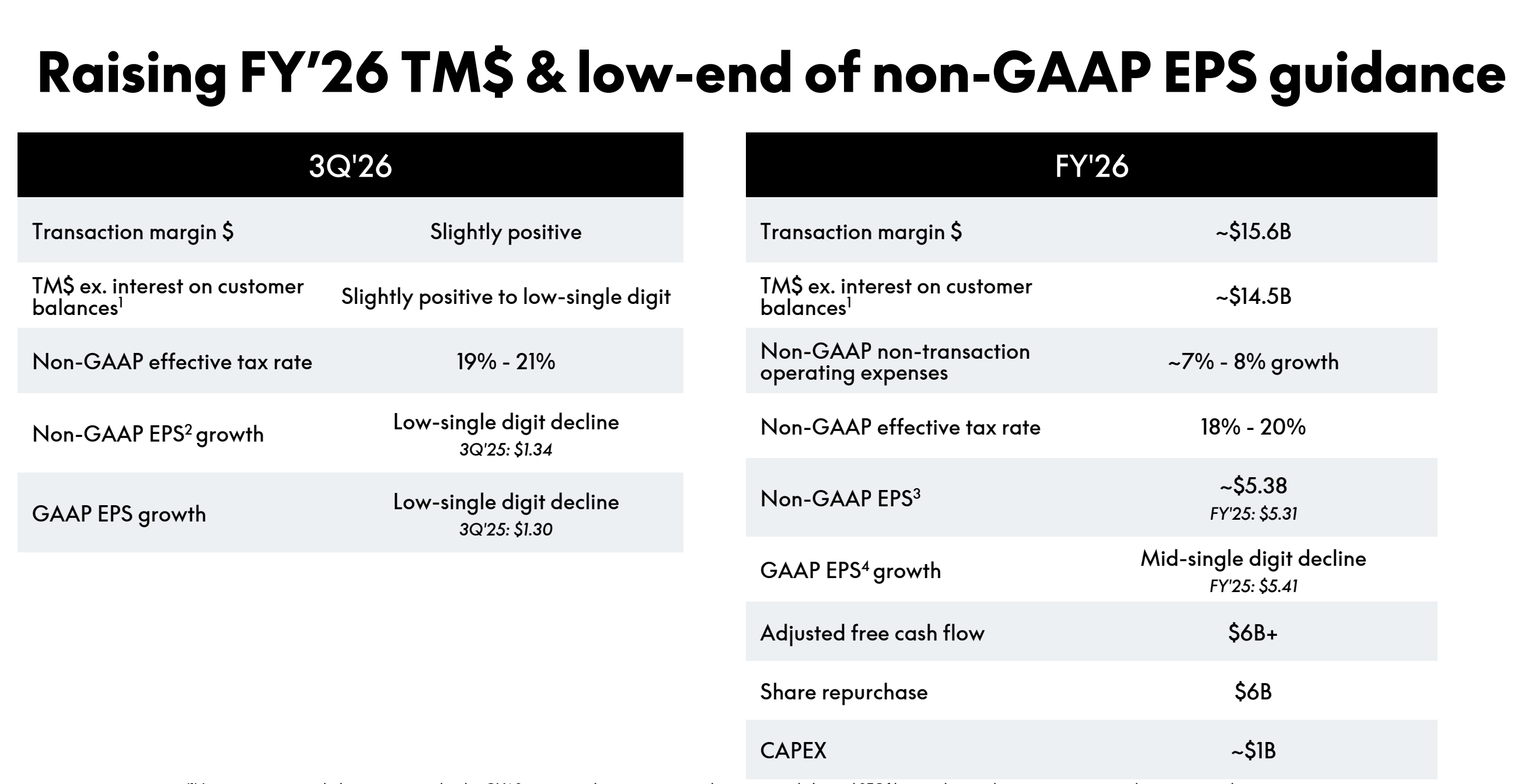
PayPal is still a major cash generator, with $1.8 billion in adjusted free cash flow this quarter.
Like I said, PayPal is heavily buying back their own shares, returning $1.5 billion to shareholders by repurchasing approximately 33 million shares.
In the past twelve months, they have bought back 111 million shares for roughly $6.0 billion.
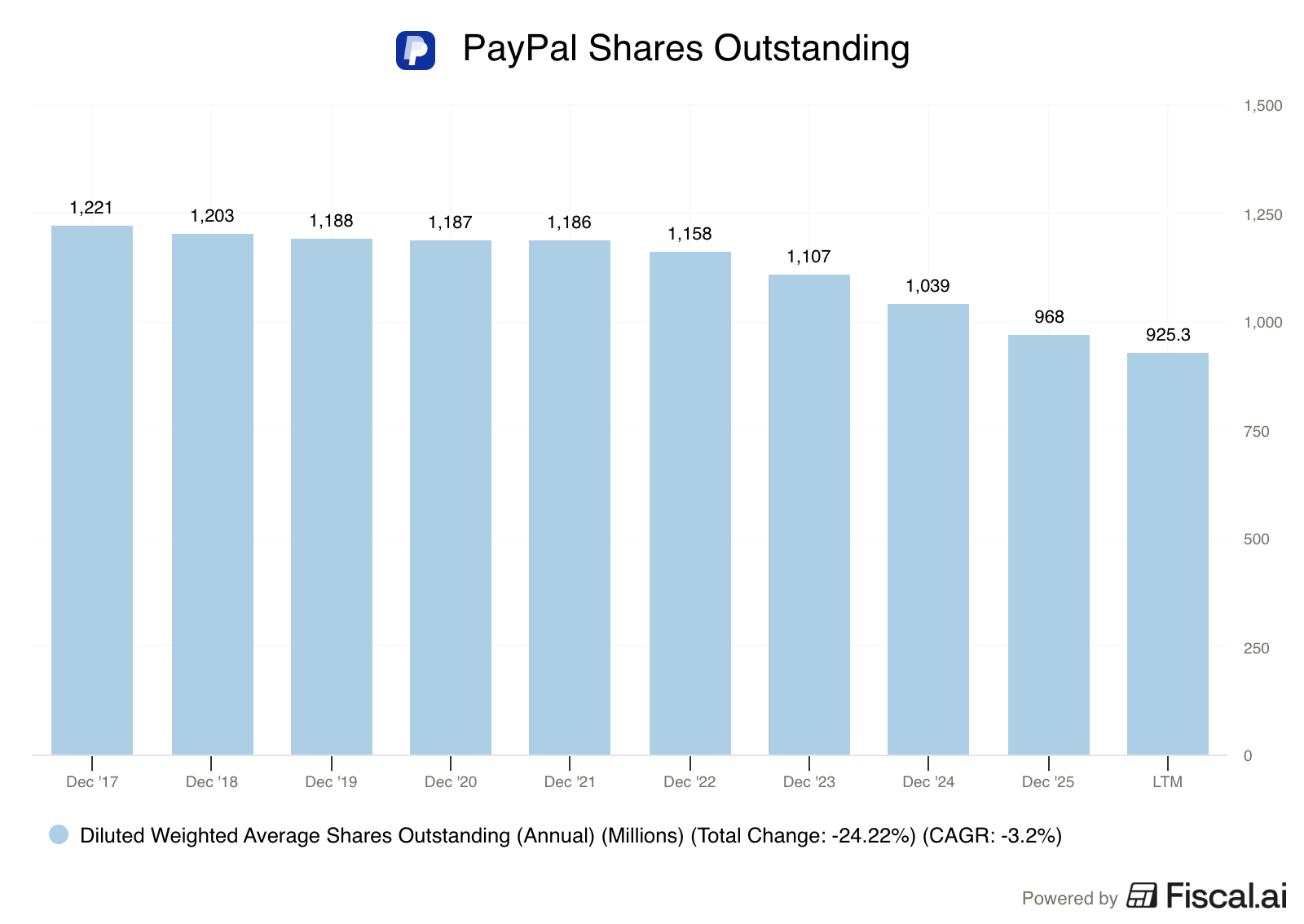
They’re not slowing down either.
The company is guiding for at least $6.0 billion in adjusted free cash flow and $6.0 billion in share repurchases for the full year of 2026.
At the current stock price around $58 per share, a $6.0 billion buyback program means PayPal can take out 12% of its share count in a single year.
The Buyout Offer
Management did address the buyout offer from Stripe in the earrings call.
Here’s what CEO Enrique Lores had to say:
Before I conclude, I want to address the recent M&A speculation regarding the company. I’m sure you can understand, as a matter of policy, we don’t comment on market speculation or potential M&A discussion. As a board and management team, our responsibility is to maximize long-term shareholder value. We believe that executing the transformation strategy I have outlined will create significant value for our shareholders. That remains our focus. While there is still significant work ahead, I have strong conviction in our direction and in our ability to execute. At the same time, we remain open and objective in evaluating opportunities.
If we see levers or a path that we believe would create superior value for our shareholders than executing our current strategy, we would, of course, carefully consider them.
Sounds to me like Lores and the board think the offer is way too low, but if they got the right one, they would consider it.
The Transformation Strategy
Lores gave us a more concrete outline for his plan for the company.
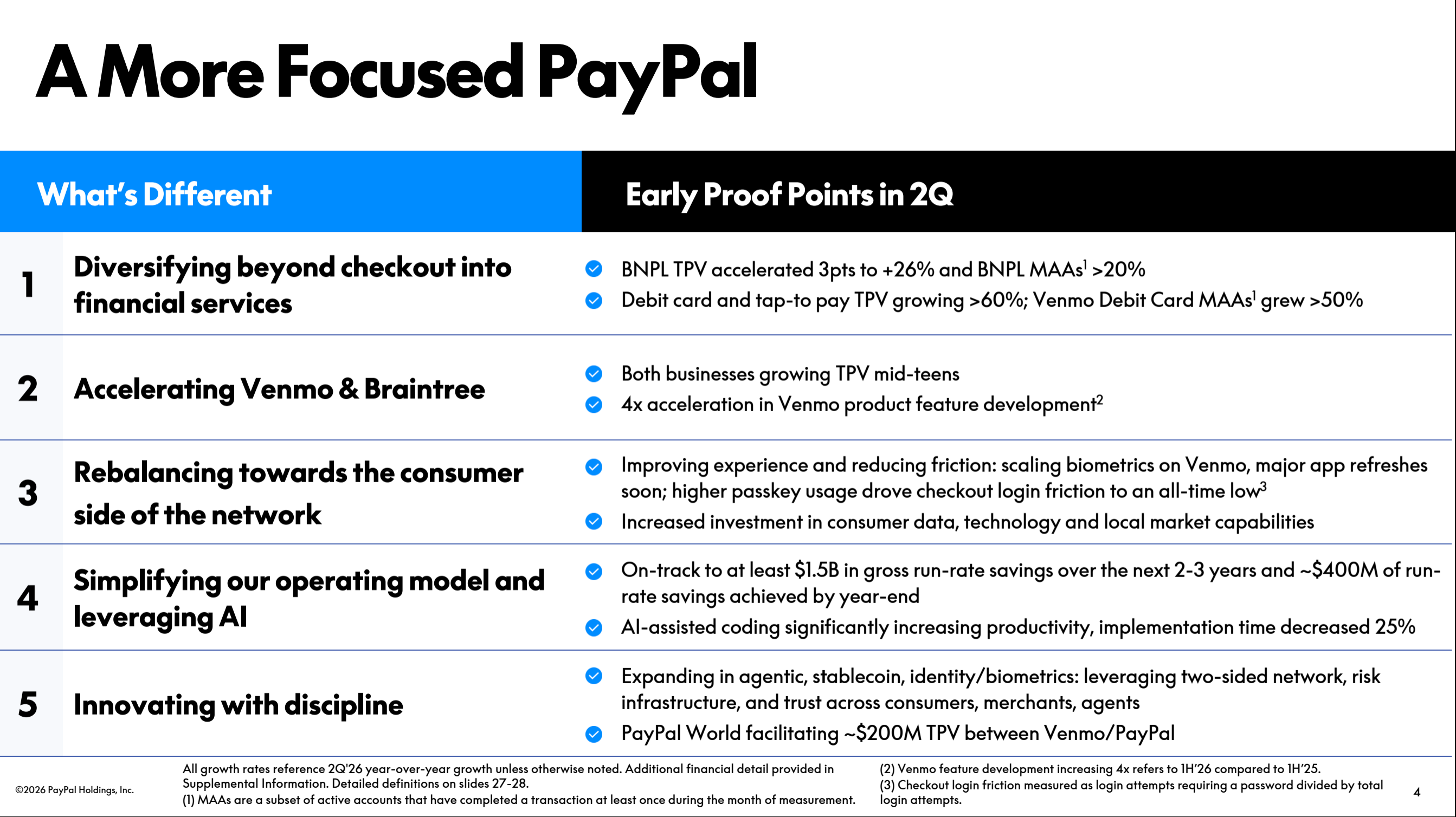
The most important things in my opinion?
1. Moving more into financial services.
This makes a lot of sense.
This means more debit and credit cards, more Buy Now Pay Later, and possibly more.
It’s a fast growing and profitable part of the business.
Venmo debit card monthly users are up 50%
People who use both debit cards & Pay with Venmo have 9x higher Average Revenue Per Account
Pay with Venmo and Buy Now, Pay Later continue to outpace the market, taking share from other payment methods and growing 44% and 26%
2. Focusing on the consumer side of the network
Again, this makes a lot of sense.
PayPal’s main advantage over competing payment providers is that their network is two-sided.
They have the data from both the merchants and the consumers.
This allows them to do things that nobody else can - like very quickly approve users for Buy Now Pay Later, or run an ads business.
Overall Impression
Overall, I think this was a good quarter for PayPal.
They’re showing impressive growth in Venmo and they continue to improve the profitability of Braintree.
Their plan moving forward makes sense, they say they’re on track for $1.5 billion in savings, and they continue to generate lots of free cash flow.
This of course will continue to be funneled into buybacks, which at this valuation should eventually drive serious returns.
The fact that Stripe is trying to buy PayPal shows that it’s both undervalued and not dying, despite what the market thinks.
Cannibal #2
Cannibal #2 bought back 10% of its total shares outstanding inthe first half of the year, and it’s not done yet.
Even better?
This company is moving from holding company to operating company.
Organic growth is accelerating, and the company has figured out how to cross-sell to existing clients, and pitch bigger deals to new ones.
If you want to know more about this high-yield cannibal, upgrade your subscription here:
One Dividend At A Time,
-TJ
Used sources
Interactive Brokers: Portfolio data and executing all transactions
Fiscal.ai: Financial data
Disclaimer
As a reader of Compounding Dividends, you agree with our disclaimer. You can read the full disclaimer here.
Great breakdown TJ! The added bonus of the buyback is that when the company is undervalued, it creates even more value for shareholders. Curious what you think of the Stripe bid and whether $PYPL should take it?
Interesting review. The headline numbers don't tell the whole story. Payment volume, revenue and free cash flow continue to grow, while the company is returning significant capital to shareholders through buybacks and dividends.
Markets can be quick to write off businesses that are going through a transition. The real test is whether those underlying improvements continue to translate into stronger shareholder value over the next few years. Patience is often rewarded.