

Hi Partner 👋
On Monday, we looked at how the income from Our Portfolio has been compounding and a bit of the macro picture right now.
Today it’s time to look at every single position in Our Portfolio.
We’re going to be skeptical and make sure every company still deserves its spot.
Why? Because as investors, we can’t be complacent.
Businesses change, new competitors show up, and we learn more about each business the longer we own it.
We need to make sure that we’re not holding stocks out of laziness and ignoring real problems in the business.
We need to be willing to kill good ideas for even better ones.
Just listen to Charlie Munger:
“Part of the reason I’ve been a little more successful than most people is I’m good at destroying my own best-loved ideas.”
This brings us to the most important concept in investing: Opportunity Cost.
Every single dollar we tie up in a good business is a dollar we cannot invest in a great business.
If a company’s expected forward returns are no longer as attractive as when we first bought them, we should consider allocating that capital somewhere else.
We are constantly looking to improve the quality and the future return prospects of Our Portfolio.
To do this objectively, we’ll use a Stoplight Framework:
🟢 Green (Strong Conviction): The best businesses we own.
🟡 Yellow (Watch Closely): Near-term friction or thesis questions, these are stocks to keep a close eye on.
🔴 Red (Consider Trimming/Selling): The opportunity cost might be too high. These are stocks we might think about trimming or selling.
Let’s dive in.
🟢 The Green Tier: Strong Conviction
These are the stocks I worry the least about.
They are executing well, and their moats are still very strong, or even growing.
A great example?
British American Tobacco ($BTI): Is successfully growing the New Categories, and generating a lot of cash to pay us a 9% dividend yield on our cost basis.
🟡 The Yellow Tier: Watch Closely
These are great businesses facing some near-term friction, or questions about the thesis.
We’re watching them a bit more closely.
Let’s give you an example of one.
Domino’s Pizza ($DPZ):
Domino’s is struggling with macro pressures right now.
The number of orders customers are making continues to grow, but they’re ordering less items in each order.
That’s lowering franchisee profitability, which is leading to slower new store buildouts.
That will slow down growth in the short term, but I still think in the long-run Domino’s is a great setup.
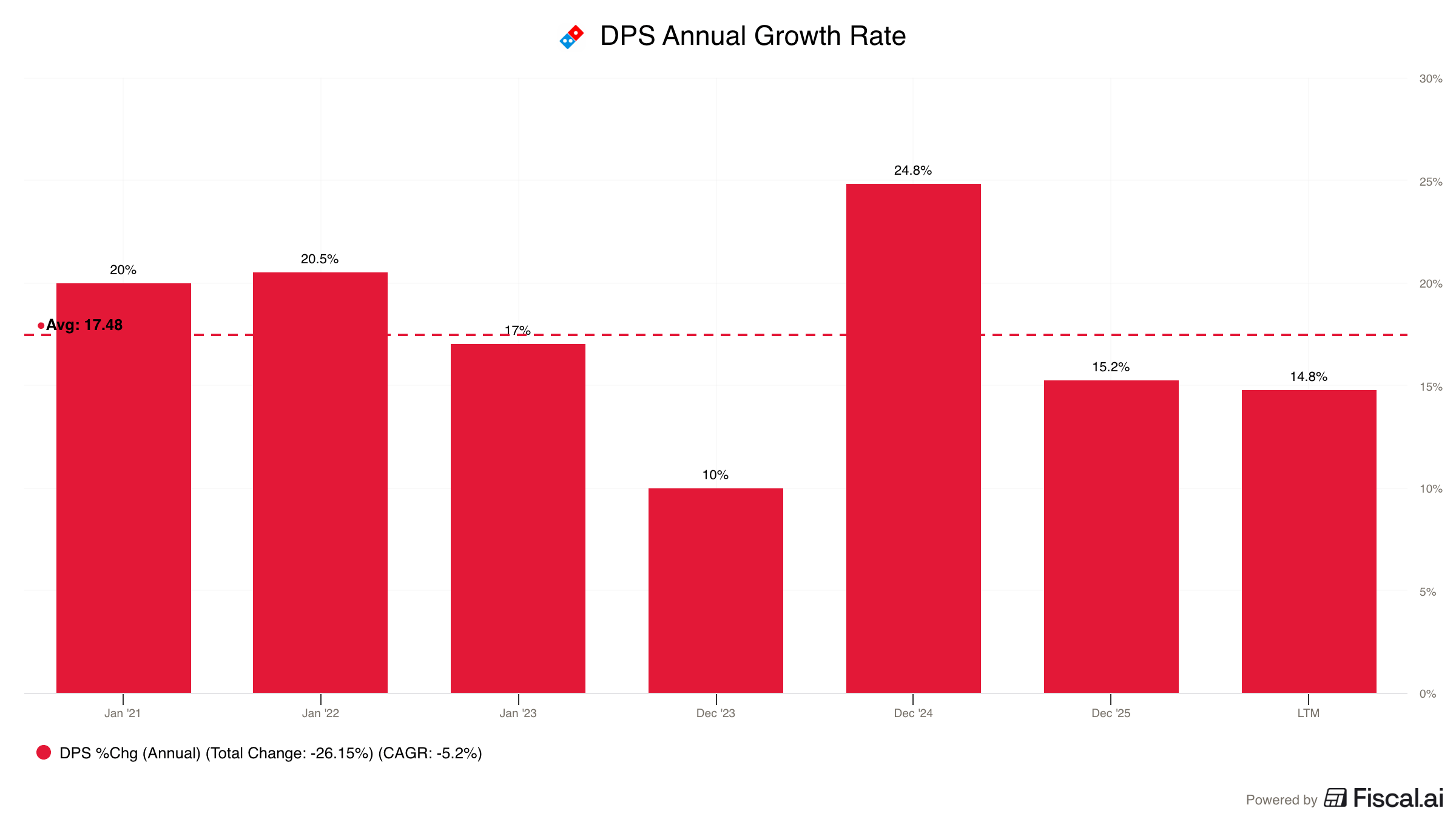
Domino’s has increased its dividend by nearly 32% since we bought it.
Over the past 5 years, it’s grown the dividend by nearly 18% on average.
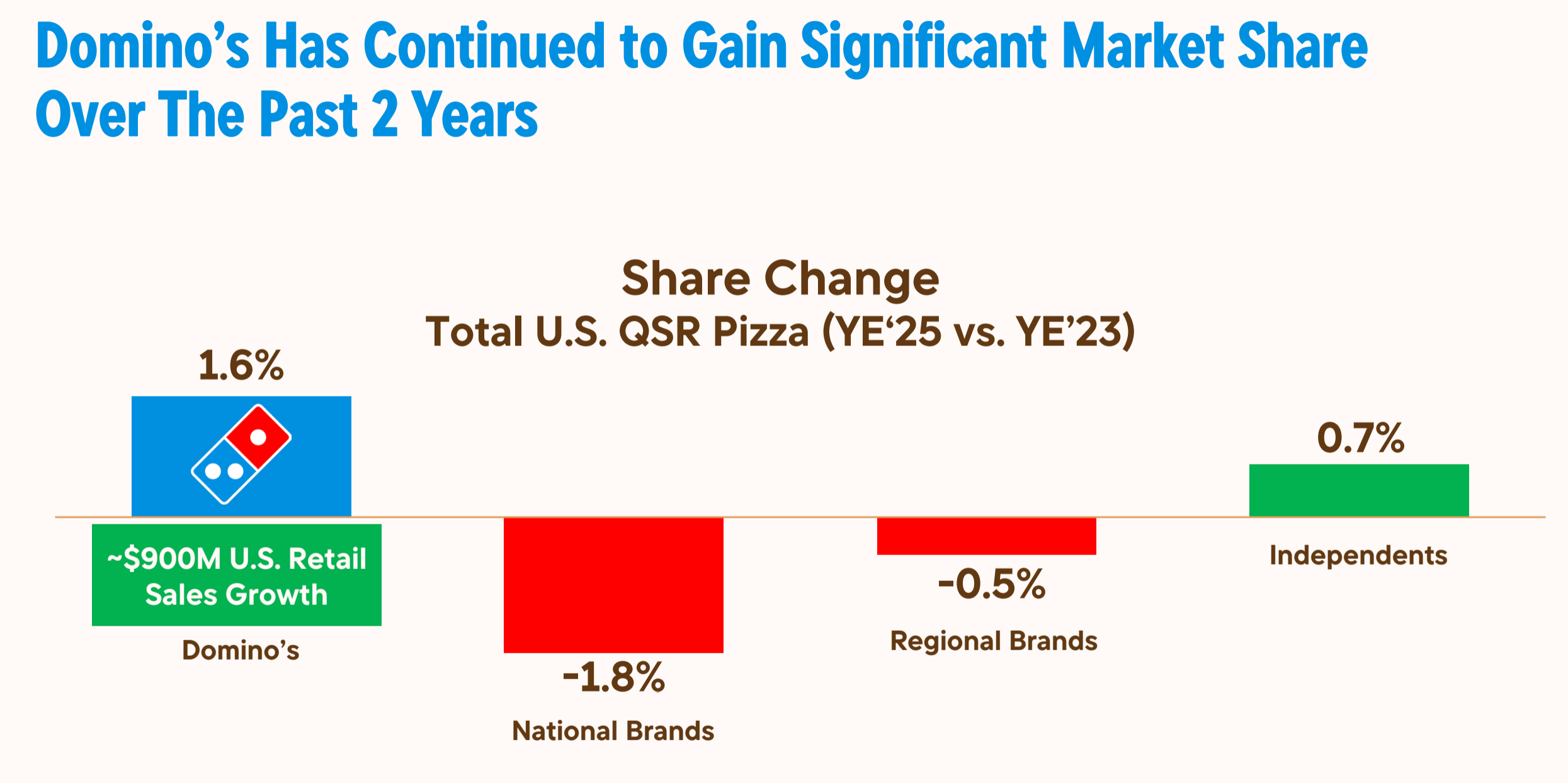
Domino’s revenue growth has slowed this year, but competitors like Papa John’s are seeing revenue decline.
Domino’s is actively taking market share in a tough environment.
Domino’s business model is still excellent.
When the consumer rebounds (as they always do), Domino’s will come out much stronger on the other side
🔴 The Red Tier: Opportunity Cost & Thesis Problems
These are the positions where the thesis might be shifting, or the opportunity cost is becoming too high.
In fact, most of the businesses are here because the market is now pricing in a lot of their future growth and there might be better opportunities elsewhere.
A great example?
Canadian Natural Resources ($CNQ)
CNQ is a cash machine.
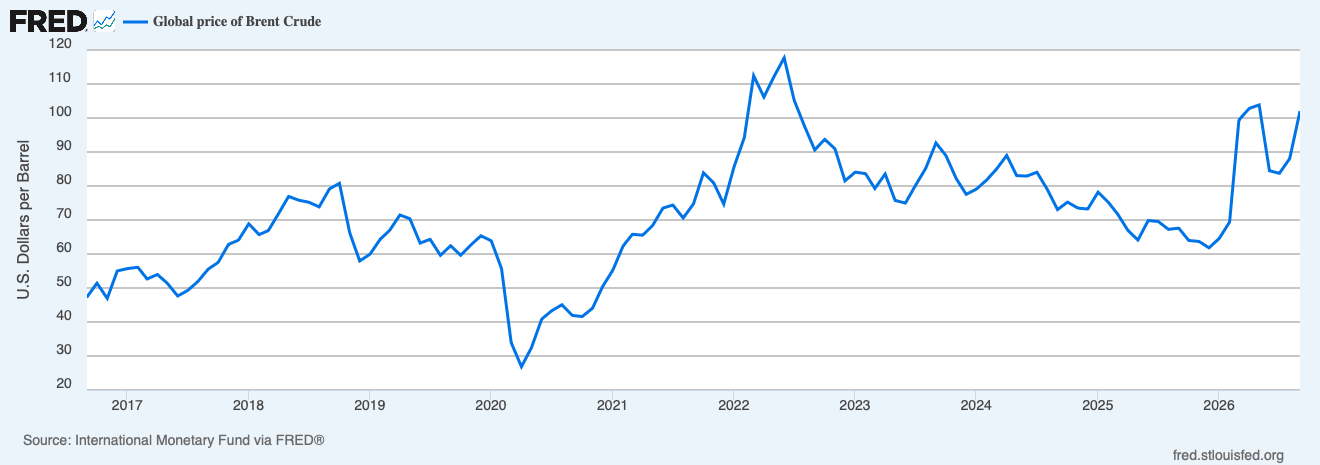
But the stock has run up a lot since the Iran war pushed oil prices up.
This situation won’t last forever.
Another thing I’m thinking about is where Canadian Natural Resources can sell their oil.
Nearly all of the oil Canada exports (96%) goes to the U.S.
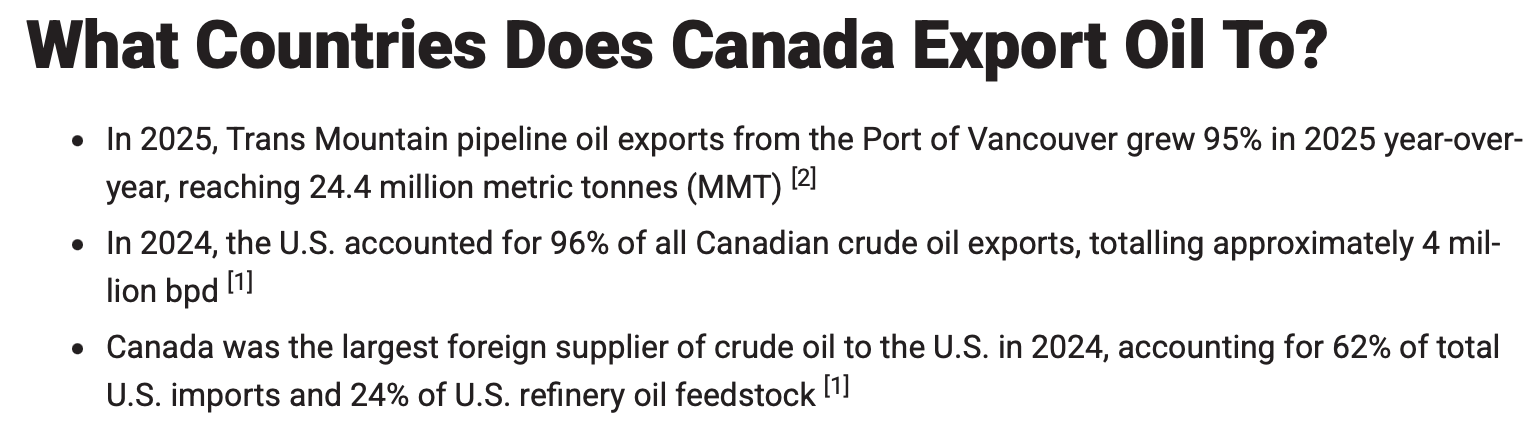
They’re constrained on how much they can export elsewhere because they don’t have pipeline capacity to get the oil to ports.
That’s why CNQ is holding off on growing production.
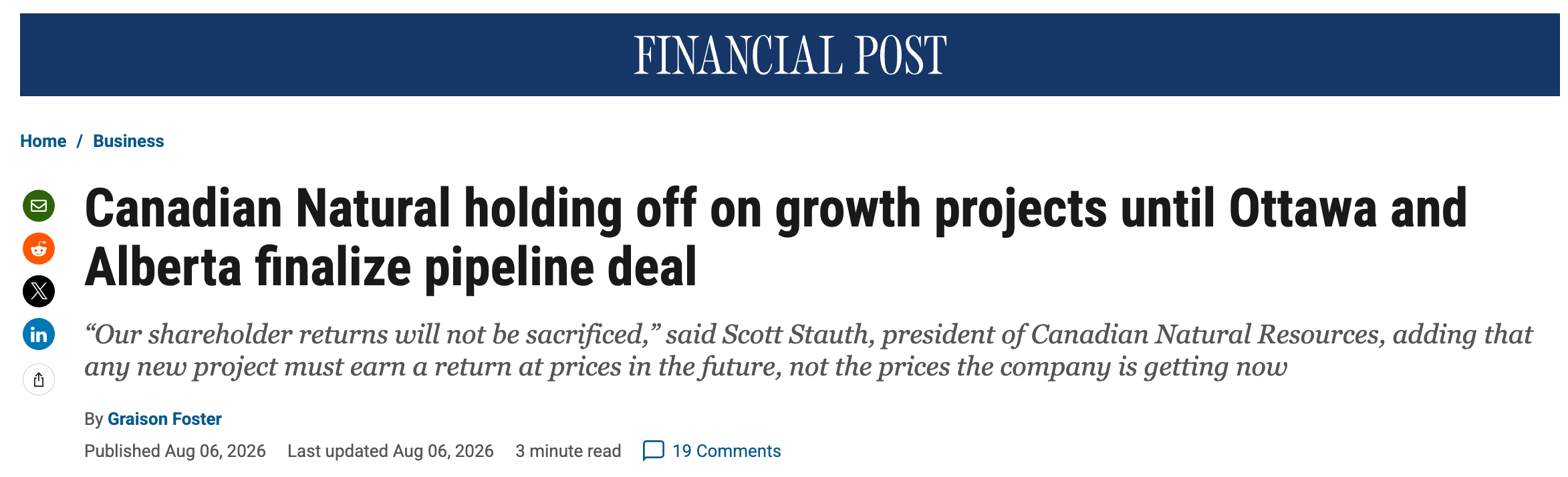
Canadian Natural Resources will have a very hard time selling more oil than they currently do until more pipelines are built.
Pipeline construction has a lot of political hurdles and they almost always take longer to go into operation than planned.
There’s one more thing.
CNQ has paid down their debt to their target level, and management has committed to buying back stock with the cash flows that were going to debt.
If that happens at peak commodity (and CNQ stock) prices, that’s not a great way to allocate capital in my opinion.
It might be better to take the gains from CNQ’s stock price and allocate the capital elsewhere.
See the Rest of Our Portfolio
Knowing what is working and where the opportunity costs are too high is only the first step.
The three stocks above are just a small preview of the analysis we apply to all 18 positions we currently hold.
If you want to see exactly where the rest of our holdings fall, upgrade to Premium today.
When you join, you get instant access to the full Stoplight Portfolio Review.
Even better, you will be on the list for this Saturday’s update where we will reveal:
The Green Light Buys: Which of our highest-conviction businesses we plan to allocate more capital to right now.
The Shopping List: Our brand-new watchlist of high-quality businesses we are thinking about adding to the portfolio next.
One Dividend At A Time,
-TJ
Used sources
Interactive Brokers: Portfolio data and executing all transactions
Fiscal.ai: Financial data
Disclaimer
As a reader of Compounding Dividends, you agree with our disclaimer. You can read the full disclaimer here.