

Something special is happening on June 23rd that you won’t want to miss.
If you want behind-the-scenes updates and early access to our upcoming high-yield reports, join the High-Yield VIP List, and you’ll get the following immediately when you join for free:
My high-yield stock watchlist
A Checklist of Dividend Investing Mistakes
The Highest Yielding Dividend Aristocrats
Get on the list by leaving your email here.
Today is Dividend Day.
The series where I teach you 5 things about dividend investing in less than 5 minutes.
1️⃣ High Yield vs. Dividend Growth
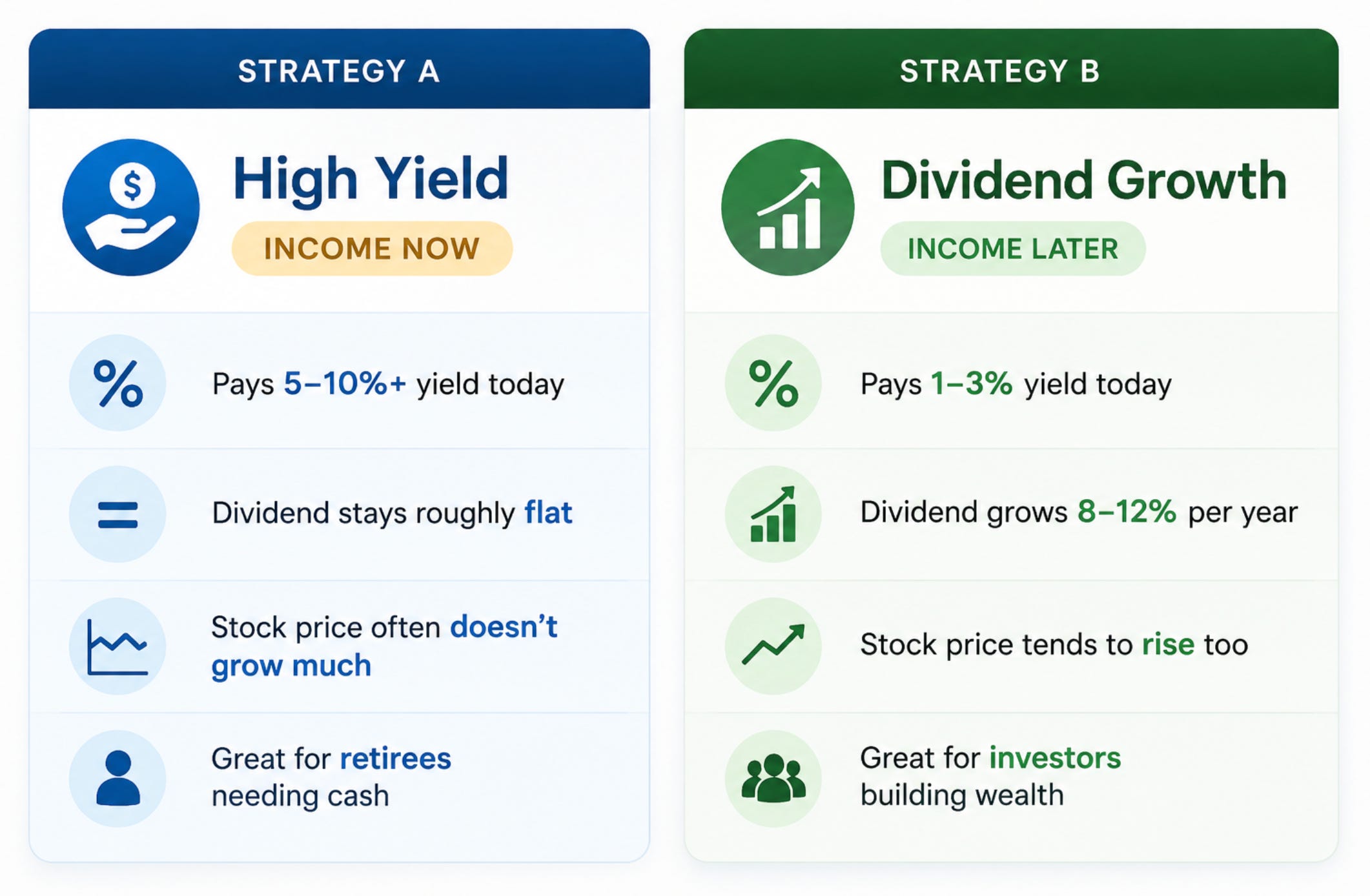
When you invest for dividends, you face a fundamental choice:
Do you want a big paycheck today, or a smaller paycheck that keeps growing?
That’s the high-yield vs. dividend growth tradeoff in a nutshell.
Both strategies pay you income. But they do it differently.
This visual puts it in a very simple way:
2️⃣ Dividend Growers vs High Yielders
Is it better to own companies that grow their dividends or those that already offer high yields?
Tough question right?
Lets answer this with the help of the index performance.
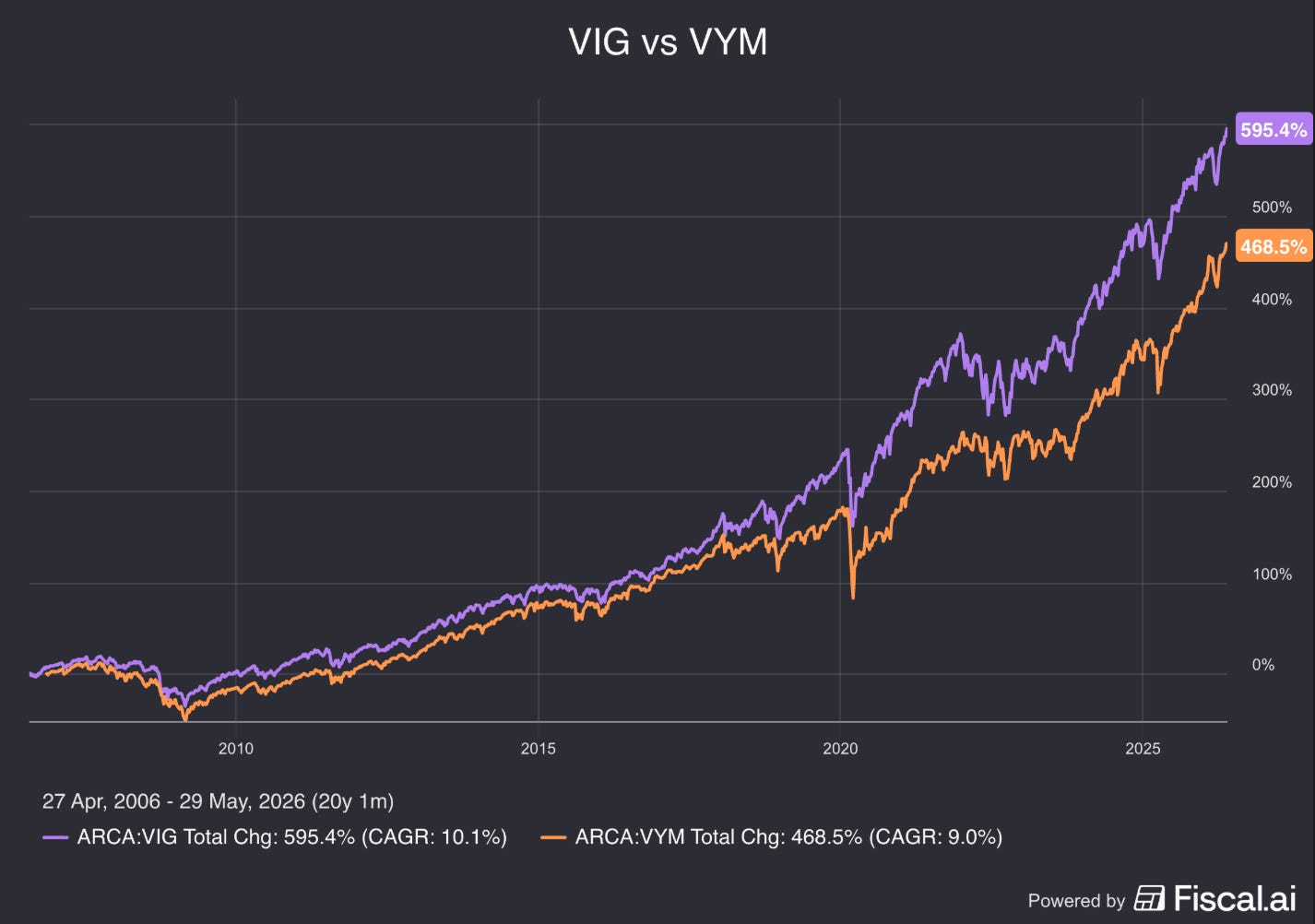
VIG invests in companies with a history of consistently increasing their dividends.
VYM focuses on stocks with the highest dividend yields
Both are Vanguard funds and both charge the same low 0.04% expense ratio, but their approaches are very different.
In recent years, high yield has had the upper hand.
VYM outperformed VIG in 2021, 2022, 2024, 2025, and remains ahead year-to-date in 2026.
But over the long run, dividend growth has been the winner.
Since the launch of both funds, a $10,000 investment grew to $69,540 in VIG compared to $56,850 in VYM.
The lesson? Both can perform well, but the longer the time period, the more dividend growth matters.
3️⃣ An Investing Quote
Dividend growth investing rewards patience.
A 2% yield that grows 10% per year becomes a 13.5% yield on your original investment by year 20.
You just have to wait for it. That waiting is the whole strategy.
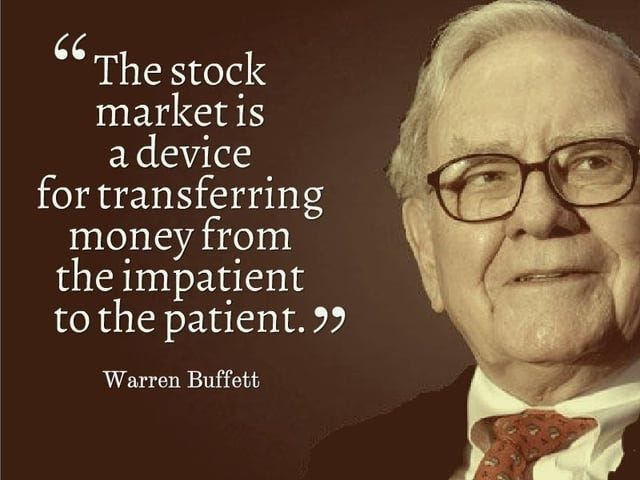
As the legend Warren Buffett says:
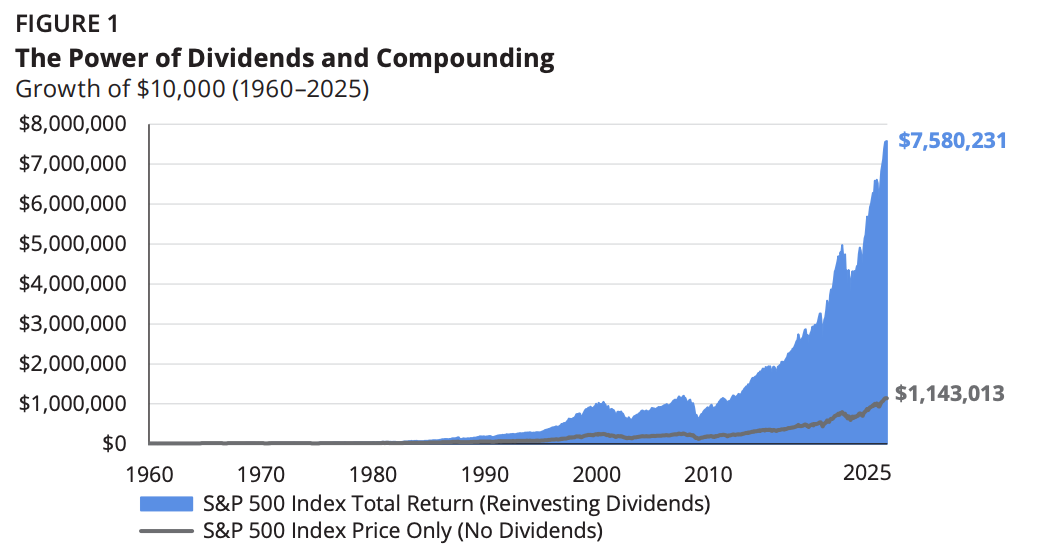
4️⃣ The data goes back to 1960
Dividend growers have dominated the market over the very long run.
Hartford Funds has done excellent research in this area.
One of the most interesting findings?
From 1960s, 85% of the S&P 500’s cumulative total return can be attributed to reinvested dividends and the power of compounding.
You can access their full report here.
5️⃣ Example of a Dividend Stock
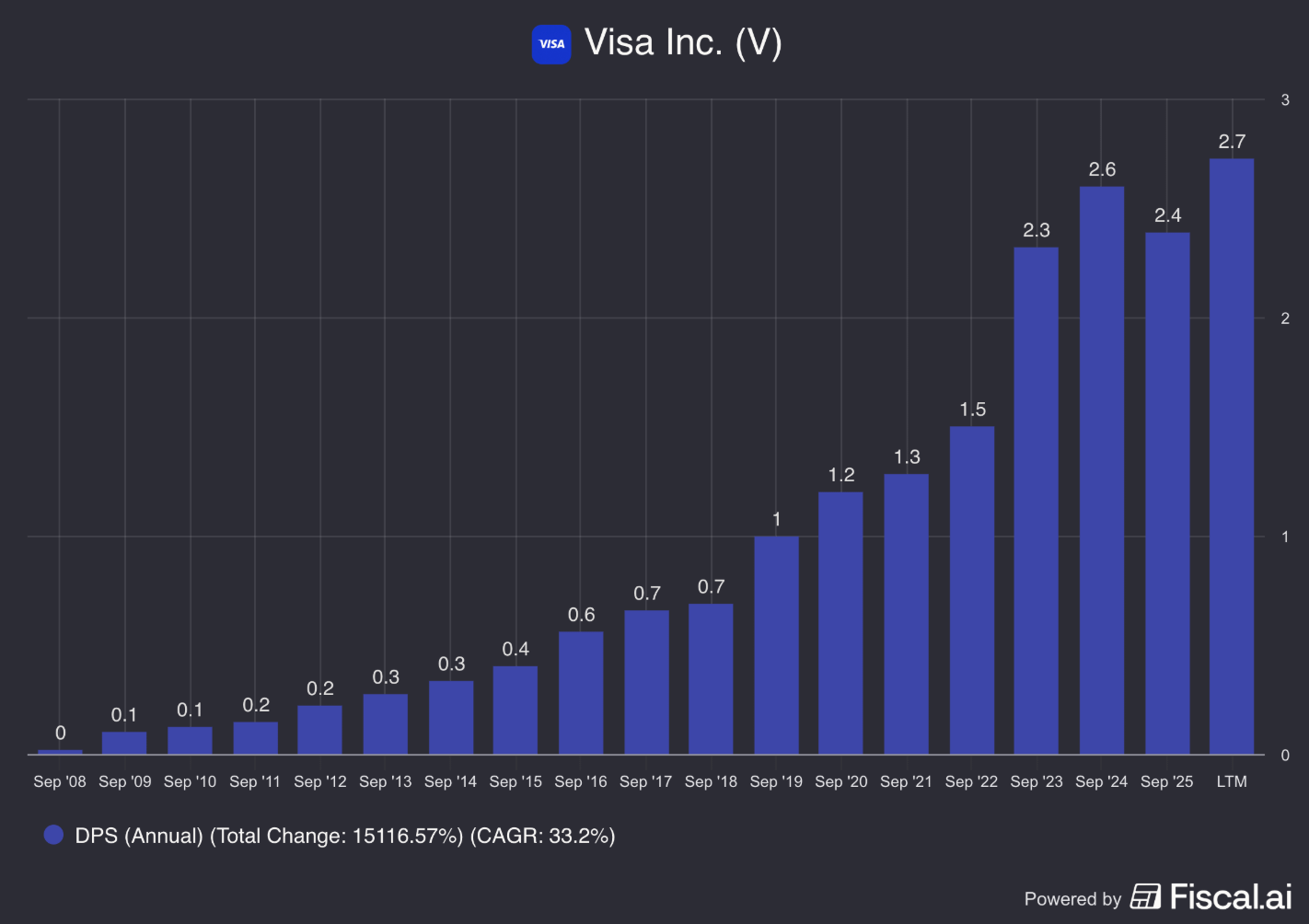
Let’s look at Visa (V).
Visa operates the world’s largest payment network, processing billions of transactions every year.
The company earns a small fee on every card swipe and has increased its dividend consistently over time.
Key numbers from Fiscal.ai:
Profit Margin: 51.7%
Forward P/FCF: 24.1x
Dividend Yield: 0.8%
Payout Ratio: 21.9%
P.S.
On June 23rd, we are kicking off a series all about high yield investing.
If you want to maximize your portfolio’s income without sacrificing business quality, or dividend growth jump on the VIP Waitlist.
You’ll get behind-the-scenes updates and the very first invite to download our brand-new high-yield special reports the minute we go live.
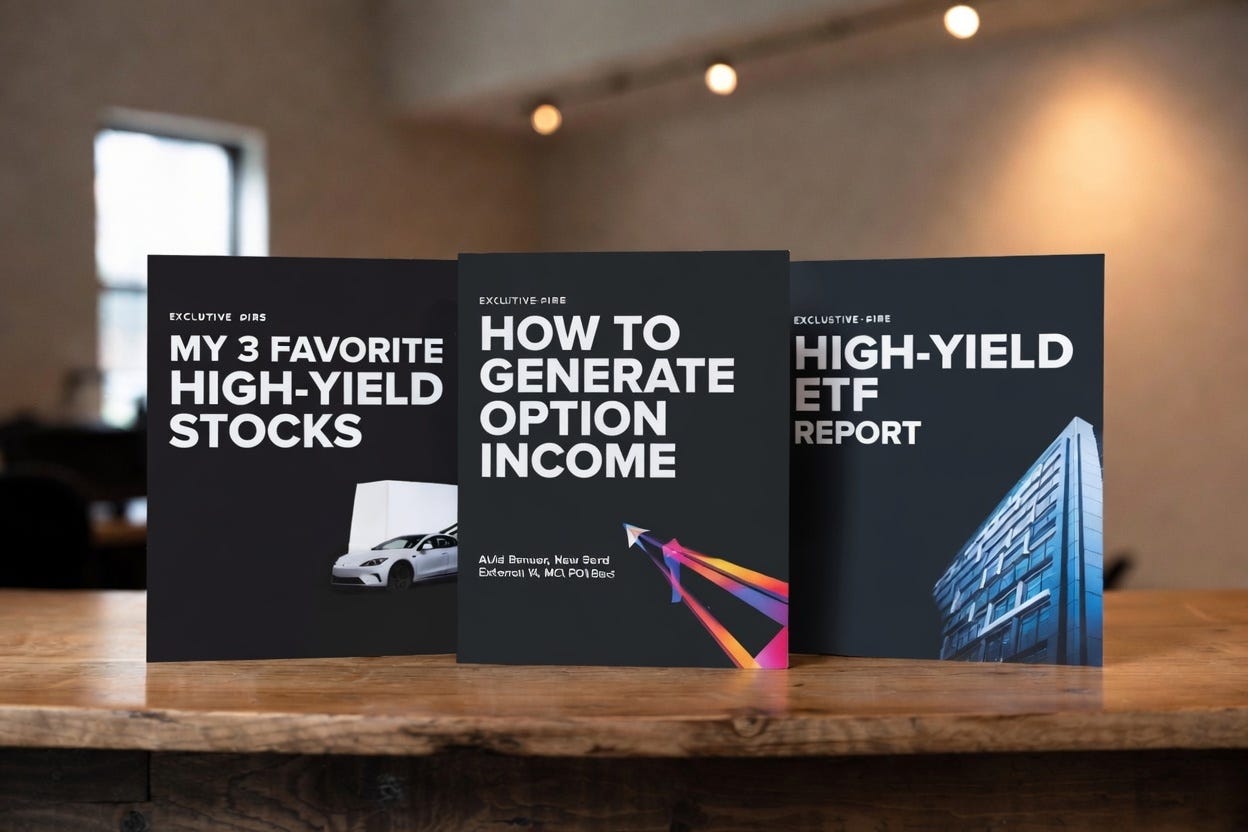
Don’t forget that you’ll also get the following just for joining the VIP list:
My high-yield stock watchlist
A Checklist of Dividend Investing Mistakes
The Highest Yielding Dividend Aristocrats
Used sources
Interactive Brokers: Portfolio data and executing all transactions
Fiscal.ai: Financial data
Disclaimer
As a reader of Compounding Dividends, you agree with our disclaimer. You can read the full disclaimer here.