

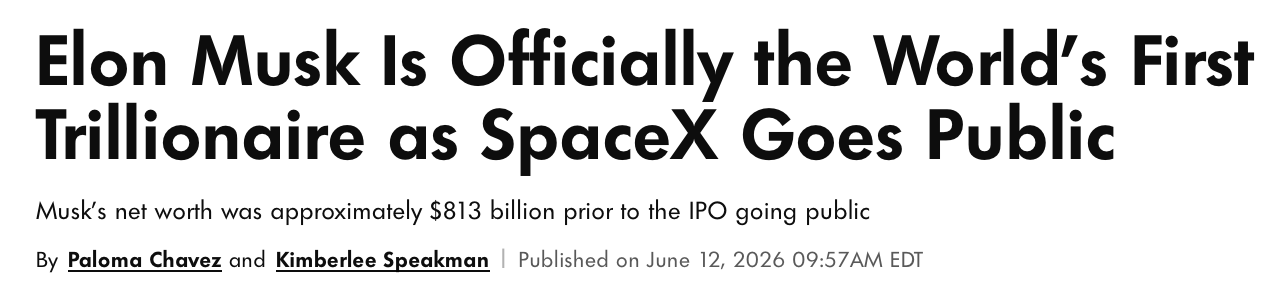
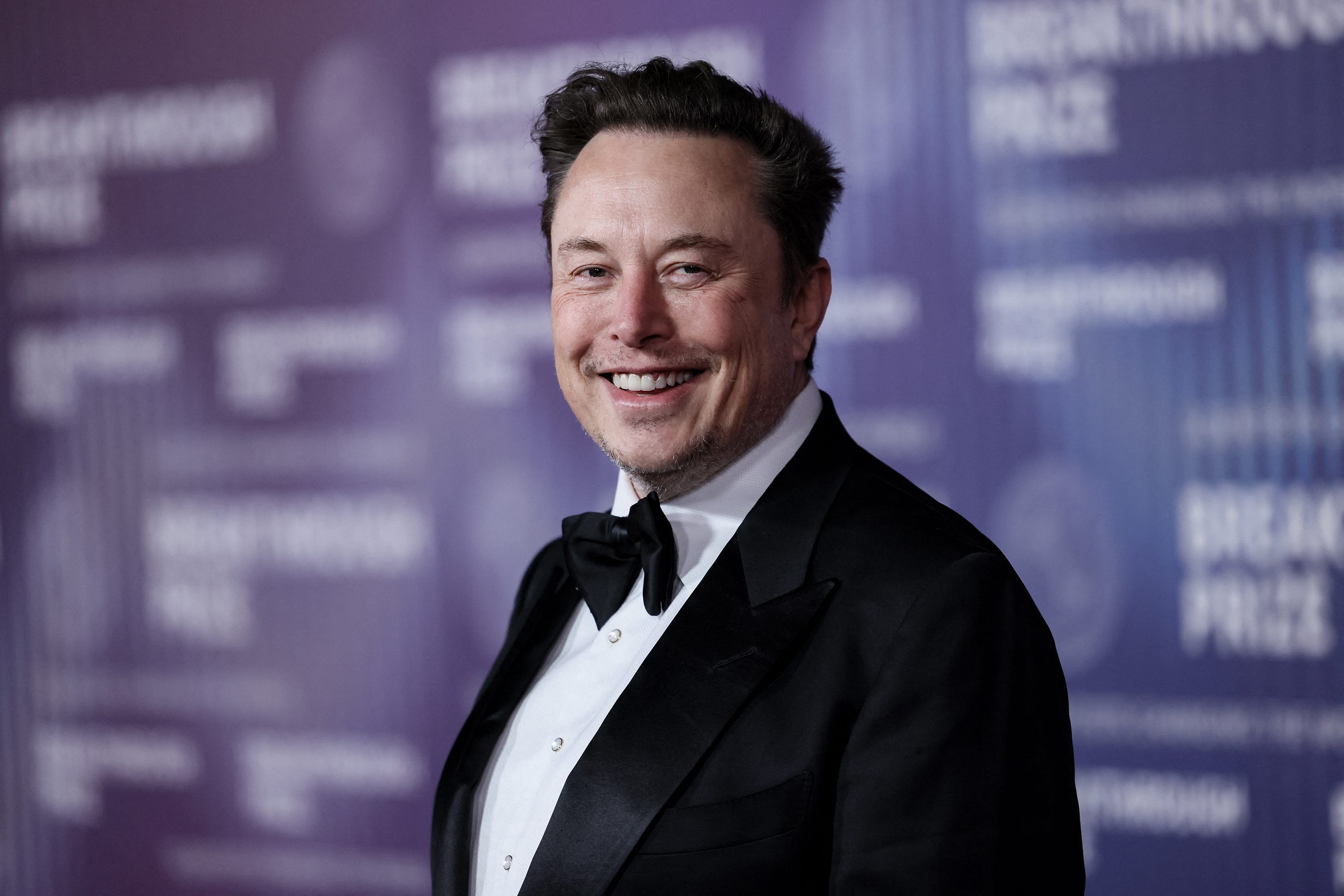
Right now, people are fascinated with Elon Musk’s net worth.
It’s certainly news-worthy - he’s the first trillionaire in history.
Today I want to put a trillion dollars into perspective and what it really means for Elon.
How much is a trillion dollars, really?
I don’t think people really understand what a trillion is.
We use it to describe company valuations, and now individual net worth and it just seems like a regular number.
It’s not.
Consider this:
One million seconds is about 11 and a half days
One billion seconds is 31.7 years
One trillion seconds is 31,709 years
How about this graphic?
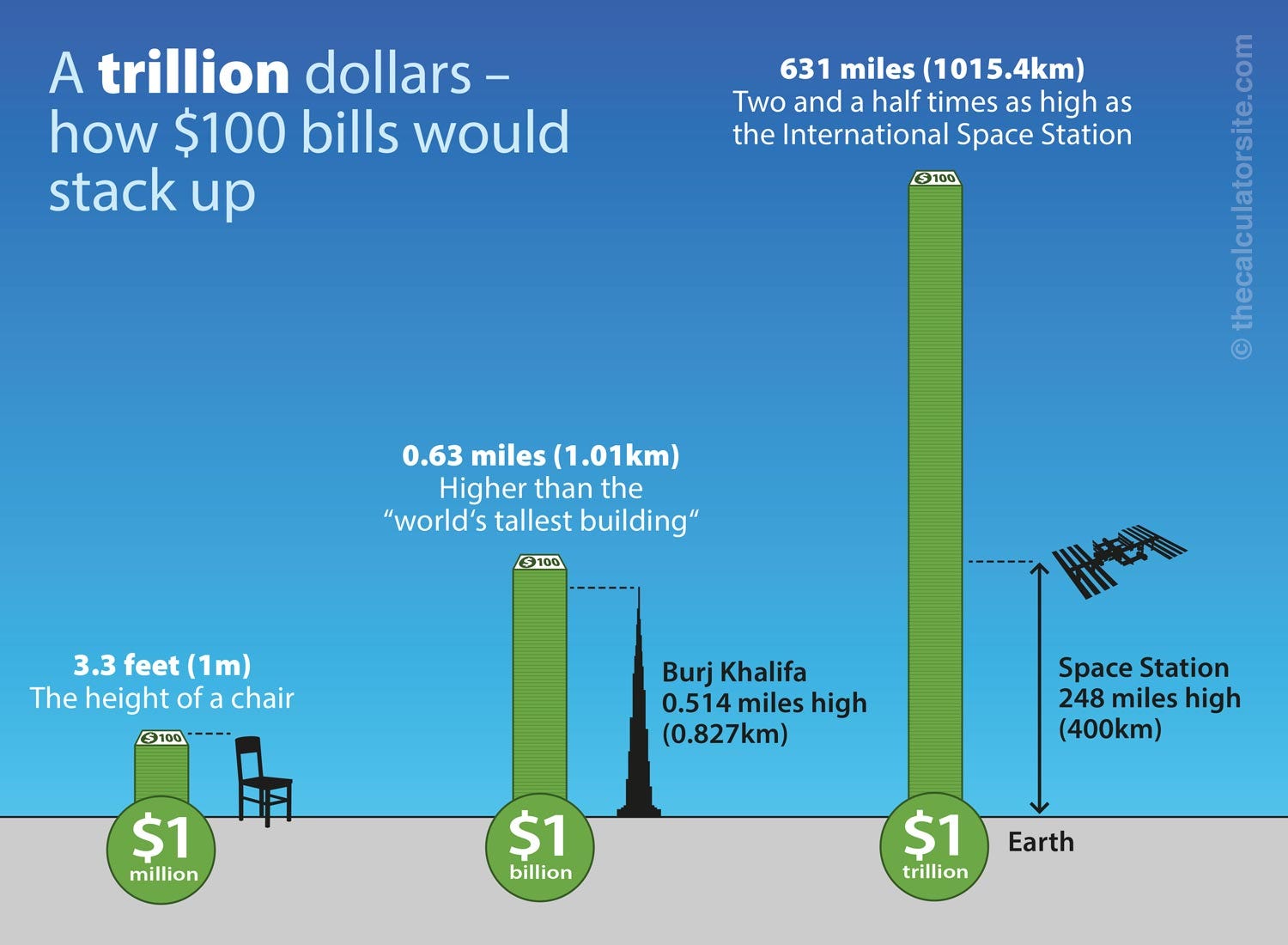
A trillion dollars isn’t just ‘a lot’.
It’s orders of magnitude bigger than millions and billions.
What’s wealth for?
Some people probably view wealth as a way to keep score of your success.
Some use it as an ego boost, to measure themselves against others.

But I like Charlie Munger’s description of what wealth is for.
He was asked in an interview if given the choice, he’d go back into the investment business.
Here’s what he said:
“Well, probably because it suits my nature. But I didn’t really enjoy the three and 30 business. Once I had enough money on my own, I’d rather just operate with my own money. That is a much better way of doing it than being forced to sell, being forced to deal with investment bankers, being forced to deal with investment consultants, being forced to deal with venture capital. To hell with them. Who wants it? You don’t need other people. The point of getting rich is so you don’t have to need other people, so you don’t have to get along with others.”
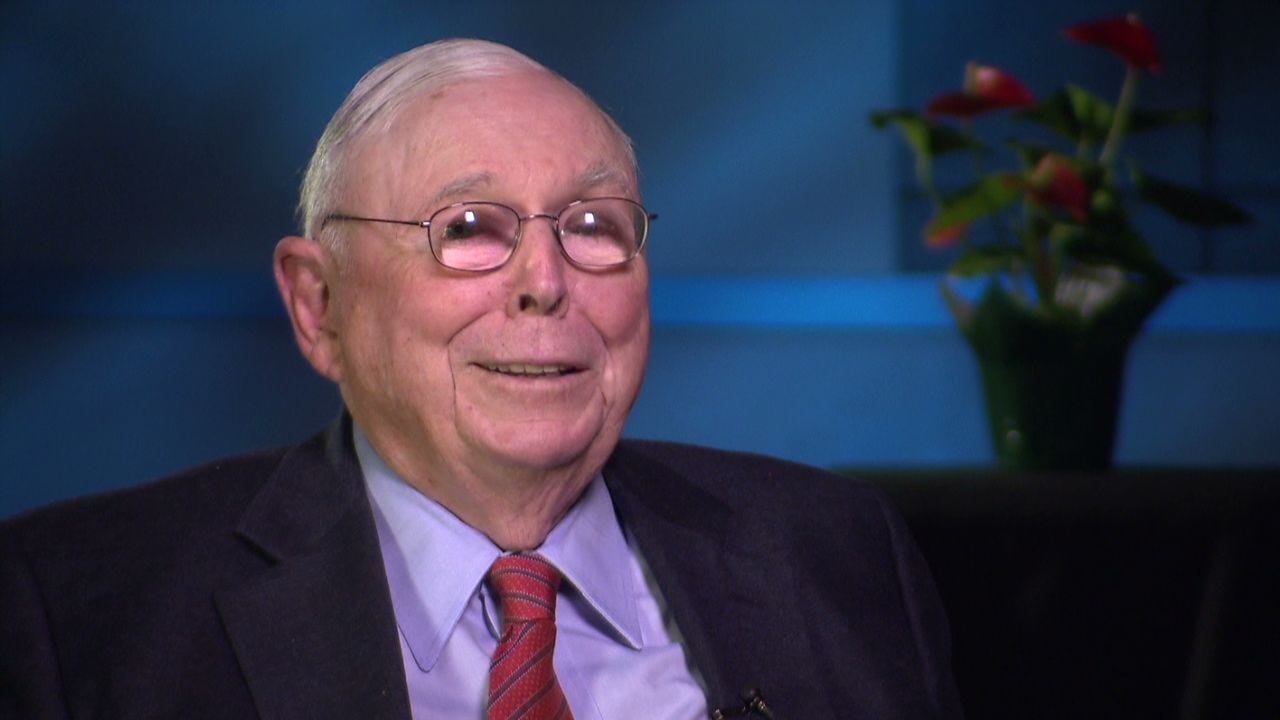
For Charlie, the point wasn’t to be rich.
The point was autonomy and freedom.
When you hear ‘trillionaire,’ you probably picture someone who has that.
A man who can do whatever he wants, whenever he wants.
Where is Elon Musk’s wealth?
Look at how Musk’s wealth is actually structured:
Tesla salary: $0
SpaceX salary: $0
Tesla dividends: $0
SpaceX dividends: $0
100% of his wealth is tied up in stock.
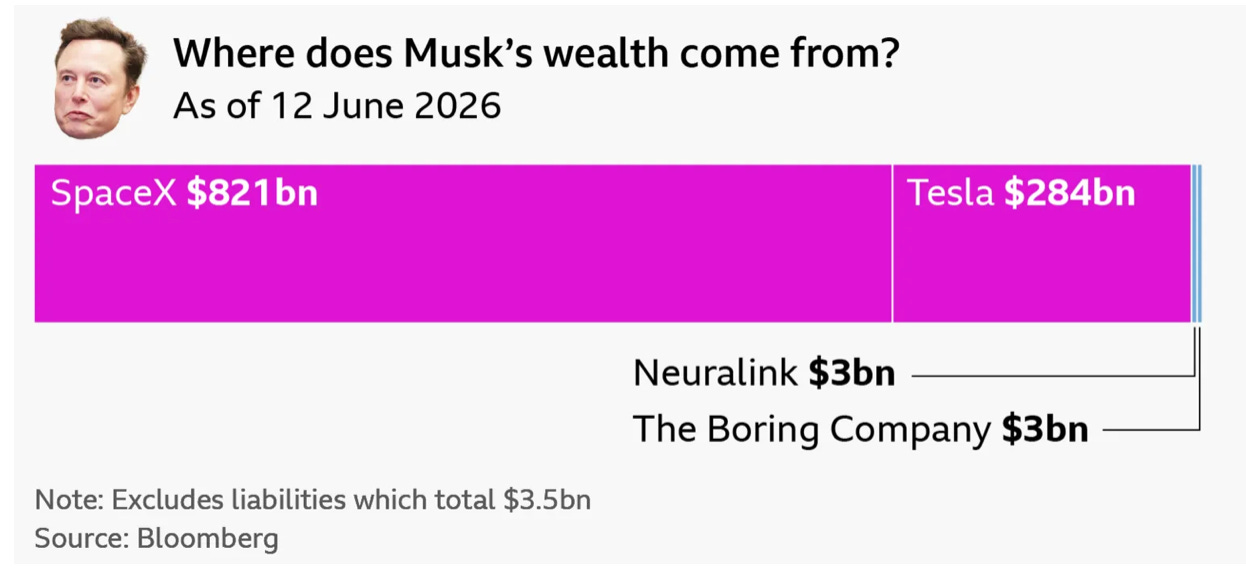
And most of it is now in SpaceX, which is currently trading at a massive valuation.
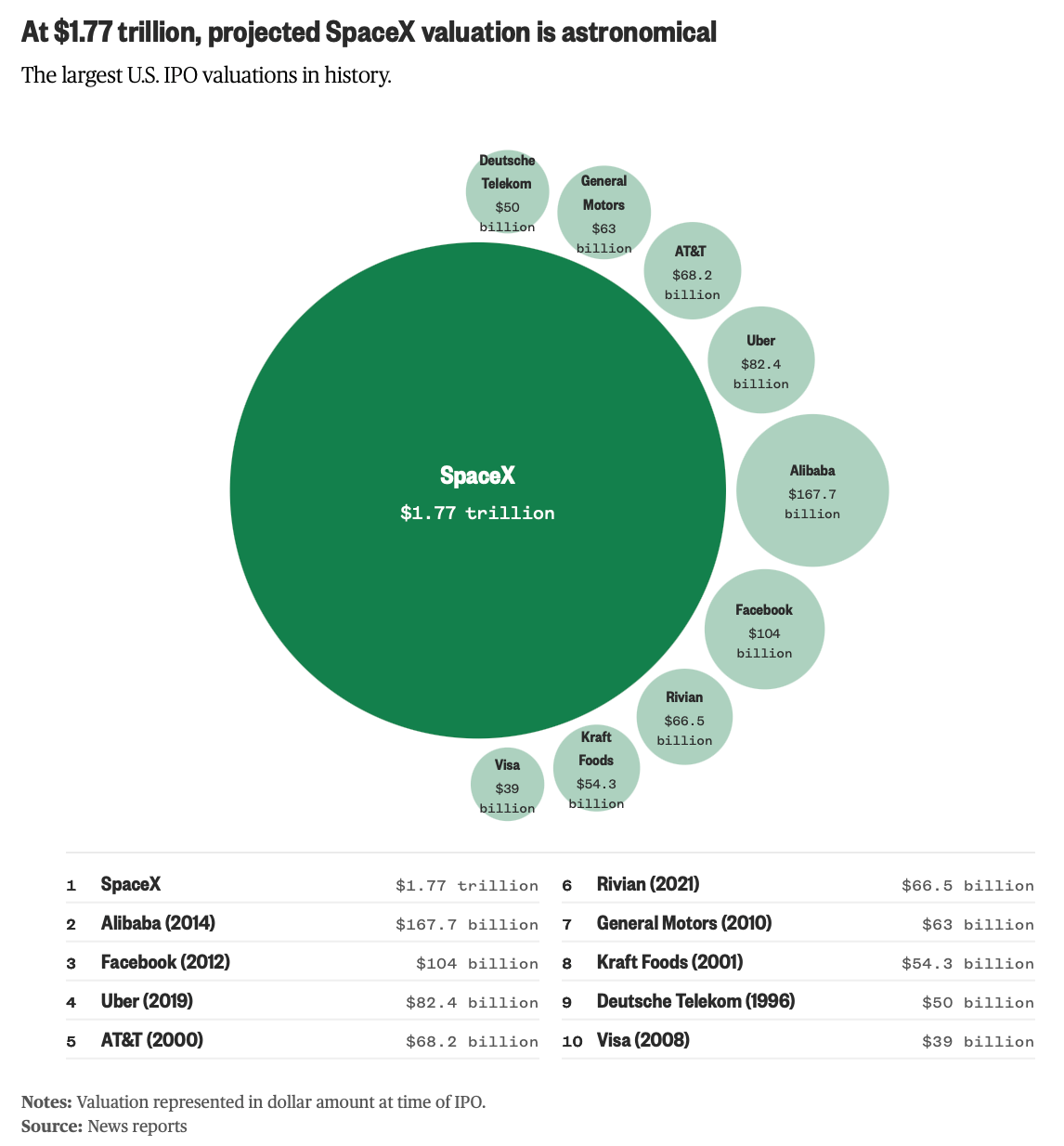
On paper, he is the richest man in the world.
In reality, he has a massive cash flow problem.
When Musk wanted to buy Twitter, he couldn’t just write a check.
He had two choices:
Sell his shares: This panics the market and crashes the stock price.
Borrow against his shares: This means taking on massive debt from banks.
He chose debt.
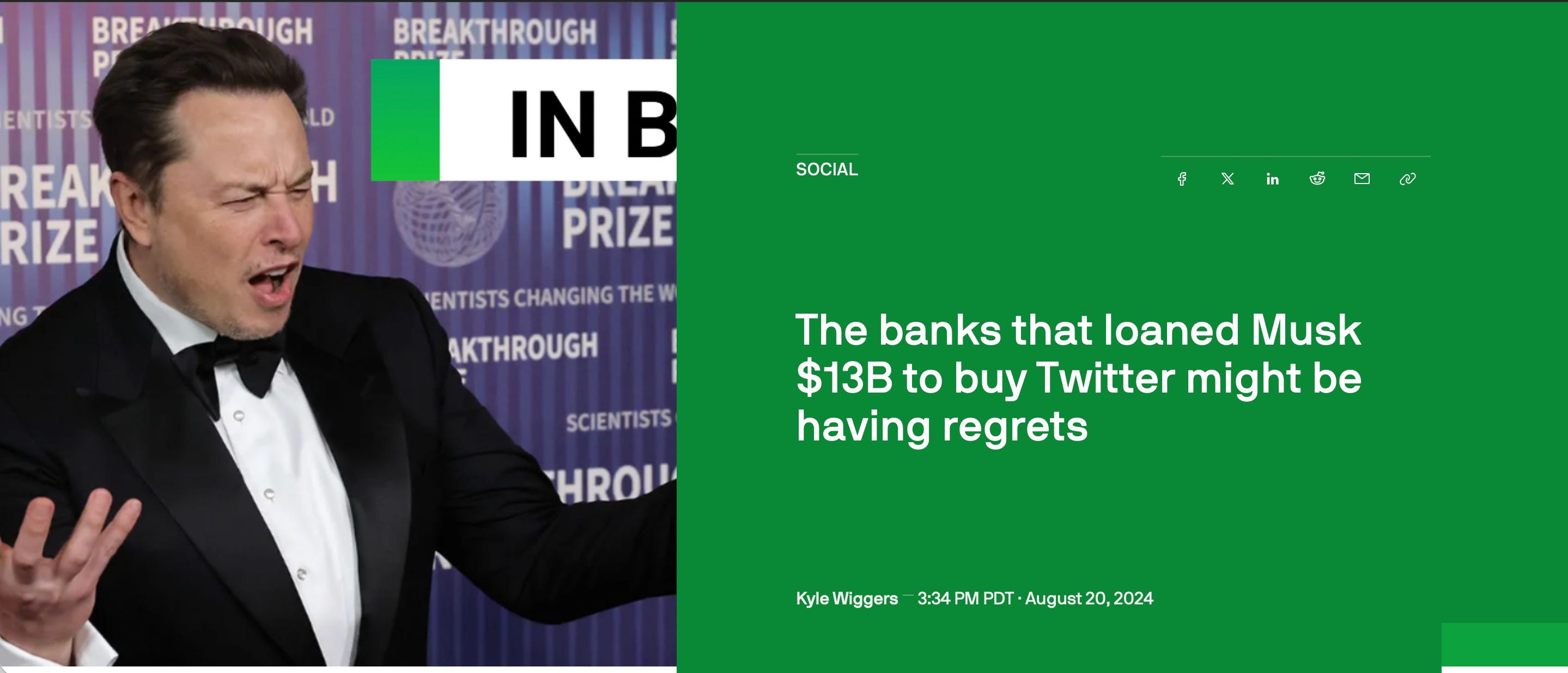
But when you borrow billions of dollars against a volatile stock, you aren’t free.
The banks hold the power.
If Tesla’s stock crashes, he gets a margin call, forcing him to sell shares at a low price.
And back to those SpaceX shares (which remember, are the majority of Elon’s wealth)...according to the registration statement, he and other top insiders are forbidden to
Sell
Lend them out
Borrow against them
...for 366 days after the IPO.
Should they count as part of his net worth until those restrictions are lifted?
Munger knew that net worth is just a scoreboard.
True wealth is independence, the ability to wake up and owe nothing to anyone - no banks, no lenders, no venture capitalists.
What if Elon was a dividend investor…
In 2004, Musk invested $6.5 million in Tesla.
What if he had invested that same $6.5 million into a high-quality dividend stock like Realty Income (O) instead?
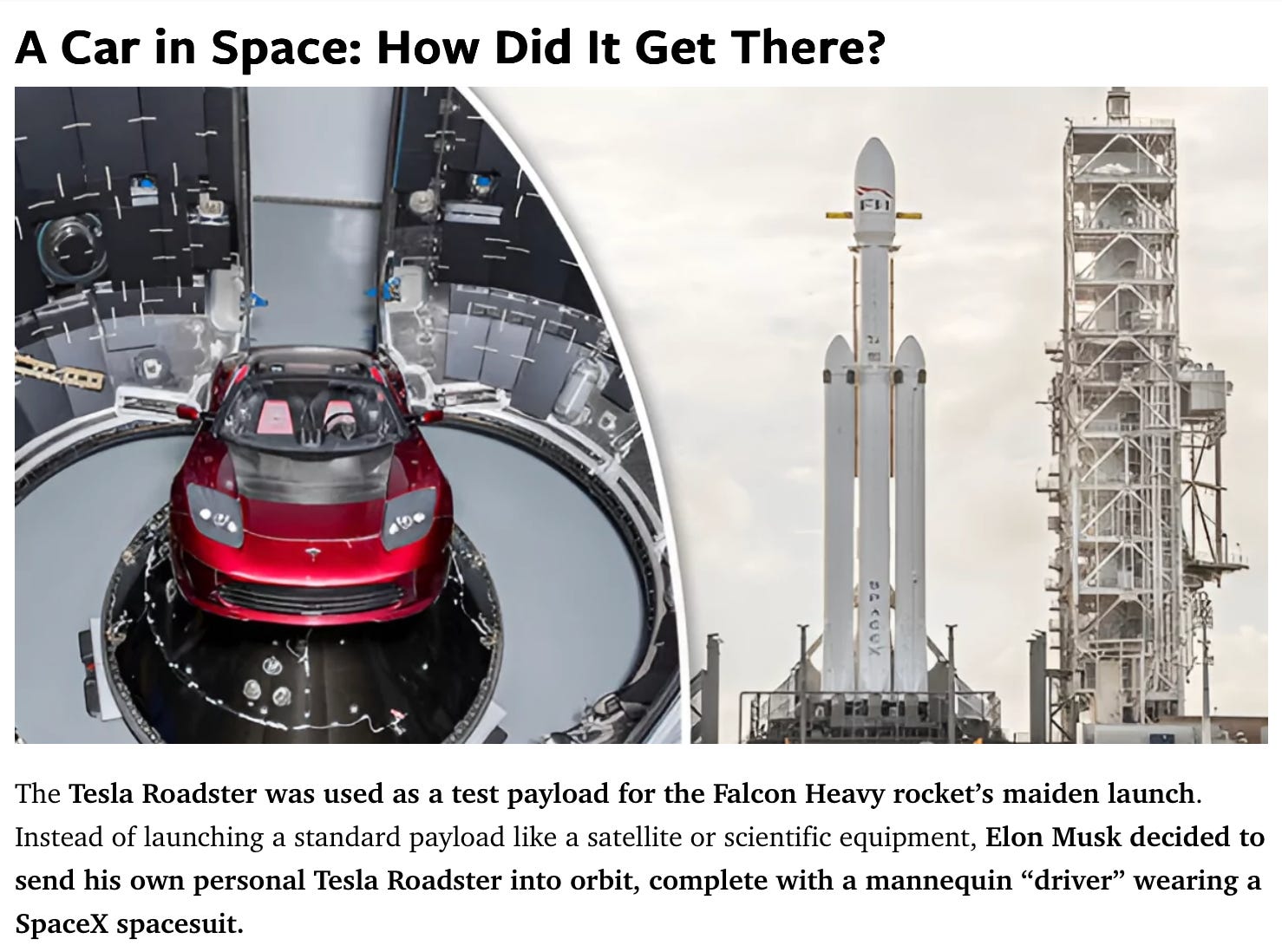
Yes, it would have been much less exciting than revolutionizing electric cars and shooting them into space…
But Realty Income has been raising its dividend for more than 30 years.
And it pays monthly.
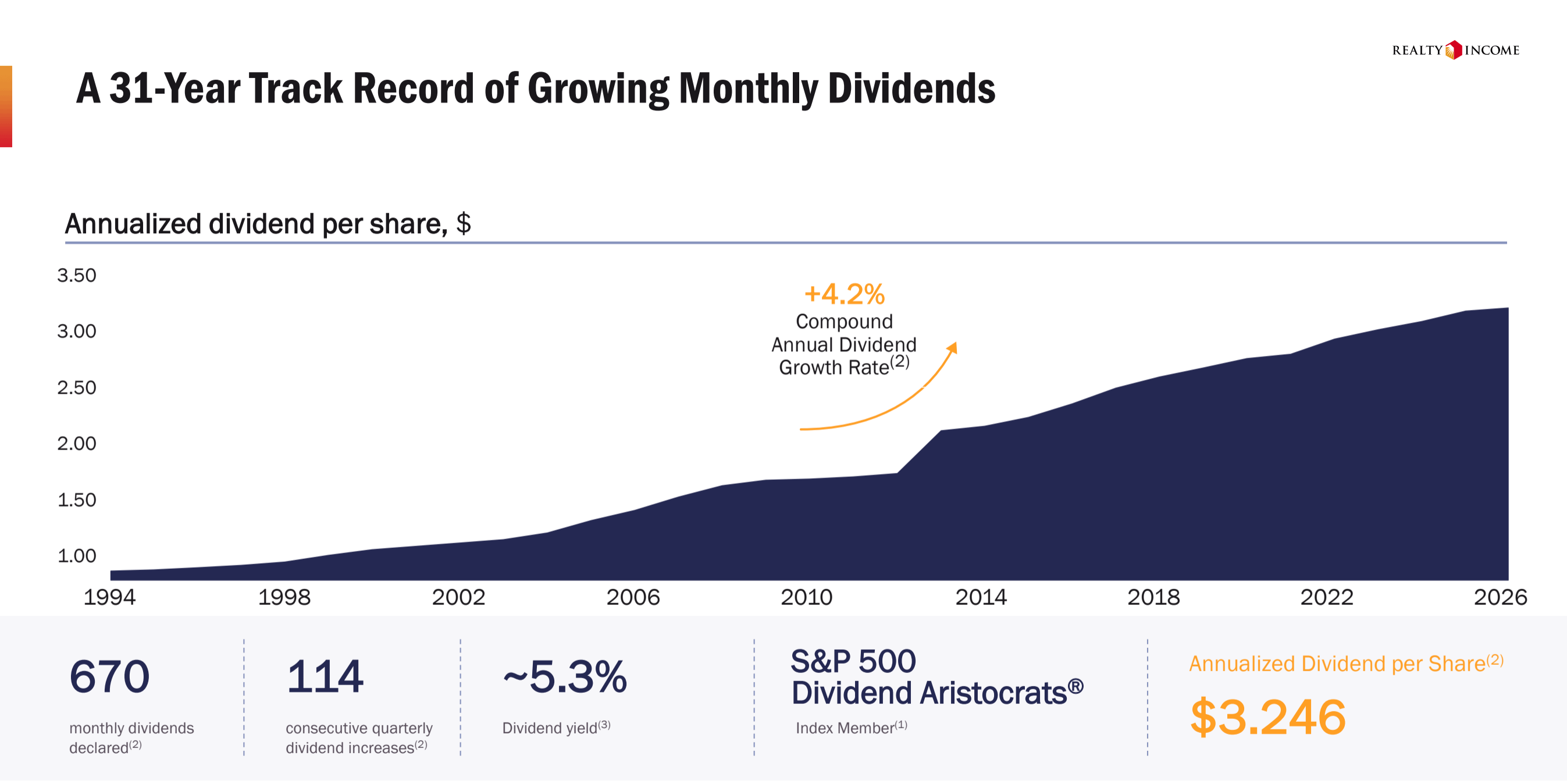
If he bought Realty Income and reinvested his dividends, here is what his life would look like today:
He would own 1.1 million shares.
He would receive $3.5 million in pure cash every single year.
He would do absolutely zero work to earn it.
Even if he spent the dividends instead of reinvesting them, he would still own 330,000 shares and collect over $1 million a year in passive income.
Conclusion
Paper wealth looks great in Forbes magazine.
But if you don’t have cash flow, it forces you to sell your assets, take on leverage and answer to bankers, or work every single day.
Net worth increases your ego
Cash flow increases your freedom
I know which one I’d rather have.
One more fun trillion-dollar fact:
It’s estimated that this article takes about 3 minutes to read. If I paid you $100 million dollars for every second you’ve spent reading this, I’d owe you $18 billion. That’s less than 2% of $1 trillion, which written out is $1,000,000,000,000.
One Dividend At A Time
-TJ
Used sources
Interactive Brokers: Portfolio data and executing all transactions
Fiscal.ai: Financial data
Disclaimer
As a reader of Compounding Dividends, you agree with our disclaimer. You can read the full disclaimer here.
My definition of "rich" has definitely changed as I get older. Health is at the top of my list of things for me to feel "rich".
Interesting