

Last week I wrote all about Terry Smith changing his strategy.
He thinks that the market has changed and become much more driven by momentum.
Netflix and PayPal might be good examples of this - let’s show you why.

Netflix
Netflix is down nearly 50% this year after reporting earning last week.
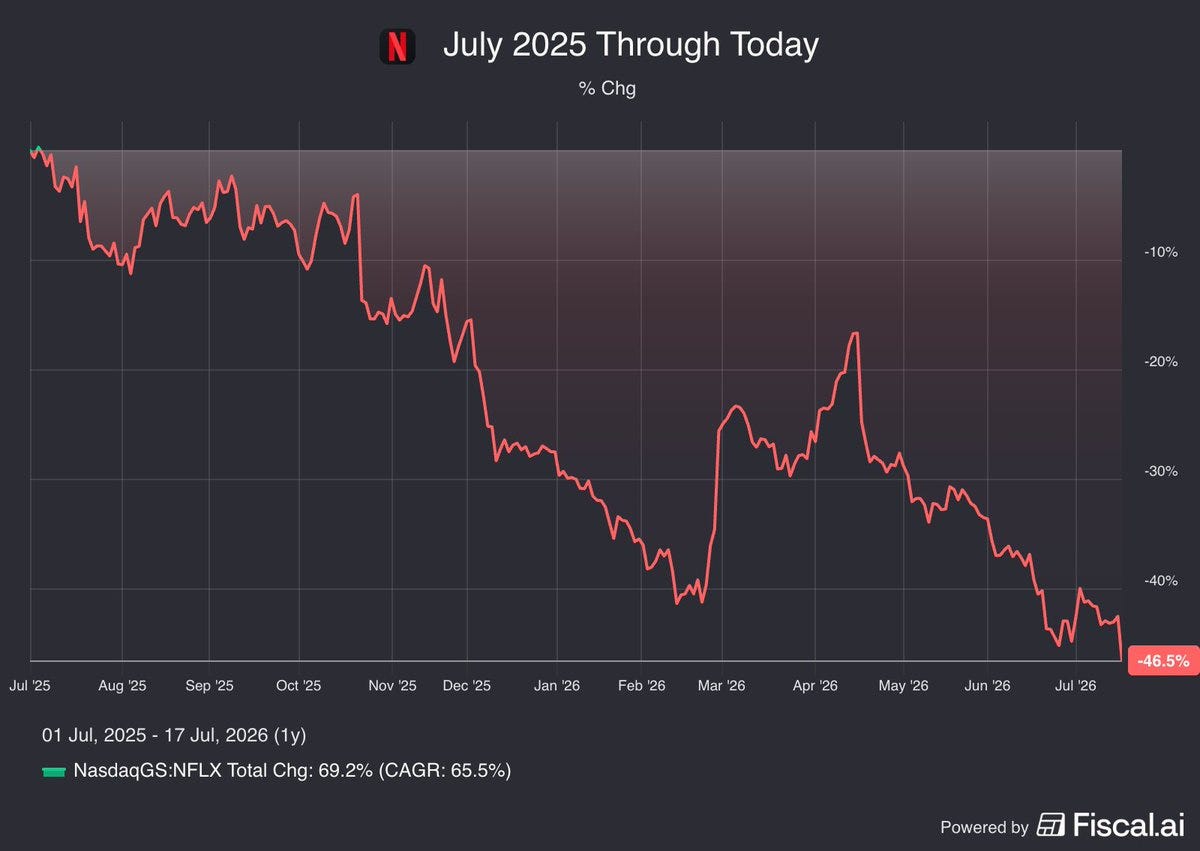
Based on the stock price, you’d think that something was seriously wrong with the business.
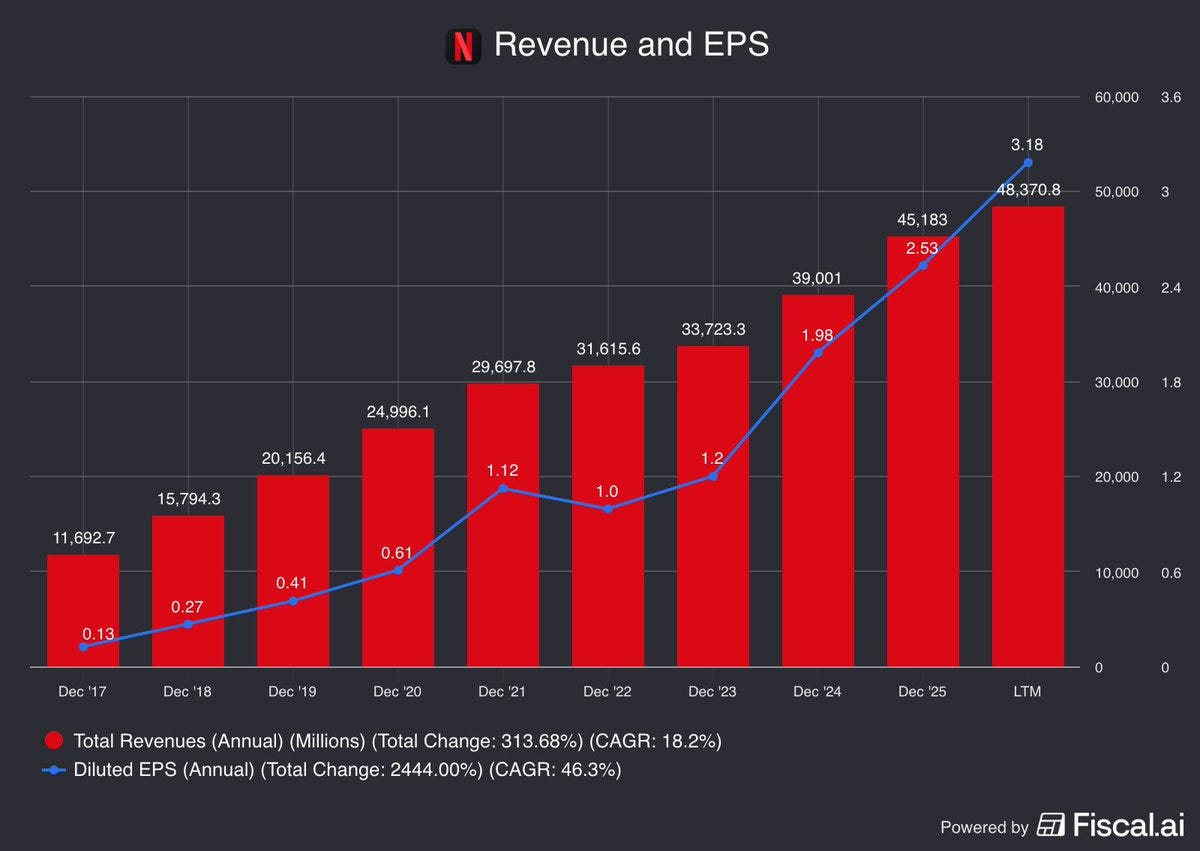
But since 2017, Netflix has been a consistent and impressive grower.
Revenue has grown 17% per year
EPS has grown 46% per year
But Netflix’s stock didn’t always go down.
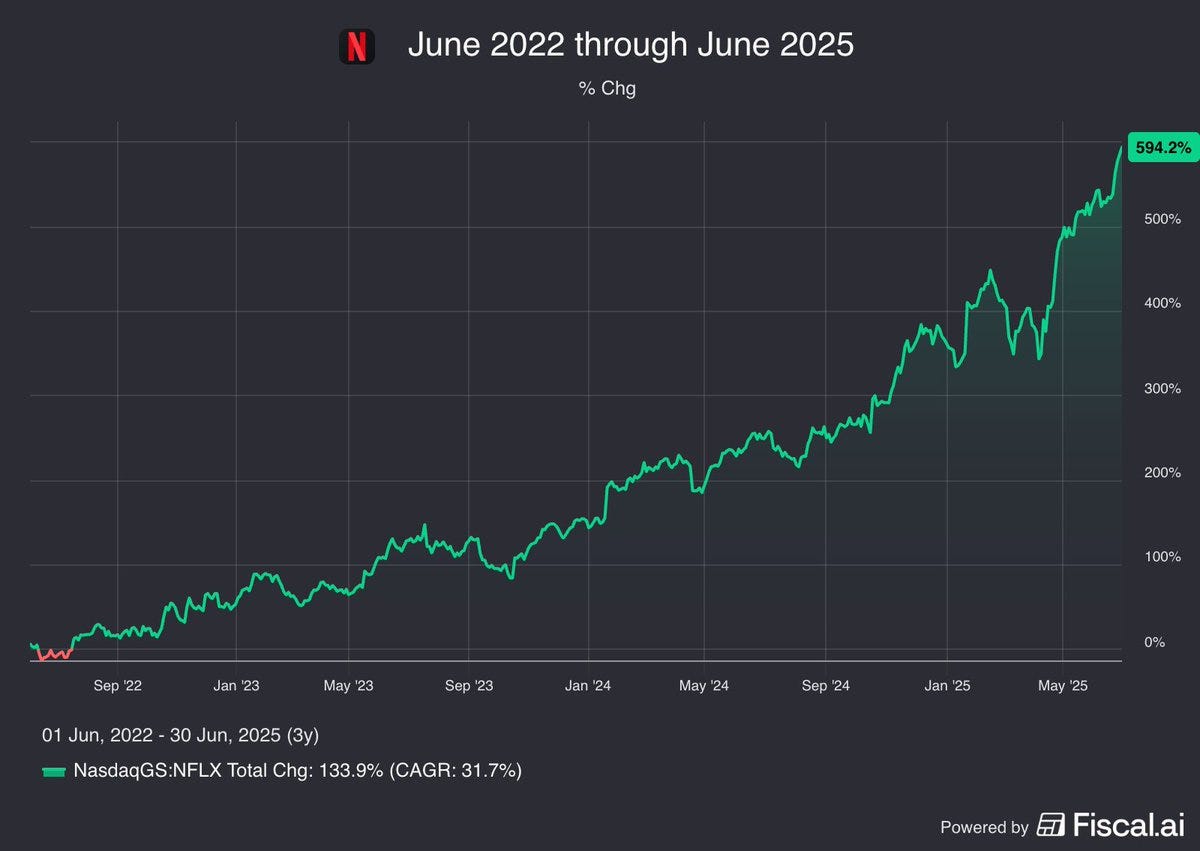
From June 2022 through June 2025, Netflix gained nearly 600%.
Remember the FAANG era?
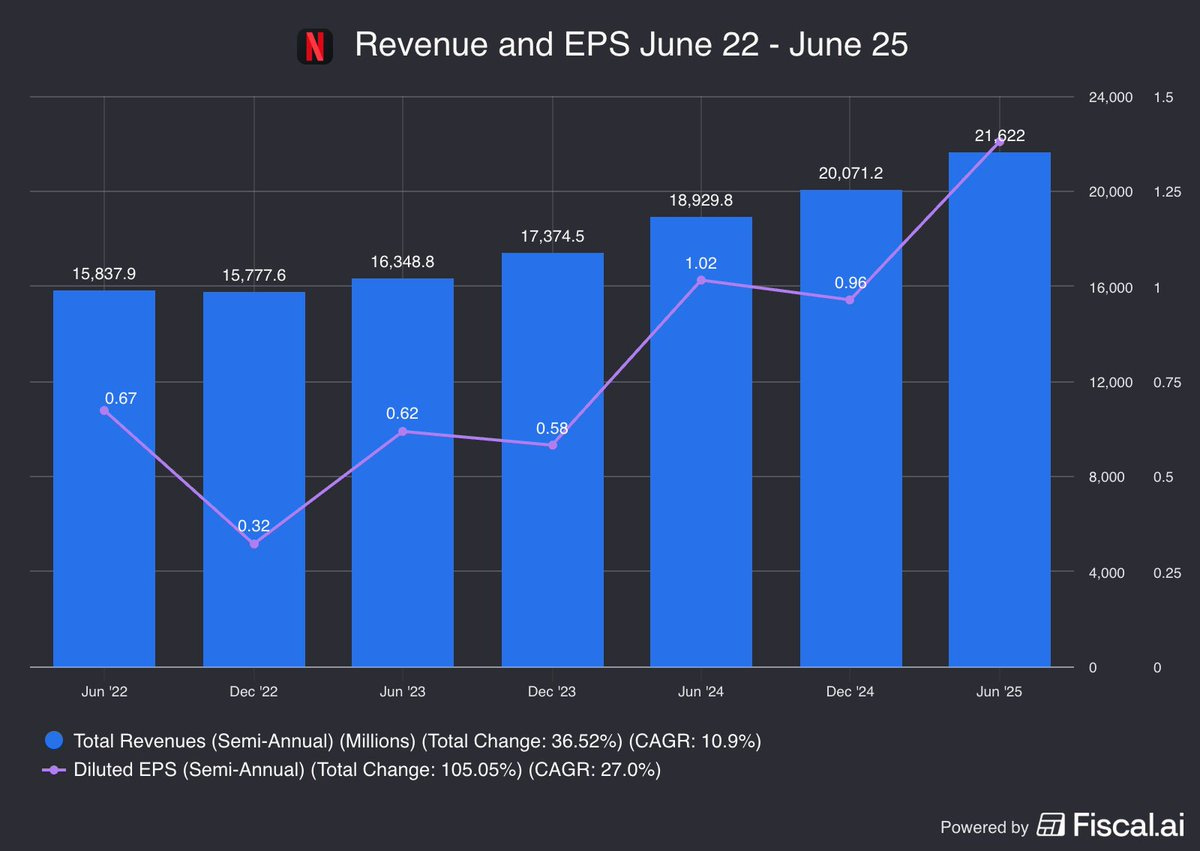
During that same period:
Revenue grew about 11% per year
EPS grew about 27% per year
Excellent results.
But nowhere close to explaining a 600% return.
What does?
Valuation.
Netflix's P/E expanded from roughly 15x earnings to 60x.
The business improved, but investors also became much more optimistic.
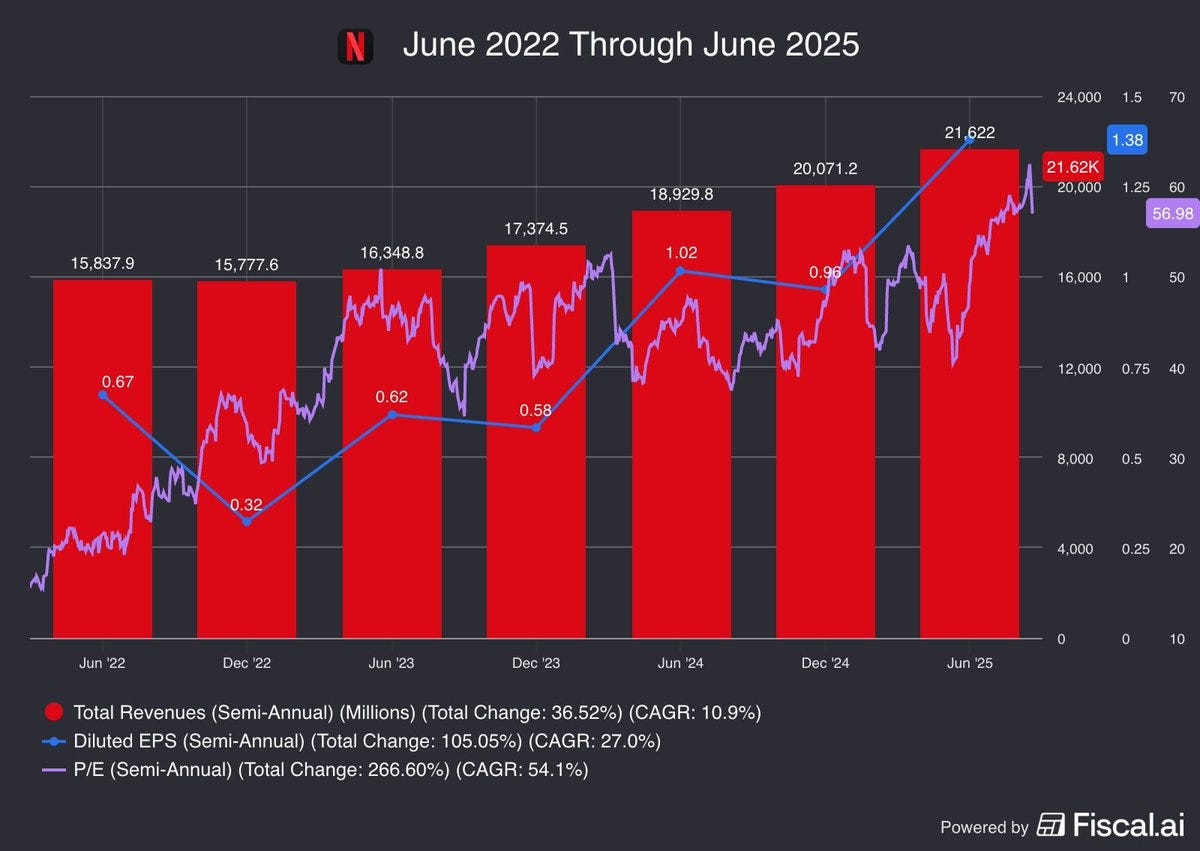
Remember, Netflix stock is down nearly 50% from this point.
That’s the market outcome.
Now let’s look at Netflix’s fundamentals.
They’re the business outcome.
Since June 2025:
Revenue has grown about +15% per year
EPS has grown about +47% per year
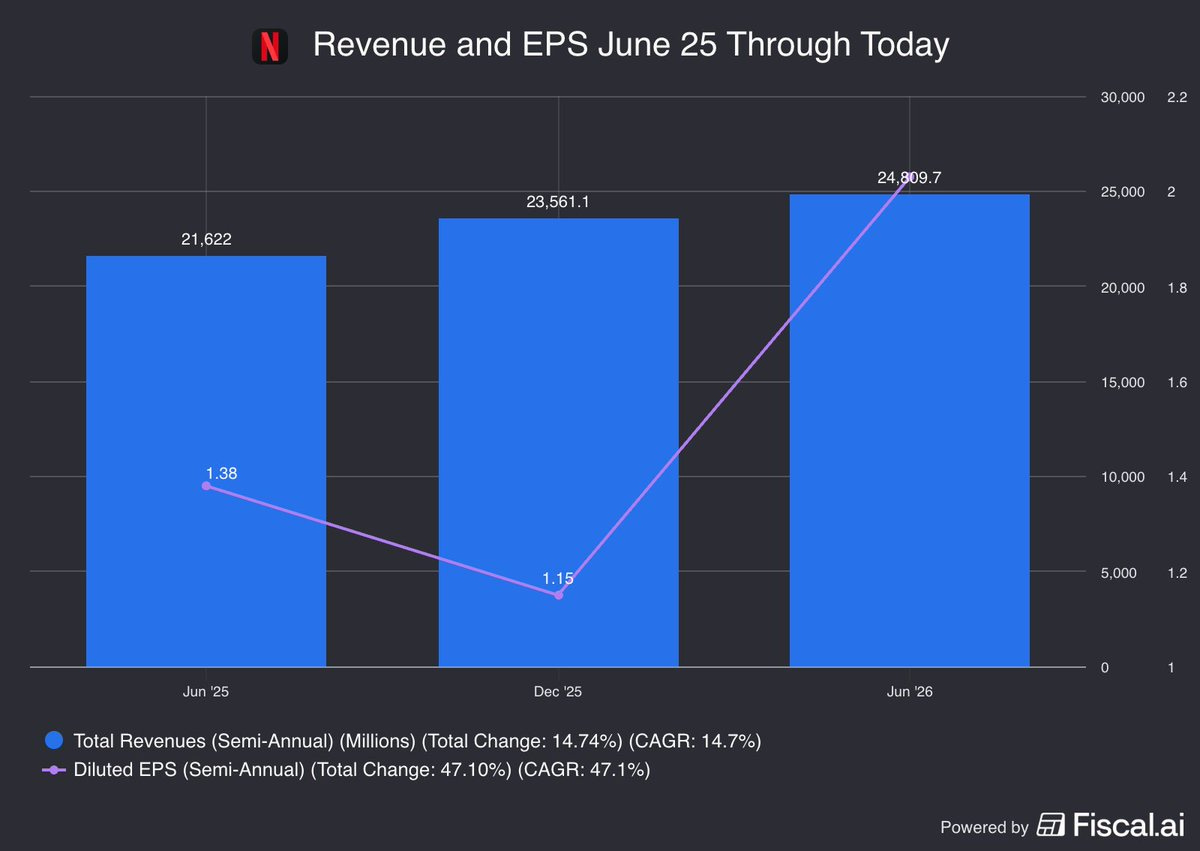
The business actually accelerated while the stock declined.
Why?
Because the P/E collapsed from 60x to roughly 22x.
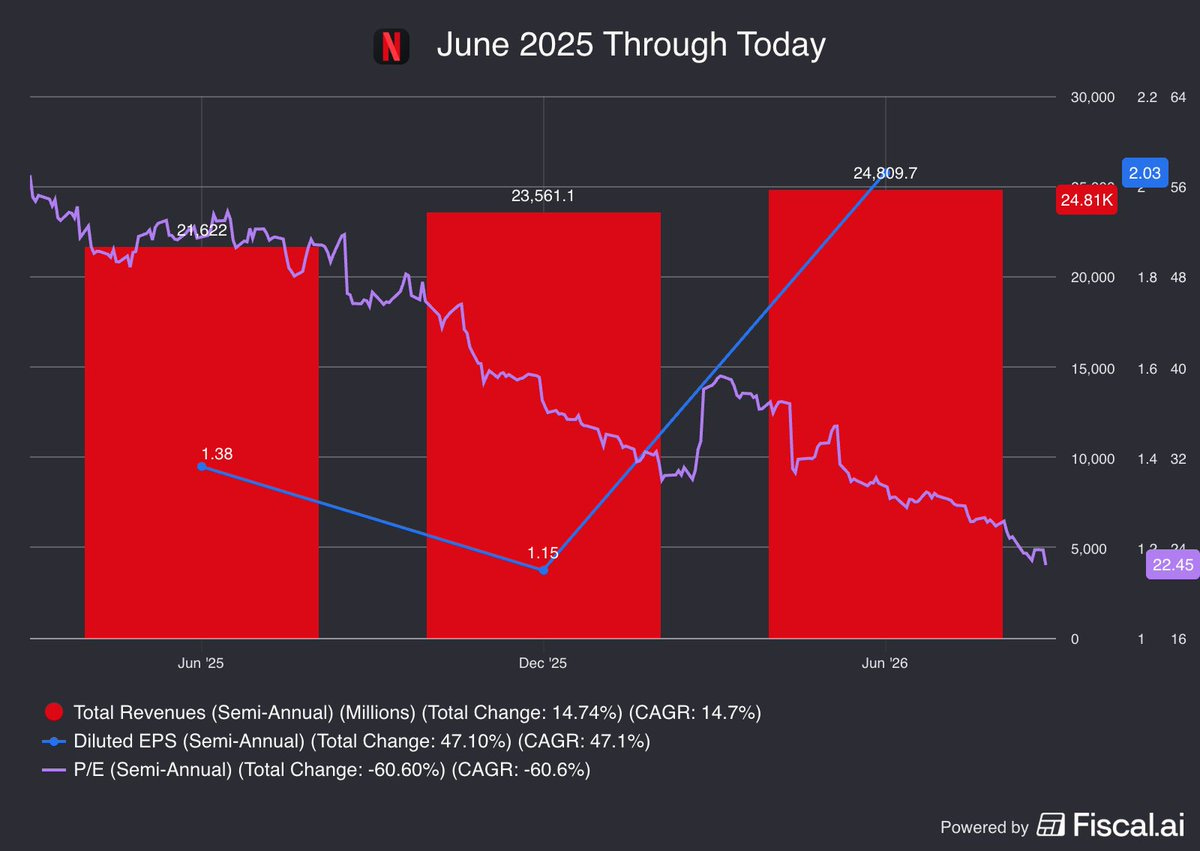
Same business, better fundamentals, completely different stock.
PayPal
PayPal is much the same story, played out over a longer period, with more dramatic swings.
PayPal the business has been pretty stable over time.
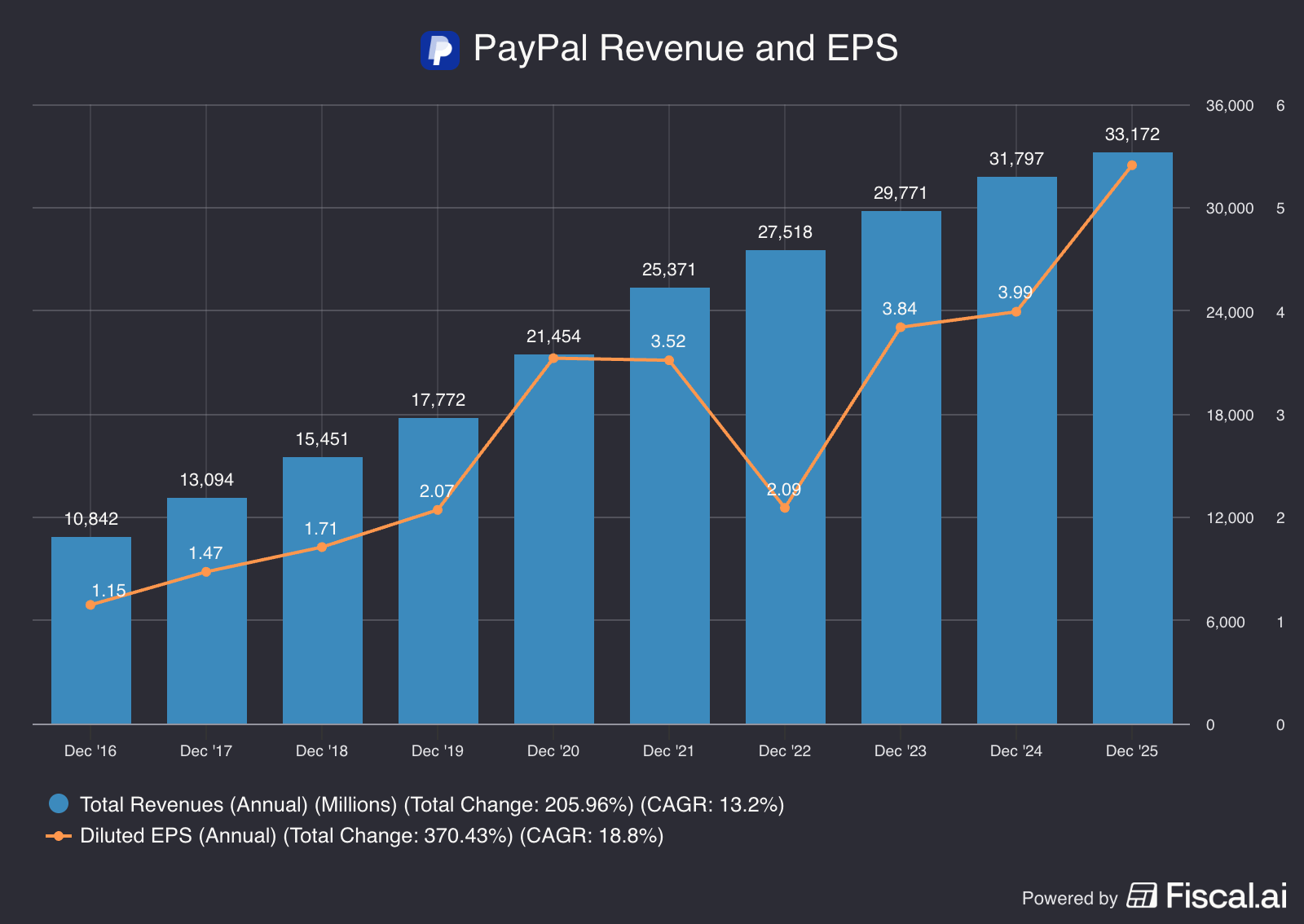
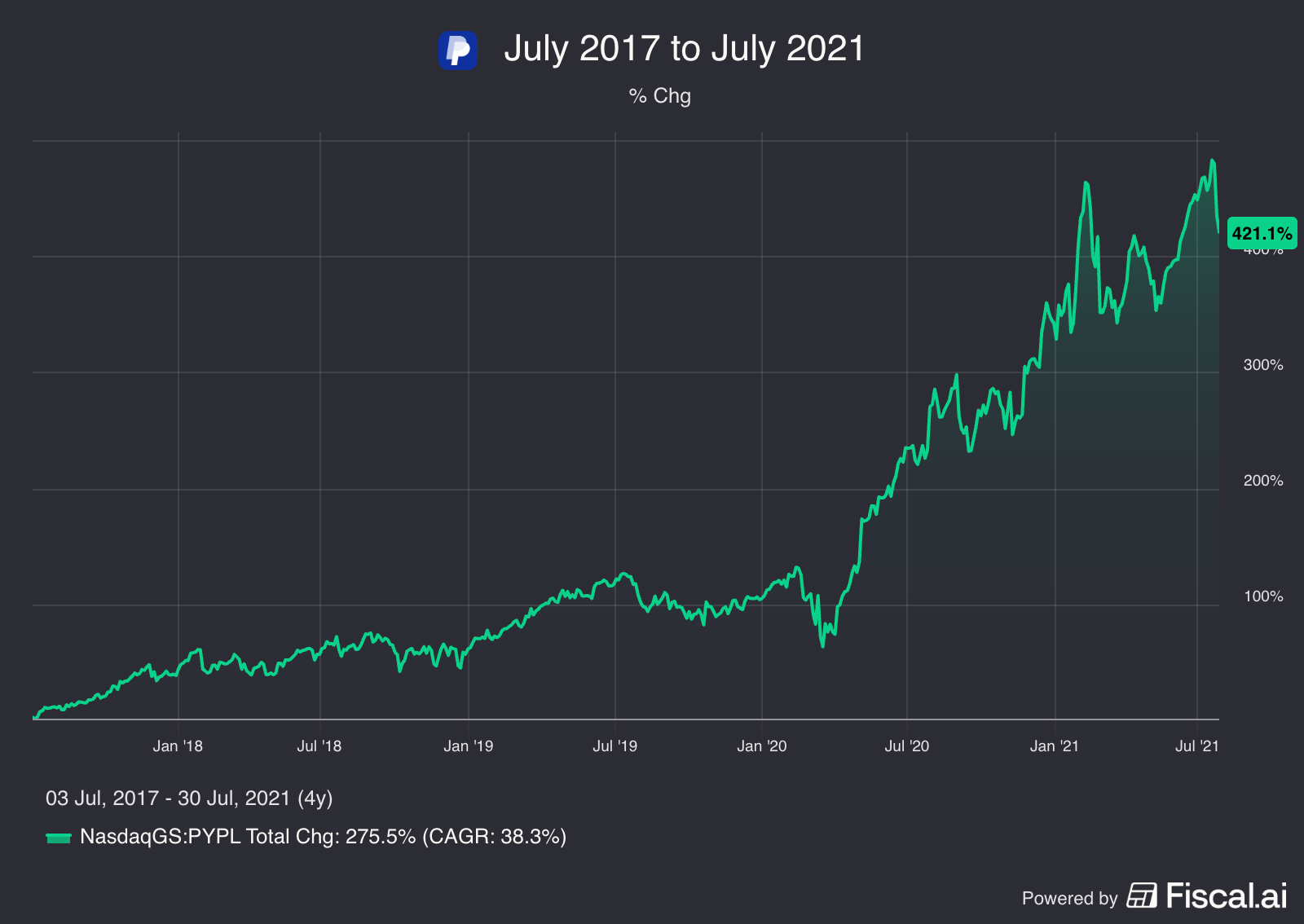
From 2017 to 2021, the stock went up more than 400%.
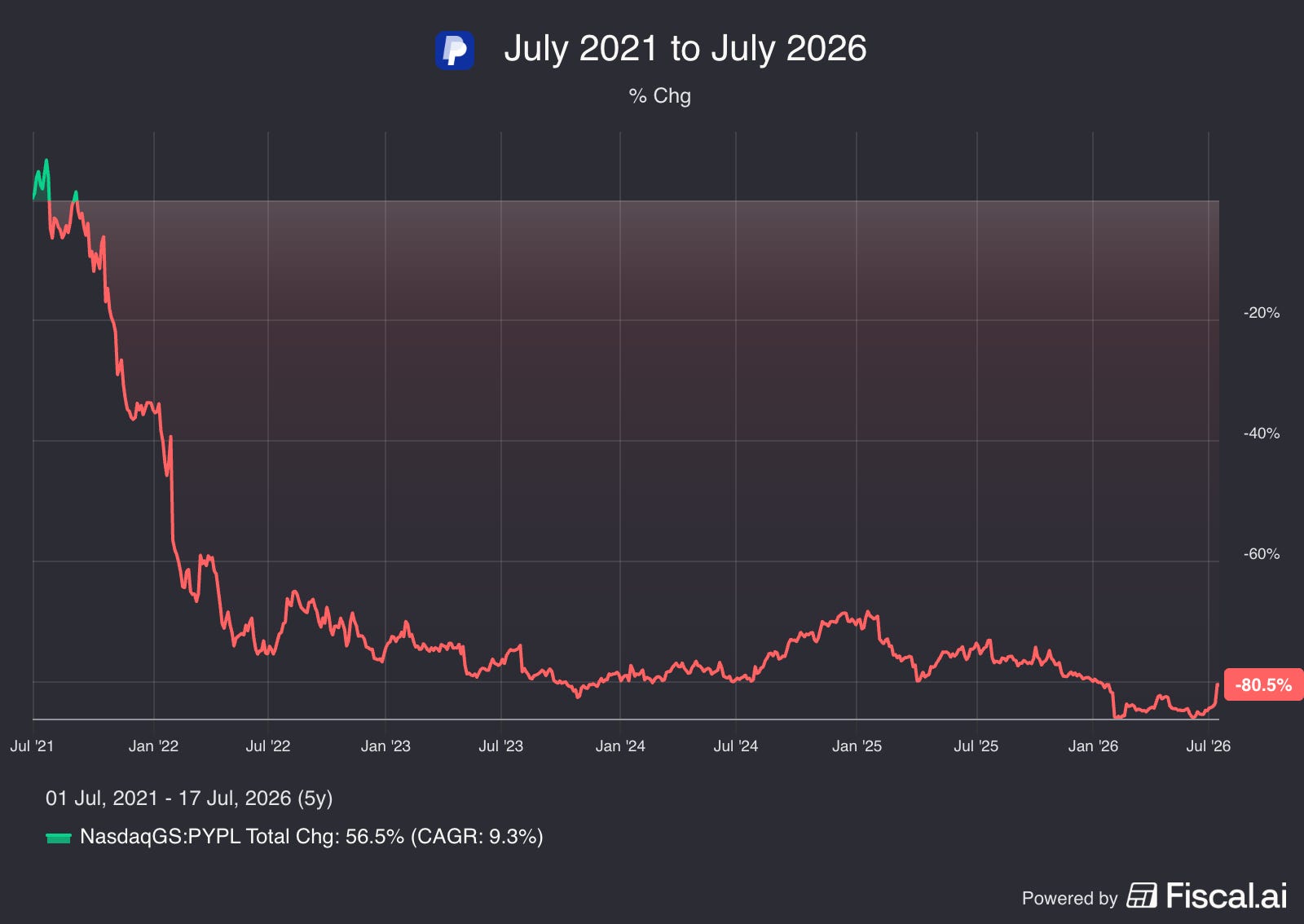
Since then, it’s down 80%.
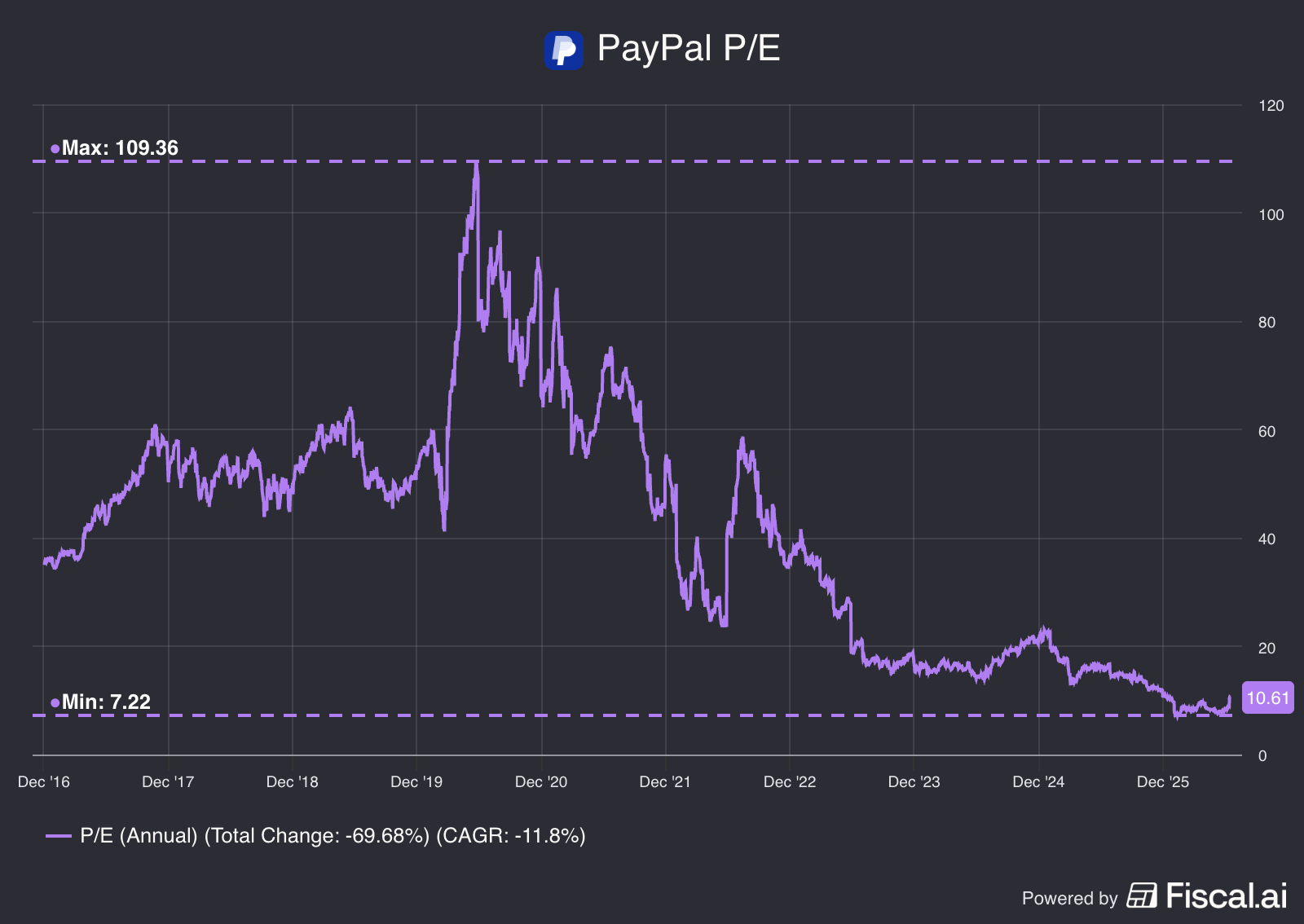
And it’s traded anywhere between 110x (!) earnings and 7x earnings.
Yes, PayPal’s growth has slowed in recent years.
We can argue about mistakes management has made, how much competition has increased, etc.
But it’s hard to argue is that PayPal was ever worth 109x earnings, or 7x earnings.
Both valuations seem far more driven by investor sentiment than by changes in the underlying business.
That's what momentum can do.
During one phase, investors become so optimistic that valuation seems irrelevant and stocks only go up.
Eventually, expectations become too high.
When sentiment shifts, valuation matters again, multiples contract, and momentum pushes stocks lower, even while the underlying businesses continue to perform well.
How Undervaluation Can be Resolved
If Smith is right, and momentum is a much stronger force in the market, then a few things are likely.
Prices will go much further above and below the intrinsic value of the business than in the past.
And will be able to stay that way for longer than in the past.
That means that a stock could stay undervalued for years.
But it doesn’t mean shareholders are stuck forever.
If the market refuses to recognize a company’s value, the company still has options:
Pay dividends. Instead of waiting for the stock price to rise, the company can return cash directly to shareholders. As the dividend grows, the stock often becomes too attractive for investors to ignore.
Repurchase shares. If management believes the stock is cheap, they can buy back shares. Every share they retire increases each remaining shareholder’s ownership of the business.
Get acquired. Another company or private equity firm may see the undervaluation and buy the entire business at a premium, giving shareholders an immediate gain.
Activist investors step in. An investor may buy a large stake and push management to make changes, like selling assets, spinning off a division, improving capital allocation, or even selling the entire company.
Keep growing. As the company continues to increase earnings and cash flow, the gap between price and value often becomes too large for the market to ignore.
The Buyout Offer
PayPal has been putting buybacks to serious work over the past few years because management thinks their stock is undervalued.
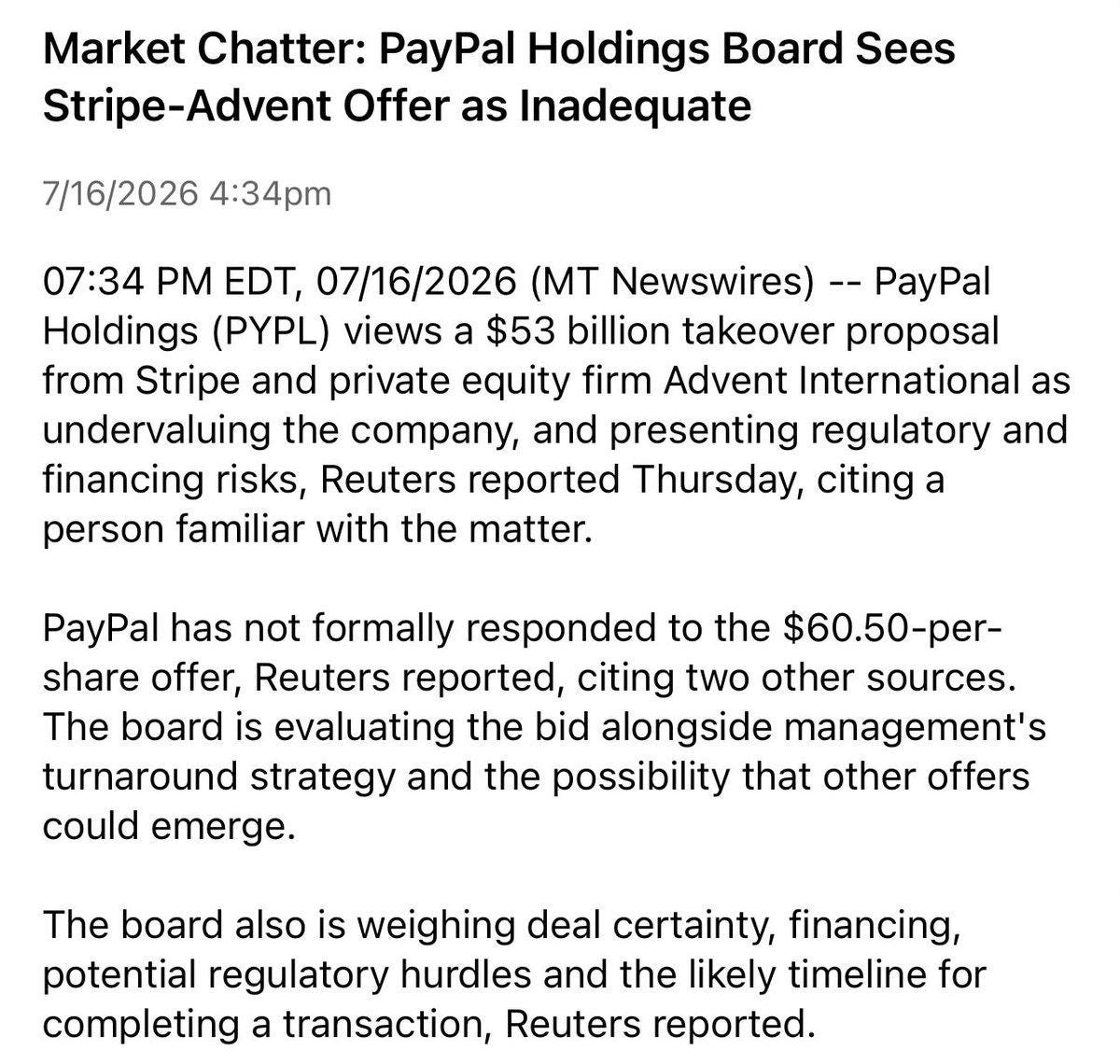
But last week, they reportedly got a buyout offer from Stripe, and Advent International.
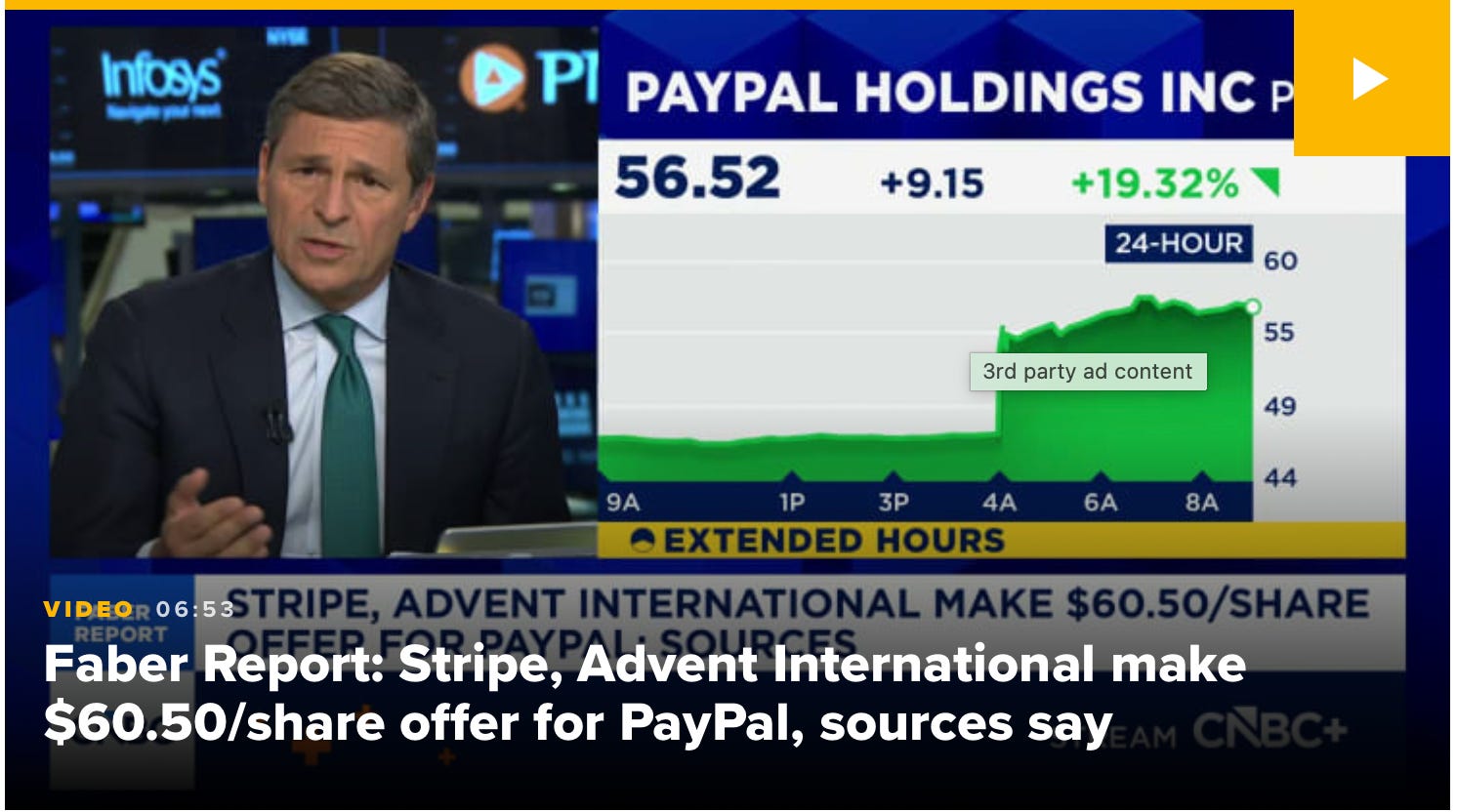
The offer is at $60.50 per share, valuing the company at $53 billion.
The initial reports are that PayPal’s board is likely to reject this offer due to:
Undervaluing the company
Regulatory uncertainty
Financing concerns
Confidence in PayPal’s long-term prospects
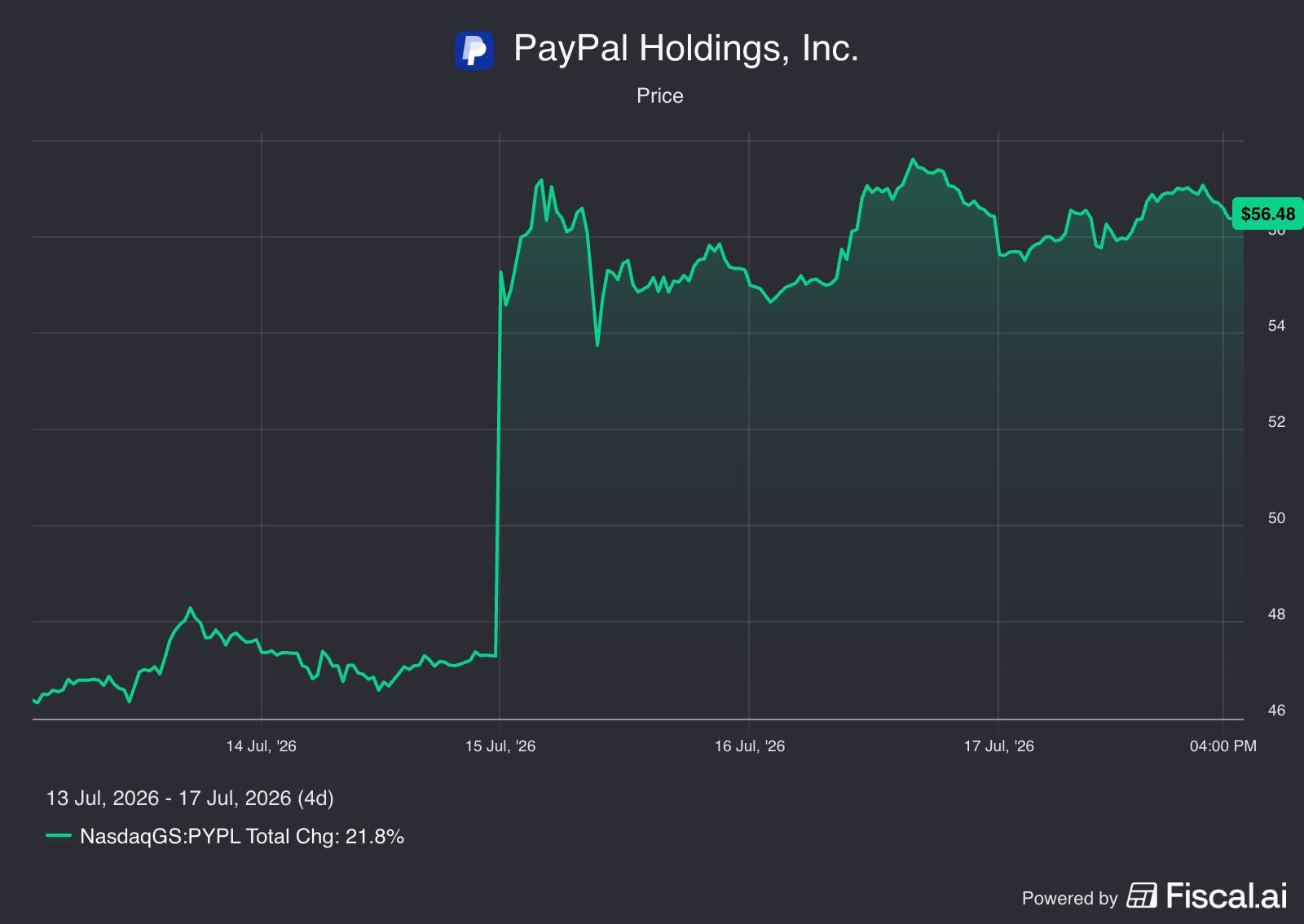
The market appears skeptical that a deal will happen at that price as well, with PayPal’s stock still trading roughly 10% below the offer when it closed last week.
So is the board right?
Instead of trying to figure out exactly what PayPal is worth, let’s ask an easier question: Does $60.50 make sense?
A Lazy Valuation
Estimating intrinsic value always involves assumptions.
Small changes in a discounted cash flow model will produce very different answers.
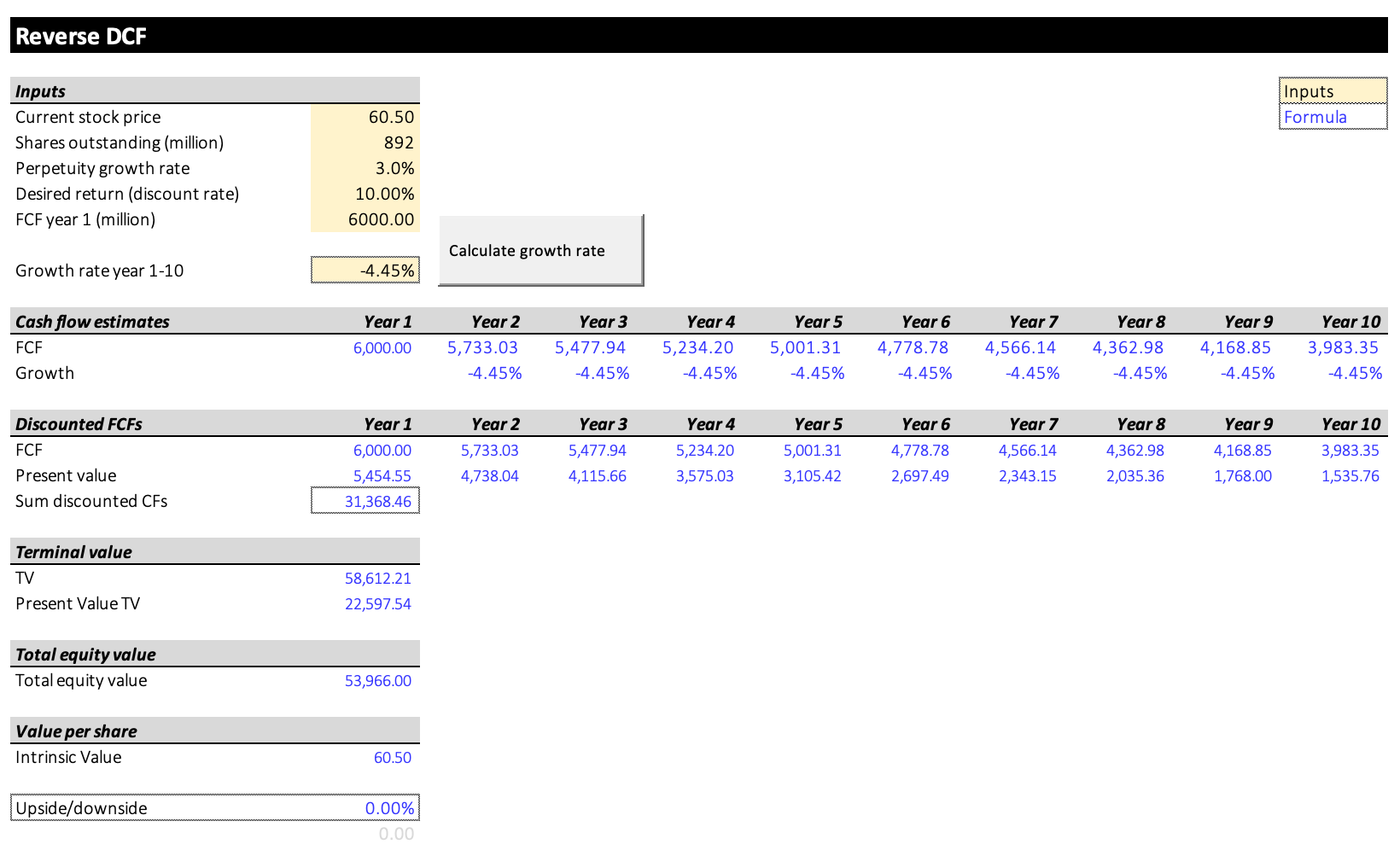
Instead of trying to predict the future, let’s see what Stripe’s offer assumes about PayPal’s future.
A reverse DCF using a 10% return suggests that $60.50 a share assumes that PayPal’s Free Cash Flow will decline by about 5% per year.
Here’s an even simpler way to think about it.
A business with no expected growth often trades around 10x free cash flow.
PayPal currently generates roughly $6 billion of annual free cash flow, and analysts project that to continue.
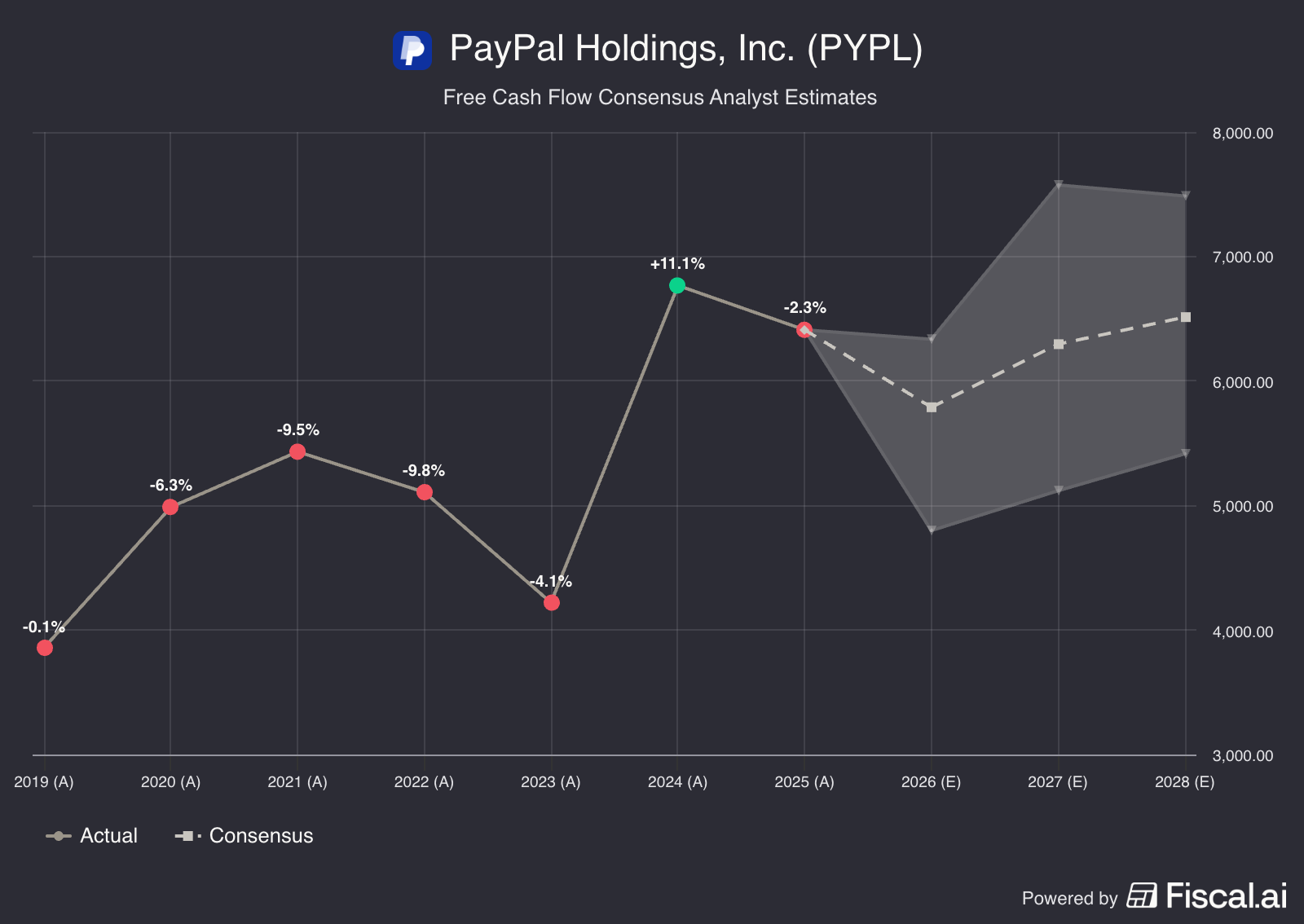
Put a 10x multiple on that, and you get a value of about $60 billion, or around $70 per share.
If $70 represents a reasonable value for a business that never grows again, then a $60.50 offer already looks difficult to justify.
Growth and Buybacks
Of course, PayPal isn’t standing still.
Management still has multiple ways to grow the business:
Further monetizing Venmo
Expanding Fastlane
Growing the advertising platform
Continued BNPL growth
How it ends up remains to be seen, but zero growth is far from the only possible outcome.
There’s also another important source of shareholder returns: buybacks.
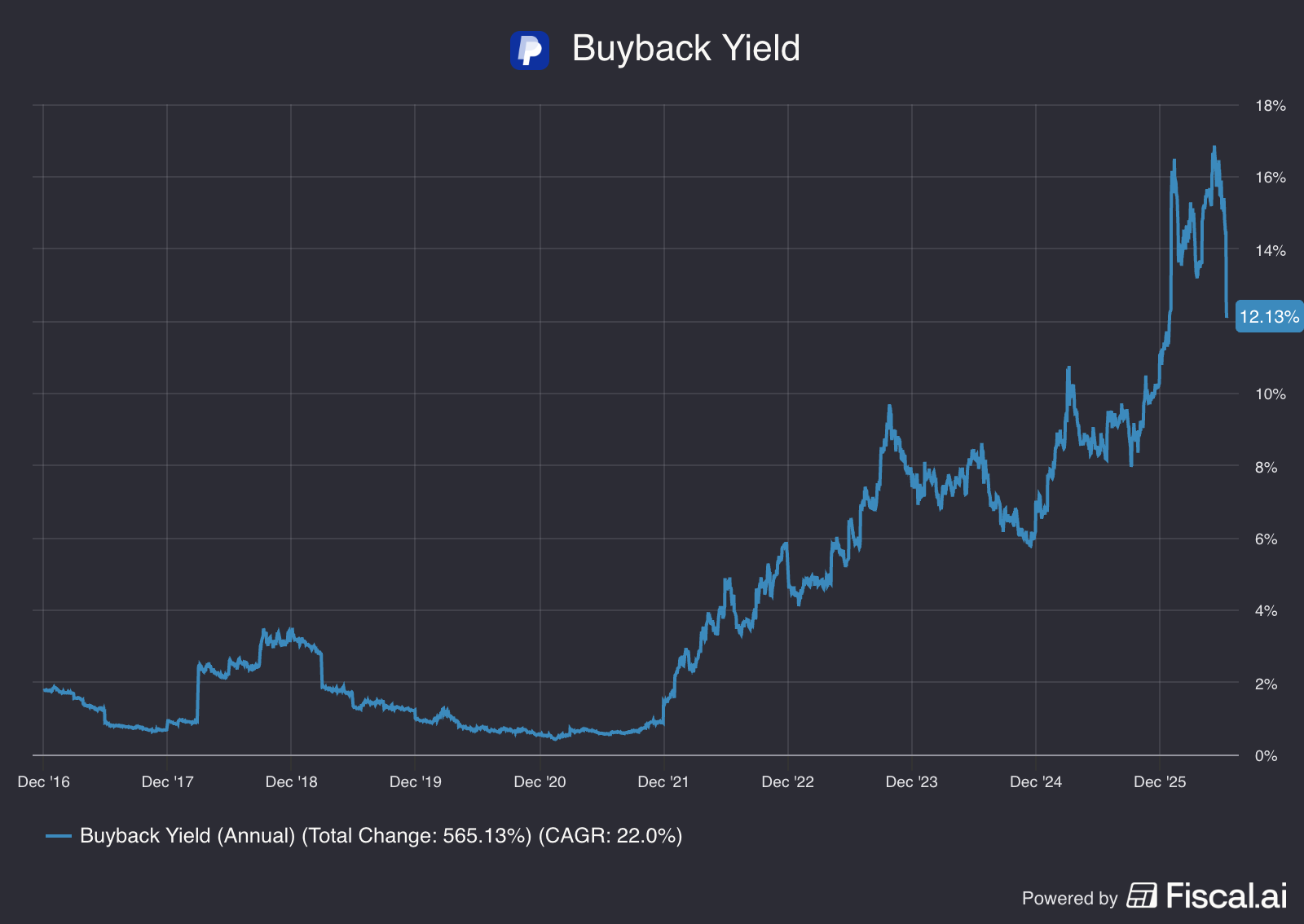
With a market capitalization of roughly $50 billion and around $6 billion in annual free cash flow, PayPal is currently at a buyback yield of 12%.
Show Me The Incentives and I’ll Show You The Outcome
When new CEO Enrique Lores was hired, much of his long-term compensation was tied to higher share prices in 3 to 5 years.

This bonus is worth up to $62,500,000 if he hits the top target.
The lowest target is probably somewhere around $70/share based on Lores’ start date and the lowest PayPal traded in that time period.
None of this proves PayPal is worth exactly $70, $100, or $125 per share.
Valuation is never that precise.
But it’s difficult to build a reasonable case that a business generating roughly $6 billion in annual free cash flow, with continued buybacks and multiple avenues for future growth is only worth $60.50 per share.
So What Happens Next?
It’s hard to say, but I think PayPal accepting this offer is unlikely.
Here are some of the possibilities:
A Formal “No”: PayPal’s board has signaled the $60.50 offer is too low, so an official rejection is expected. This will force Stripe and Advent to either walk away or come back with a higher bid.
A Bidding War: We saw this happen recently when Netflix and Paramount started competing for Warner Brothers Discovery. A second bidder could appear, driving up the price.
Upcoming Earnings: PayPal reports earnings on July 28. If the numbers show the business is improving, the board has the leverage to demand a higher price. If the numbers are weak, frustrated shareholders might pressure the board to just take the cash.
Conclusion
Here’s what you should remember from today’s article.
Prices Move on Emotion, Businesses Run on Cash: Momentum can separate a stock price from the fundamentals for years. Both Netflix and PayPal prove that a company’s underlying business can grow steadily while Mr. Market sends the stock price much higher or lower
Stripe’s Offer Prices a Declining Business: At $60.50, Stripe’s buyout bid assumes PayPal’s free cash flow will shrink by 5% every year.
The Floor is around $70: Even if PayPal never grows again, putting a basic 10x multiple on its $6 billion in free cash flow makes the business worth $70 a share
High Buyback Yield: PayPal’s 12% buyback yield puts a floor under the stock, forcing earnings per share higher even without any growth
Follow the Incentives: The board and CEO Enrique Lores have zero financial reason to accept this. Lores’s performance bonuses don’t even kick in until the stock hits roughly $70, and his top target is at $125.
What’s Next: I expect a formal “no” from the board soon. Earnings will either give the board more leverage to demand a higher price or give frustrated shareholders a reason to complain.
One Dividend At A Time,
-TJ
Used sources
Interactive Brokers: Portfolio data and executing all transactions
Fiscal.ai: Financial data
Disclaimer
As a reader of Compounding Dividends, you agree with our disclaimer. You can read the full disclaimer here.
This was a great read, and I agree that Stripe’s offer for PayPal was very low. Interested to see how their earnings call goes and how the board responds. Thanks for sharing your insights!