

Fidelity National Information Services (FIS) might be one of the most important companies in the global financial system.
If you’ve never heard of them, I’m not surprised.
They’re the company behind the software that holds your checking account balances, issues your credit cards, and clears global trades.
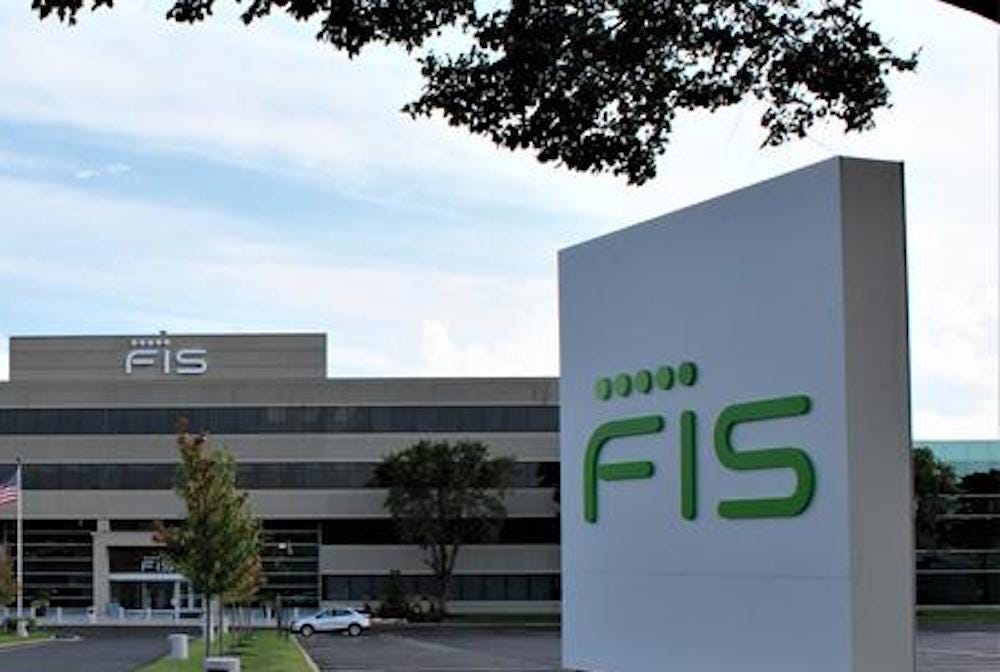
Nearly 12% of the world's economy runs through their technology every single day.
If you guessed that the switching costs here would be incredibly high, you’re right.
Its core banking software boasts a near 99% retention rate.
After all, no bank executive wants to risk a catastrophic failure by ripping out the very software that keeps the bank running.
So, if the business is so essential, why is the stock down nearly 60% over the past year?
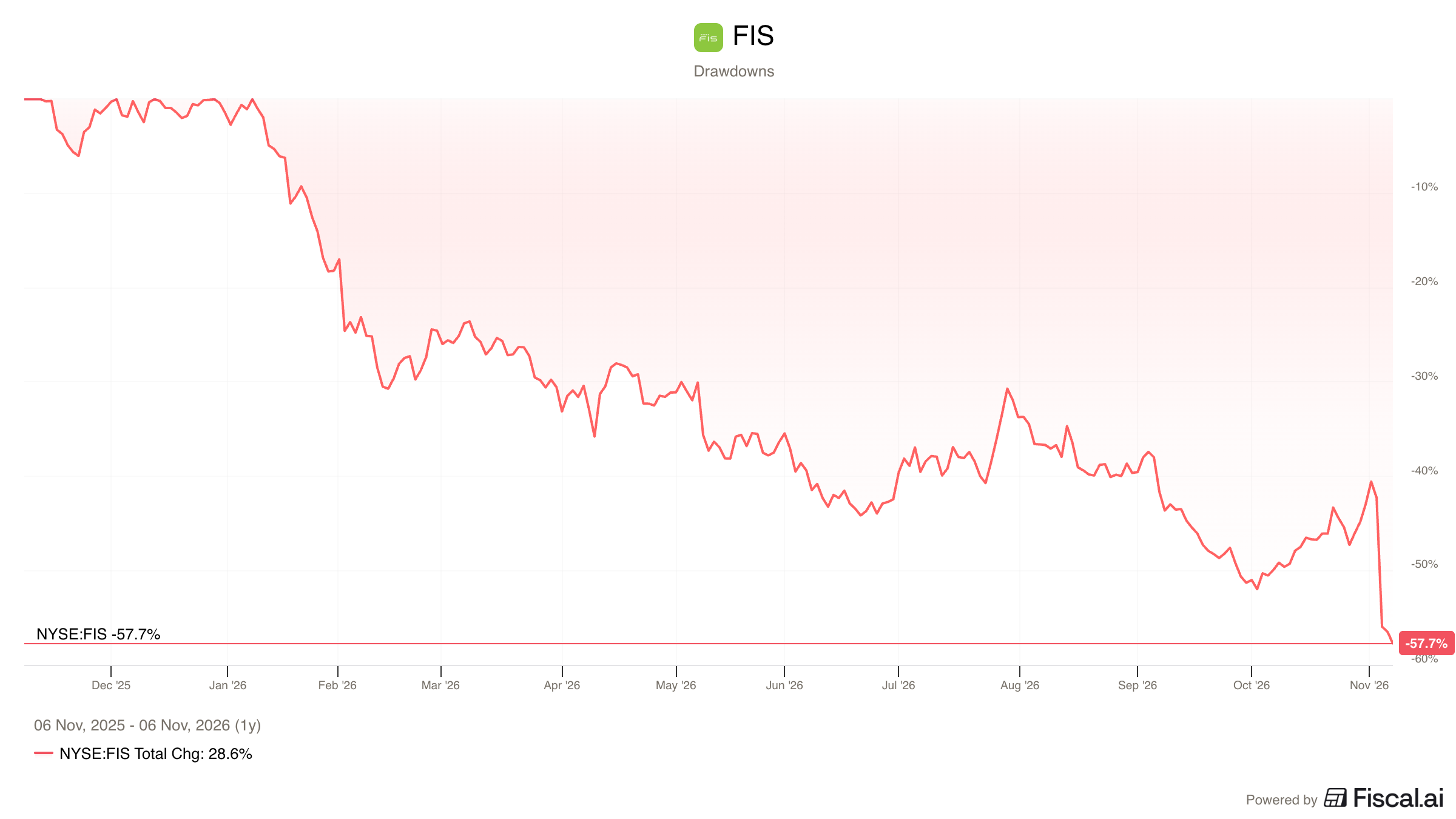
The short answer?
Investors are exhausted.
Over the last few years, FIS bought Worldpay, realized it was a poor fit, spun it out, sold the rest of it, and immediately pivoted to a $13.5 billion acquisition of a credit processing business (TSYS).
Throw in some recent revenue guidance cuts caused by banks delaying their software implementations, and the market has completely thrown in the towel.
The recent stock drop has pushed the dividend yield over 6%, with a payout ratio of just 23%.
Management is currently focused on paying down debt and is targeting $3 billion in free cash flow by 2028.
Once the debt is under control, they plan to use that cash to aggressively buy back their dirt-cheap stock.
Is Wall Street wrong about (or just too impatient with) FIS?
Let’s dive in and see!
Fidelity National Information Services (FIS)
Fidelity National Information Services (FIS) is a financial technology company that provides plumbing for the global financial system.
They build and operate the software that banks, asset managers, and other financial institutions use to manage accounts, process transactions, and keep track of money.
Company name: Fidelity National Information Services, Inc.
✍️ ISIN: US31620M1062
🔎 Ticker: $FIS
📚 Type: High Yield Stock
📈 Stock Price: [leave blank, I will fill in later]
💵 Market cap: [leave blank, I will fill in later]
📊 Average daily volume: $143 million
Now let’s dive into the full investment case!
1. Do I understand the business model?
FIS provides the core banking software that holds customer account balances, the systems that process credit and debit card transactions, and the platforms that capital markets firms use to trade and manage assets.
Whenever you check your bank balance, use a debit card, or when a bank processes a loan, there is a very high chance FIS’s technology is making it happen.
The company recently sold off its merchant processing business (Worldpay) to focus on serving financial institutions.
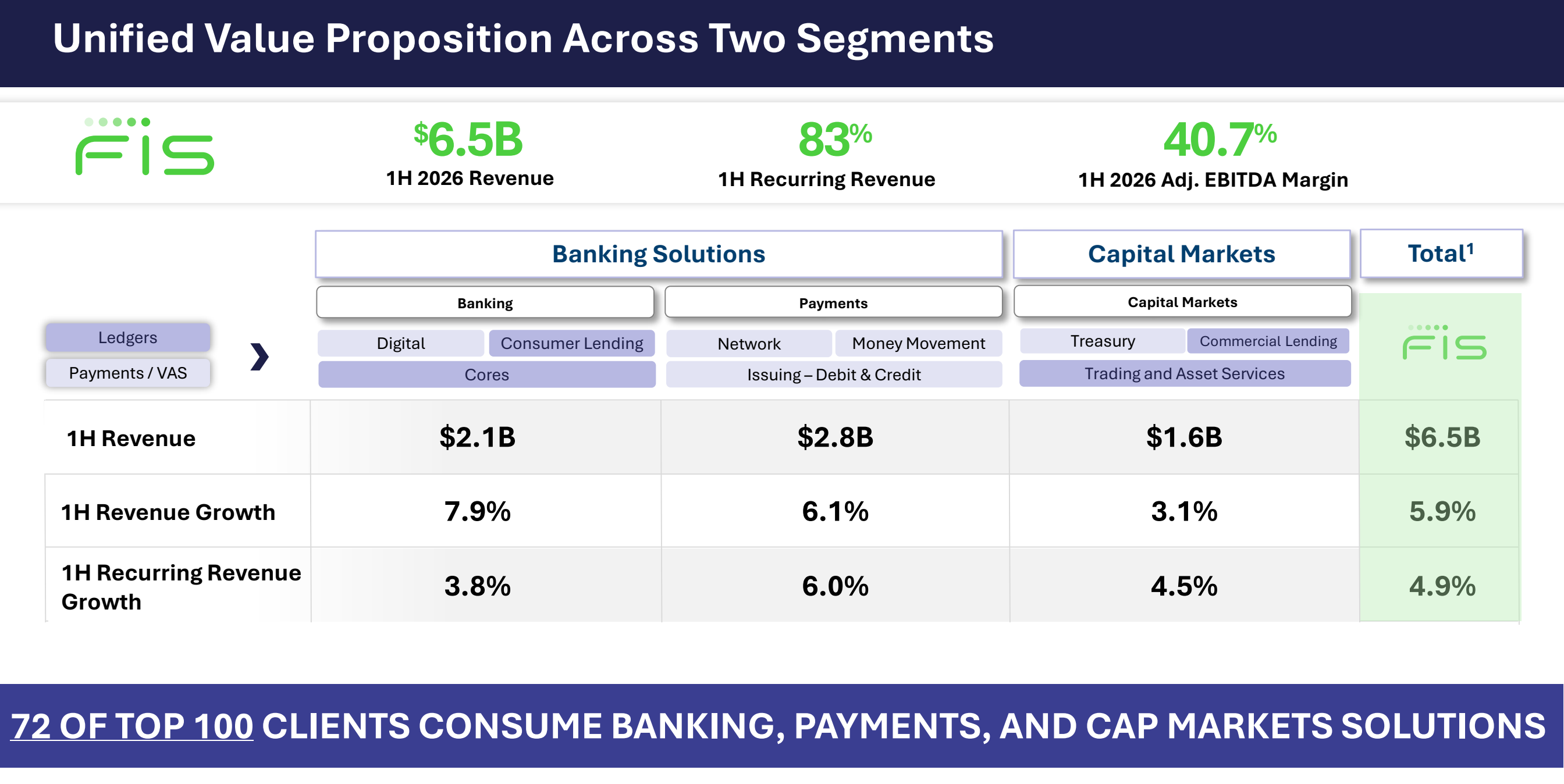
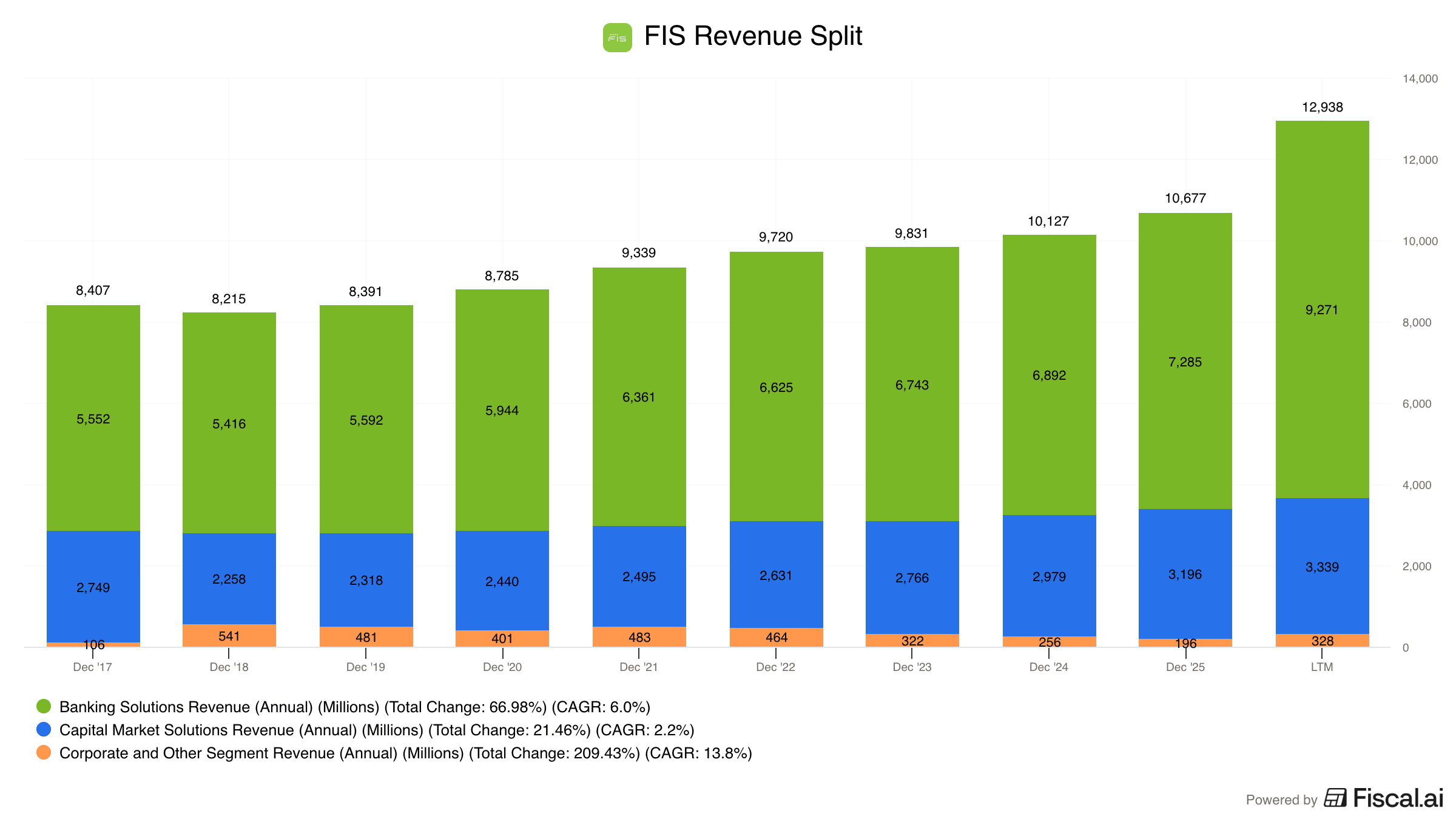
Revenue Split
Most of the revenue comes from core banking and processing. Here’s the revenue split for the last 12 months:
Banking Solutions: $9.271B (72% of revenue)
Capital Market Solutions: $3.339B (26% of revenue)
Corporate and Other: $0.328B (2% of revenue)
Geographic Split
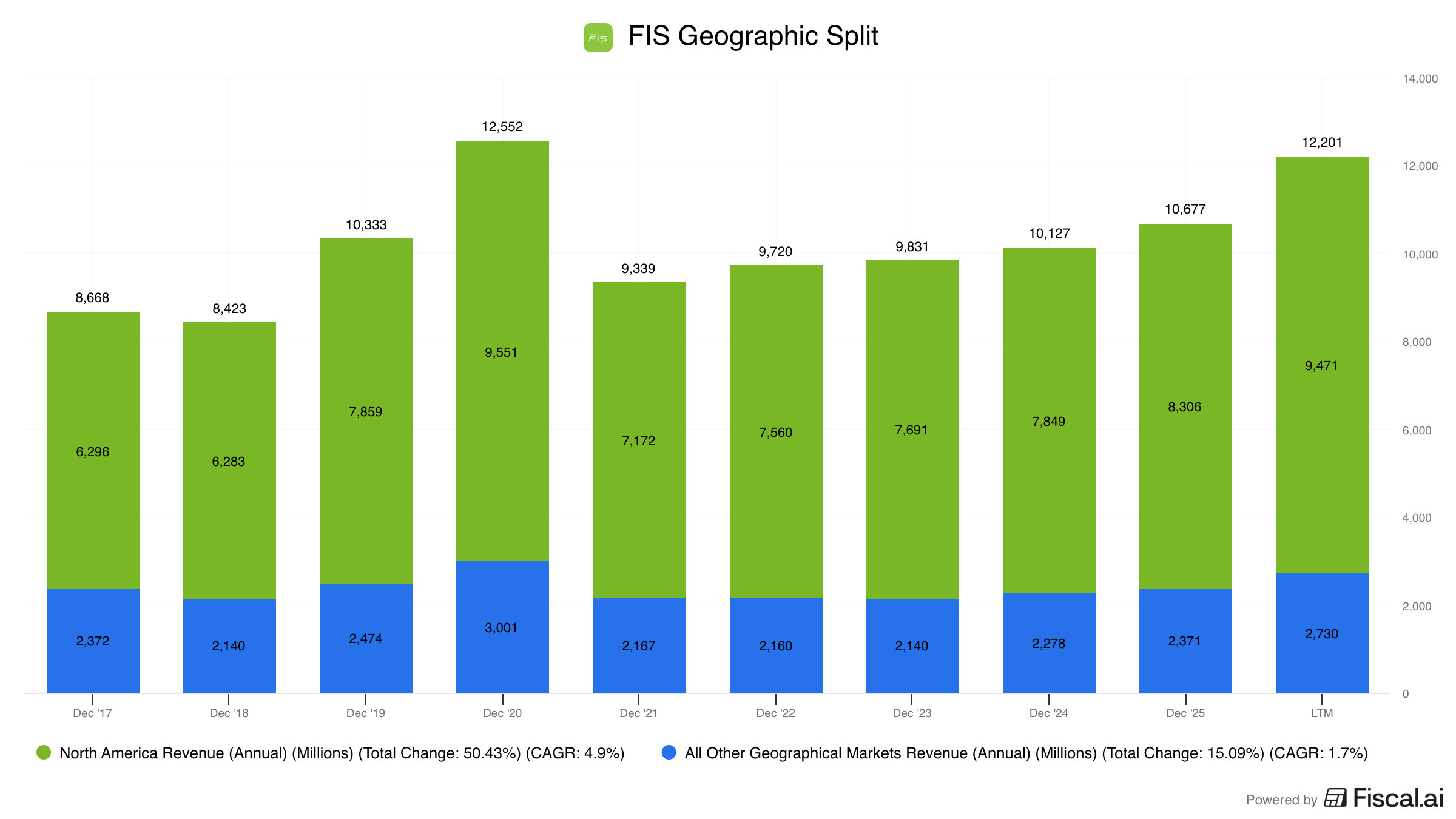
The vast majority of the revenue comes from North America.
In the past 12 months about 77.5% of revenue came from North America.
The remaining 22.5% comes from international markets, mainly the United Kingdom, Germany, Australia, India, and Ireland.
Who are the customers?
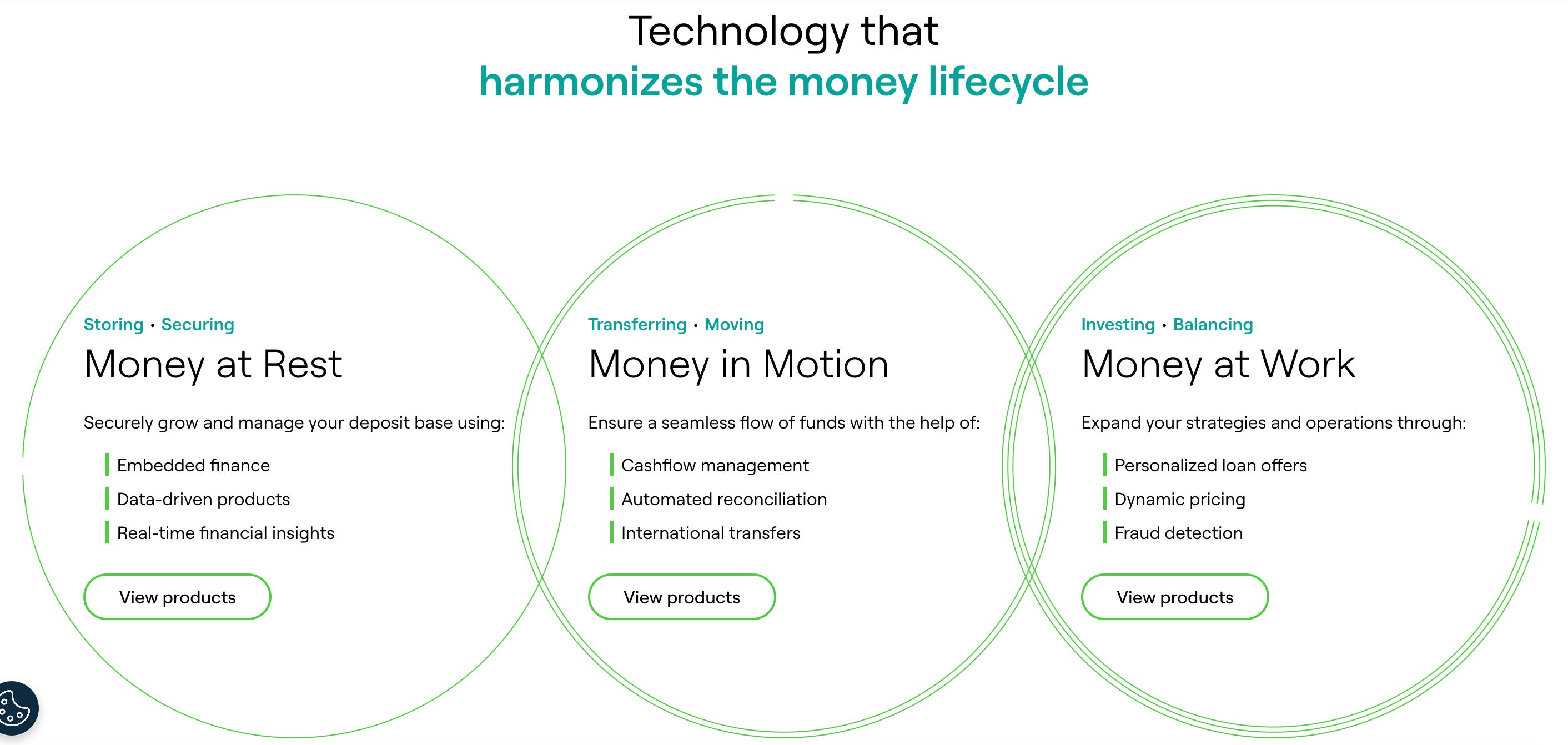
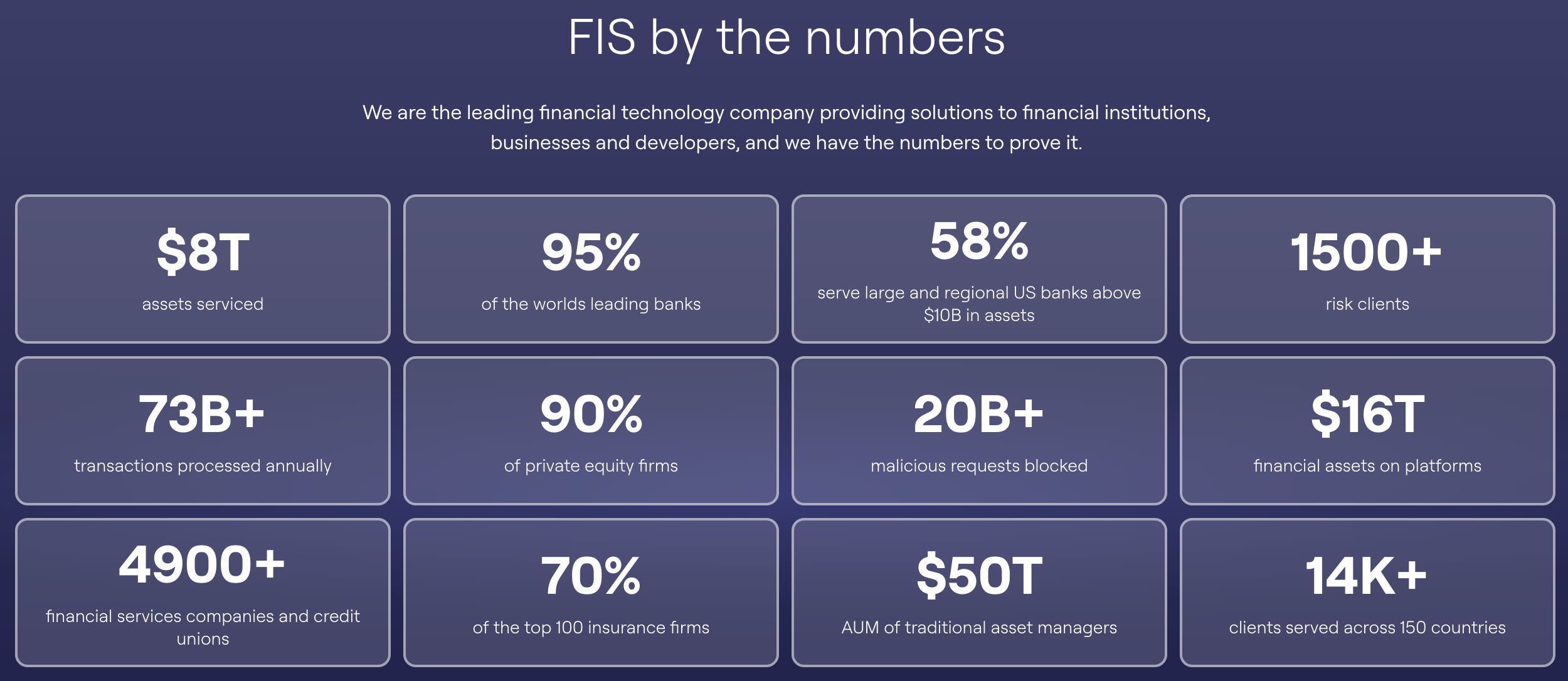
FIS serves more than 14,000 clients in 75 countries around the world.
Those customers are financial institutions like large, global banks, regional and community banks, credit unions, and commercial lenders.
They also serve asset managers, private equity firms, and insurance companies through their capital markets division.
What’s the moat?
FIS has very high switching costs.
Banks don’t want to change their core systems, the risk is simply too high.
If the system goes down or a migration fails, the bank cannot process loans, show customer balances, or clear transactions.
That’s a catastrophic failure, which is why over the past year renewal rates with large financial institutions has been over 90%.
FIS has several advantages for customers.
First, FIS has a track record of stability and scale, giving bank executives peace of mind.
Second, they offer a vast ecosystem of products, so when a bank uses FIS for its core ledger, it easily cross-sells them into payments, fraud detection, and digital banking apps. That makes it even harder to switch.
Third, FIS consolidates transaction volumes across thousands of institutions, driving their unit costs down to a level that banks could never achieve on their own.
When you put those things together, it gives FIS a moat made up of switching costs and scale.
In addition to driving down unit costs, FIS’s scale also lets it invest heavily in next-generation technologies like AI for anti-money laundering and cybersecurity.
They can spread the R&D costs over thousands of clients, meaning FIS can build things that banks couldn’t afford to on their own.
2. Is management capable?
Stephanie Ferris - CEO
Stephanie Ferris was named CEO of FIS in December 2022.
She was the CFO of Worldpay before it was acquired by FIS.
She was brought into the CEO role to turn around the company’s operational issues.
That led her to decide to sell off the Worldpay division and transition FIS back toward a cash-generating business focused on core banking and capital returns.
James Kehoe - Former CFO
James Kehoe was with with FIS since 2018.

He has been important in FIS’s cost-cutting measures, managing the financial unwinding of the Worldpay divestiture, and focusing the company on debt paydown and free cash flow generation.
He stepped down effective November 5, 2026 to pursue other opportunities outside of the company.
He will remain with FIS as a senior advisor through March 2027 to ensure a smooth handover of his responsibilities.
Alexandra Brooks - Interim CFO
Alexandra Brooks will be the Interim CFO.

She joined FIS in October 2024 as Chief Accounting Officer.
She previously served as the CFO of Hertz, where she helped navigate it through post-bankruptcy restructuring.
Her experience at Hertz required focus on balance sheet repair, which is exactly the skill set FIS needs right now to manage its high debt load.
The board is conducting an external search, but Brooks has successfully transitioned from an interim to a permanent CFO role before (at Hertz), so that could happen again at FIS.
3. Has the company grown the dividend attractively?
We look for:
At least 10 years of dividend growth
5-year dividend growth >5%
FIS cut the dividend in 2024 after they sold off Worldpay to match the dividend to the remaining bank technology business.
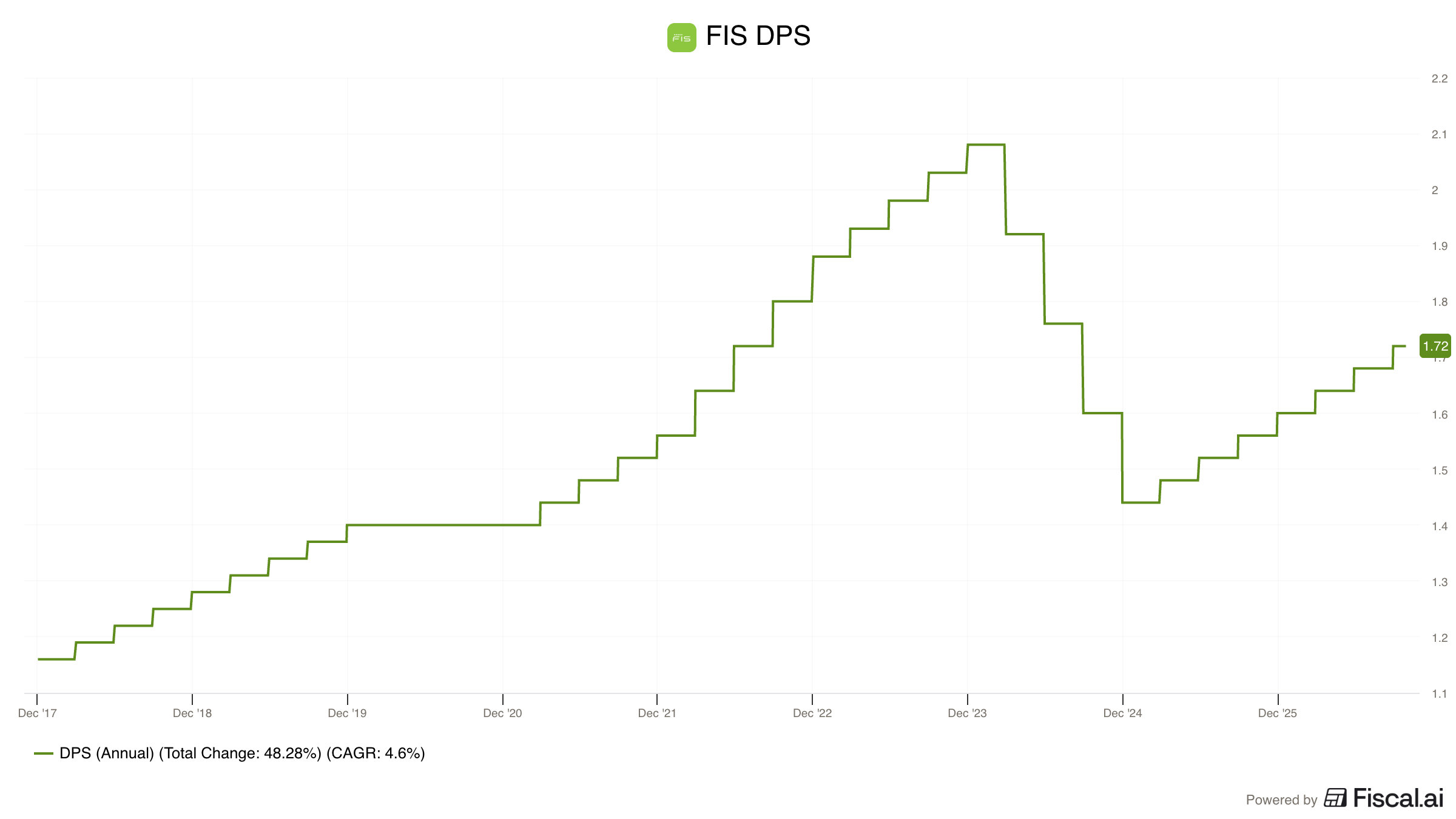
Since then they have grown the divided by about 10% per year.
4. Is the company active in an attractive end market?
FIS operates in the global financial technology and bank software market, which is very attractive.
Think about the tailwinds:
Banking Industry Consolidation:
We saw bank M&A up 30% in 2025 compared to 2024 with around $50 billion announced.
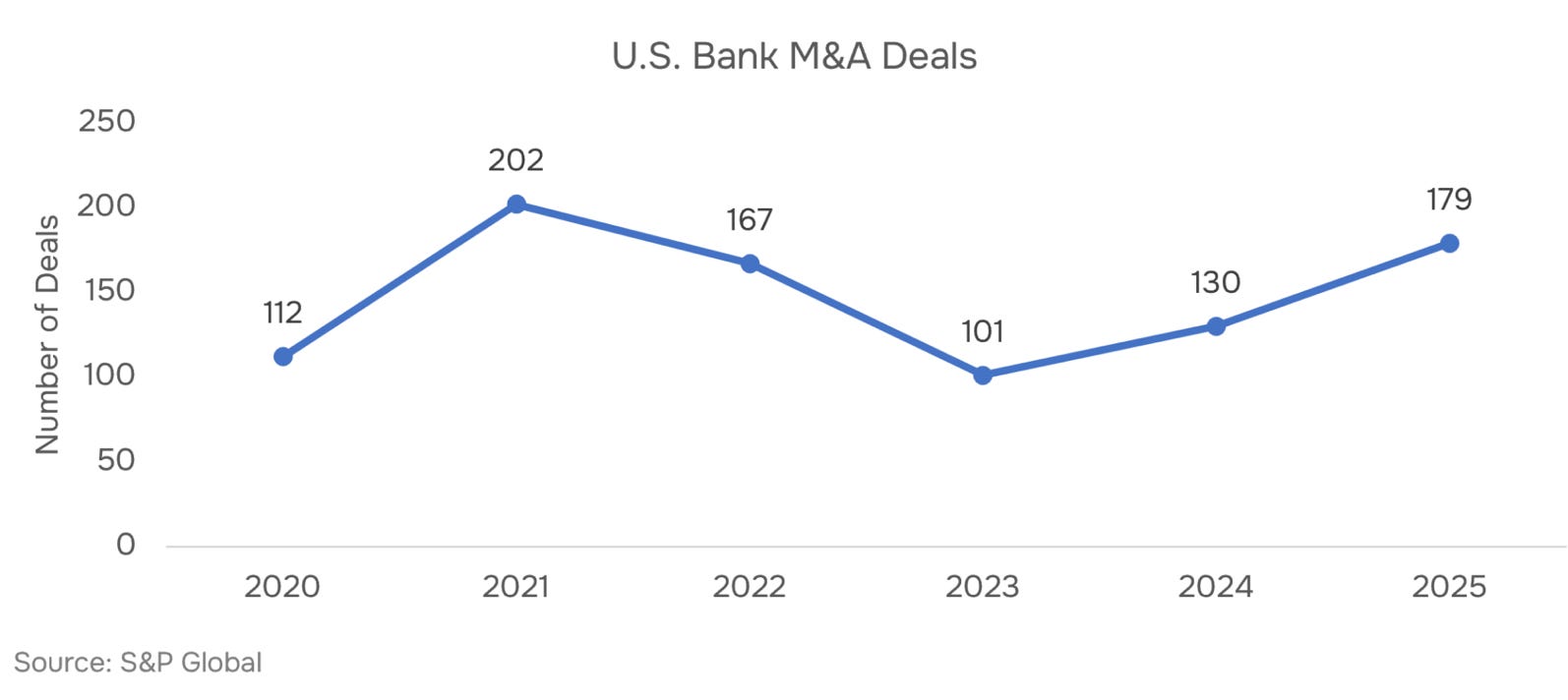
This means there’s a trend where the number of banks goes down, but the size of the existing bank gets bigger.
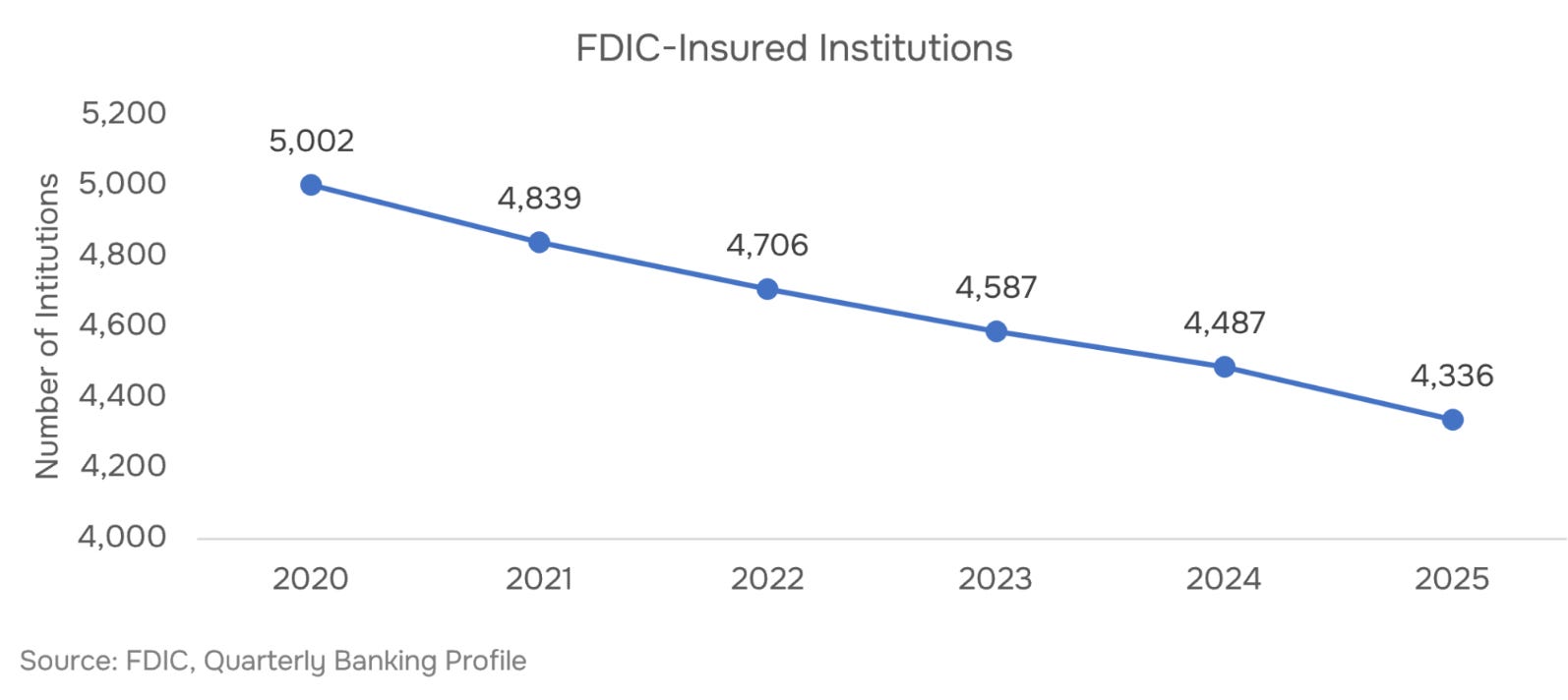
Those bigger banks are exactly the ones that tend to use FIS as a scalable platform to keep growing by acquiring smaller banks.
AI Automation:
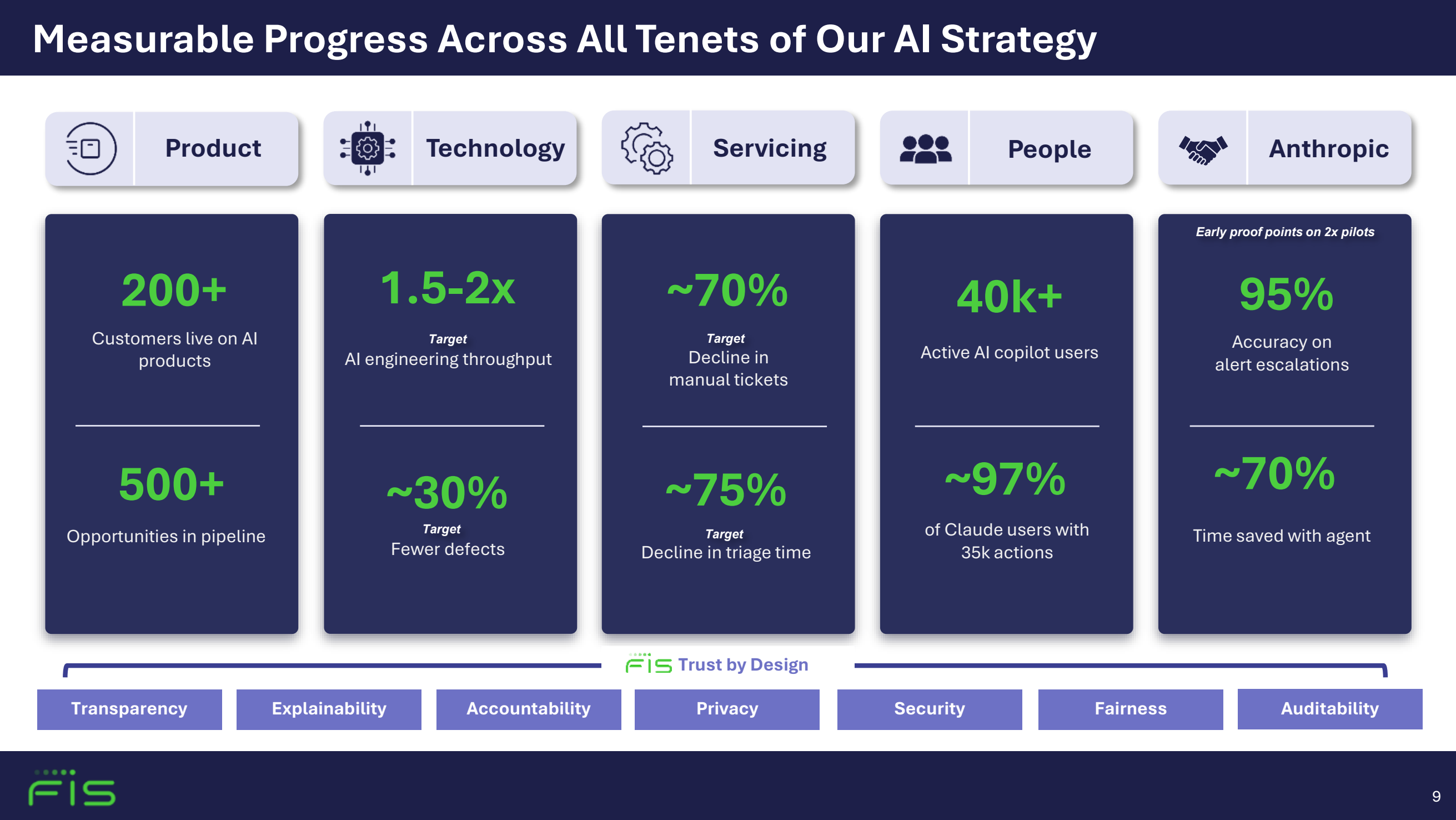
Adoption of AI technologies across financial services has increased eightfold since 2023. FIS is building proprietary AI agents to automate back-office tasks.
They just launched an anti-money laundering agent and are working on loan underwriting.
Tech Modernization:
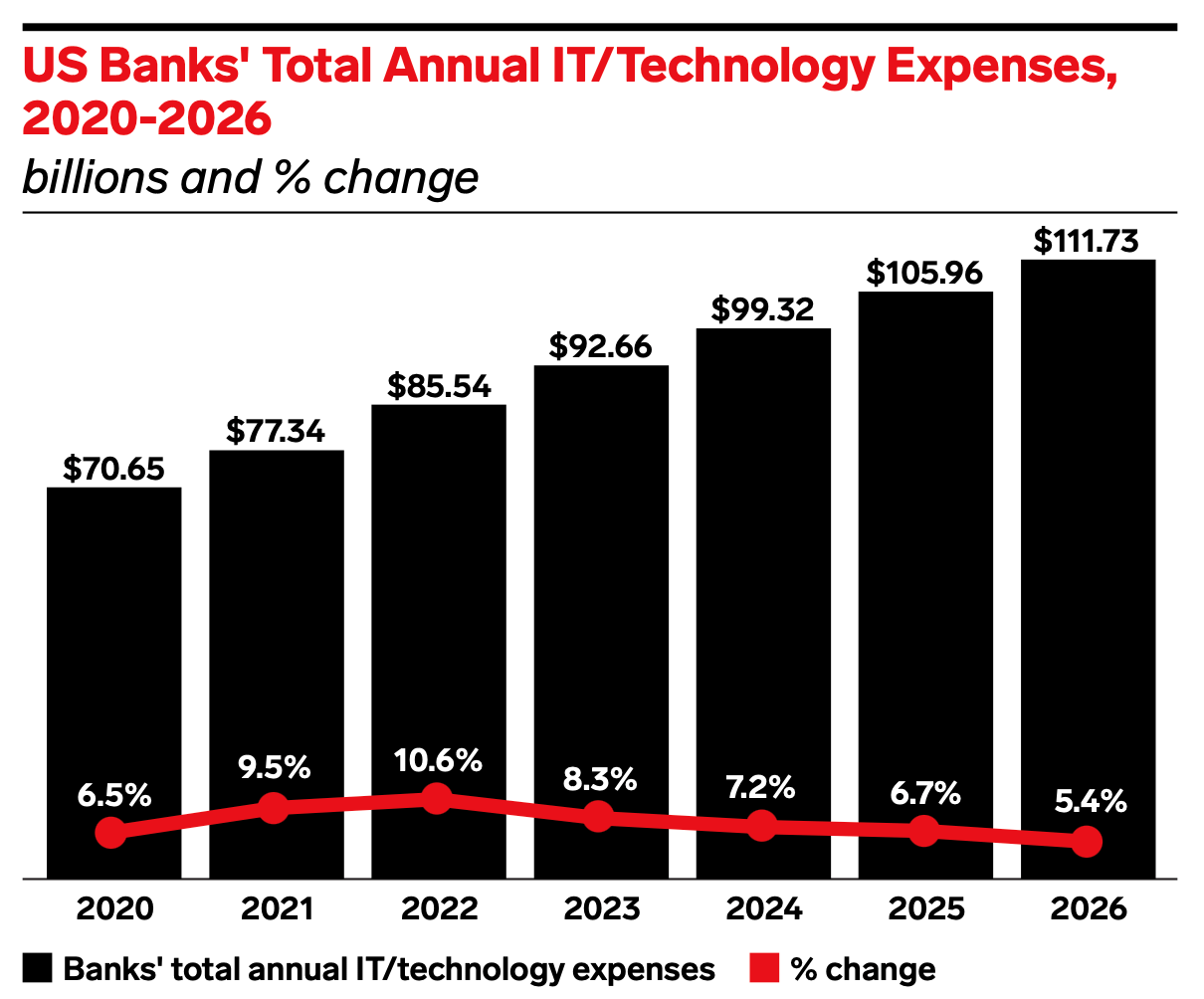
Every year, banks spend more on technology. That spending is projected to grow roughly 30% by 2029 as financial institutions look to reduce costs and modernize to compete with non-bank fintechs.
Cashless Transaction Growth:
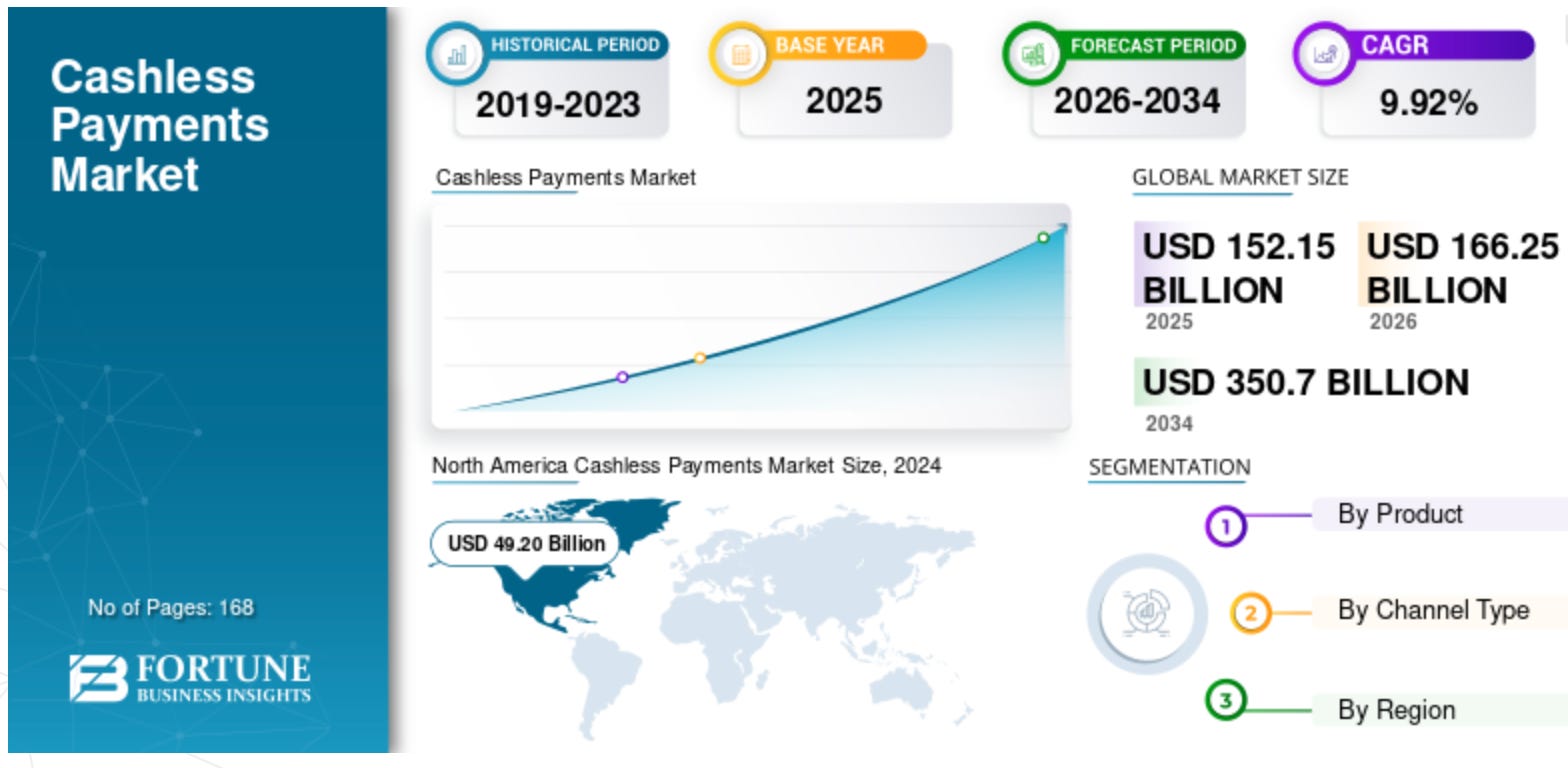
Every single year, the volume of cashless and digital financial transactions grows. FIS currently processes more than 73 billion transactions annually, and every new transaction represents potential revenue.
5. What are the main risks for the company?
Restructuring and Integration Fatigue
FIS has undergone massive structural changes over the past few years, including buying Worldpay, spinning it out, selling the remaining stake, and then acquiring the Issuer Solutions business (TSYS) for $13.5 billion. Constant restructuring can distract management and obscure true organic growth.
Mitigation: Management is now heavily focused on deleveraging and running a predictable, cash cow model. The TSYS acquisition fits much better with FIS’s legacy bank tech operations than Worldpay did, simplifying the integration process and making cross-selling natural.
Macroeconomic and Interest Rate Pressures
FIS’s Capital Markets segment is exposed to broader economic conditions. High interest rates have historically pressured lending volumes, slowing down growth in some software segments and delaying professional services conversions.
Mitigation: FIS generates the vast majority of its revenue from critical, recurring core banking services that banks must pay for regardless of the economic environment.
Client Concentration and Pricing Power
FIS caters heavily to Large Financial Institutions (LFIs). Because these banks are so massive, they have significant negotiating leverage when contract renewal times come around, limiting FIS’s ability to aggressively raise prices to offset their own vendor cost increases.
Mitigation: FIS offsets this pricing pressure by heavily cross-selling additional modules, like fraud tools, payment networks, and AI capabilities, making the overall client relationship deeper and more lucrative over time.
Implementation Delays & License Transitions
Large Financial Institutions are reprioritizing their own internal projects (heavily toward cyber defense), which is causing delays in converting FIS's backlog into actual revenue. They are also rejecting high-margin, upfront software licenses.
Mitigation: These are delays in implementation, not cancellations. Institutions still want and need products from FIS. On the software licenses, the institutions are now favoring subscription (SaaS) models, which puts some pressure on FIS’s near-term margins, but it grows their recurring revenue.
6. Does the company have a healthy balance sheet?
We like a Debt/Equity ratio < 50%.
FIS has a high Debt/Equity ratio of 1.3.
Some of that is because they’ve been buying back shares for the last 6 years, which skews that ratio.
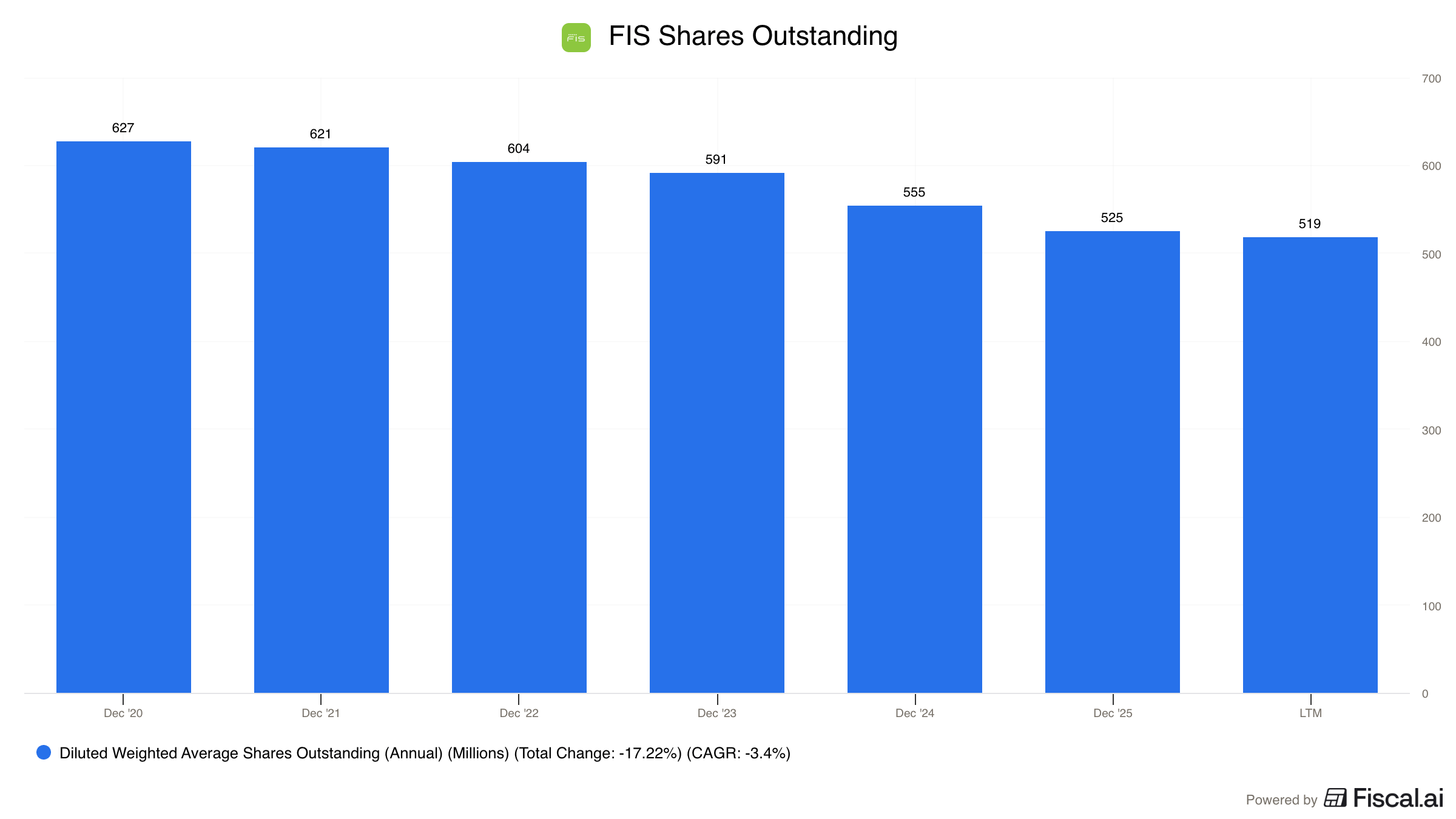
But that doesn’t change the fact that FIS took on a lot of debt to fund the TSYS acquisition this year.
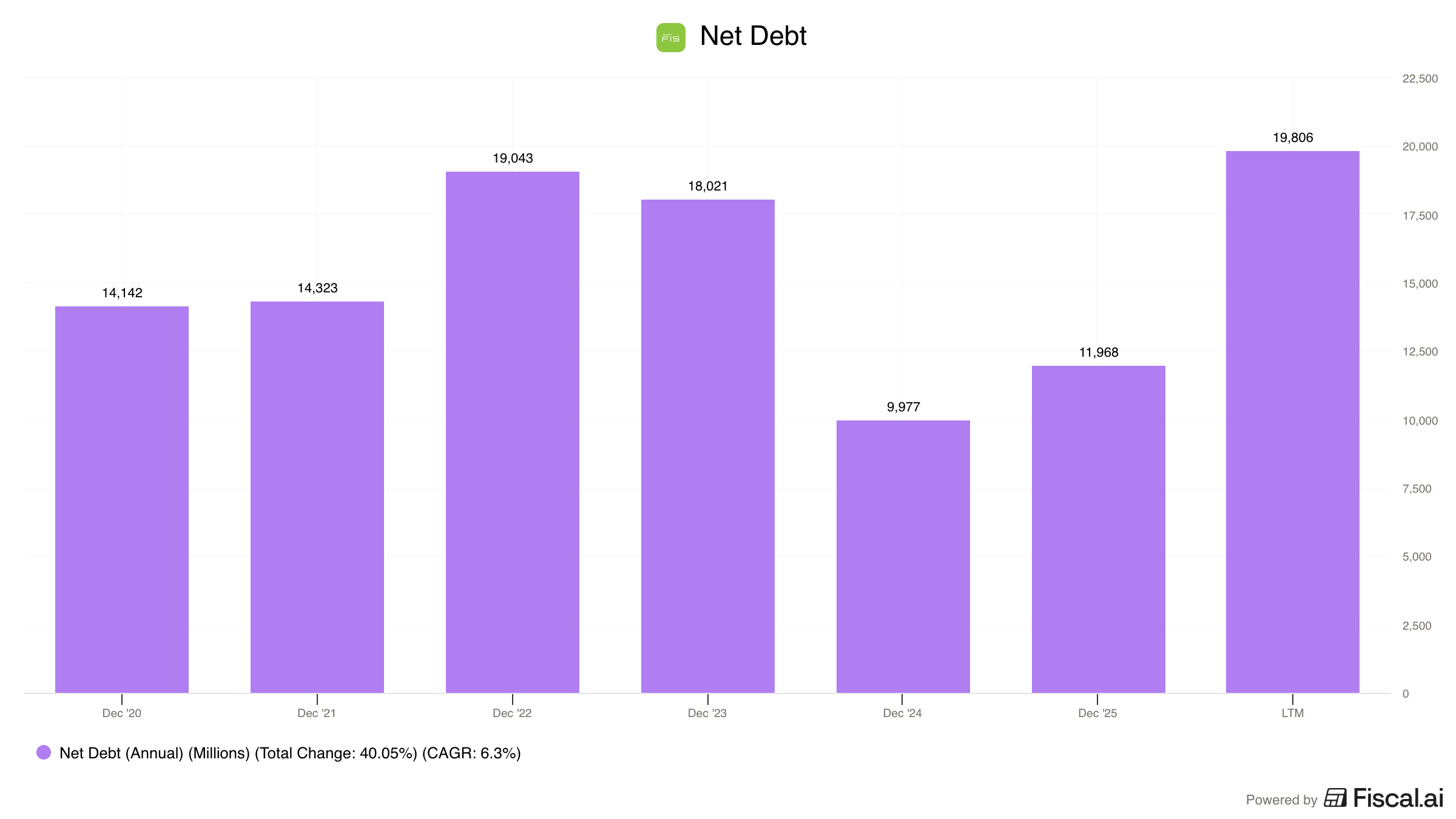
FIS does have a history of paying down debt quickly, as seen between 2022 and 2024.
They can handle periods of elevated debt (like right now) because their business is so stable, and because it generates a lot of cash.
Management has raised their Free Cash Flow guidance for this year, and expects to grow the FCF at attractive rates.
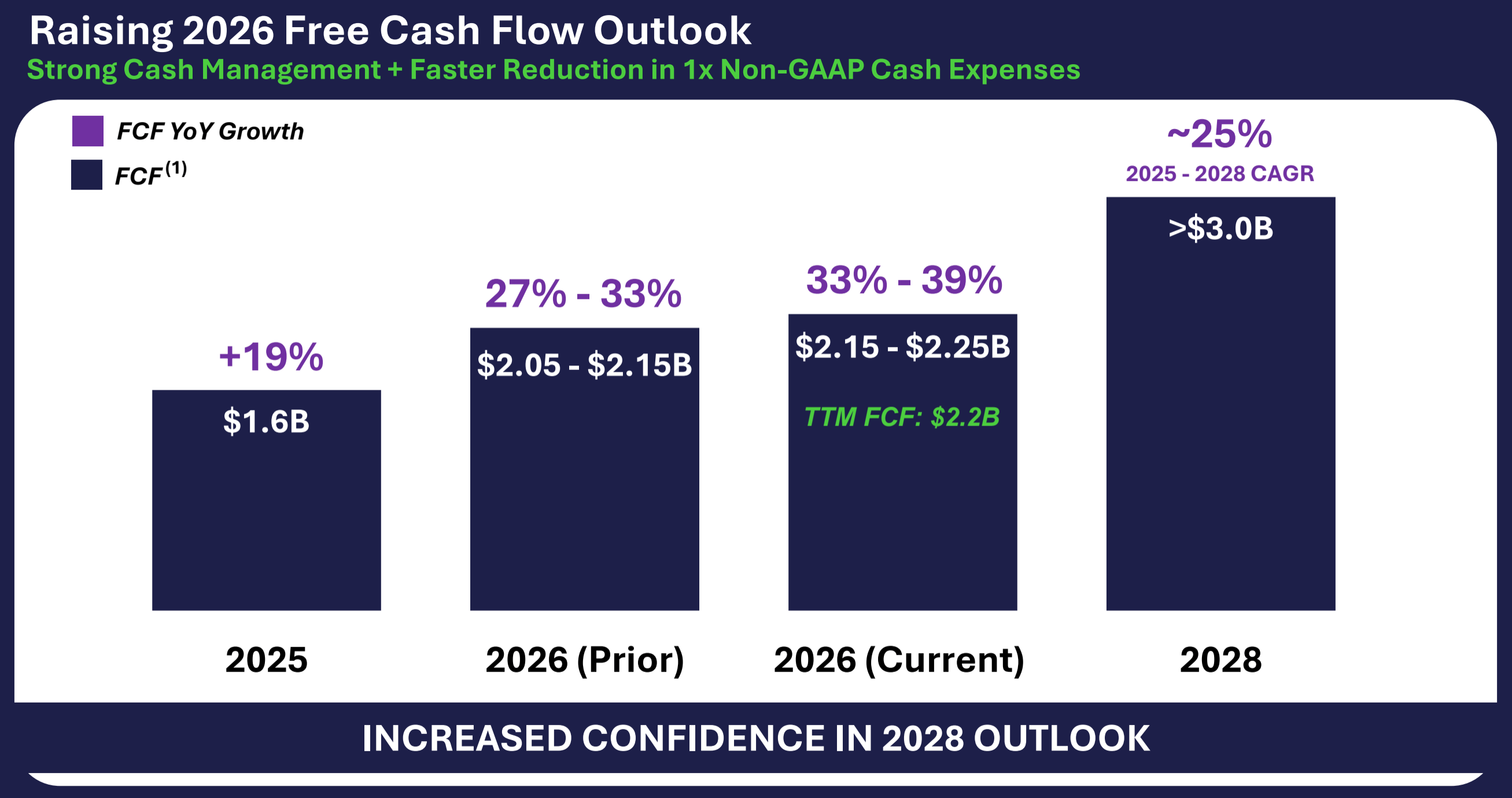
They’ve already committed to paying down the debt quickly.
While I would prefer less debt on the balance sheet right now, I expect the strength of the balance sheet to quickly improve.
7. Is the company a great capital allocator?
Key signs:
Payout Ratio <60%
Effective investments or buybacks
FIS:
Payout Ratio: 23.3%
FCF Payout Ratio: 31%
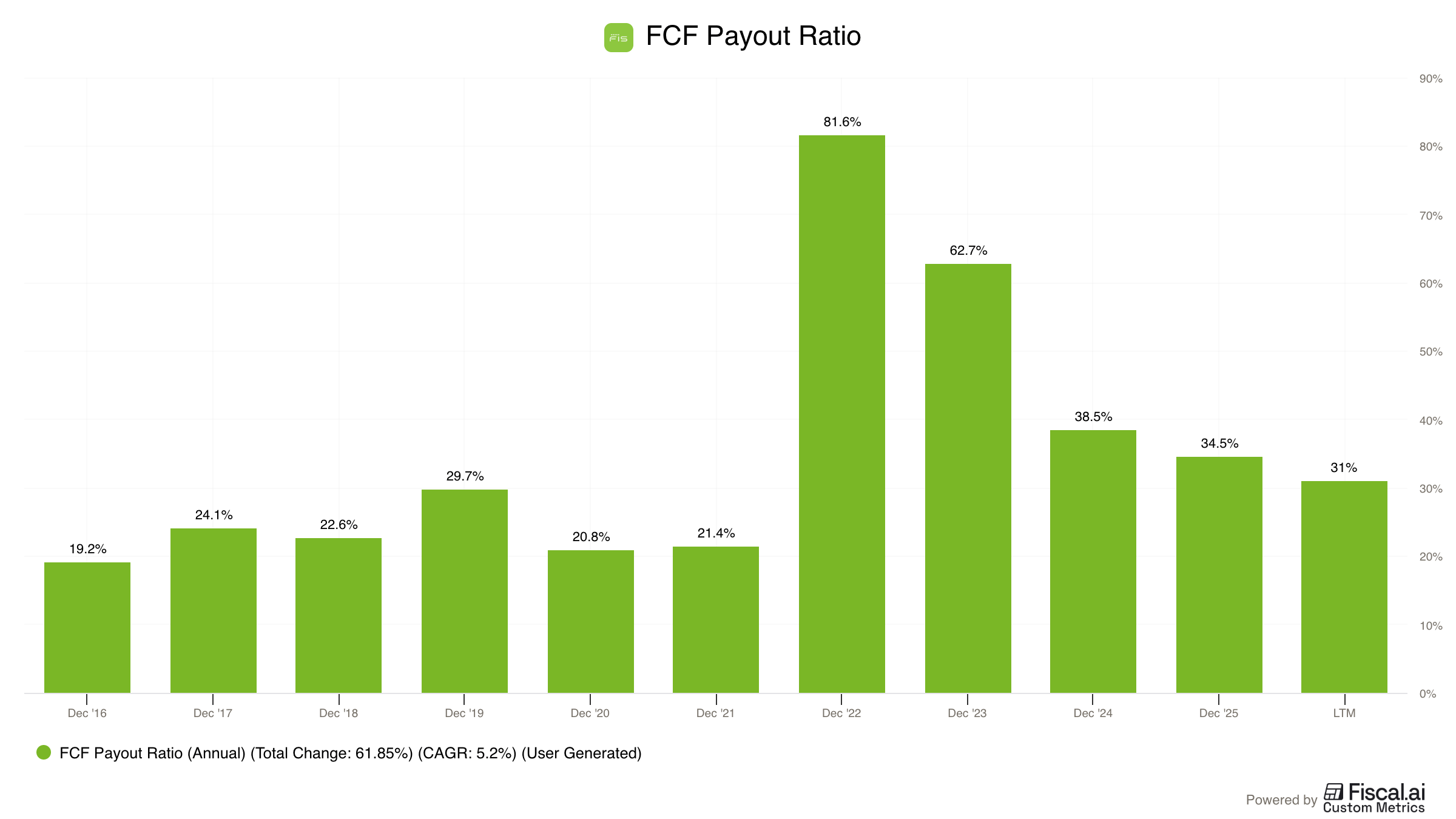
The dividend is very well covered by both accounting earnings and FCF.
Buybacks and Capital Allocation
I’ve already shown you that FIS has been a share cannibal, buying back shares consistently since 2020.
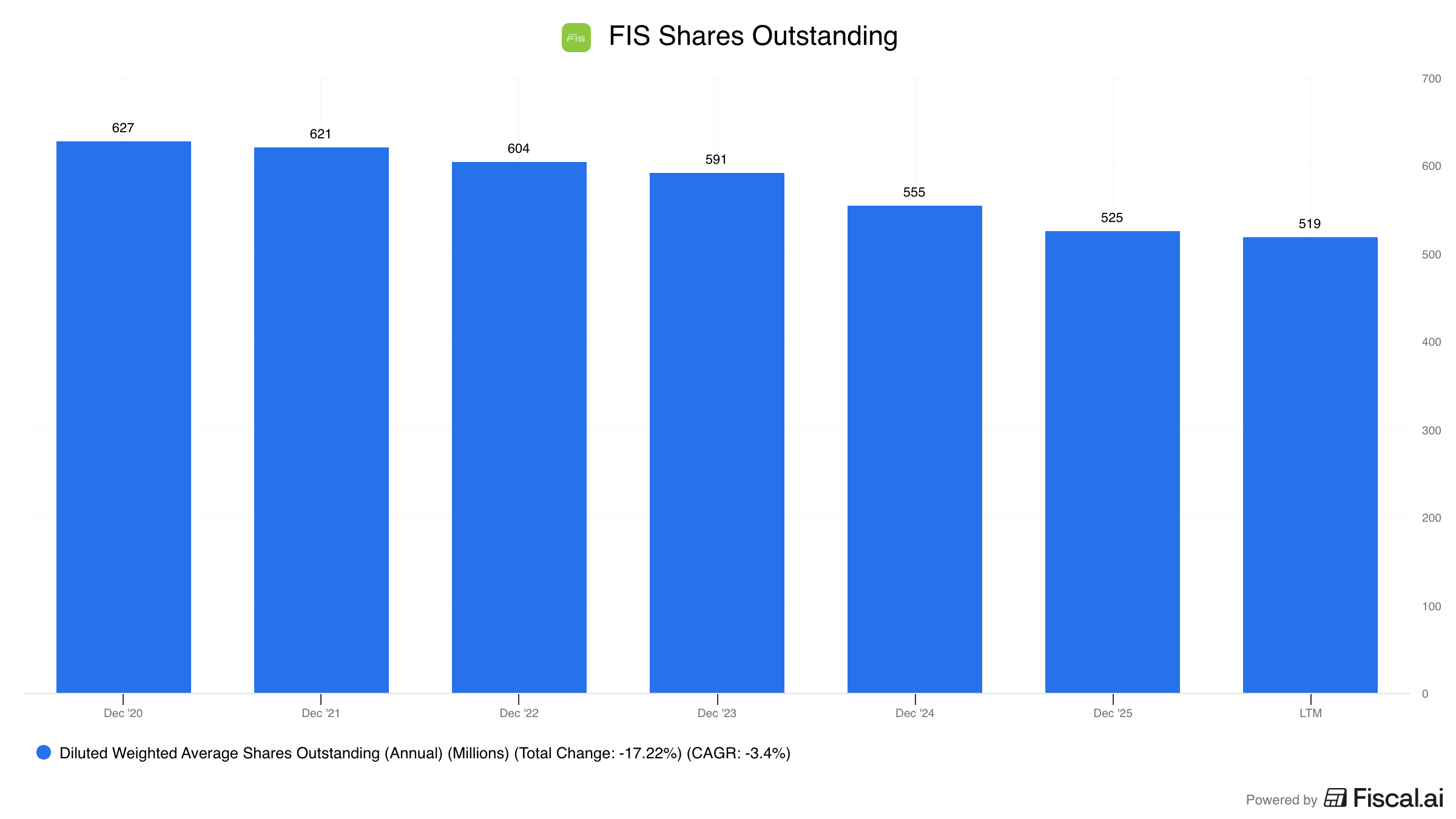
That’s something we generally like to see.
Something we don’t like to see?
Bad acquisitions, which is how I’d classify Worldpay.
Worldpay
Worldpay Acquisition (2019):
FIS spent roughly $43 billion to acquire Worldpay, aiming to combine core bank technology with merchant acquiring.
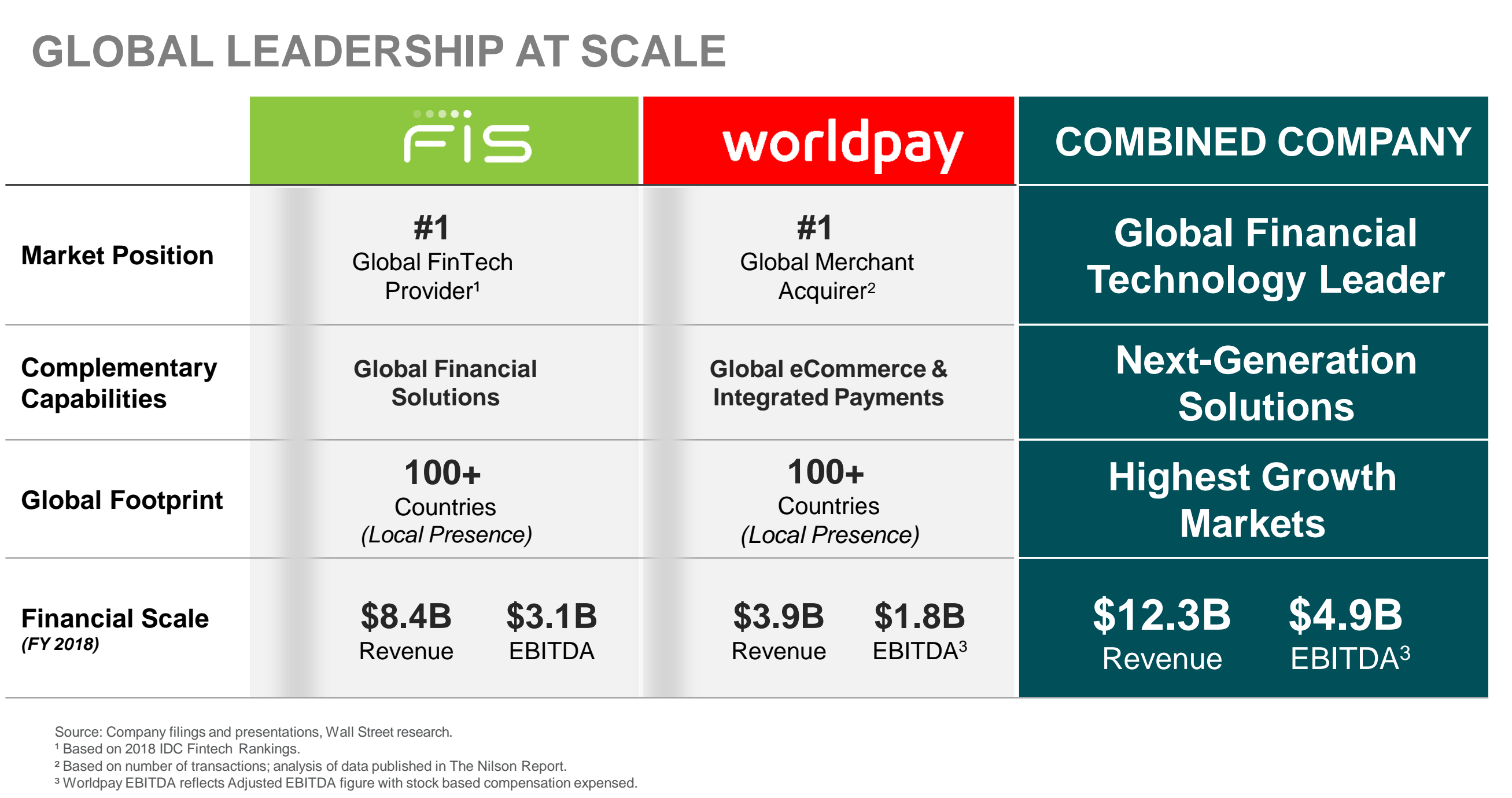
Worldpay provides the technology that allows stores and restaurants (merchants) to accept credit cards. When you swipe your card at a local coffee shop or buy something online, Worldpay processes that payment for the store.
Because the customers were completely different, the returns on this acquisition weren’t good.
A bank executive who buys software from FIS doesn’t care about the credit card swiper sitting on the counter of a local business.
That meant that FIS couldn't bundle their products together because they were selling to two entirely different industries.
Worldpay Divestiture (2024–2026):
To unlock trapped capital, FIS sold a 55% controlling stake in Worldpay to GTCR in early 2024, using the resulting >$12 billion in net cash proceeds to aggressively pay down debt and fund share repurchases.
In January 2026, FIS sold its remaining 45% minority stake to Global Payments for $5.8 billion.
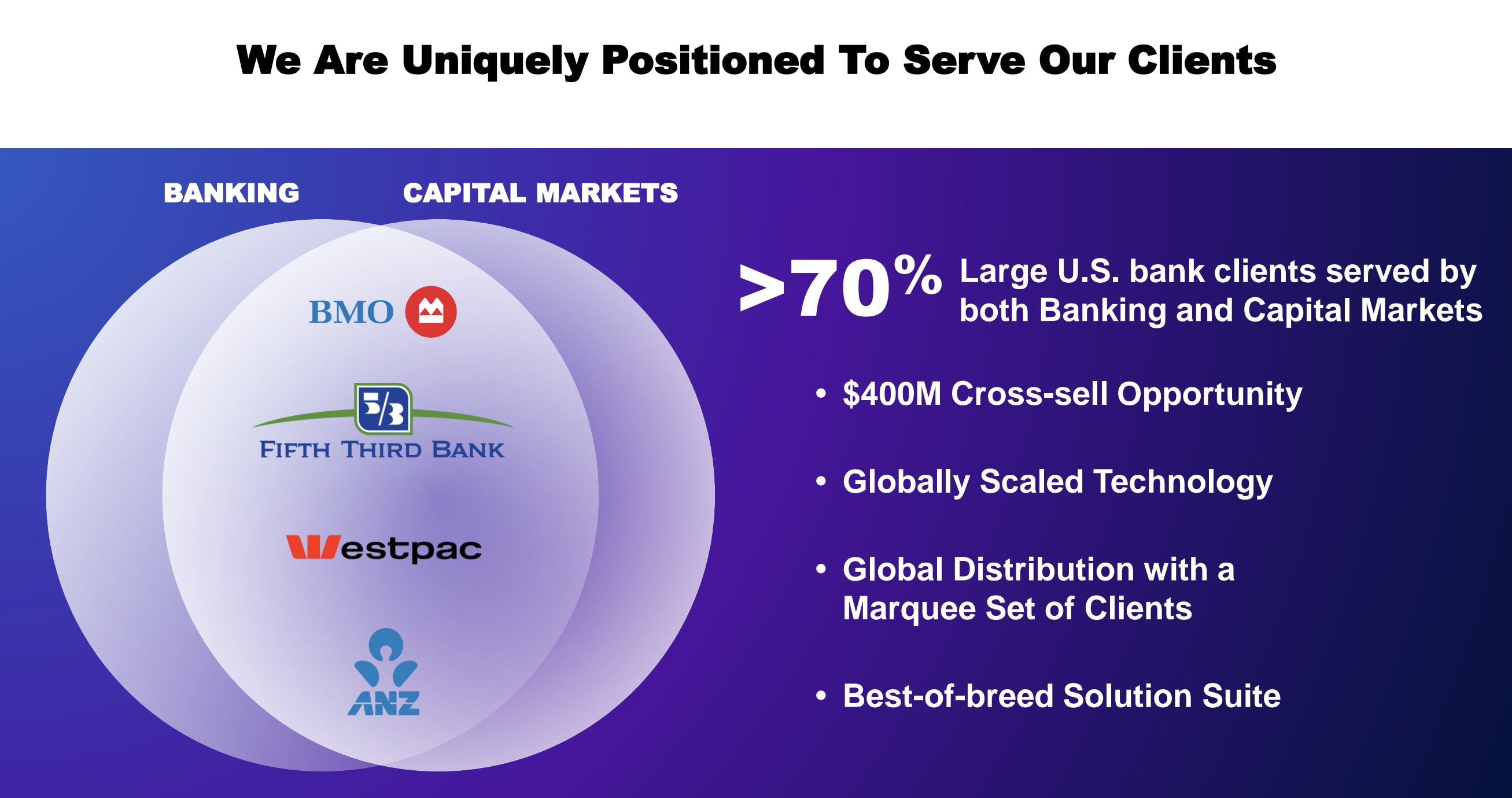
That left them with the simpler business that exists today focusing on banking and capital markets, which work well together.
TSYS Acquisition (2026):
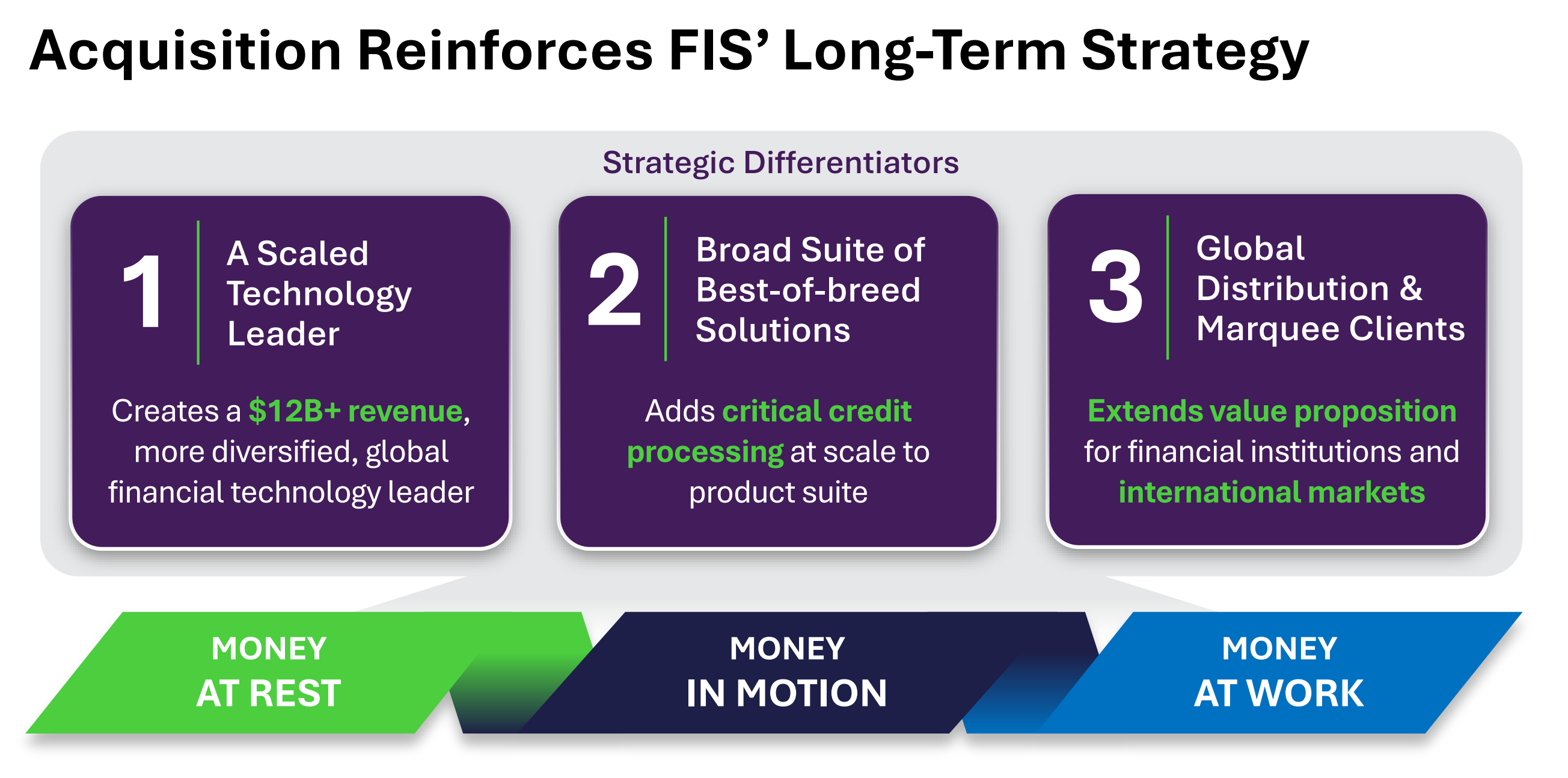
FIS immediately redeployed the $5.8 billion from the sale to Global Payments, along with $7.7 billion in newly issued debt to acquire Global Payments’ Issuer Solutions (TSYS) business for $13.5 billion.
TSYS (also called Issuer Solutions) provides the technology that banks use to create and manage credit cards.
When a bank issues you a new cash-back rewards card, they use software like TSYS to track your purchases, calculate your rewards, and generate your monthly bill.
This acquisition makes a lot more sense in my opinion, and works well with what FIS was already doing.
Current Capital Allocation
Stephanie Ferris is the former CFO of Worldpay, which means she understood that business very well and has a deep understanding of capital allocation.
I think her decision to sell off Worldpay was certainly the right one.
The TSYS acquisition is too new to judge, but it does fit with the existing FIS business much better.
She’s also made the capital allocation priorities very clear.
Pay down debt
Grow the dividend with EPS
Repurchase shares
I expect her to continue to do a good job with capital allocation.
Share repurchases are currently paused until some of the debt is paid down.
In September she was asked what would make her consider using the cash available after paying the debt and dividend for something other than share repurchases.
Here’s her answer:
“At our current stock level, nothing. We would do all share repurchase. There is really nothing that we could do beyond that that would have any incremental value. I wish we were in the market right now. I think we would love to be. That is the plan. Just cannot even imagine anything that would accrue any kind of value besides the share repurchase. Very much look forward to getting back in the market.”
For reference, the stock was at around $40/share on that day.
When Ferris says she’d love to be buying FIS stock right now, I believe her.
In March she put $1 million of her own money into the company at $50/share.

8. How does the past and future growth of the company look?
We usually look at the past 5 years, but because of the Worldpay acquisition and sale, let’s go back 10 years.
10-year revenue growth: 4.4%
10-year EPS growth: 15.7%
Long-term EPS growth rate: 13.5%
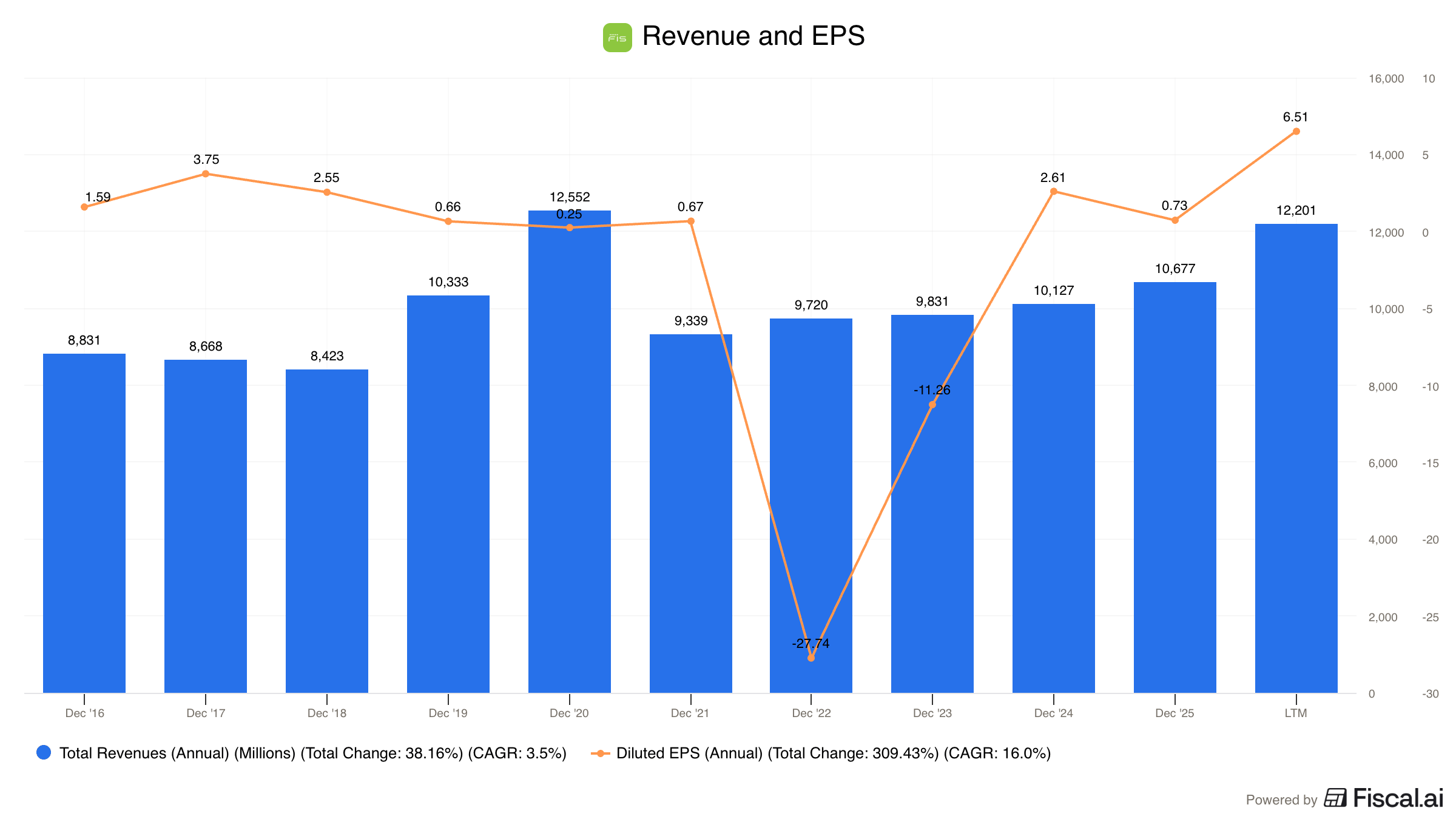
The past is a bit lumpy, but we’re not buying the past of FIS, we’re buying its future.
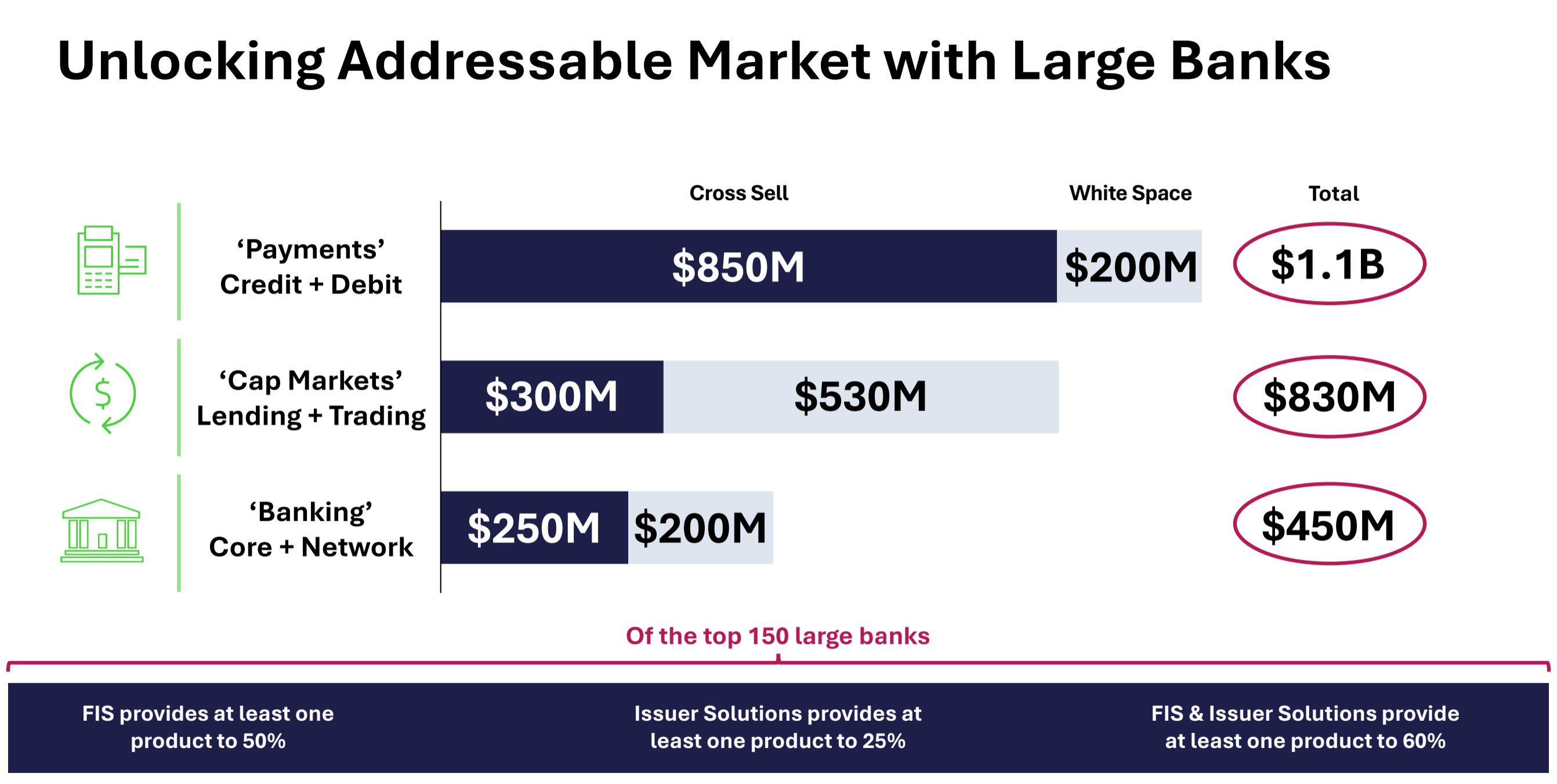
The TSYS acquisition does give FIS a lot of room to sell more products and services to their existing customers.
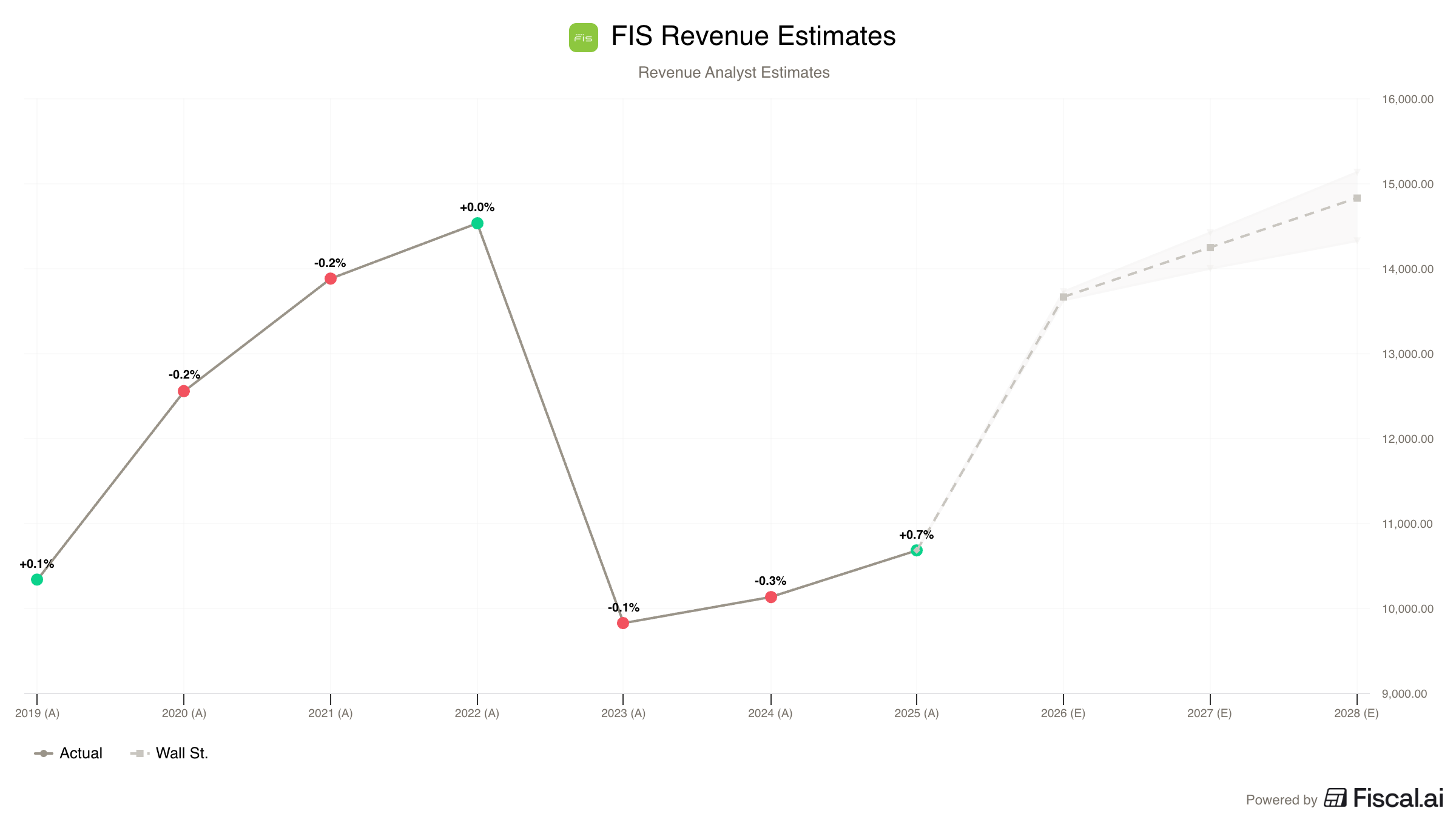
Analysts are projecting revenue to grow attractively into the future.
So far, the TSYS acquisition is going well.
In Q2 they won two new very large financial institutions, a top 10 Latin American bank and a top 10 private sector commercial bank in India.
They also have long-term contracts with 72% of the TSYS revenue under contract to at least 2029.
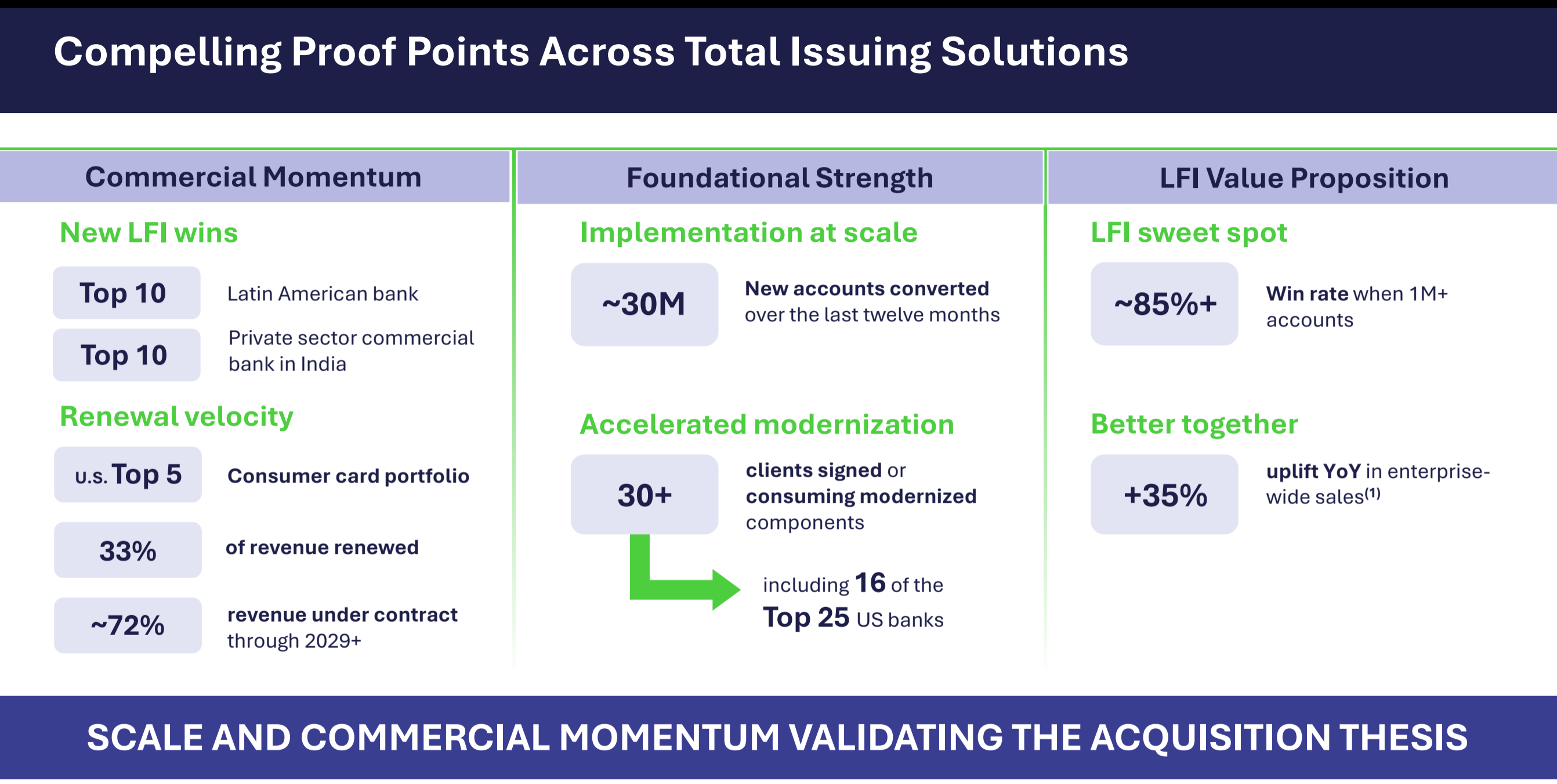
FIS has raised their FCF guidance, and is finding cost savings.
However, because of the delays in implementation and customer preference for subscription models rather than software licenses, management just cut the guidance for revenue and earnings growth in 2026.
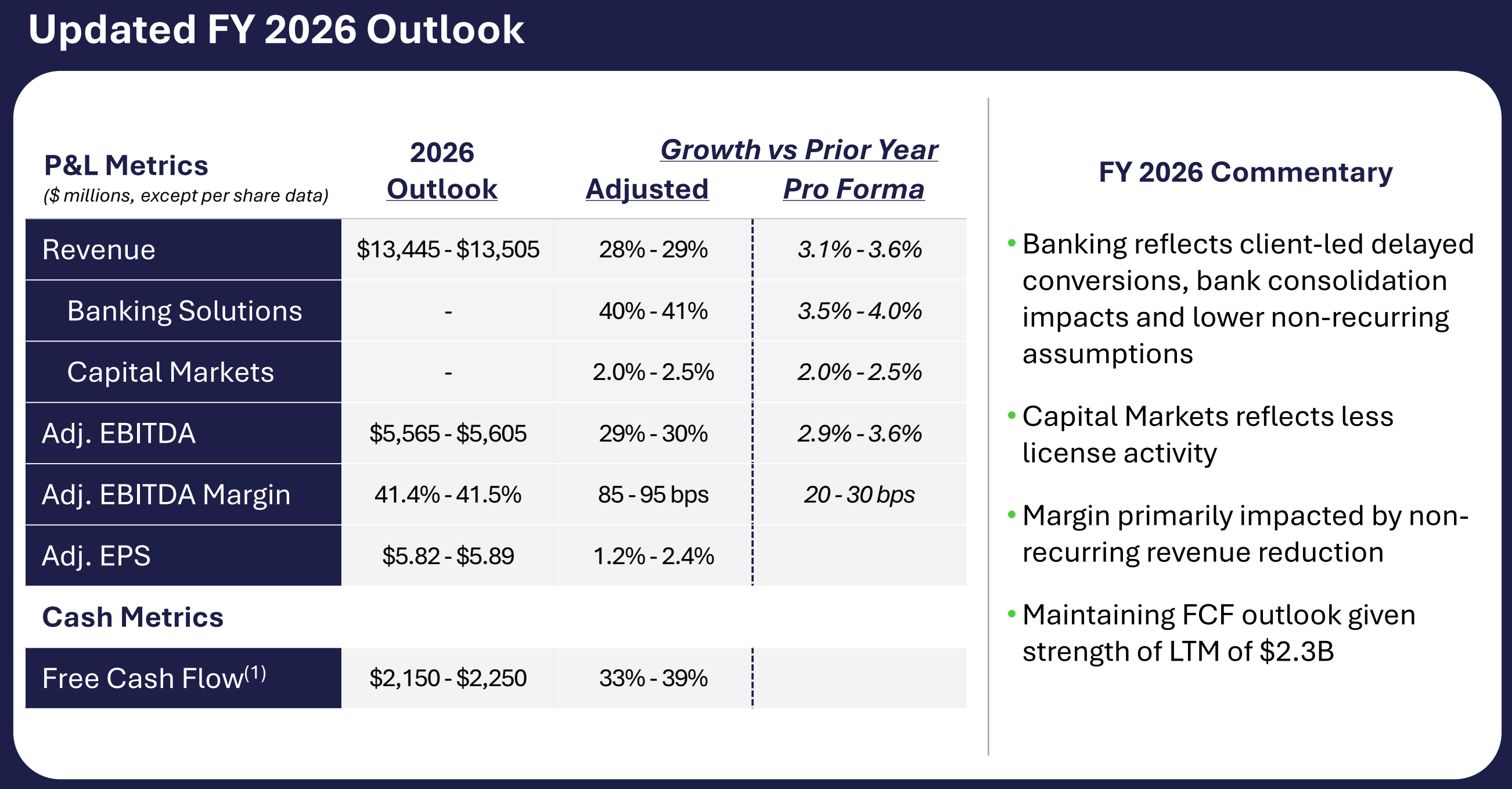
They also expect lower growth through 2027, before things get back to a more normal level in 2028.
Want To See What I Think About FIS After The Guidance Cut and How I’m Valuing The Company?
If you want the full Deep Dive, and to find out if we’re buying FIS, upgrade your subscription right here:
One Dividend At A Time,
-TJ
Used sources
Interactive Brokers: Portfolio data and executing all transactions
Fiscal.ai: Financial data
Disclaimer
As a reader of Compounding Dividends, you agree with our disclaimer. You can read the full disclaimer here.
The crucial additional aspect is the quality of future free cash flow.
In the third quarter of 2026, it grew by only 8%, while comparable revenue growth stood at 3.7%.
Furthermore, the forecast for adjusted earnings growth in 2026 has reached just 1.2–2.4%.
There is, therefore, no sign of any dynamic acceleration in growth for the time being.
Add to this $20.8 billion in debt, the temporarily suspended share buybacks, and the unexpected change in the CFO position.
Consequently, beyond the integration of TSYS, the actual pace of debt repayment and the return on capital from the acquisition will be the decisive factors.
Long FIS 💸 🕵♂️
The dividend yield of around 6% is certainly interesting.
However, only a valuation based on normalized free cash flow, net debt, and realistic long-term growth will reveal whether there is a genuine margin of safety or merely an optically attractive yield.
After all, high dividend yields in the stock market can sometimes be nothing more than a pleasant wrapper for unpleasant surprises.
That said, a successful turnaround could well transform FIS back into a compelling cash-flow compounder.