

2026 has been a crazy year in the markets so far.
It seems every week Claude gets another plugin that causes an industry to sell off.
But the S&P 500 is relatively flat. Let’s take a look at some of the trends underlying the market today.
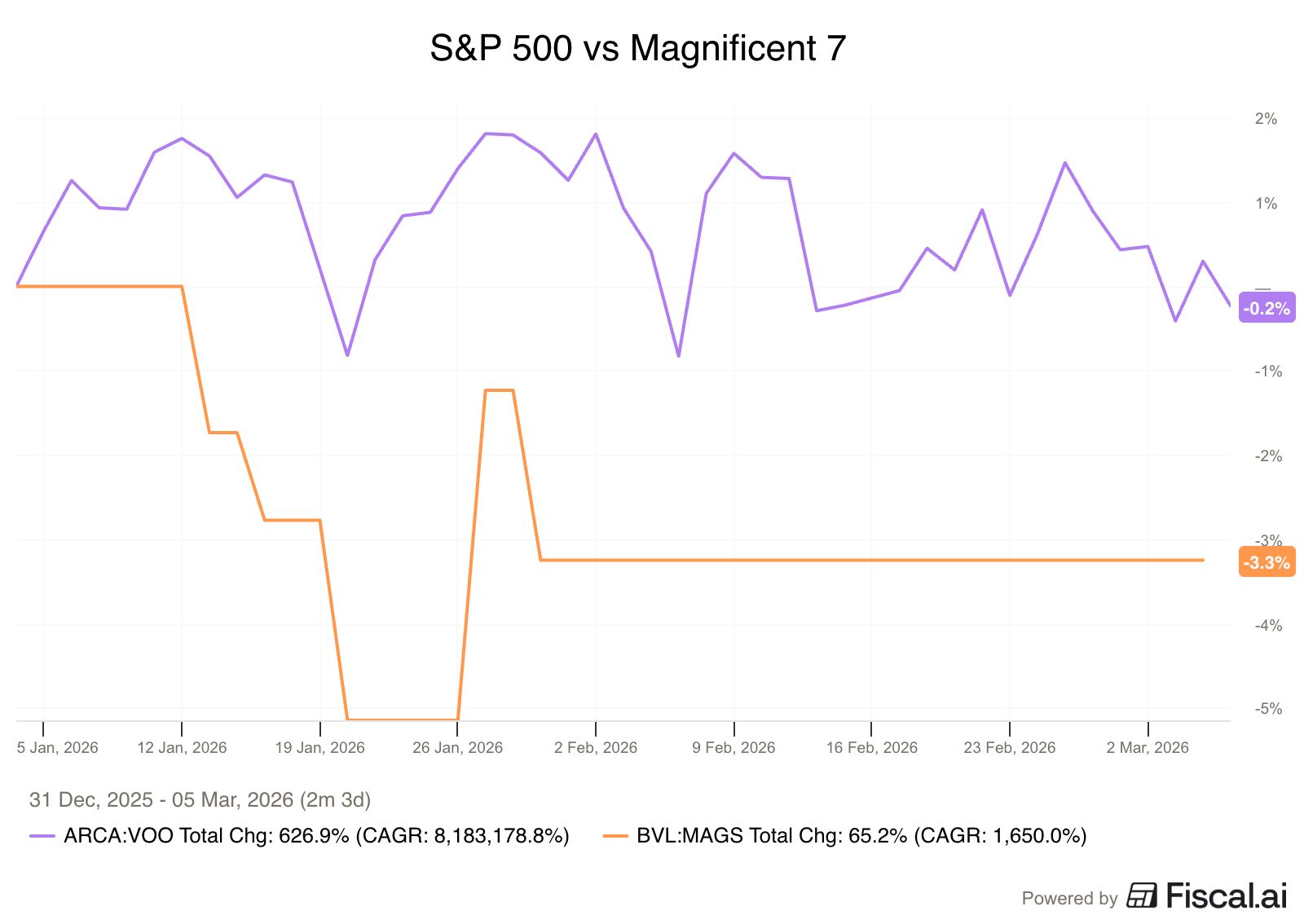
The last few years were all about the Magnificent 7 driving the market.
But so far in 2026, they’re underperforming the S&P 500.
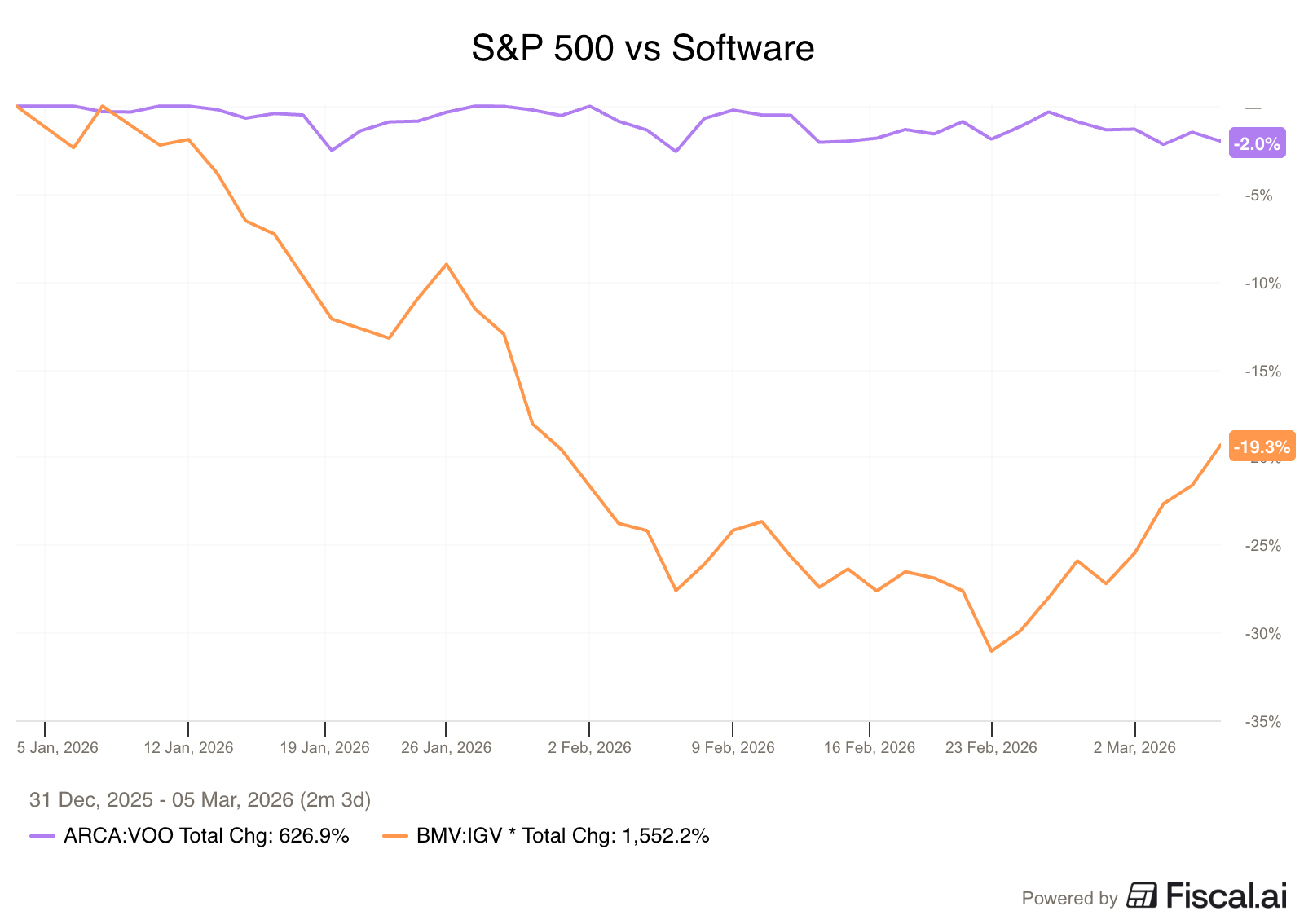
There’s been a lot of fear in different industries around AI disruption, starting with software:
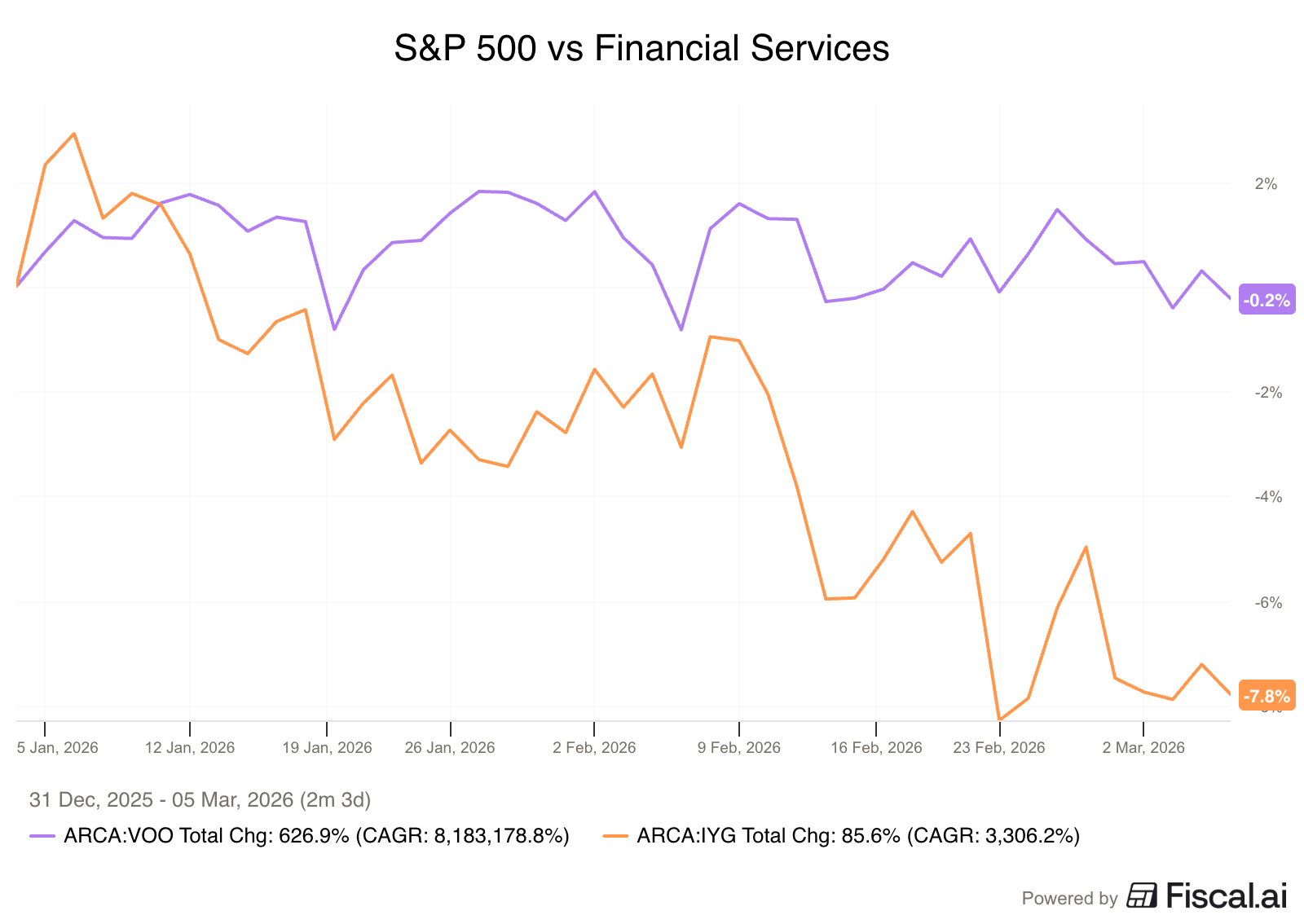
Financial services like accounting, junior legal prep, or tax services also got hit by AI fears.
This even drug in strong names like Moody’s, MSCI, and FICO.
Individual stocks like Adobe are down massively from their previous high prices.
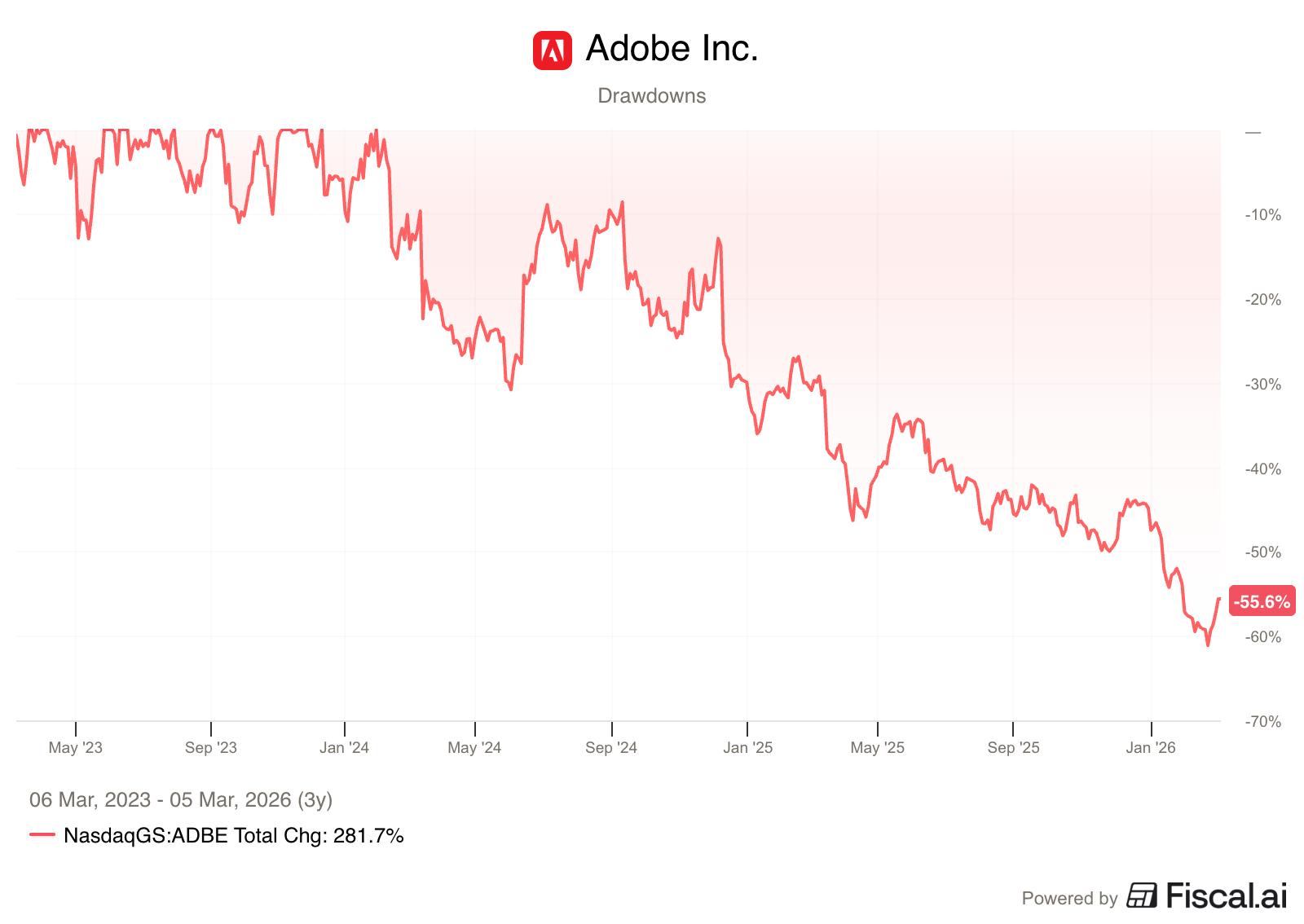
But if we look at the S&P 500 so far this year, it’s barely moved.
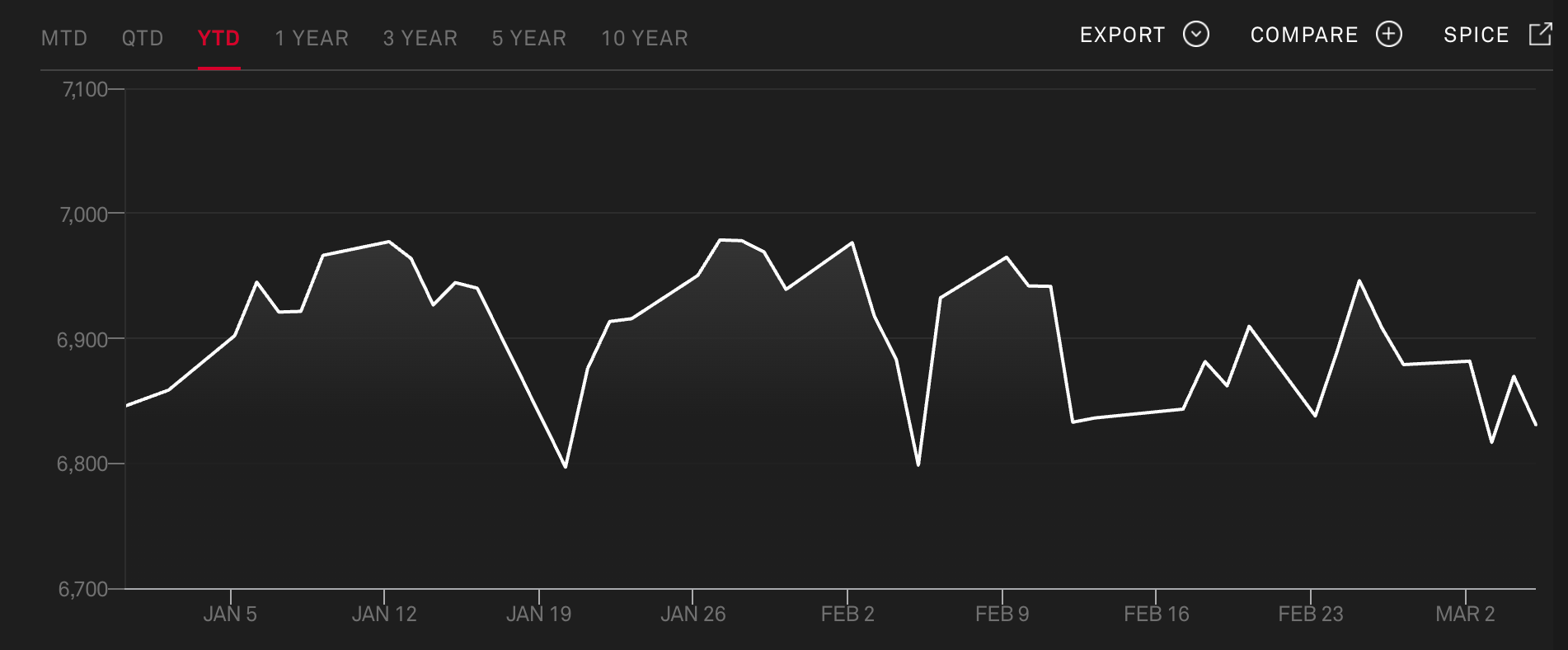
How can this be?
Because while investors are running out of certain stocks or sectors, they’re not leaving the market completely.
We can see this when we look at the market’s dispersion.
This is a measure of the difference in volatility of individual stocks and the index itself.
It’s currently at 24.5 - the highest level ever.

This means the average stock has seen ~25 points more volatility than the index over the last month.
Where are investors running to?
We know that investors are running out of software and professional services.
But it’s probably worth looking at where they’re running to as well.
One place is energy stocks.
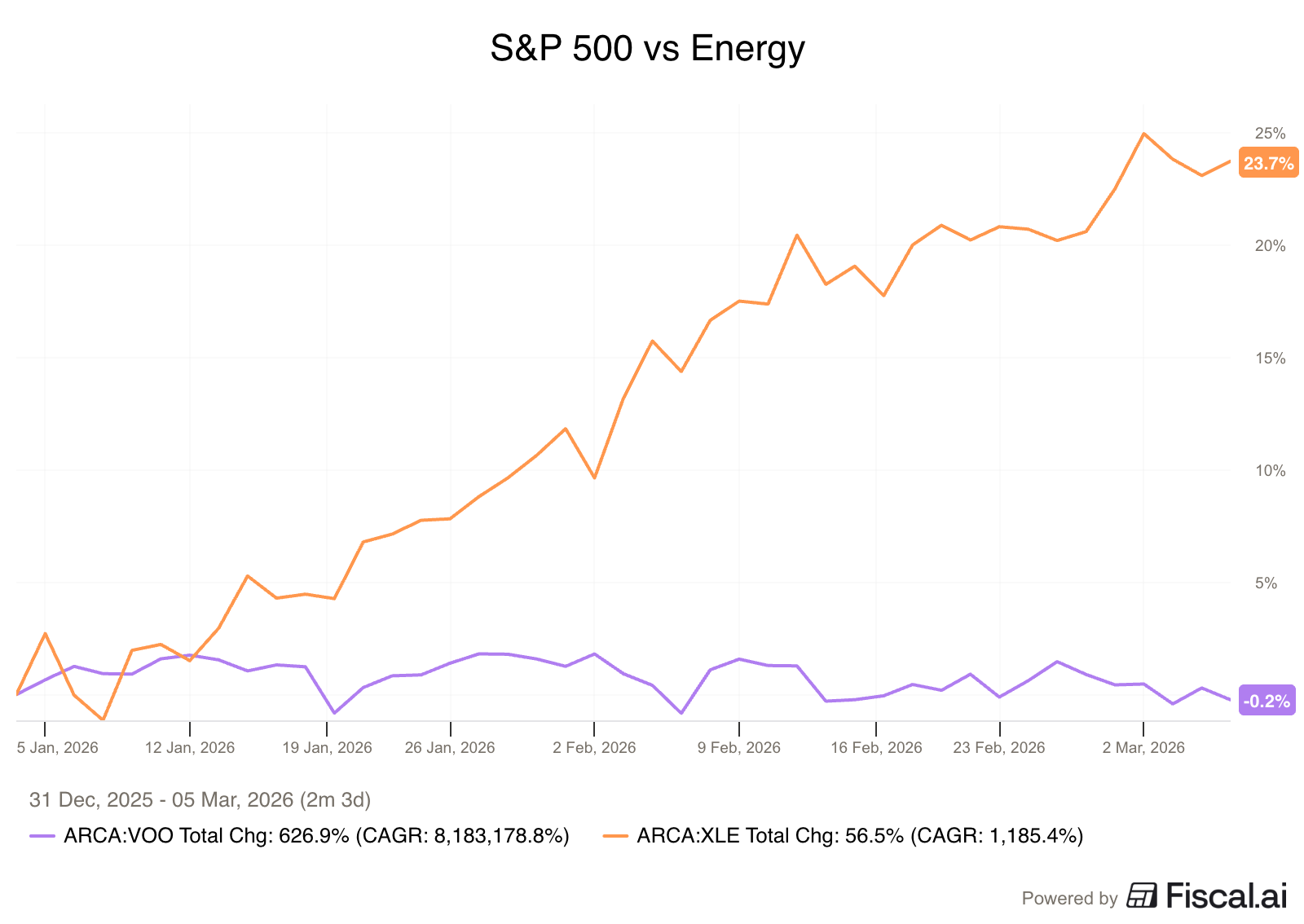
Energy demand is typically fairly stable over time.
But the data center buildout has changed that.
Energy demands and expected to significantly increase, and investors are running to the safety of the stable base demand, while hoping to cash in on the increased demand from AI infrastructure.
Another place investors are hiding out?
Consumer staples like Walmart, Coca-Cola, and PepsiCo.
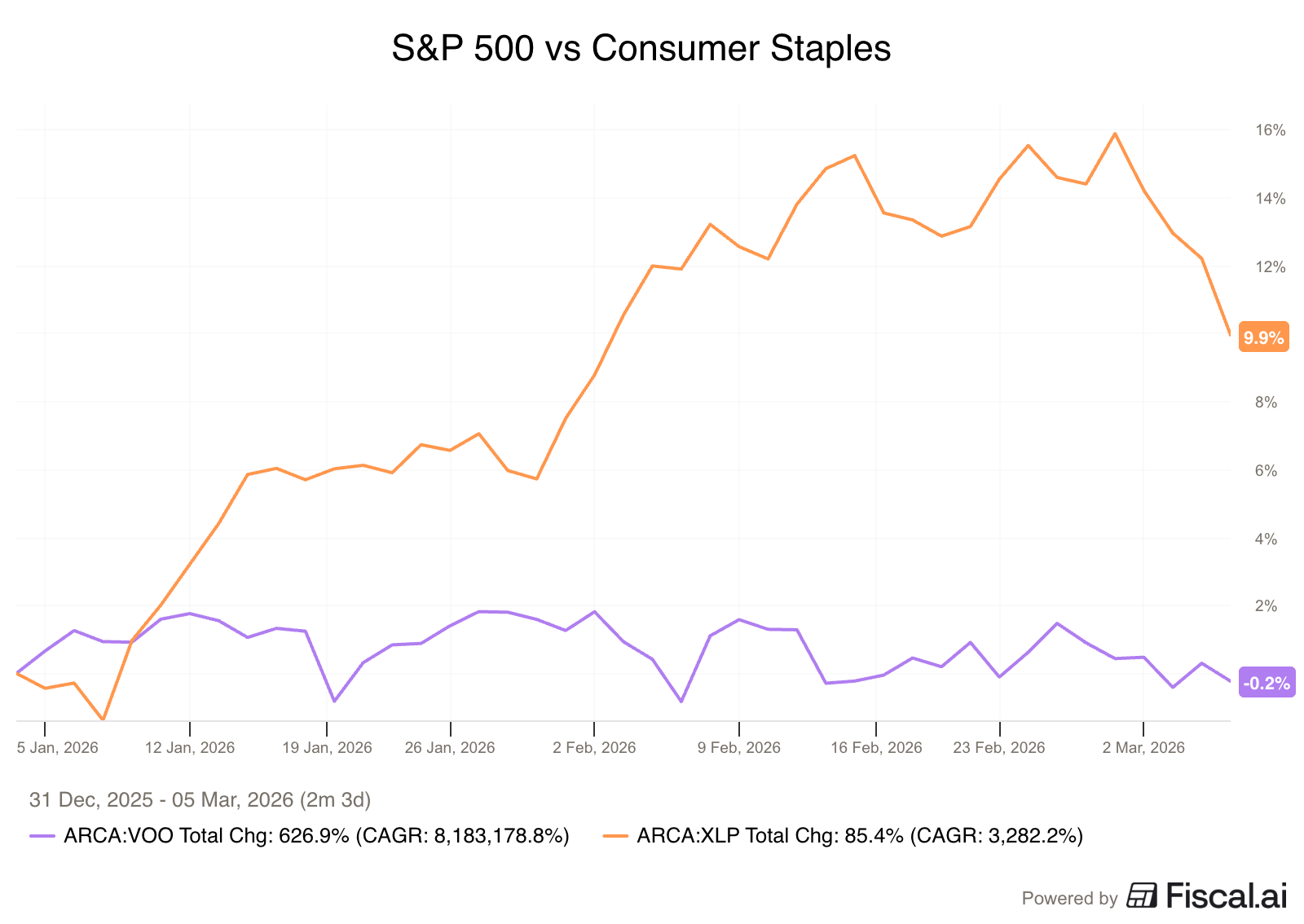
Investors move here when they want to de-risk without going to cash.
These are boring, but safe companies.
No matter what happens with the economy or AI, people still buy toothpaste, soap, and snacks, giving them predictable earnings.
Want proof that even though the S&P 500 is flat for the year, there’s some crazy things going on?
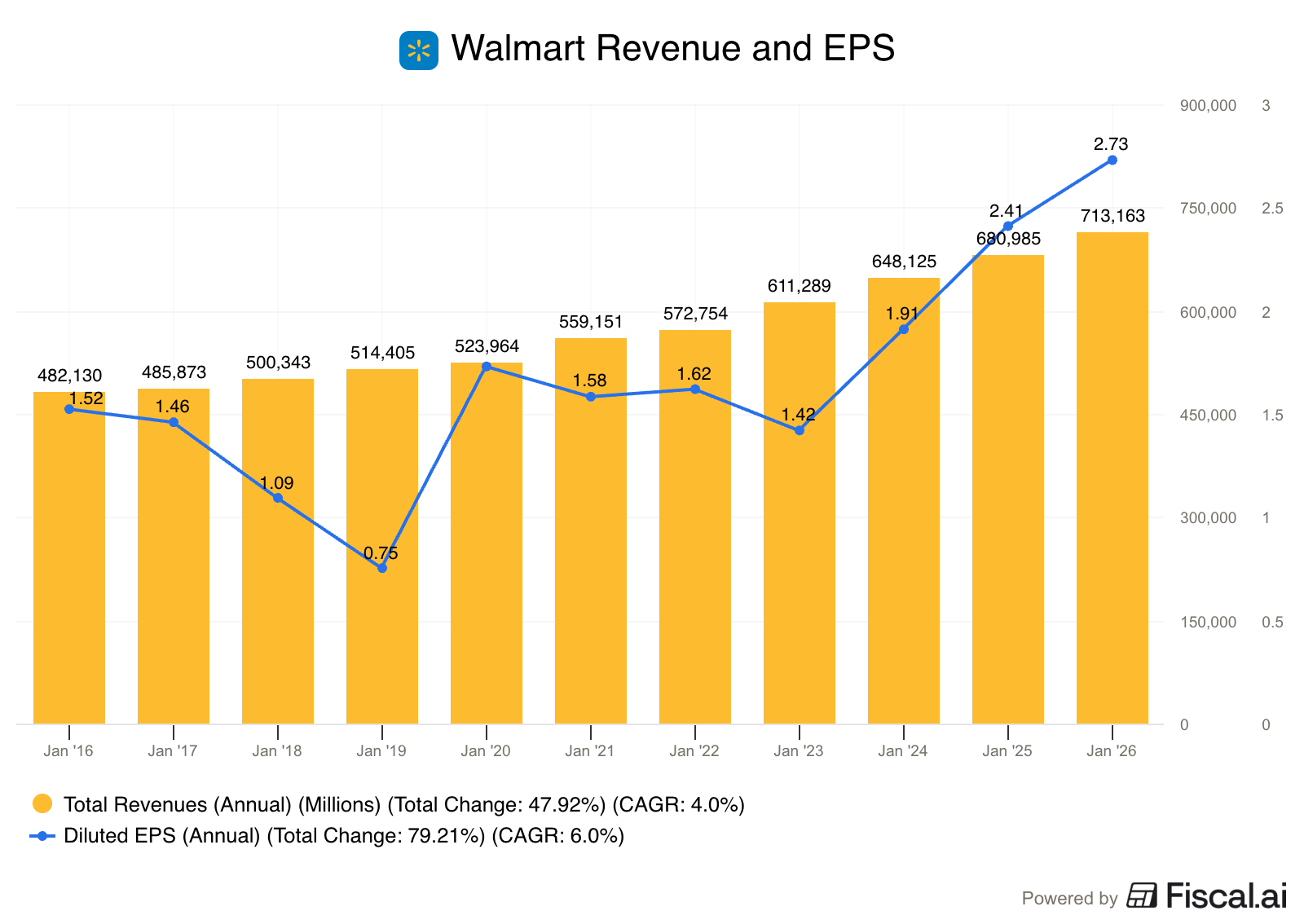
The company providing the majority of the chips fueling the AI data center buildout - NVIDIA is at a lower forward P/E ratio than Walmart.

The point here isn’t that NVIDIA looks particularly cheap.
It’s that Walmart looks pretty expensive.
Paying too much, even for a great company, can lead to terrible returns.
Safety Can Be A Trap
When you pay nearly 50x earnings for a grocery store, you aren’t buying safety, you’re buying what Shelby Davis calls return-free risk.
You are paying a massive premium for a predictable business that grows at single digits.
Where Are The Opportunities?
The best investments come from buying great cash flows when they are unpopular.
With that in mind, I took a look at the Dividend Aristocrats trading at a low P/E multiple or near their 52-week low prices.
And I think there’s some stability and safety to be found at much lower prices than Walmart’s.
Look at the difference in value:
PPG Industries (PPG)
PPG is a Dividend King with 54 years of increases.
It is a global leader in paints and coatings - a business that isn’t going away.
It trades at a forward P/E of 14 and yields 2.4%.

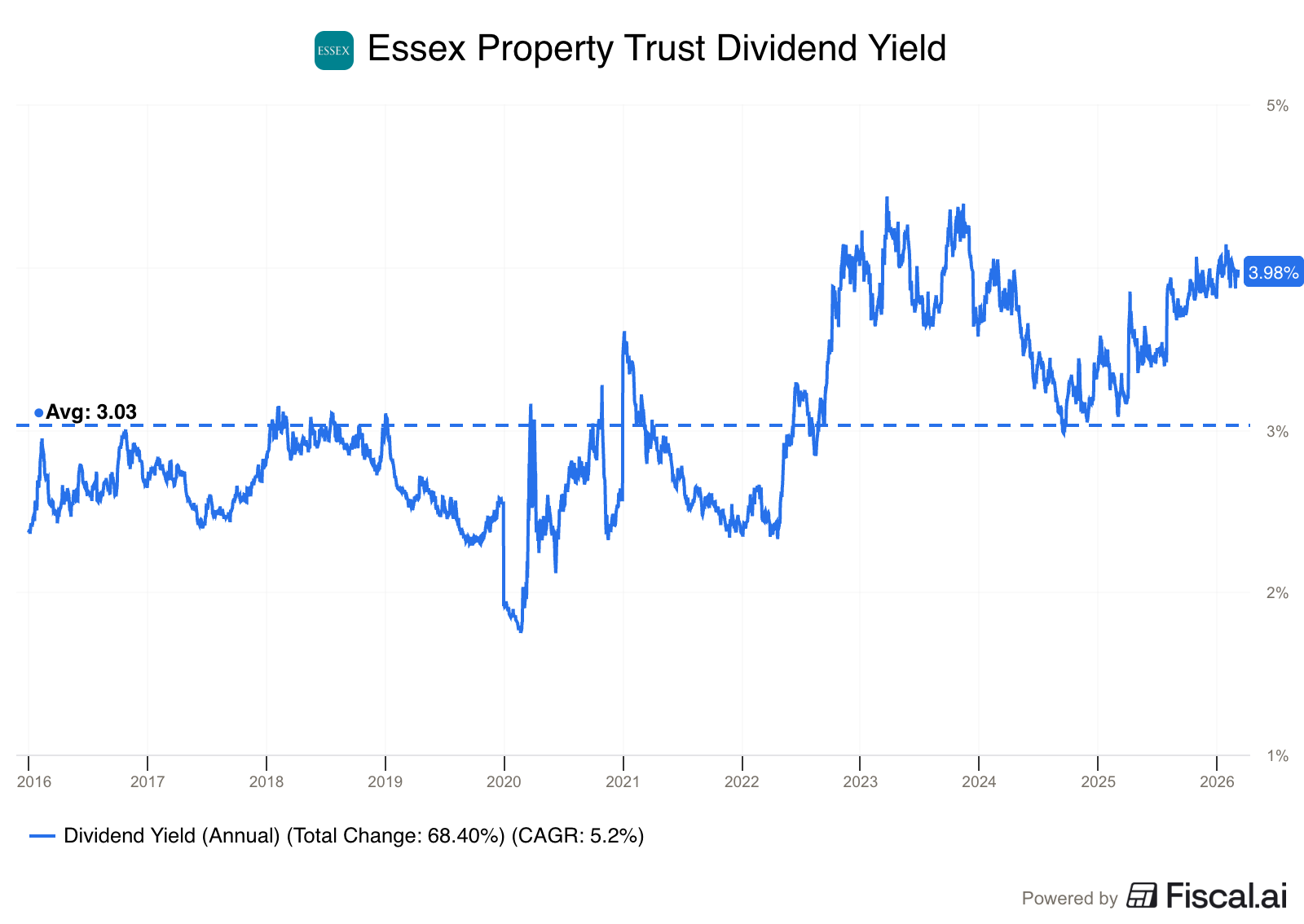
Essex Property Trust (ESS)
This REIT owns high-end apartments in West Coast markets with limited supply.
It’s grown its dividend for 32 years, and has a 4% yield.
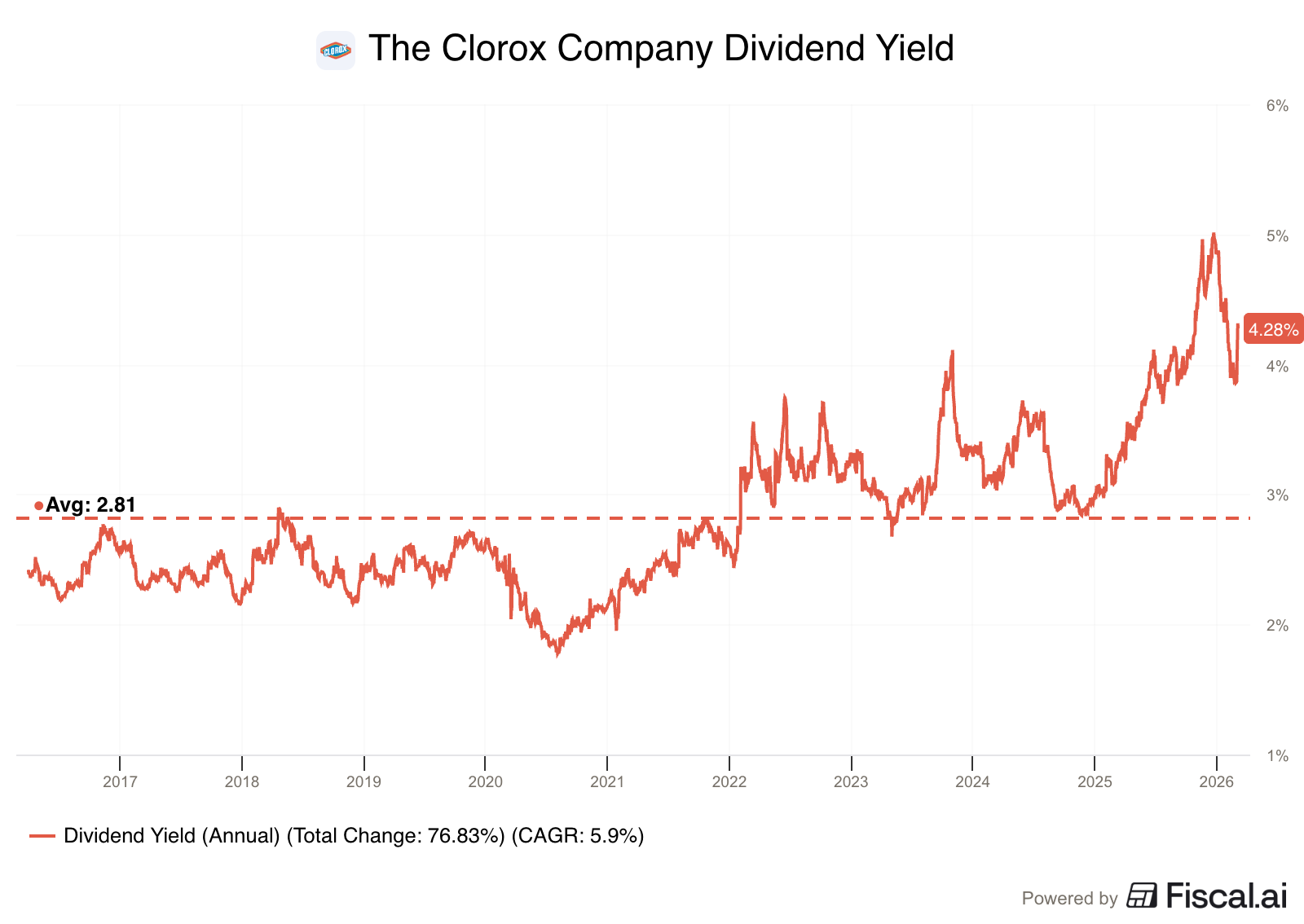
Clorox (CLX)
A Dividend King with 50 years of growth.
Even with its own stable of must-have household brands, it trades at a forward P/E of ~17.5 - less than half the multiple of Walmart, and yields 4.2%.
That’s It For Today!
Here’s what you learned:
A flat S&P 500 hides the internal volatility of individual stocks.
Individual stocks are swinging 25 points more than the index itself.
Investors aren’t leaving the market, they are just moving from areas they’re afraid AI will disrupt into areas they think are safer
Buying a grocery store (Walmart) at 50x earnings is the definition of return-free risk.
Companies like PPG, Essex Property Trust, and Clorox offer better yields and much lower valuations than the overpriced safety of Walmart or Costco.
Never confuse a safe company with a safe investment.
The price you pay determines your return.
One Dividend At A Time,
-TJ
Used sources
Interactive Brokers: Portfolio data and executing all transactions
Fiscal.ai: Financial data
Disclaimer
As a reader of Compounding Dividends, you agree with our disclaimer. You can read the full disclaimer here.
…and even PEP might be influenced by the drugs from Novo and Eli Lilly, selling less snacks..?
Dragged not ‘drug’!