

Something special is happening on June 23rd.
If you want behind-the-scenes updates and early access to our upcoming high-yield reports, join the High-Yield VIP List by leaving your email here.
You’ll get the following immediately when you join for free:
My high-yield stock watchlist
A Checklist of Dividend Investing Mistakes
The Highest Yielding Dividend Aristocrats
👋 Howdy Partner!
Investing is tough. But what if you could legally copy the moves of the best investors in the world?
That’s the power of 13-F filings.
These SEC-mandated reports let you peek into the portfolios of top investors each quarter. It’s like getting a free cheat sheet for investing success.

Mohnish Pabrai put it best:
“I’m a shameless copycat. Everything in my life is cloned … I have no original ideas.”
With that in mind, let’s take a look at the stocks recently bought by legendary superinvestors in Q1 2026, grouped by the underlying themes that make their cash flows so attractive.
1. Cannibals
These companies use their free cash flow to shrink their share counts.
Every time they retire a share, your ownership stake gets a little bigger, and a little more valuable.
Fiserv (FISV)
How does the company make money?
Fiserv owns some of the important plumbing of the financial world. They provide core processing for banks and credit unions, as well as point of sale systems for businesses globally.
Why invest?
Fiserv provides the processing that banks use to maintain their deposit and loan accounts, and post daily transactions - that’s very sticky revenue with very high switching costs
After a CEO change and reset in expectations, the stock looks cheap
Management expects to return the business to growth in 2027
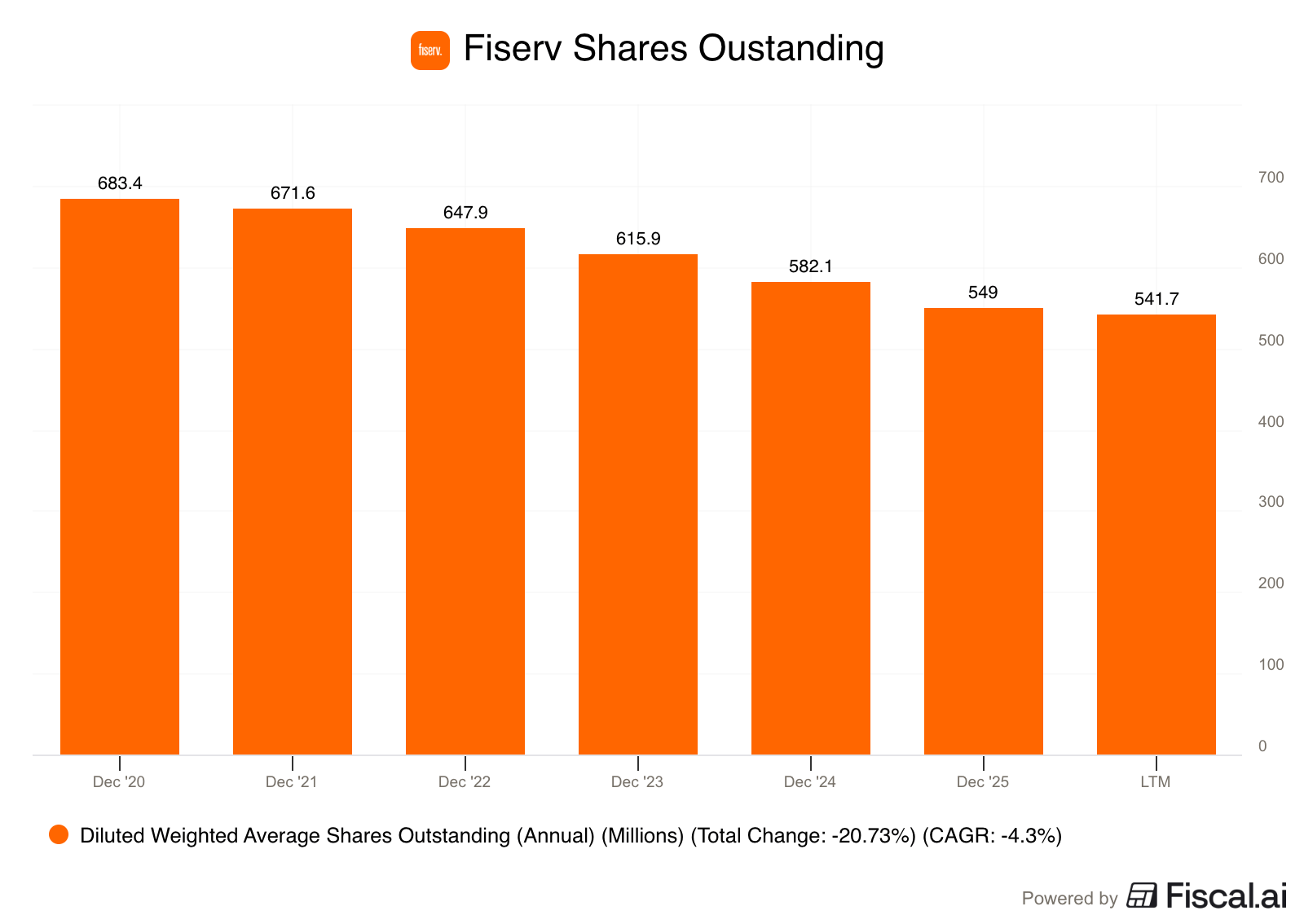
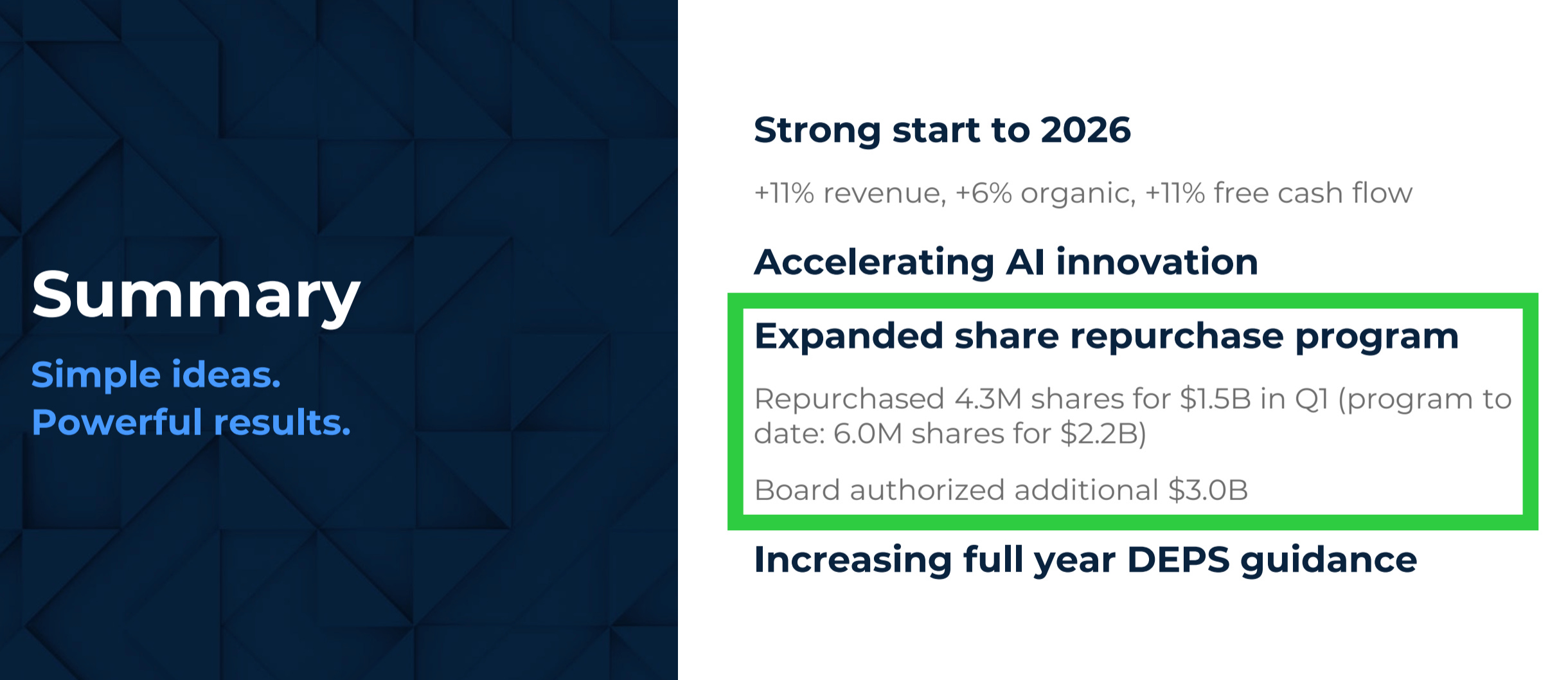
Fiserv has a history of consistently reducing the share count, and buybacks at this valuation are very attractive
Roper Technologies (ROP)
How does the company make money?
Roper is a serial acquirer of Vertical Market Software and technology-enabled products across niche markets.
Why invest?
Roper is a Dividend Aristocrat with 32 years of dividend growth
It’s a very cash-generative business, with consistent FCF margins of 30%+
Fear that AI will disrupt Roper’s software business have driven the valuation down
Management is buying back shares like crazy, reducing the share count by 6% in just 6 months.
Adobe (ADBE)
How does the company make money?
Adobe dominates the creative professional software market with its Creative Cloud suite (Photoshop, Illustrator, Premiere) and Acrobat document management systems.
Why invest?
Subscriptions are sticky, recurring revenue
Adobe has switching costs as the platform that every professional is trained on, and the platform used by nearly every large creative business
Adobe is adding AI right into its products, with AI related revenue tripling year over year in Q1
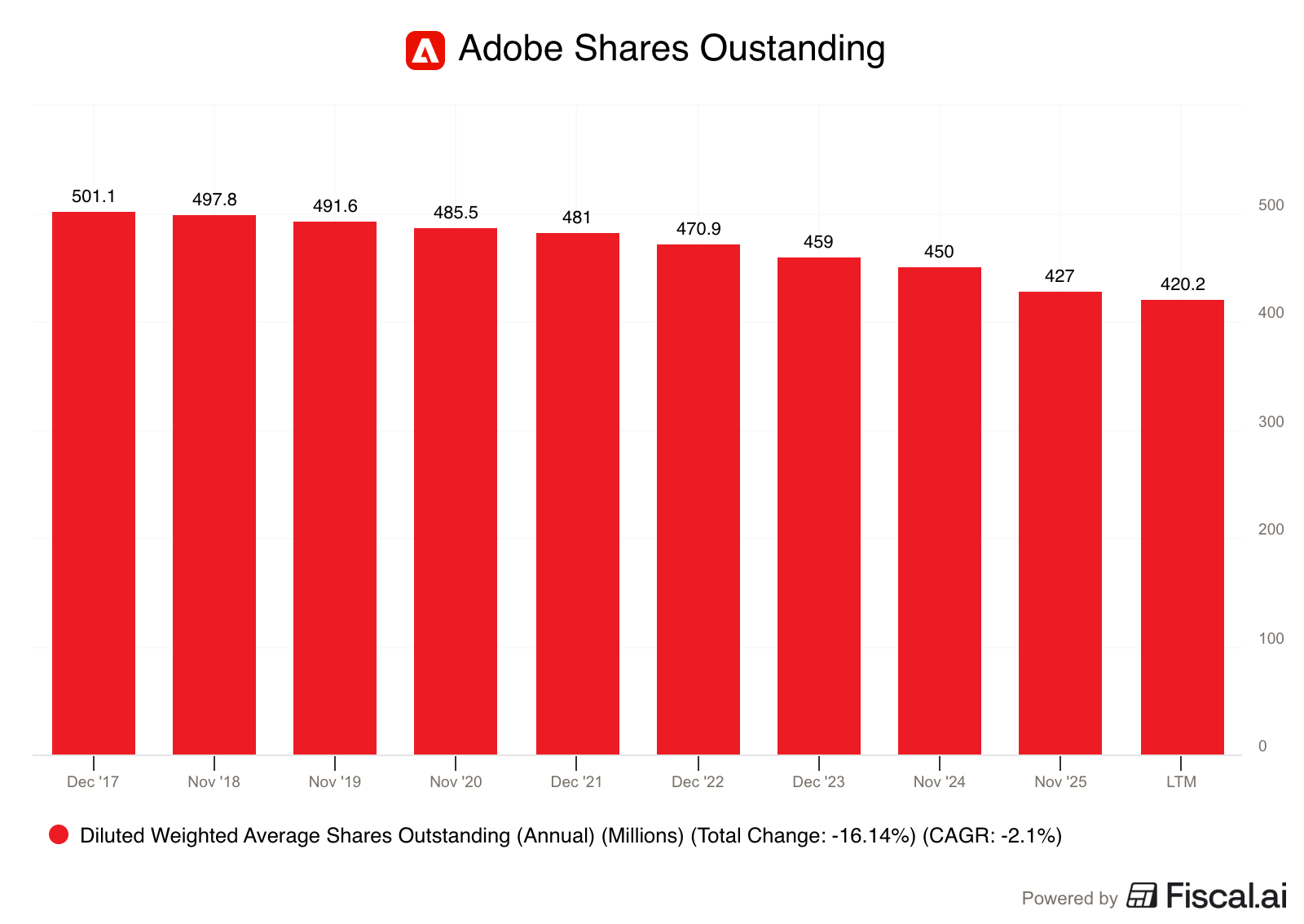
The massive cash flow easily funds ongoing share repurchases, with nearly $4 billion currently remaining authorized
2. Oligopolies
These businesses have limited competition, giving them a lot of pricing power.
Fair Isaac Corp (FICO)
How does the company make money?
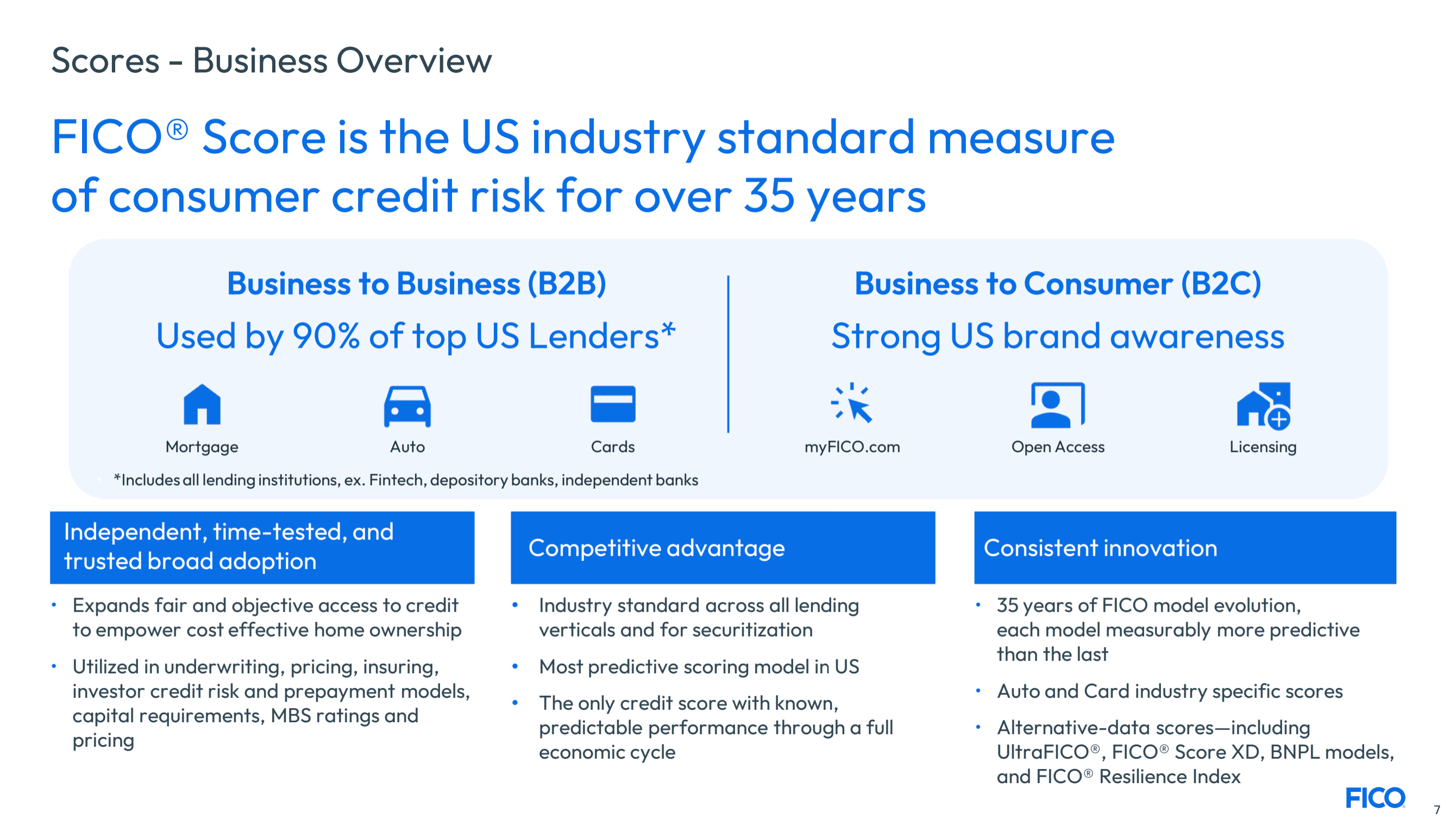
FICO is the king of consumer credit scoring. If you want a mortgage, a car loan, or a credit card, the lender is almost certainly paying a toll to pull a FICO score.
Why invest?
FICO scores are the standard across consumer lending
The company has incredible pricing power, raising the price of a score 10x over the past 4 years
The market is afraid that AI will disrupt FICO’s business, pushing the stock price down nearly 50% from its high
S&P Global (SPGI)
How does the company make money?
S&P Global provides credit ratings, data analytics, and licenses its stock indexes to the financial world.
Why invest?
Operates in a highly lucrative oligopoly (alongside Moody’s and Fitch)
Capital-light, recurring revenue model
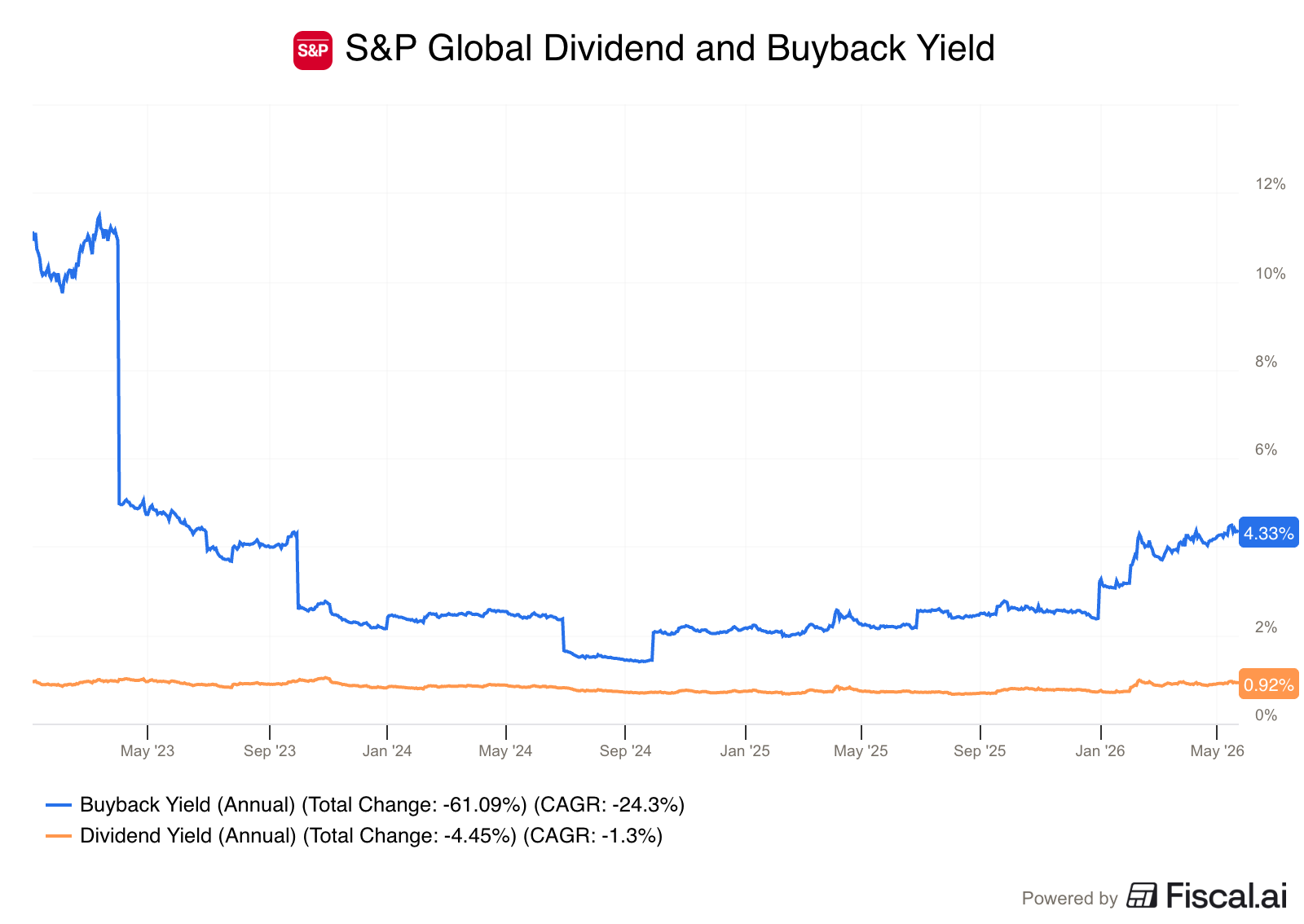
S&P Global is a Dividend King and also regularly returns capital through share repurchases
Accenture (ACN)
How does the company make money?
Accenture is an IT consulting and professional services company. They help the largest enterprises in the world transition to cloud computing, integrate AI, and optimize their supply chains.
Why invest?
Accenture is the top IT consulting firm giving them a strong brand, high trust, and high switching costs
Their scale means they’re the only firm that can be a one stop shop for any project, anywhere in the world
Fear that AI will reduce Accenture’s billable hours has pushed the stock price down, but the company has already moved more than half of its work to fixed-price contracts
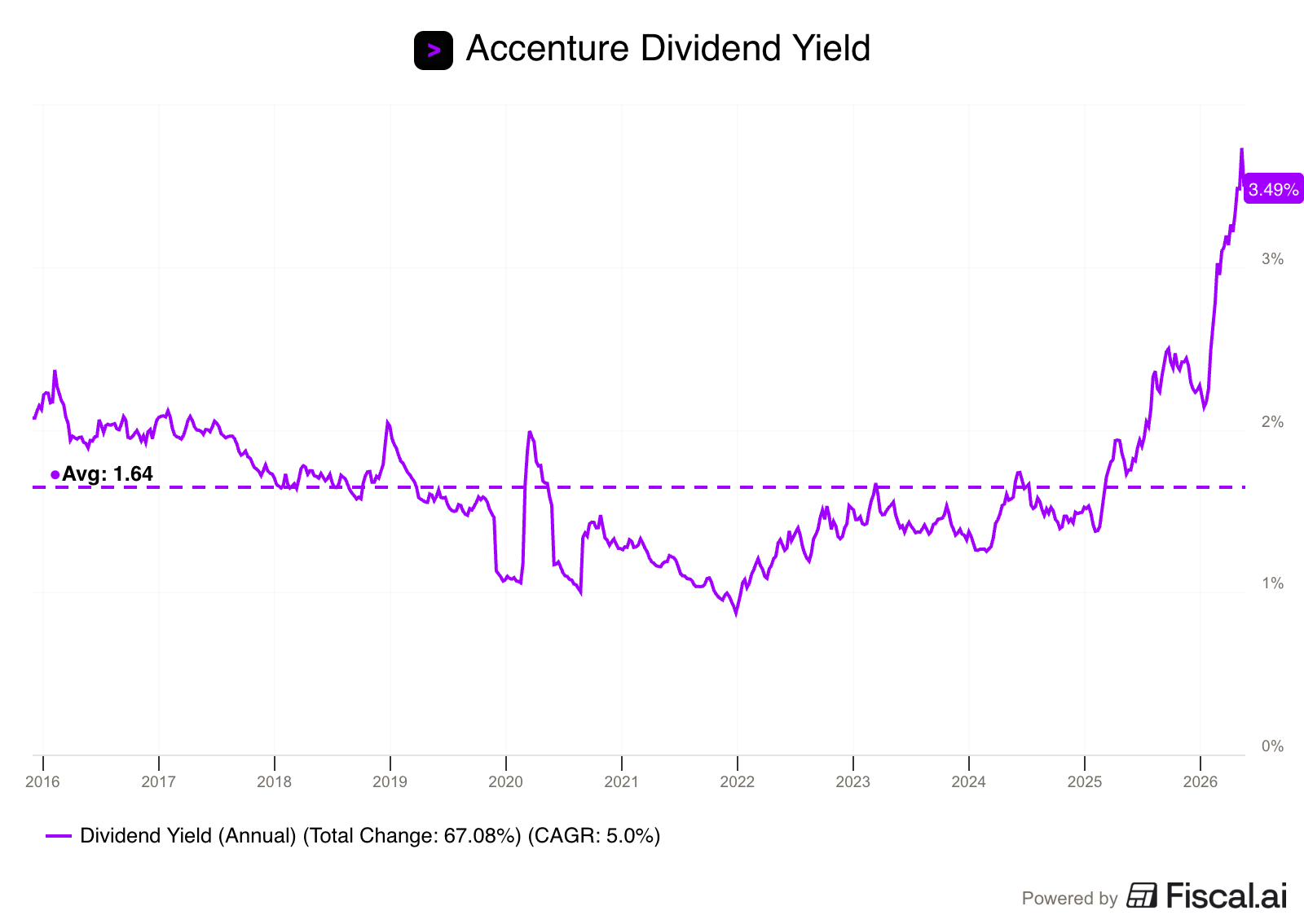
Accenture has raised its dividend for more than 20 years, and is now trading at more than 2x its historical average dividend yield
Cash Cows
What this group lacks in growth, it makes up for with stability and cash generation.
Comcast (CMCSA)
How does the company make money?
The media and theme park assets grab the headlines, the core of the business is their massive broadband internet and communications infrastructure across the US.
Why invest?
Comcast’s broadband infrastructure is nearly impossible to replicate and is an absolute cash cow
The parks business (Universal Studios and Islands of Adventure) is growing quickly and has very high margins
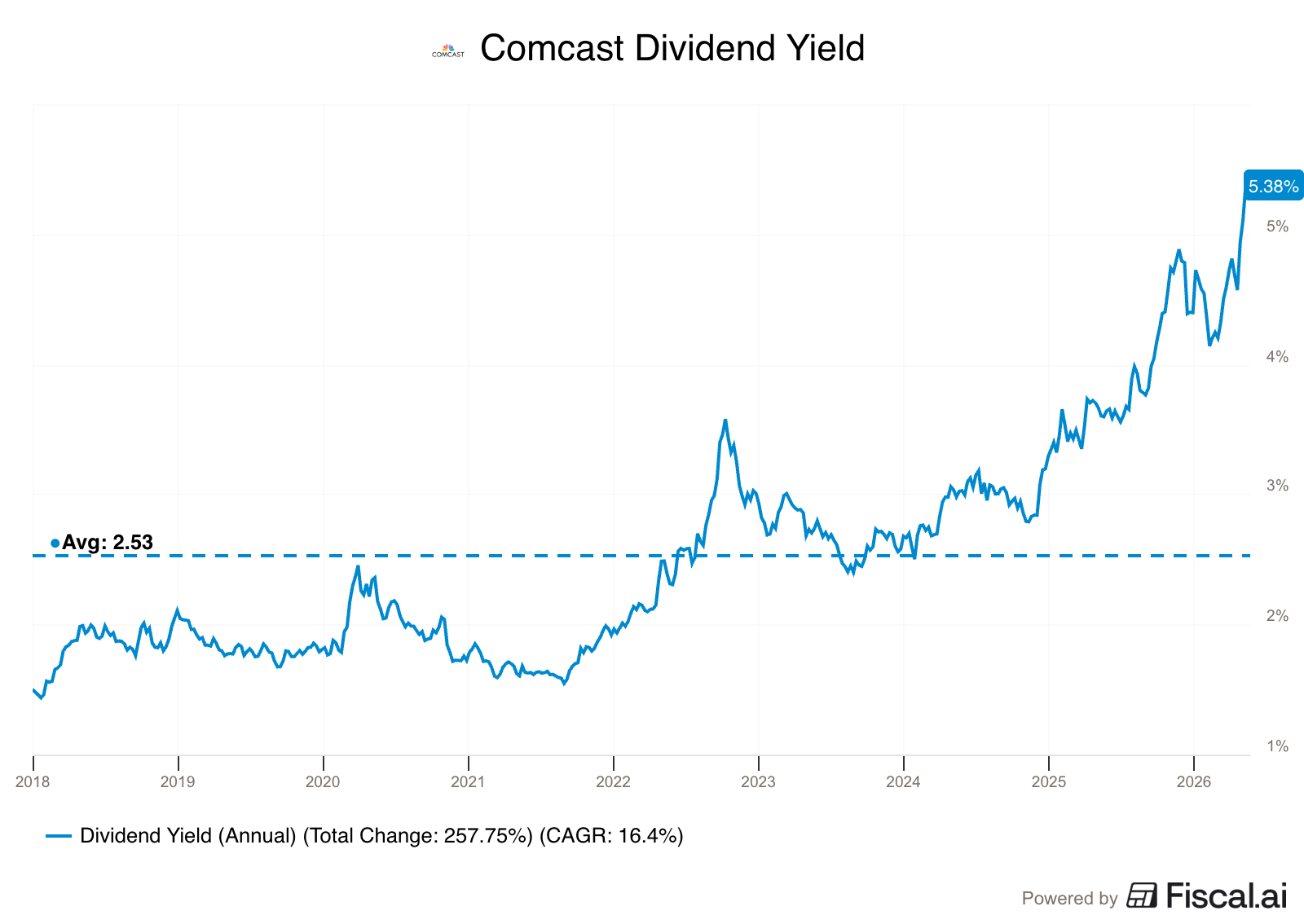
Comcast’s dividend has grown for 18 years, yields 5%+, and is very well covered by earnings
Ferguson Enterprises (FERG)
How does the company make money? Ferguson distributes plumbing and HVAC supplies. Their customers range from large commercial contractors to local service professionals.
Why invest?
Ferguson is boring but beautiful - people will always need running water and working heat
They operate in a highly fragmented market, and their scale gives them cost advantages that competitors can’t match
Because their main customers are contractors who need a network of physical stores, Ferguson has limited exposure to online competition
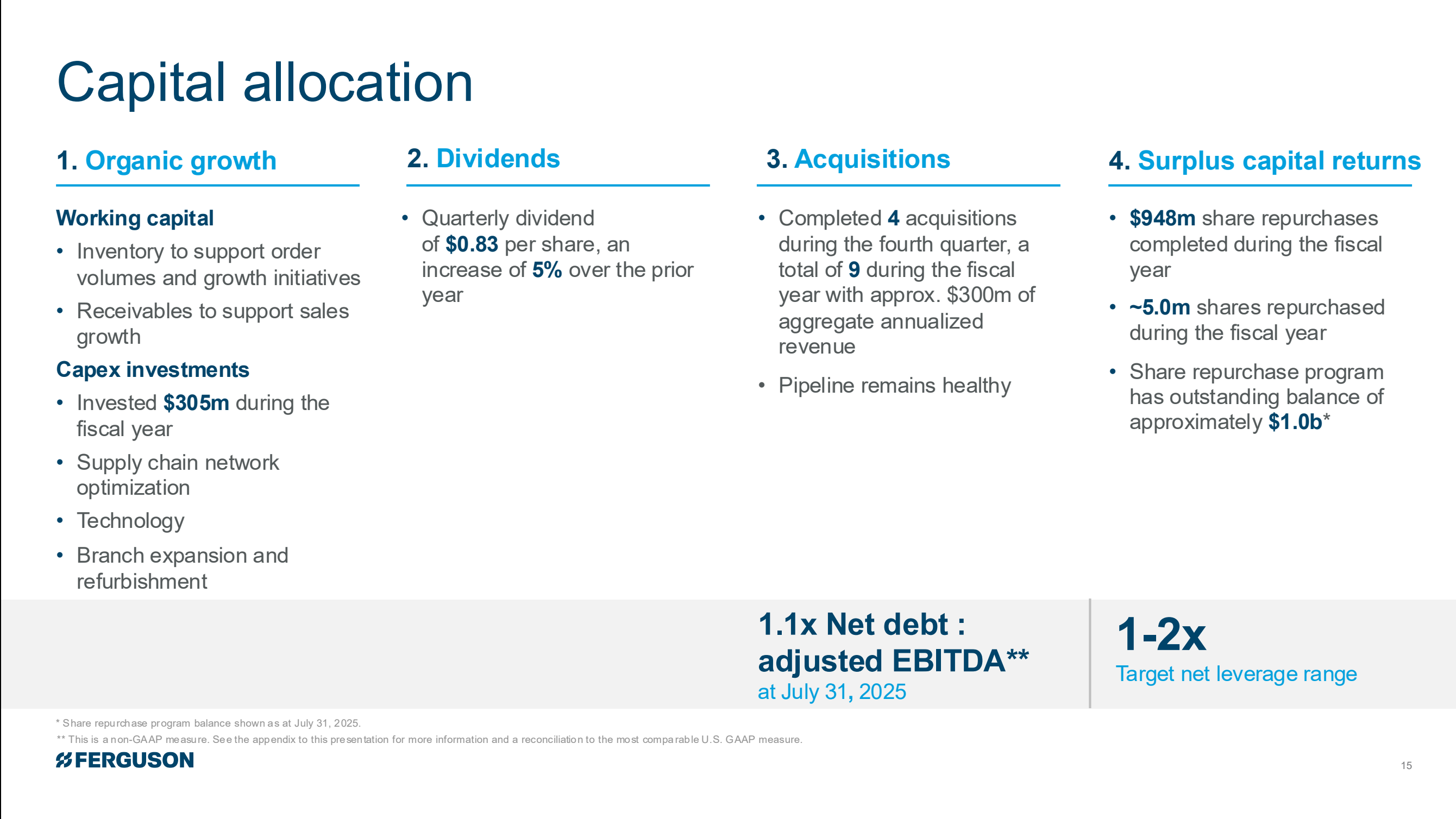
Ferguson has a very clear (and sensible) policy on how to returns a lot of the cash they generate to shareholders
4. Healthcare
Superinvestors are finding value in the healthcare sector as well. Let’s highlight two companies we already own:
Novo Nordisk (NVO)
How does the company make money?
Novo Nordisk dominates the global market for diabetes and obesity care, most notably through its blockbuster GLP-1 medications like Ozempic and Wegovy.
Why invest?
Novo Nordisk has launched several excellent products recently
Wegovy HD offers weight loss on par with Eli Lilly’s Zepbound
The Wegovy Pill has been incredibly successful
The market for Novo Nordisk’s products continues to expand very rapidly, giving them a long runway for growth
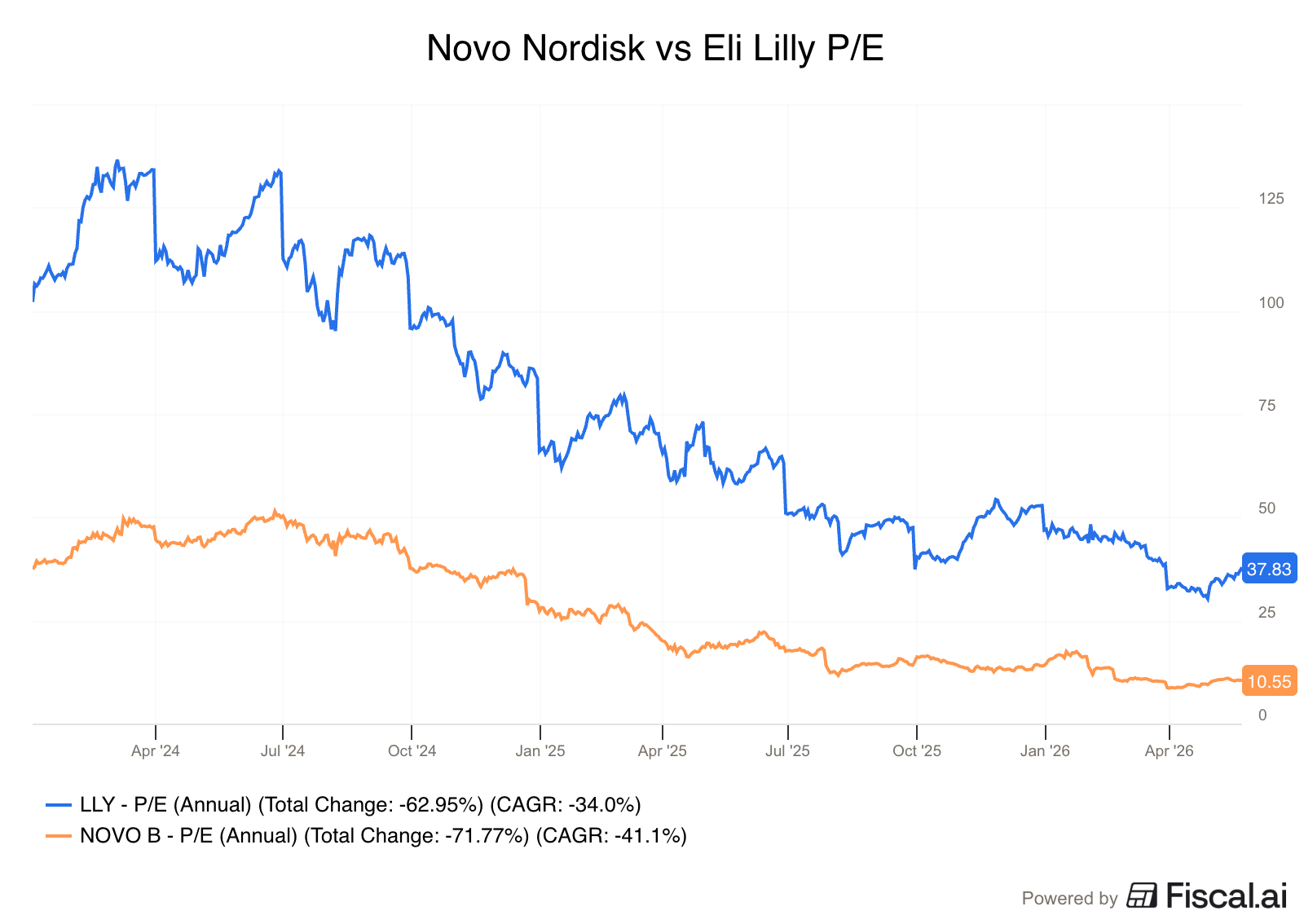
The market still hasn’t full bought into the growth story around oral GLP-1 medications, leaving Novo Nordisk trading at nearly 1/4th of Eil Lilly’s P/E multiple
Zoetis (ZTS)
How does the company make money?
Zoetis is the global leader in the discovery, development, and manufacturing of medicines and vaccines for companion animals and livestock.
Why invest?
The fundamental thesis of pet humanization and livestock health hasn’t changed
The stock is way cheaper right now than when many of these superinvestors were buying it
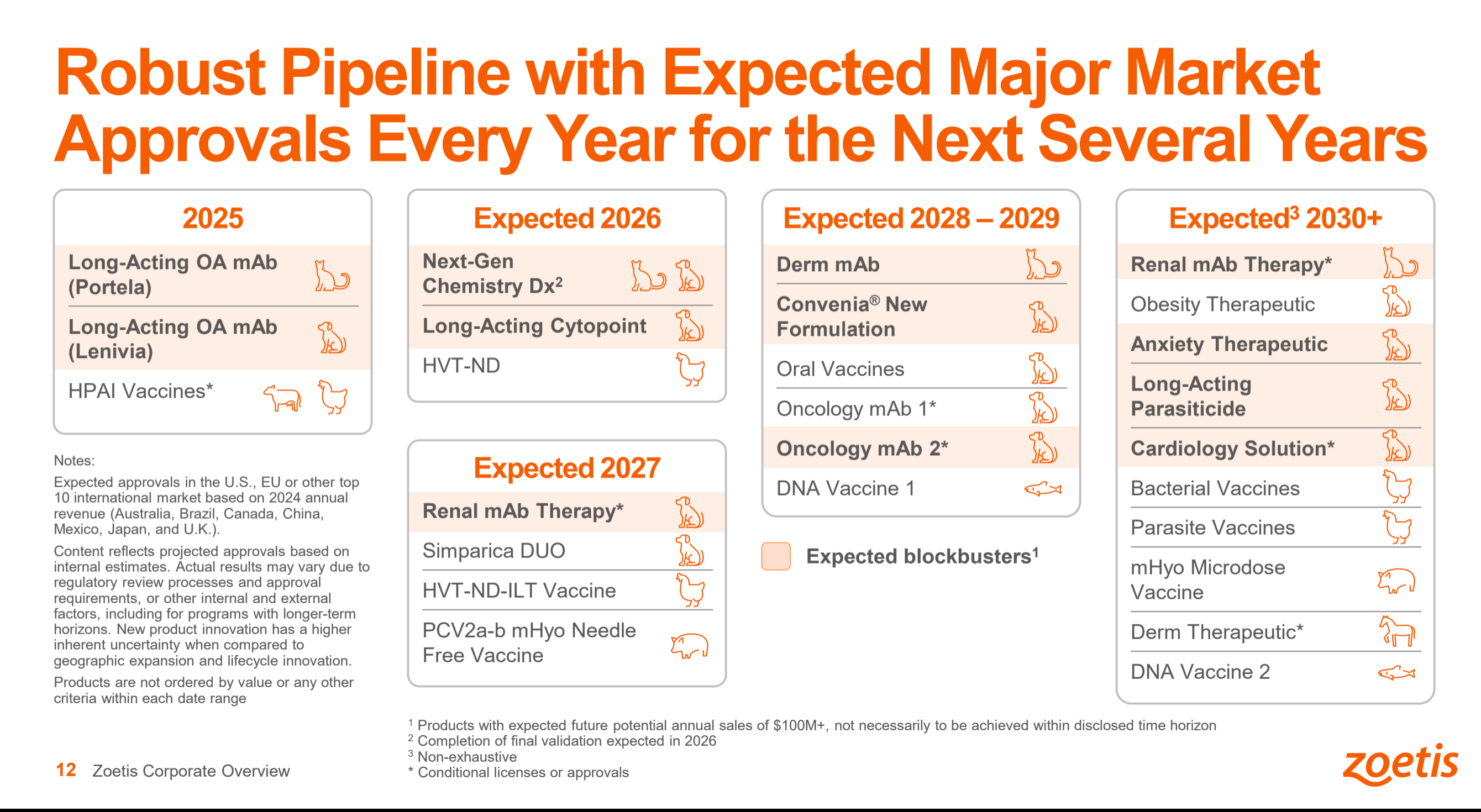
Zoetis is in a temporary period of slow growth, but has more than 12 potential blockbuster medications in its pipeline
Final Thoughts
There’s no shame in copying the best.
These investors have spent decades perfecting their craft, and now you can piggyback off their hard work.
Just remember: Do your own research before making any investment.
Even the best investors aren’t right 100% of the time.
One Dividend At A Time
-TJ
P.S.
On June 23rd, we are kicking off a series all about high yield investing.
If you want to maximize your portfolio’s income without sacrificing business quality, jump on the VIP Waitlist.
You’ll get behind-the-scenes updates and the very first invite to download our brand-new high-yield special reports the minute we go live.
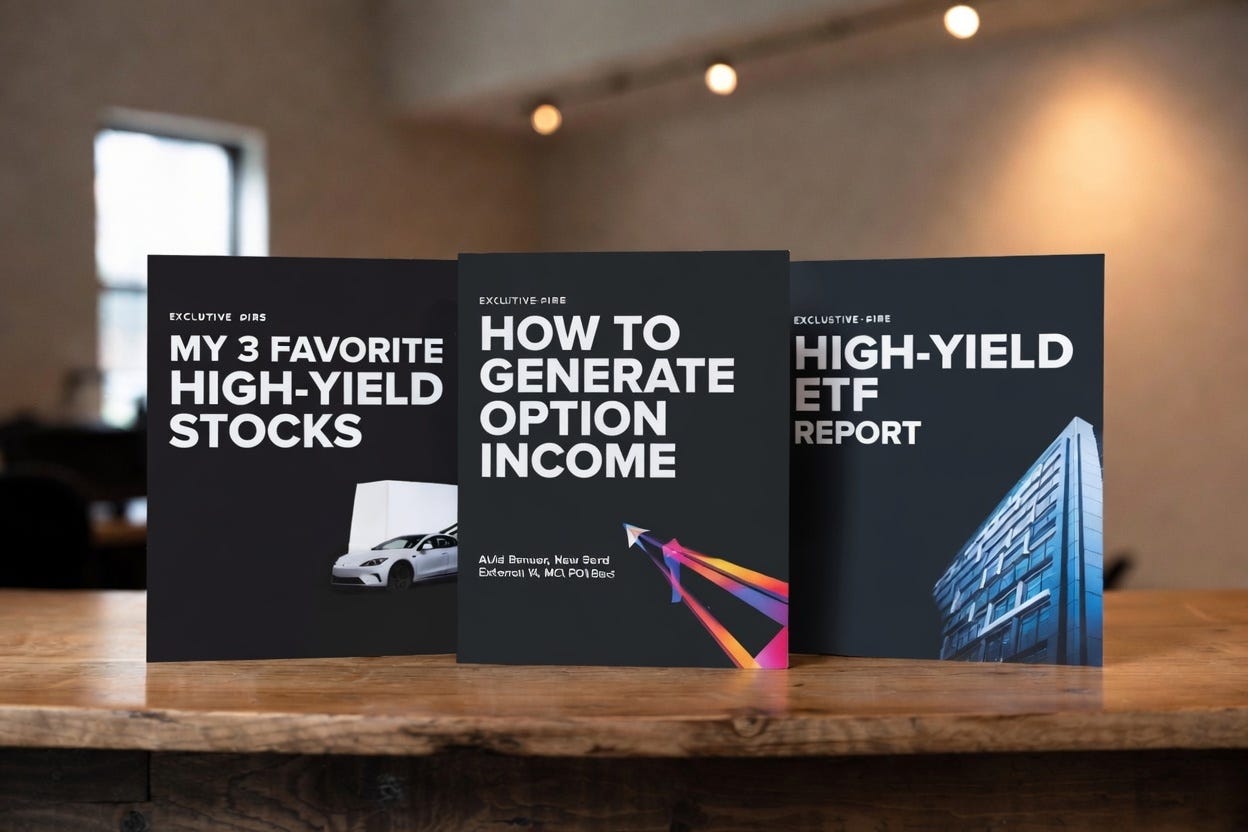
Don't forget that you’ll also get the following just for joining the VIP list:
My high-yield stock watchlist
A Checklist of Dividend Investing Mistakes
The Highest Yielding Dividend Aristocrats
Used sources
Interactive Brokers: Portfolio data and executing all transactions
Fiscal.ai: Financial data
Disclaimer
As a reader of Compounding Dividends, you agree with our disclaimer. You can read the full disclaimer here.