

Most investors think that stock prices going up means a company is doing well.
Not always.
Check out Tesla.
You would think that if they sold more cars, and had more revenue that the stock price would go up.
And if they sold less cars, and revenue dropped that the price would go down.
Nope.
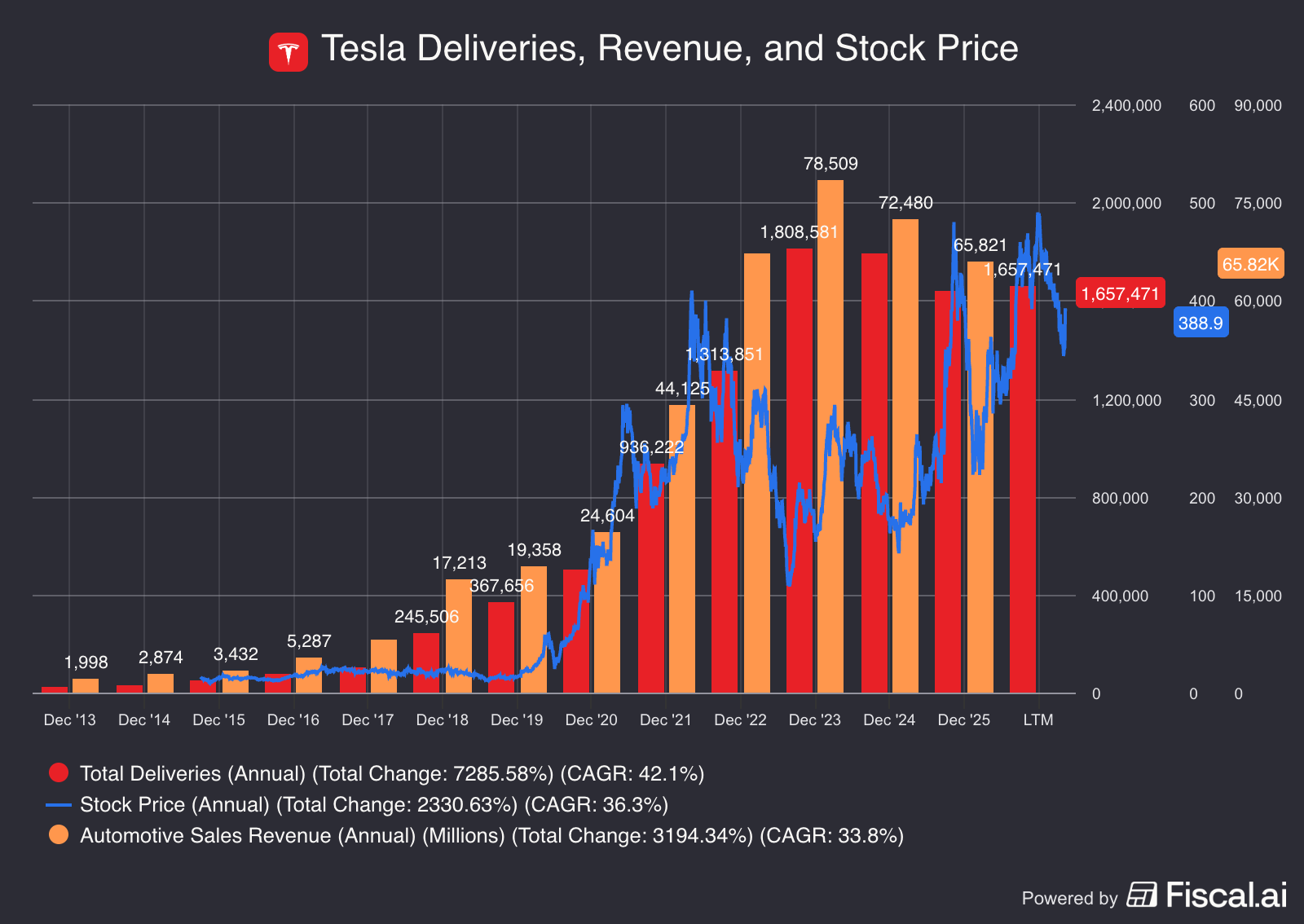
What’s going on?
A stock price is a market outcome.
It’s a collective guess from millions of investors about what a company might be worth in the future.
Keep in mind that for different investors, ‘the future’ might be 10 seconds from now, 10 days from now, or 10 years from now.
Stock prices can be driven by headlines, interest rates, previous price moves, or FOMO.
Dividends are a business outcome.
They’re paid from the company’s profits.
Or more specifically, cash.
Let’s stay in the Mag 7 for example with a company that’s paid and grown dividends for a long time.
Microsoft.
Look at how the dividends and earnings grow together.
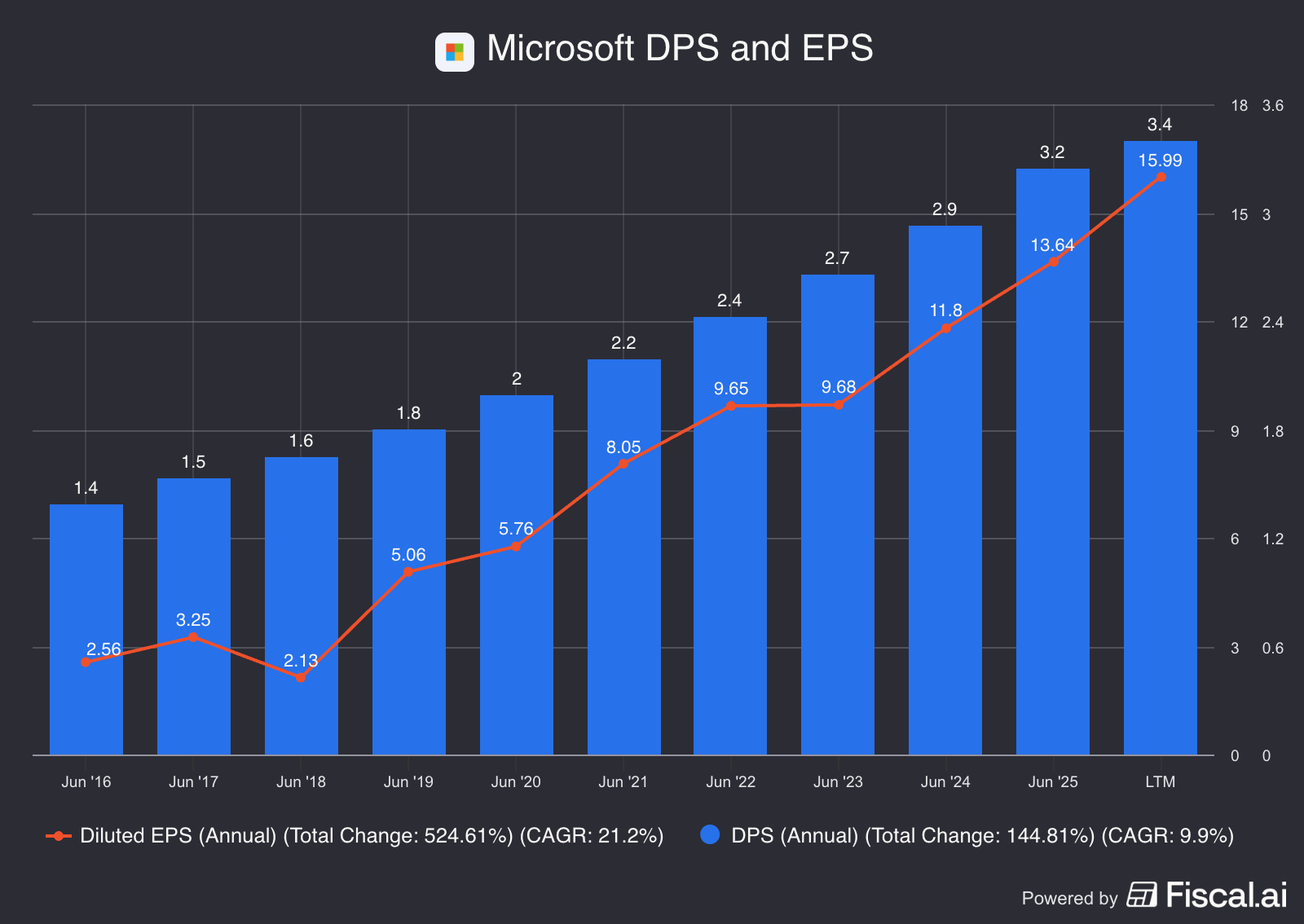
A company isn’t required to grow the dividend.
They could make more money and decide to do something else with it, like acquire another company, build another factory, or try out a new product line.
Growing Dividends Are A Signal
Dividends are a commitment.
Once a company starts paying them, investors expect them to keep coming.
One thing management hates is cutting a dividend.
When they raise the dividend, it’s a signal that they think their earnings are sustainable.
It’s a public bet on the company’s future earnings potential.
Compare Microsoft’s chart above with this one from Nutrien.
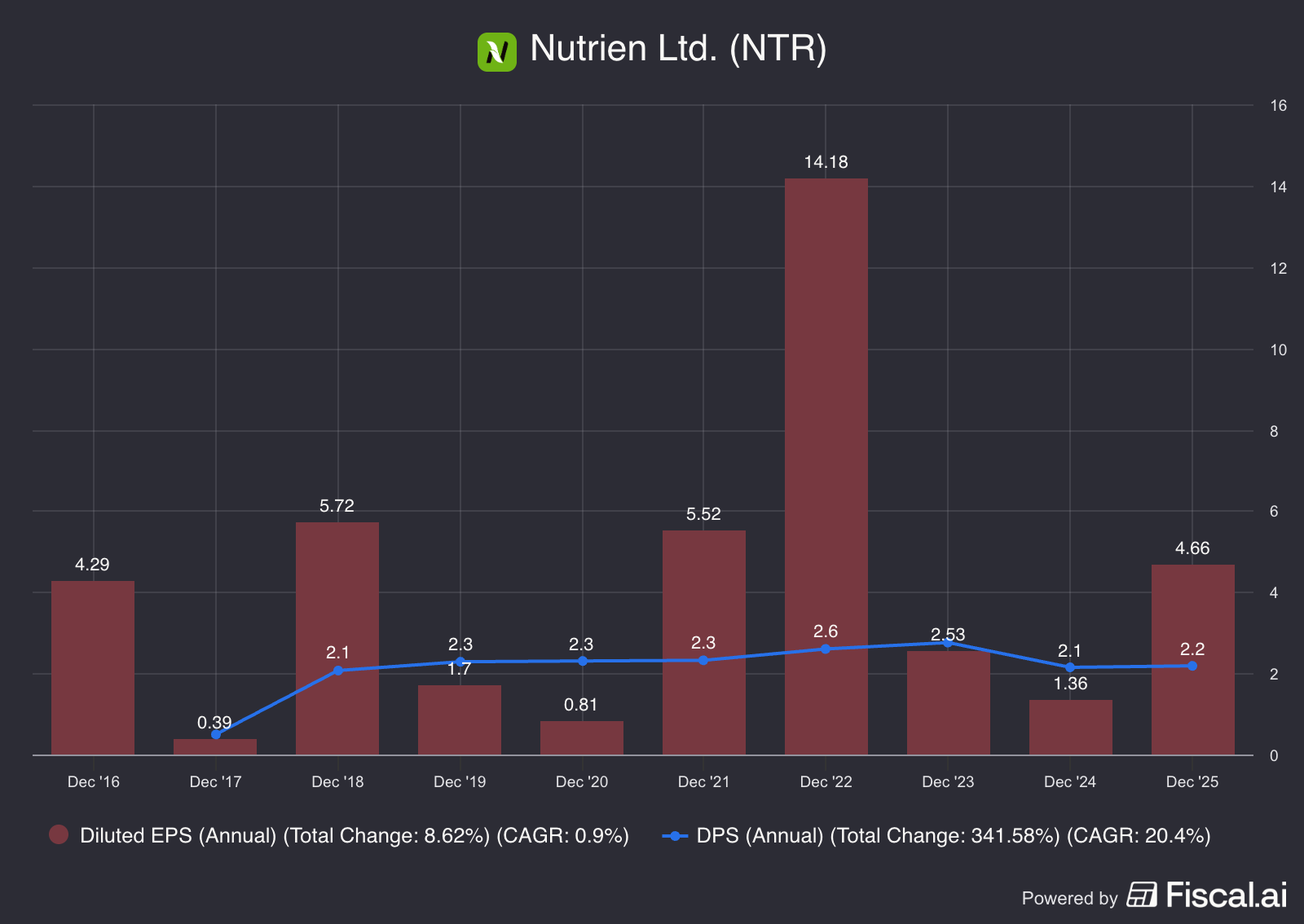
Nutrien is a cyclical company, so there are periods where the earnings go way up, but the dividend doesn’t follow.
That’s because management knows that next year, prices could crash and earnings could go back down.
Four Reasons Dividends Go Up
1. Earnings Growth
This is the most obvious path.
The company sells more products or raises prices, producing more profits.
More revenue + stable margins = More cash.
Stable revenue + growing margins = More cash.
Fastenal is a great example of this one.
They have steady revenue and earnings growth, and the dividend has grown right along with them.
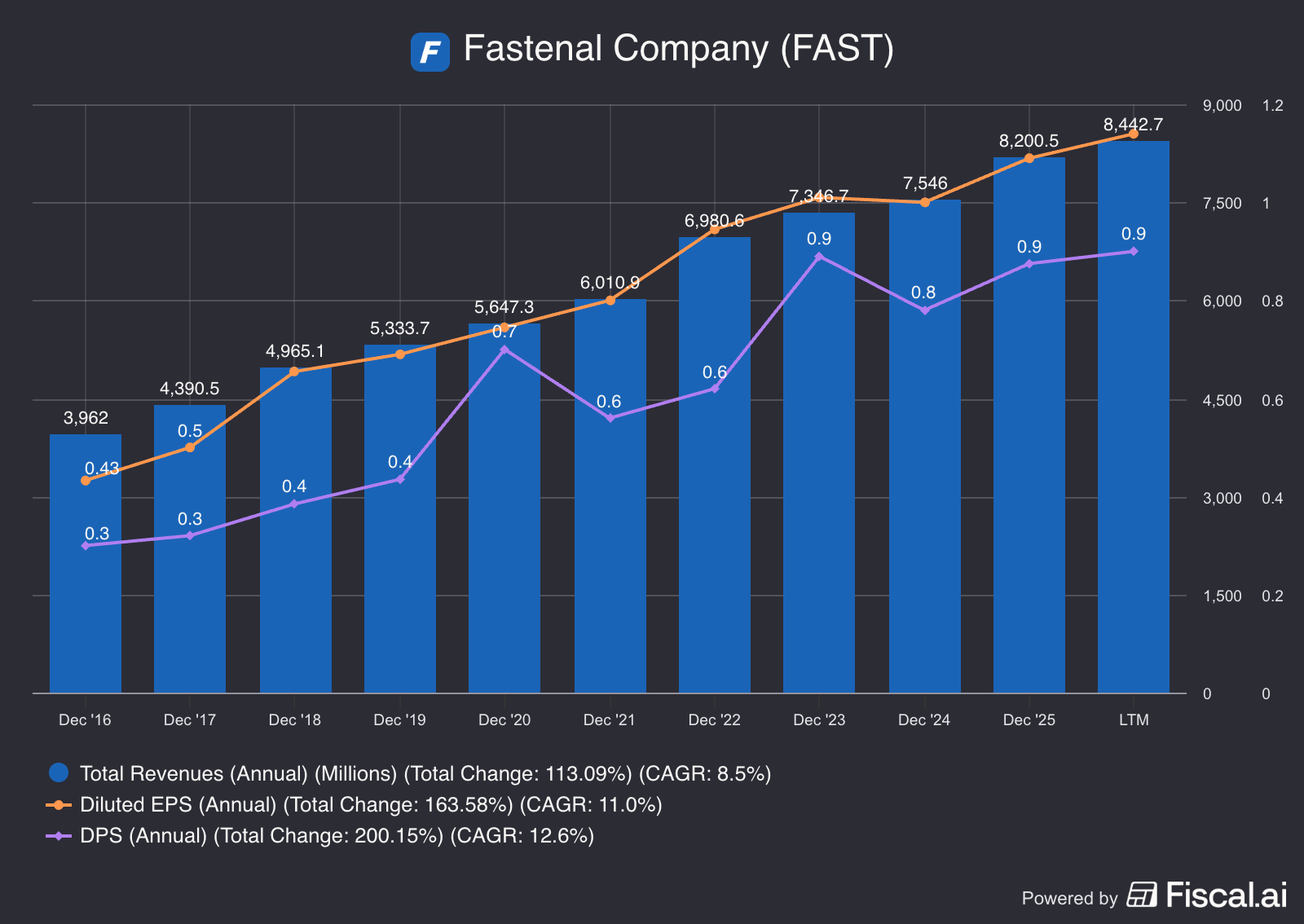
The dividend spikes in 2020 and 2023 are due to special dividends paid out.
2. Buybacks
Management can give you a raise without actually earning a penny more in total profit.
If a company buys back its own stock, there are fewer shares
That means you own a bigger portion of the company
The dividend per share can go up, while the total amount paid out in dividends stays the same because they are dividing the same pile of cash among fewer people.
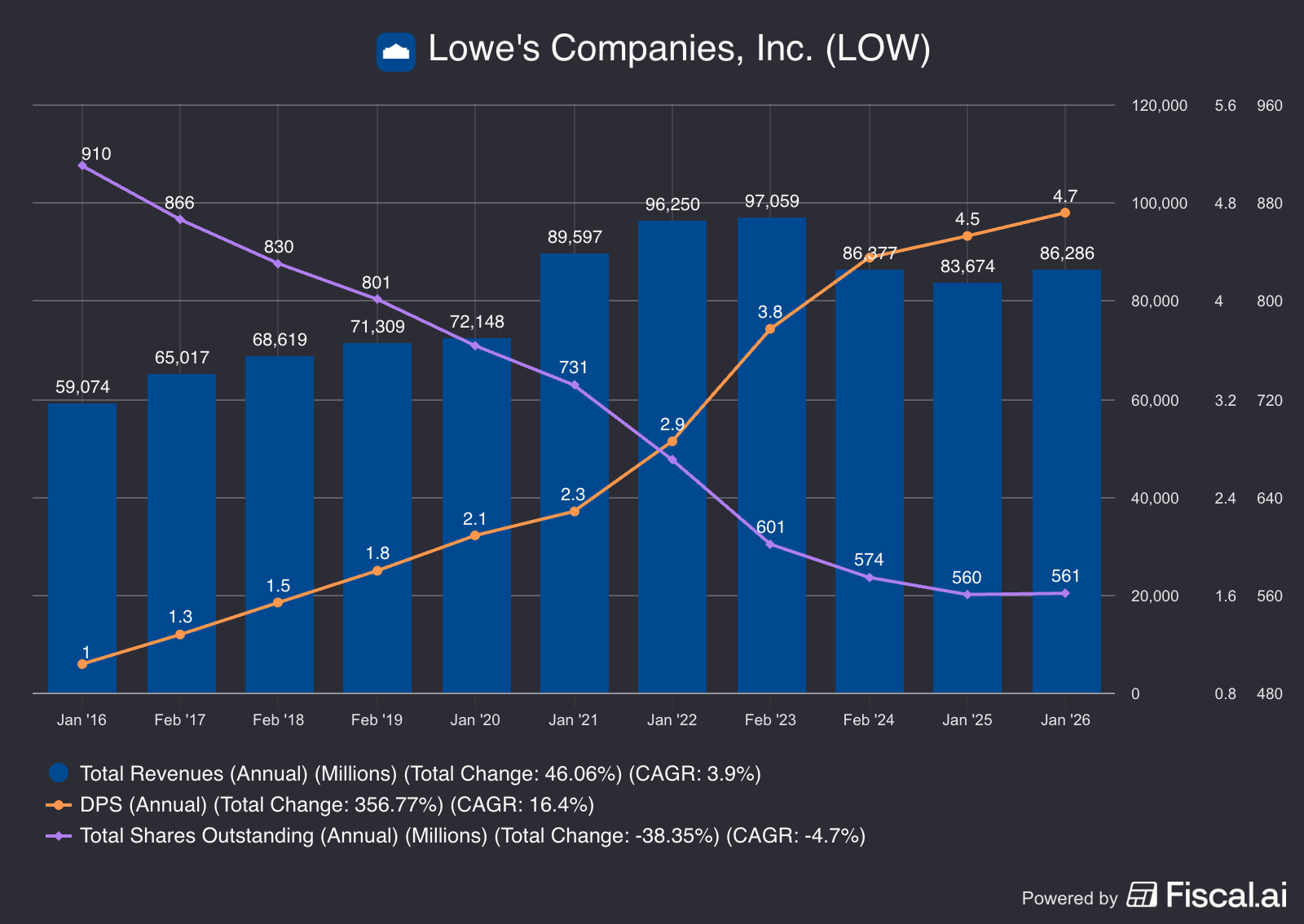
A great example of this one is Lowe’s.
Their revenue doesn’t grow quickly, but the dividend does.
That’s because Lowe’s has reduced the share count by almost 40% over the past 10 years.
3. Debt Paydown
Interest is just a dividend paid to the bank.
Less debt = lower interest payments
That unlocks cash that can be paid to shareholders instead of the bank
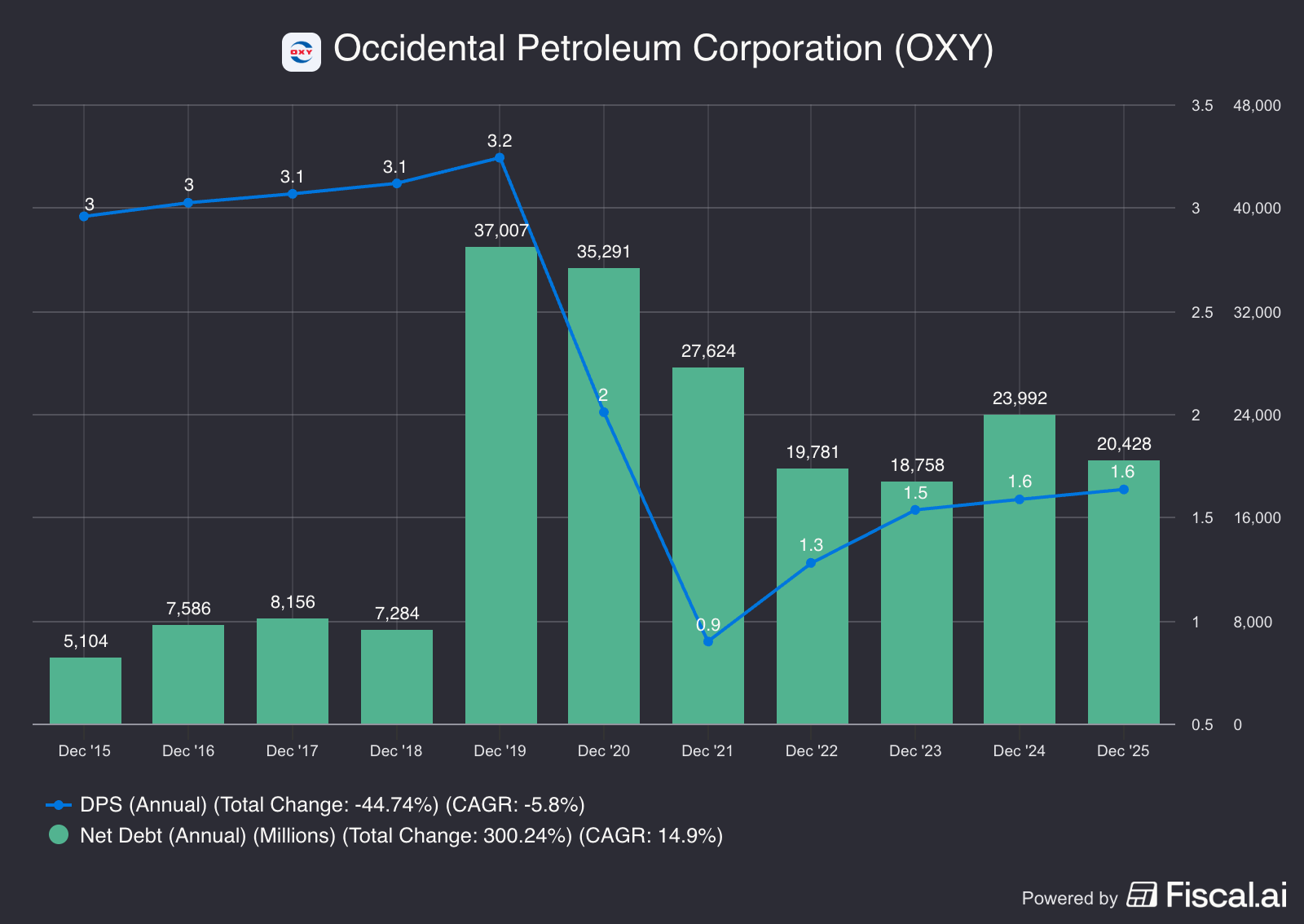
Occidental Petroleum is an example of this dynamic.
In 2019 they took on a lot of debt to acquire Anadarko.
From 2020 to 2022, they decreased the dividend and focused on paying down debt.
Once the debt level was reduced, Occidental was able to start raising the dividend again.
4. Lower Growth, More Cash
Young companies need to spend every dollar they make building factories, hiring staff, or developing new products.
But eventually, the business matures and they don’t have to spend as much on growth.
When a company stops spending billions on growth, that cash has nowhere to go but back to the owners.
This is the transition from Growth Stock to Cash Cow.
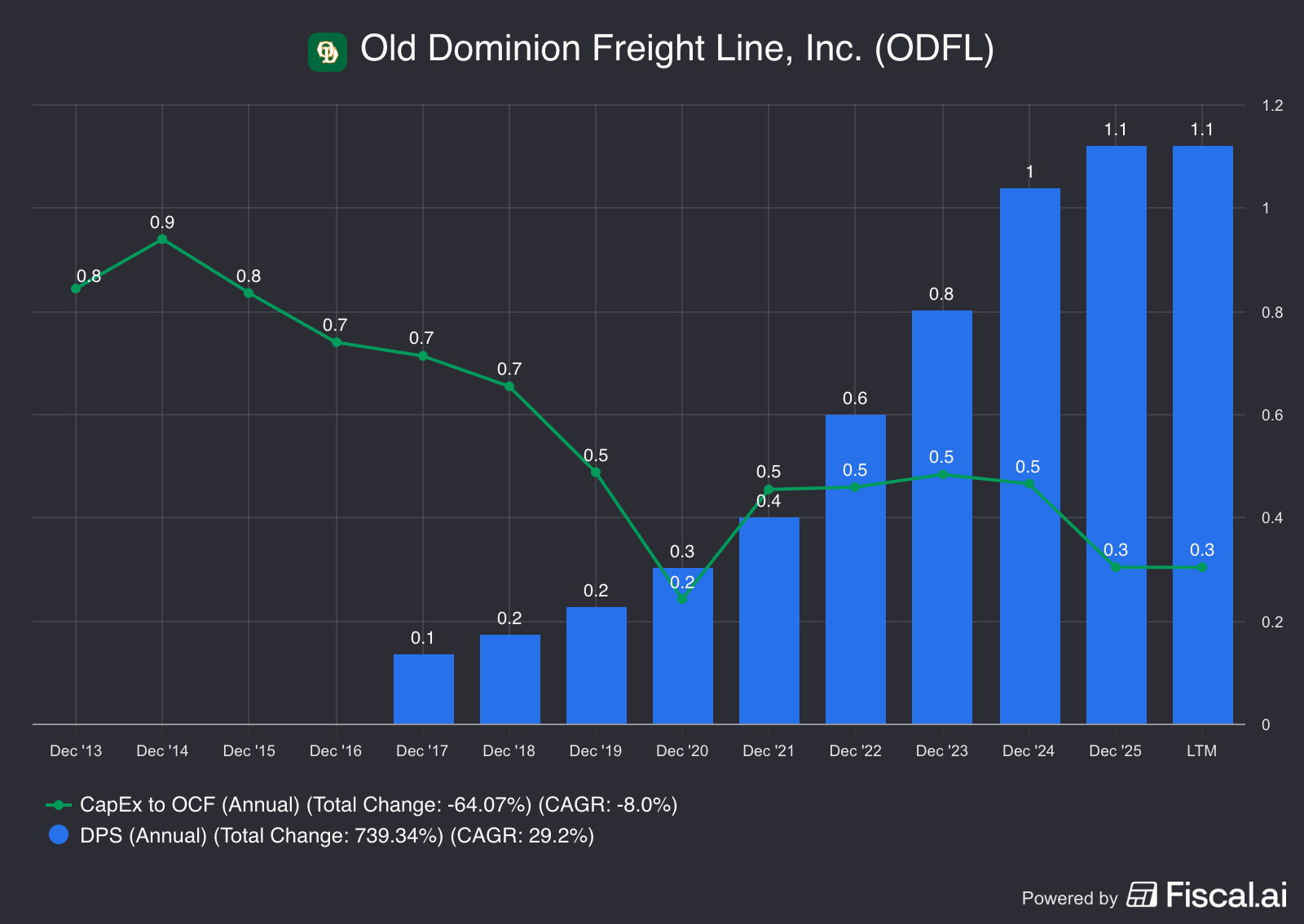
An example of this dynamic is Old Dominion Freight Lines.
The green line is CapEx to Operating Cash Flow.
Old Dominion spent a long time building terminals and warehouses to create the most efficient Less Than Truckload network in the U.S.
As the network got built out, the amount of profit spent on growth dropped, and Old Dominion was able to initiate a dividend in 2017.
Conclusion
Dividends are business outcomes.
Growing dividends should come from growing profits and cash flow.
If they’re not, the dividend might not be sustainable and might be in danger of being cut.
Healthy reasons for dividends to grow are:
Earnings Growth: Selling more products or raising prices creates more cash flow t
Buybacks: Reducing the share count divides the profit into fewer, larger slices for the remaining owners
Debt Paydown: Lowering interest expenses means more cash for dividends
Lower CapEx: As building phase spending slows, the business transitions from reinvesting for growth to paying shareholders
That’s It For Today!
One Dividend At A Time,
-TJ
Used sources
Interactive Brokers: Portfolio data and executing all transactions
Fiscal.ai: Financial data
Disclaimer
As a reader of Compounding Dividends, you agree with our disclaimer. You can read the full disclaimer here.