

I came across this chart recently and I thought it was interesting for a few reasons.
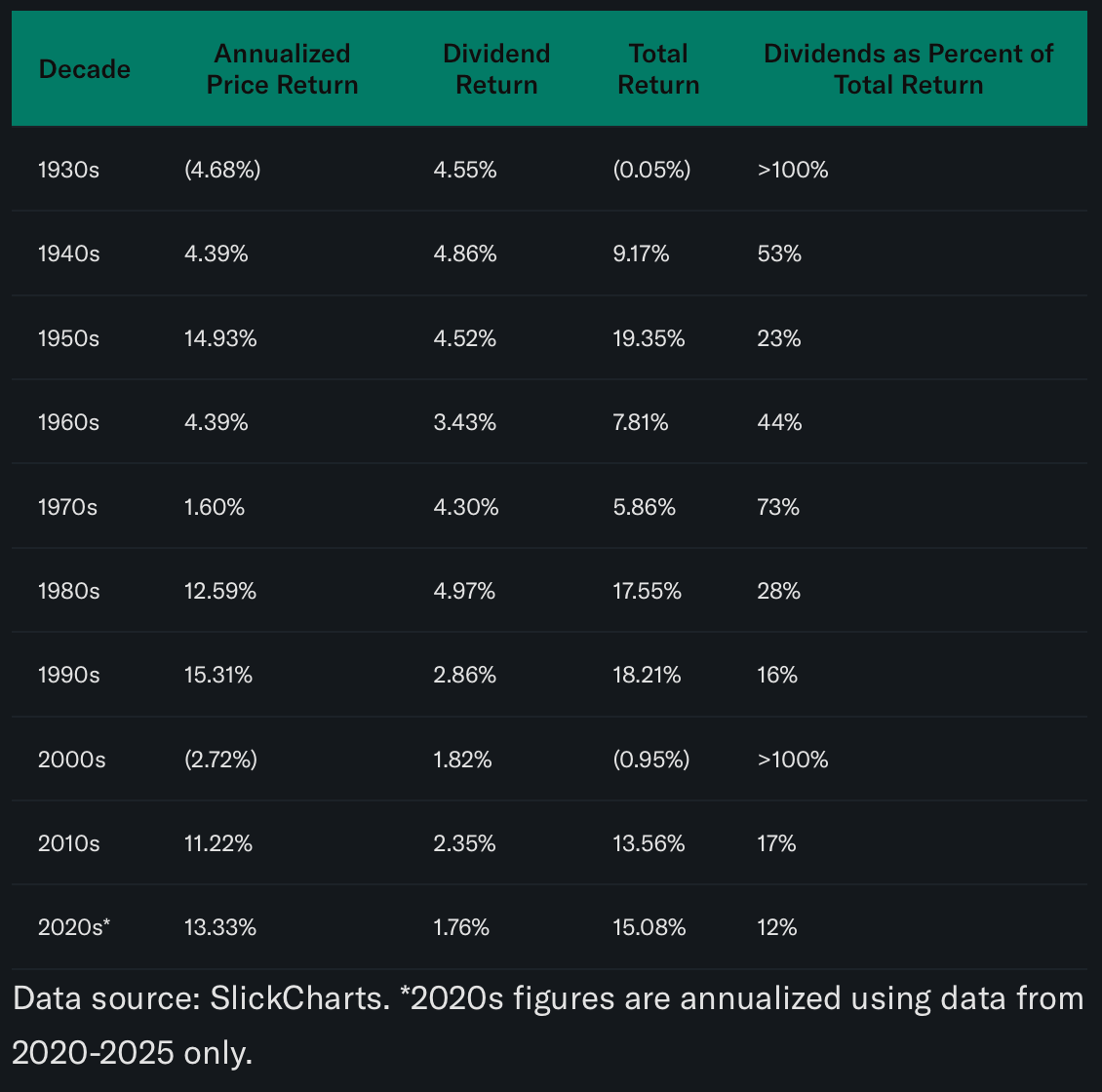
It breaks down the S&P 500’s annualized returns by decade, including both price returns and dividends.
Give it a look, then we’ll talk about my thoughts.
A few things caught my attention.
First, returns varied enormously between decades.
From -0.95% in the 2000s to 19.35% in the 1950s.
Second, dividends made a huge difference during periods of flat or negative price returns.
In some decades, they accounted for almost all of your investment returns.
But something else caught my attention.
It made me wonder whether the market you experience when you start investing influences your expectations, risk tolerance, and the kind of investor you become.
I think the answer has to be ‘yes.’
Your Starting Point Matters
Let’s consider two investors.
Here’s the S&P 500 from June of 1969 to September of 1987.
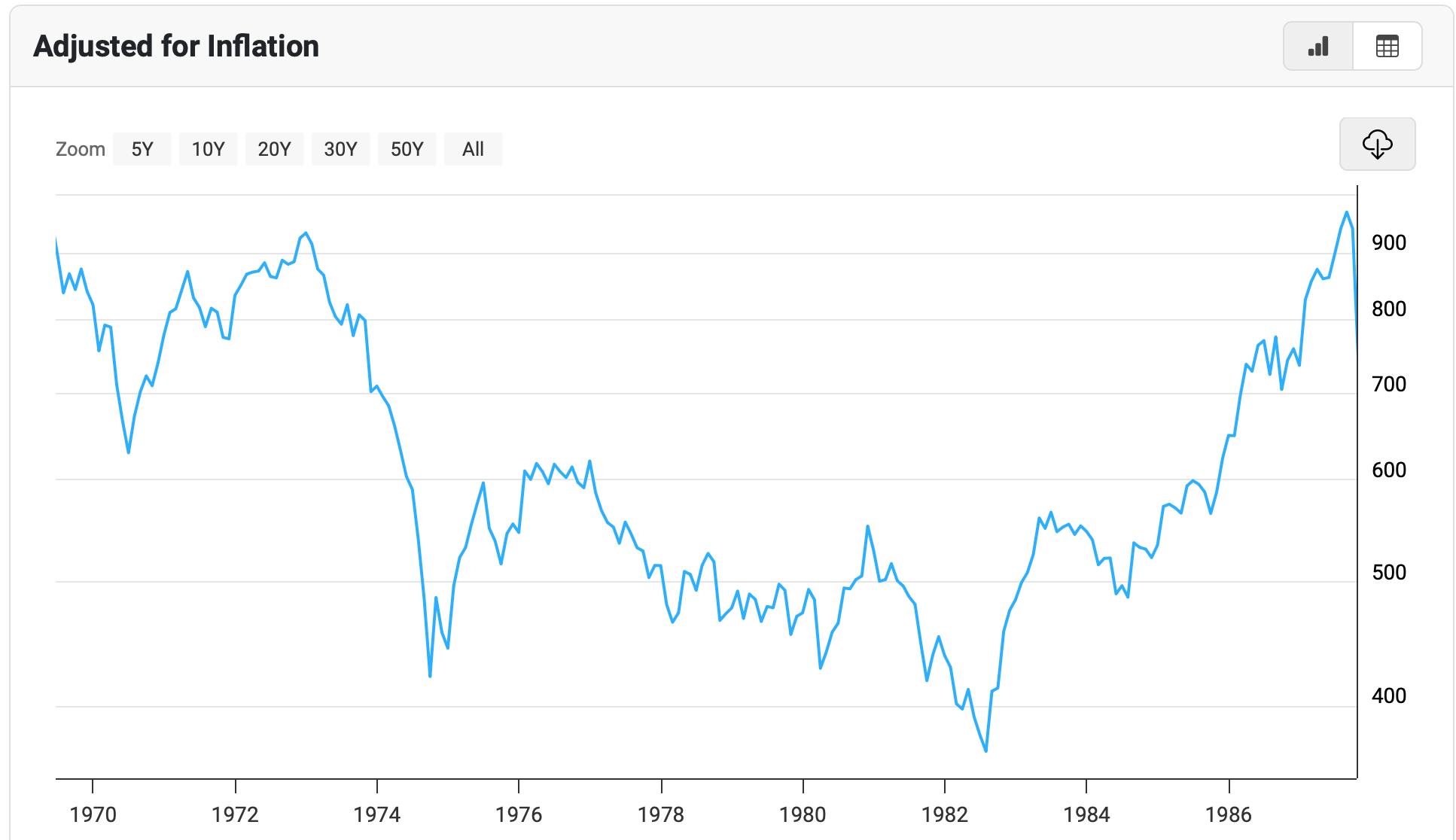
If you started investing here, you waited almost 20 years to wind up back where you started.
Now let’s imagine an investor that started the same time period back from today.
That starts them investing just before the 2008 market crash.
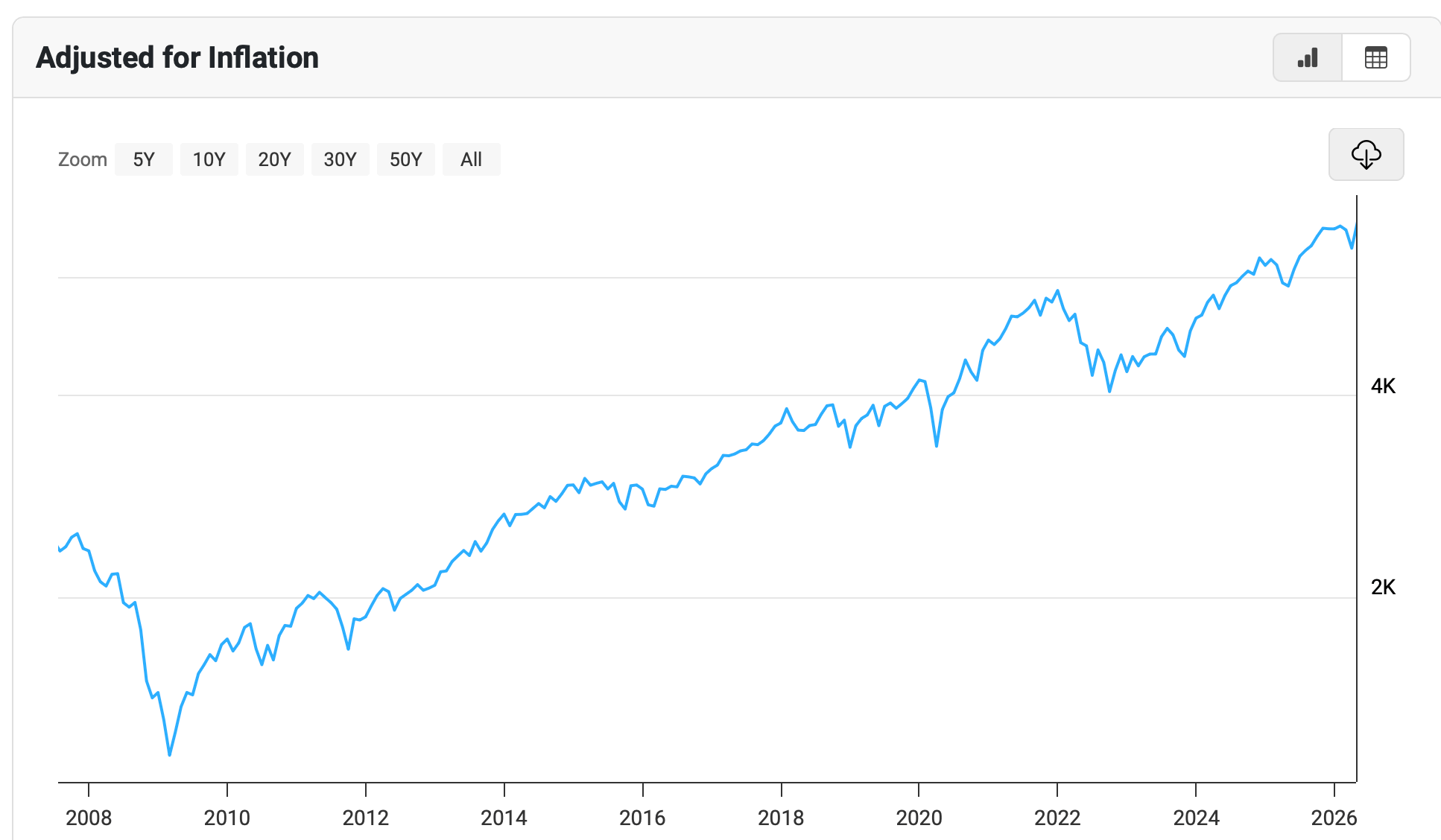
By today, you’ve nearly tripled your money.
Same investing vehicle. Same amount of time invested in it. Very different experiences.
And those experiences probably shaped how each investor thinks about the stock market.
The Expectations We Develop
Imagine starting to invest in 2009.
You experienced one of the longest bull markets in history.
Every time stocks fell, they eventually recovered.
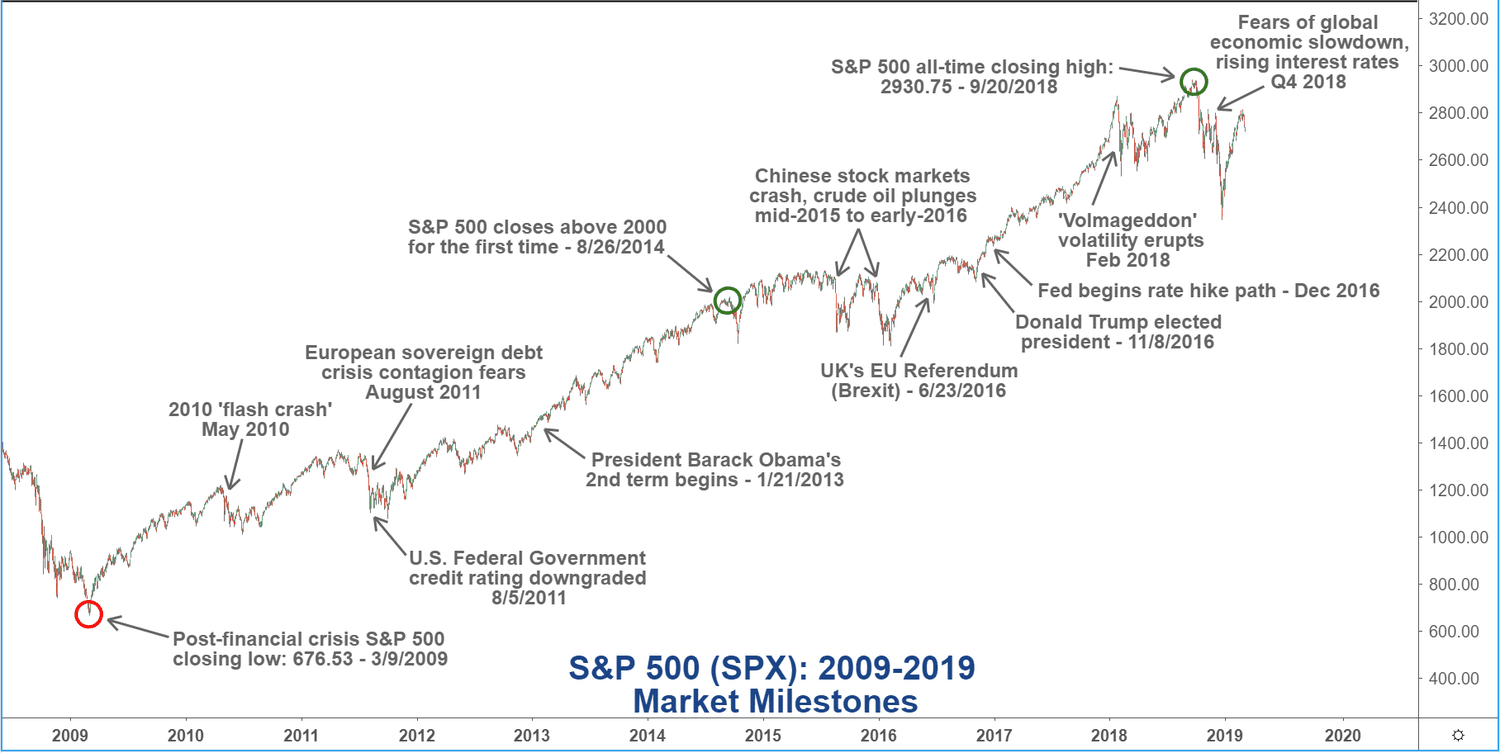
Buying the dip worked.
Stocks went up.
Your portfolio grew.
After a while, you might start believing this is how investing normally works.
You become comfortable taking more risk because you’ve never experienced a prolonged period of disappointing returns.
Now imagine starting in 1969.
You spend almost two decades watching the market go nowhere in real terms.
Your portfolio doesn’t seem to make much progress.
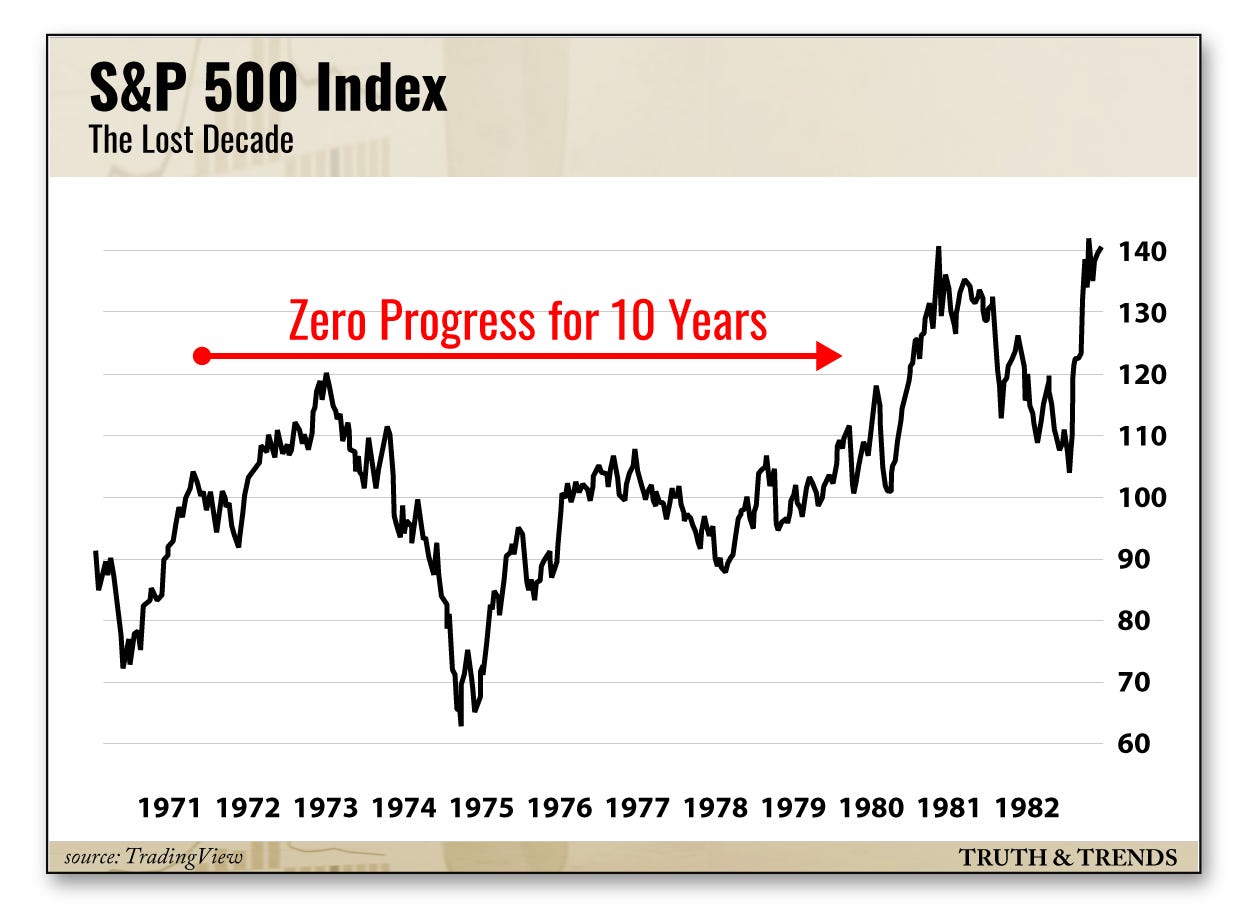
You might start questioning whether stocks are really such a good investment.
Maybe you become more conservative. Maybe you stop investing altogether.
The interesting part is that neither investor necessarily did anything wrong.
They just started at different times.
But their experiences could lead them to develop completely different expectations about the future.
And that’s where things get interesting.
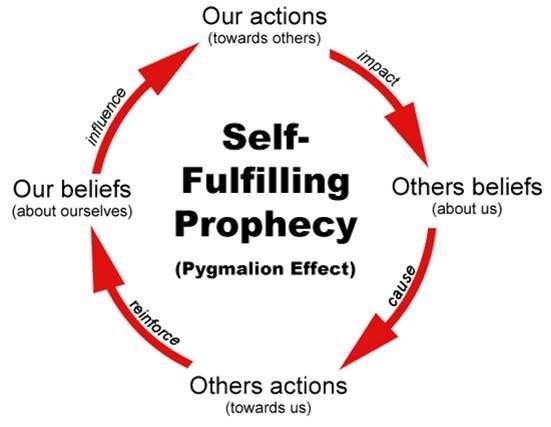
Can Investor Psychology Become a Self-Fulfilling Prophecy?
If investors believe stocks will keep going up, they’re more likely to buy.
When prices fall, they’re more likely to see it as an opportunity.
That buying can help support prices and reinforce their optimism.
The opposite can happen after a prolonged period of poor returns.
Investors become pessimistic.
They avoid stocks or sell what they own.
Lower demand can put further pressure on prices, reinforcing their belief that stocks are a poor investment.
If that’s the case, we’d have a self-fulfilling prophecy.
But stocks don’t stay flat, or go up or down forever, so what breaks the cycle?
What eventually breaks the cycle?
Planting the Seeds of the Next Cycle
Howard Marks once wrote:
“Success carries within itself the seeds of failure, and failure the seeds of success.”
After a long period where stocks are flat (like our 70’s example), they’re probably very cheap.
After all, even though the S&P 500 didn’t move for 18 years, that doesn’t mean the businesses didn’t - they probably kept earning more over time.
Eventually, this becomes too good of an opportunity to ignore.
A new generation of investors might come along and say ‘hey, these stock things are cheap, and look at the dividends we can collect, let’s invest in those!’
Their buying can help start the next cycle.
And the process begins again.
As Marks also wrote:
“Psychology is the essential component in understanding the cycles that matter so much to investors.”
I think these quotes connect well.
The experiences of one generation can help shape the expectations of the next.
Success creates optimism. Optimism can lead to excessive expectations.
Failure creates pessimism. Pessimism can create opportunities.
What Should We Take Away From This?
We can’t pick when we start investing.
And we can’t control the market we’ll be in over the next 10 or 20 years.
But we can control how we approach investing.
We should avoid assuming that recent returns will continue indefinitely.
A decade of strong returns doesn’t mean the next decade will be the same.
And a decade of poor returns doesn’t mean stocks have stopped being a good investment.
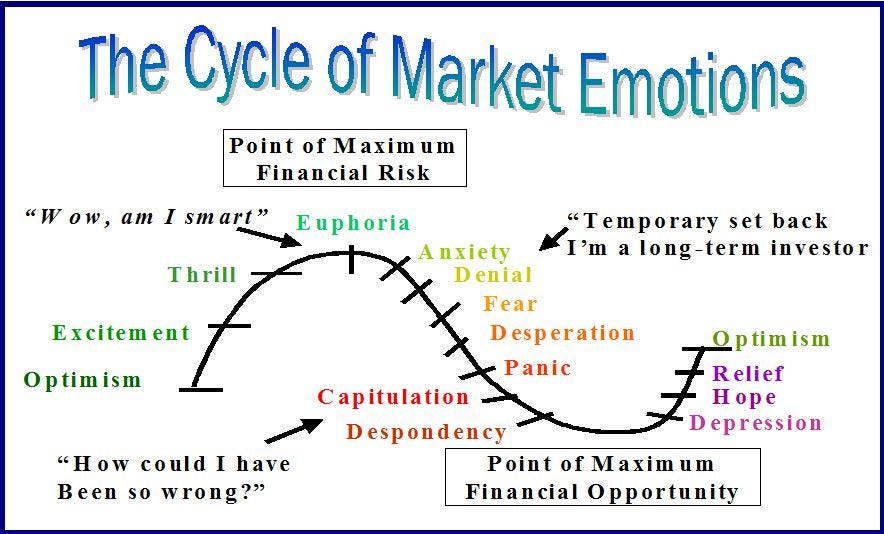
Remember that markets tend to be cyclical and that investor emotions have a lot to do with it.
Don’t get swept up in the fear and greed.
One more Howard Marks quote to end this:
“Sometimes the overall mood of investors in a market is positive, meaning they’re characterized by optimism, credulousness, fear of missing out (“FOMO”), and risk tolerance. And sometimes the mood is negative and marked by pessimism, skepticism, fear of loss, and excessive risk aversion. Whereas in real life things fluctuate between pretty good and not so hot, in the minds of investors things can go from flawless to hopeless and back.”
One Dividend At A Time,
-TJ
Used sources
Interactive Brokers: Portfolio data and executing all transactions
Fiscal.ai: Financial data
Disclaimer
As a reader of Compounding Dividends, you agree with our disclaimer. You can read the full disclaimer here.