

We’ve talked about the potential issues with inflated demand, depreciation expenses, and circular financing.
But my concerns with the AI build out go beyond that.
Even if we assume that the demand is really as high as they claim it is, and even if we assume that the funding is unlimited, there are still issues.
A great example is the Project Jupiter data center in New Mexico.
It’s one of the Project Stargate data centers that’s being developed by Blue Owl Capital with Oracle as a main tenant.
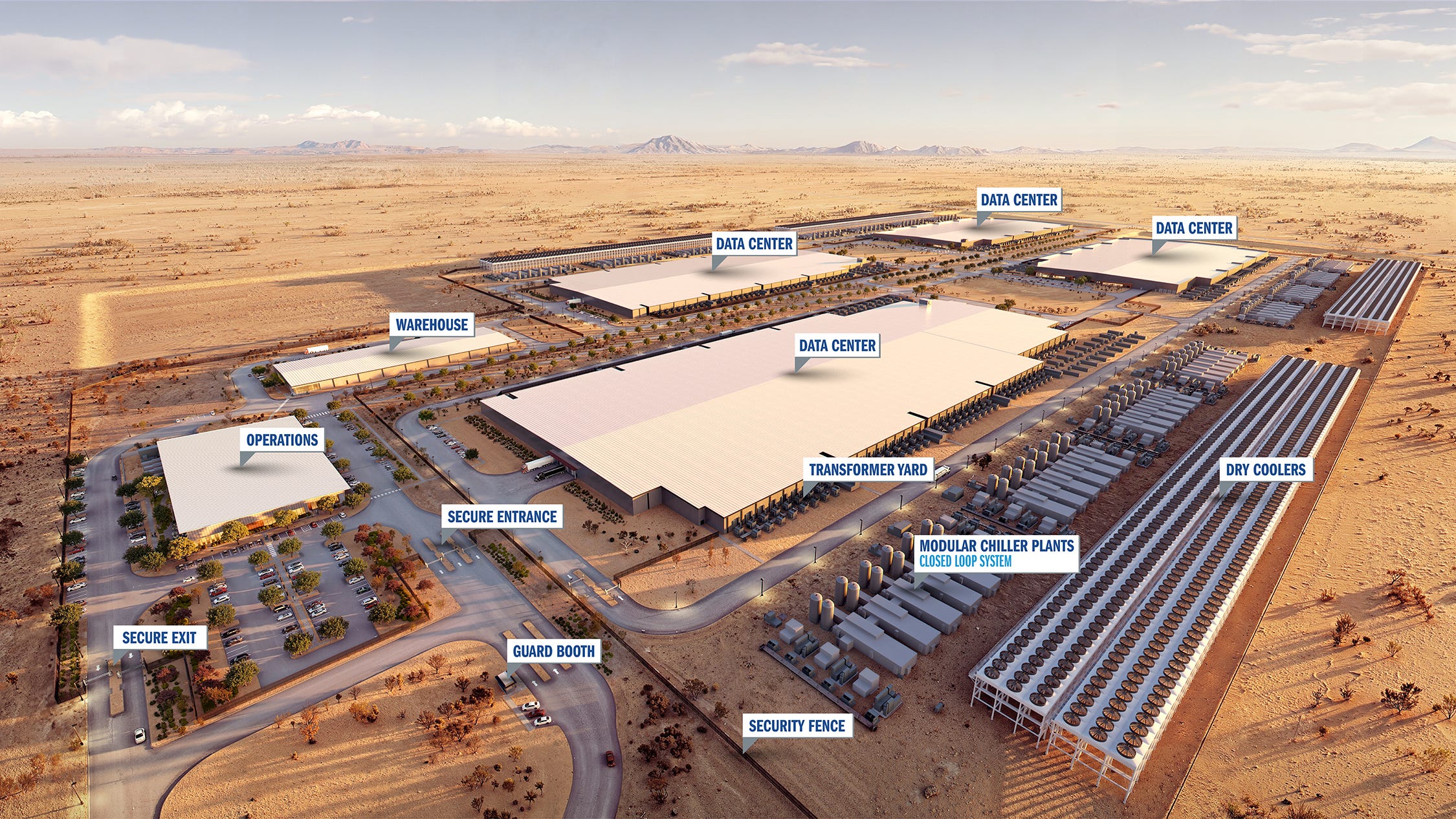
The data center needs its own 2.45-gigawatt power plant that constantly produces electricity to run.
That power is to come from fuel cells made by Bloom Energy, which run on natural gas.
The gas is to come from a pipeline being built by Energy Transfer, which was to begin service in August.
Notice I said was.
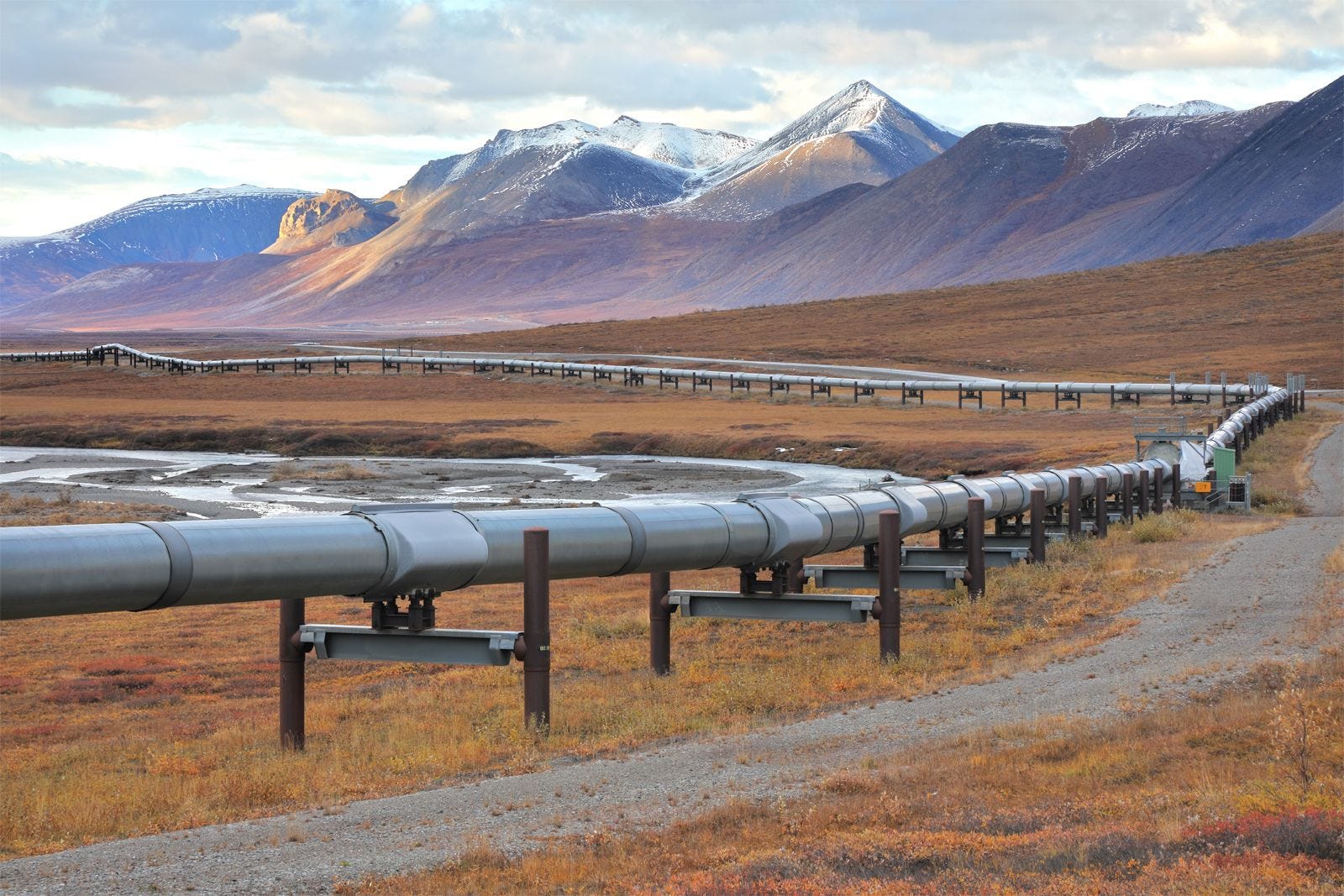
The pipeline is now scheduled to begin service in February of 2027.
The New Mexico State Land Office has rejected Energy Transfer’s attempt to have the pipeline cross a 0.6-mile stretch of state trust land…twice.
They argue that the pipeline would not benefit state lands.
Project Jupiter also doesn’t have the air permits needed to run the fuel cells yet.
That’s led Oracle to send a ‘Force Majeure’ notice to Blue Owl.
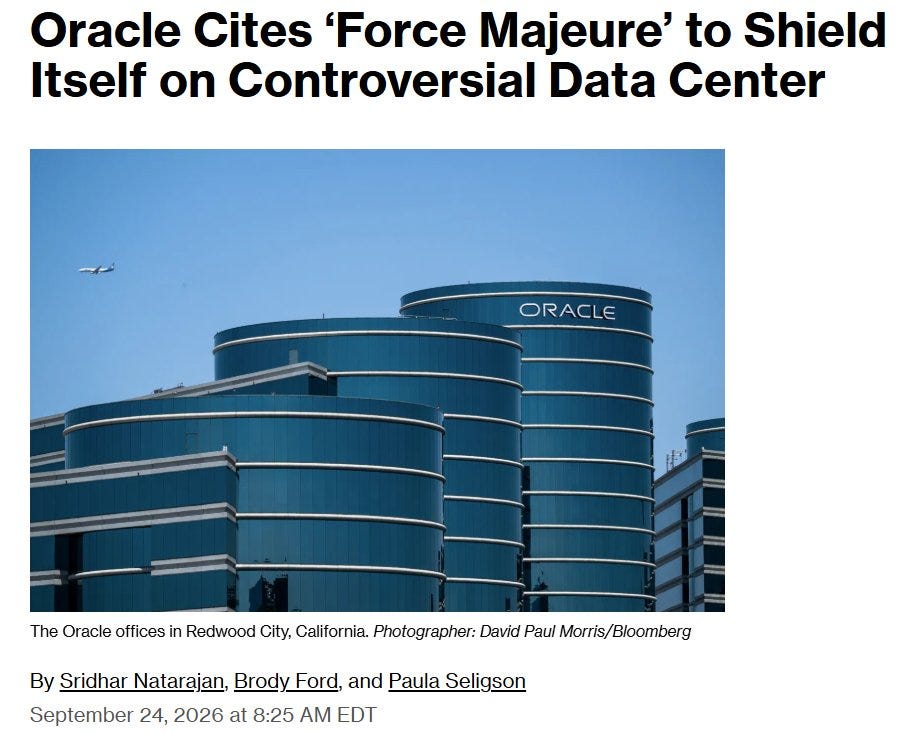
This is a legal clause common in development contracts that protect a company if an unforeseeable, uncontrollable event makes it impossible for them to fulfill their end of the deal.
In this case, Oracle is using it to attempt to delay rent payments by up to three years if the data center isn’t online in time.
The longer it takes for the data center to be up and running, the longer it takes to start generating revenue.
And with $18 billion in debt from a consortium of banks, there is a clock running.
But the debt isn’t the only problem.
There are tax break agreements between Doña Ana County and Project Jupiter.
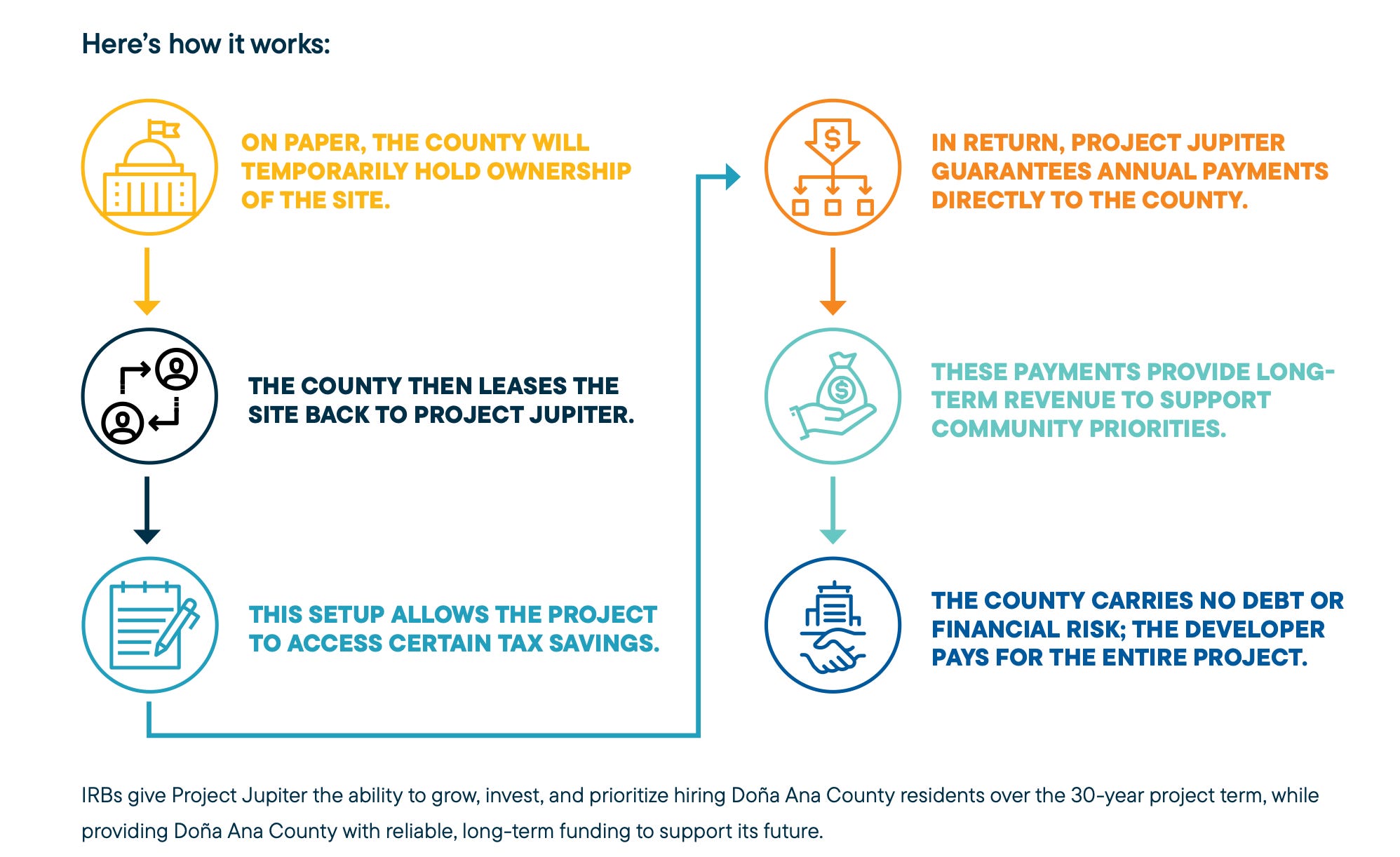
In those agreements, the companies committed to bring a first phase of the facility into operation between October and December of this year, and complete the entire campus and power plant by the third quarter of 2028.
If you’re not going to have a gas pipeline until February 2027, I’m not sure how phase 1 will be running by December 2026.
Companies and analysts can project demand and revenue all they want, but the actual construction of a data center happens in the real world.
Which has its own set of problems.
Physical Constraints
The real constraint on the AI buildout probably isn’t really the chips or memory as Wall Street likes to imply.
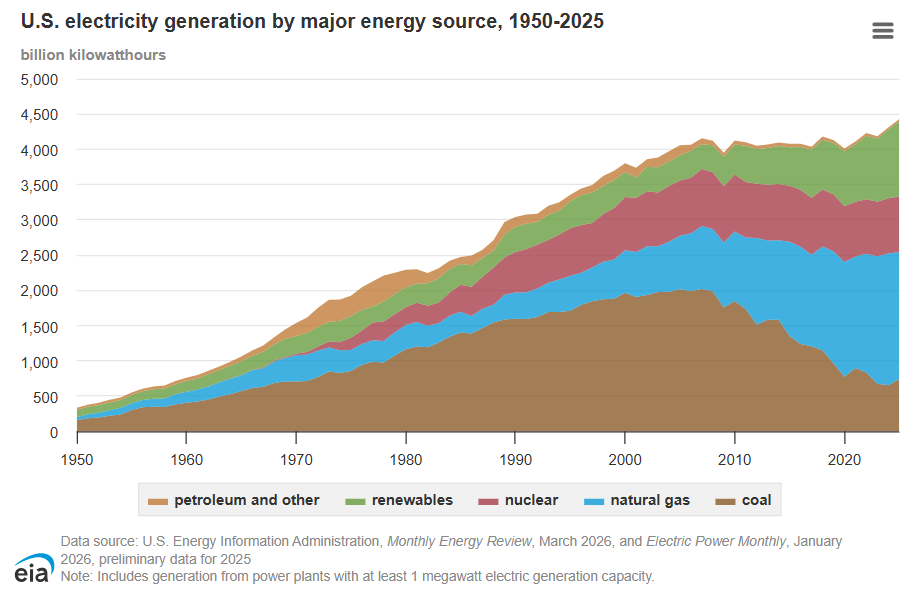
U.S. power demand has stayed relatively stable since 2000.
Most of the new power construction has been to replace coal plants that have been retired.
Morgan Stanley thinks it will take about 100 GW of power to run US data centers through 2028.
For perspective, 1 gigawatt can typically power about 750,000 to 1 million average homes.
100 GW is enough capacity to simultaneously power 75 to 100 million homes, or roughly three-quarters of all households in the United States.
That’s a lot of power that will take a long time to develop.
Turbines and Transformers
Data centers can’t get power off the grid, and they can’t wait for the utility companies to develop the power for them.
So they’re trying to provide it themselves.
Even if the data center developers have the chips, and permits, they still need the hardware to generate and use their own power.
GE Vernova is one the big suppliers of this equipment.
In their latest update, they said that orders for gas turbines have nearly doubled compared to last year at this time.
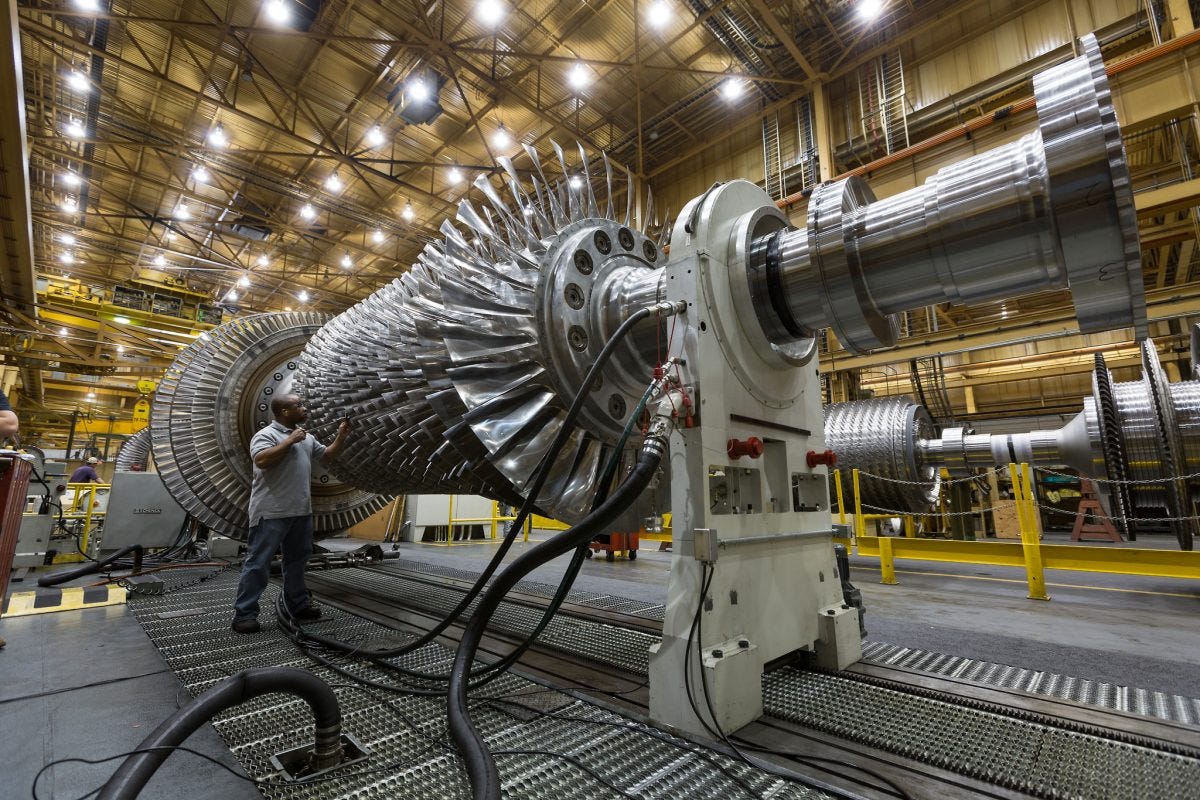
They’re expanding capacity to try to keep up, but how fast they can do that is limited.
They’re on track to be able to build 24 GW per year by 2028
And 30 GW by 2030
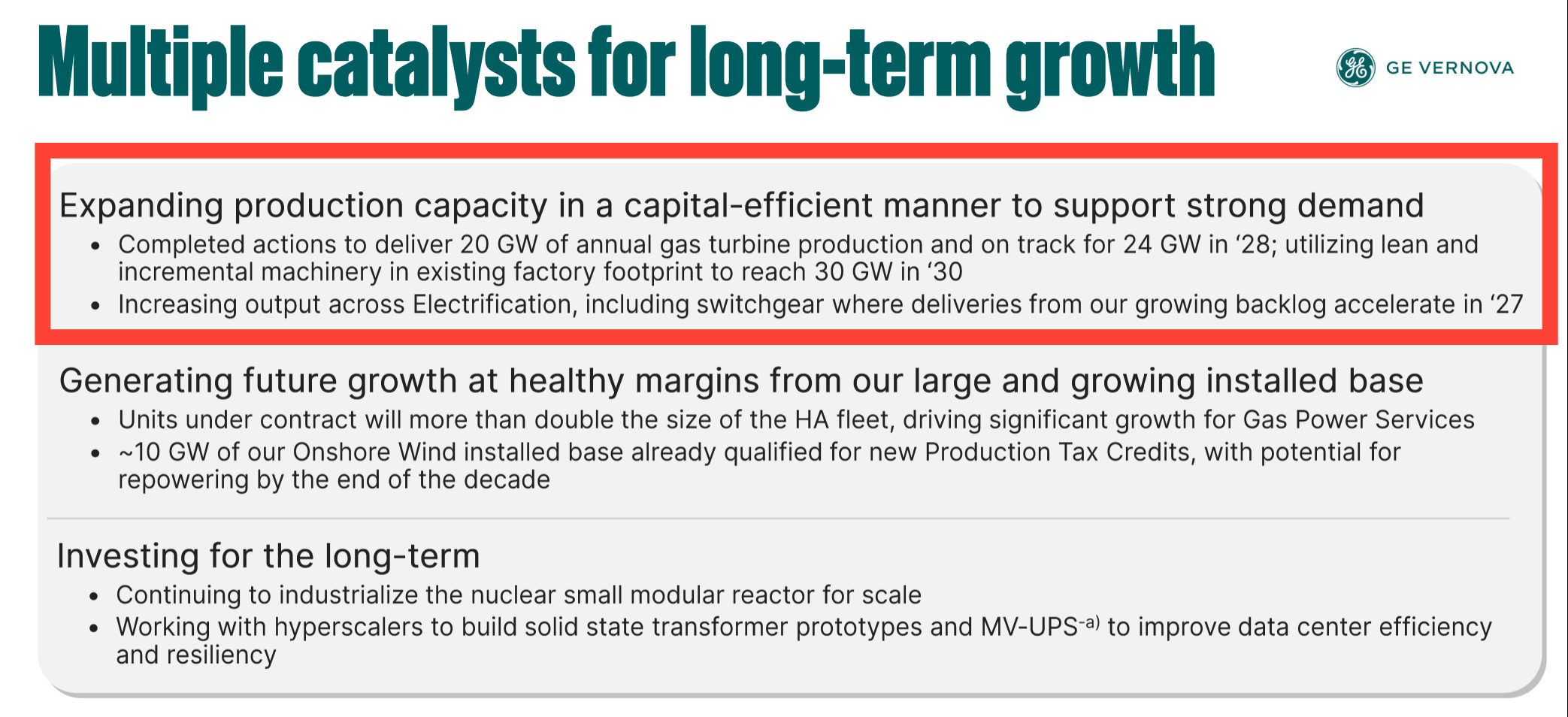
But remember that Project Jupiter needs nearly 2.5 GW.
Even if GE Vernova can supply 24 GW worth of turbines by 2028, that means they can only supply about 10 data centers the size of Project Jupiter per year.
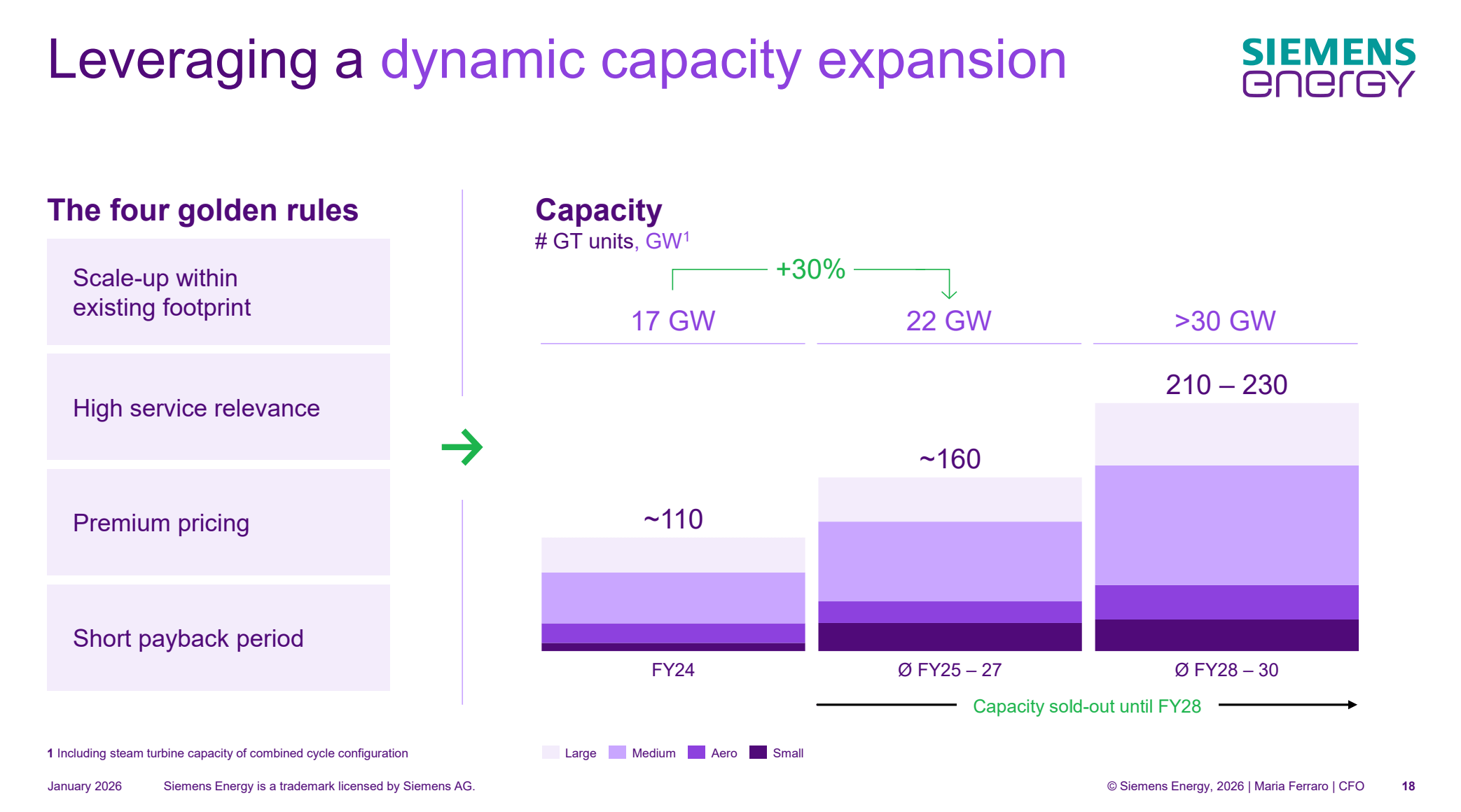
Siemens is another major supplier of turbines, and in January, they were already sold out until 2028.
They’re expanding capacity too, but are currently only at 22 GW of capacity, with plans to get to ‘>30 GW’ by 2030.
GE Vernova also makes transformers, switch gear, and substation equipment that’s also required to power data centers.
They’re seeing strong growth in orders here too.
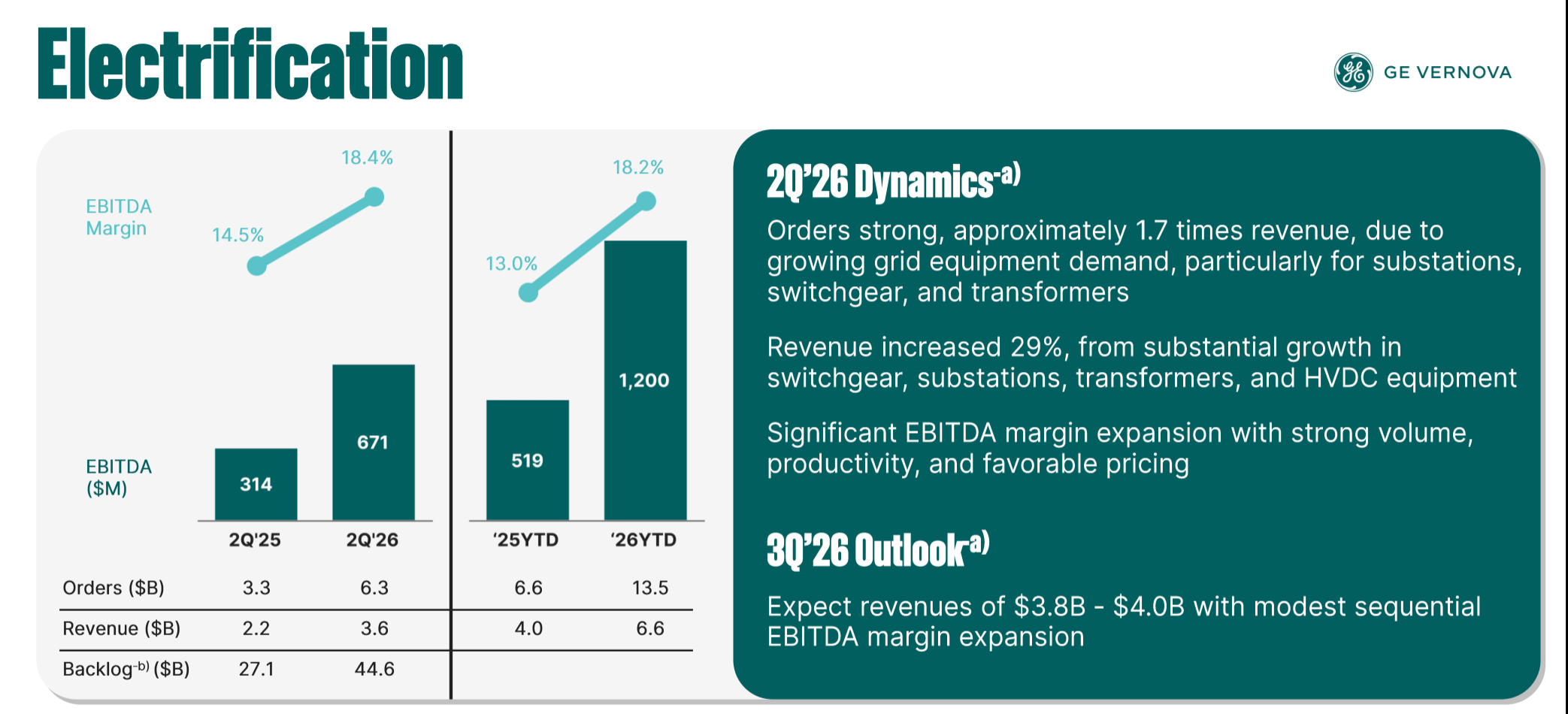
Limits in power and equipment are causing a lot of data center projects to be delayed or cancelled.

The majority of data centers aren’t yet even being built.
Only about 27% of data center projects are currently under construction.
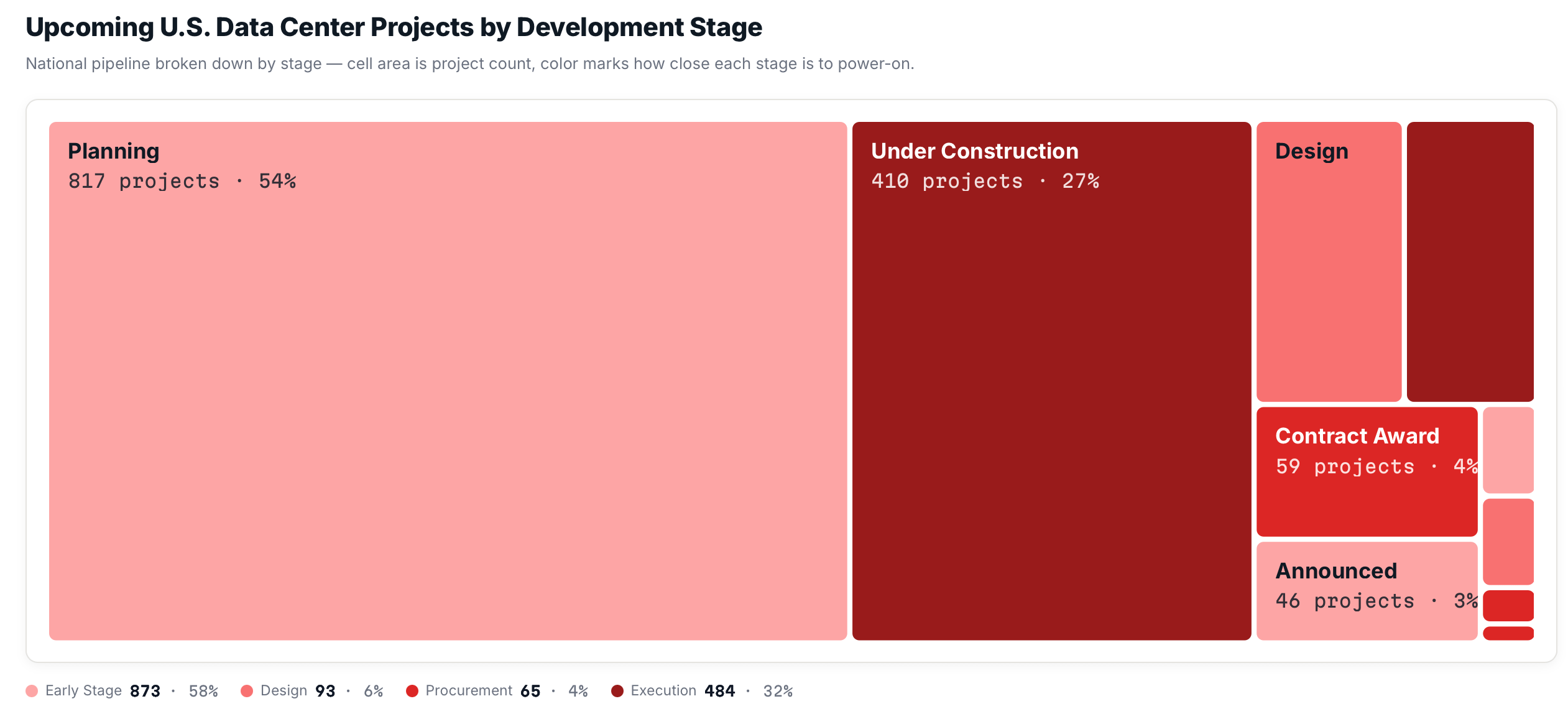
The vast majority are still in the planning stages.
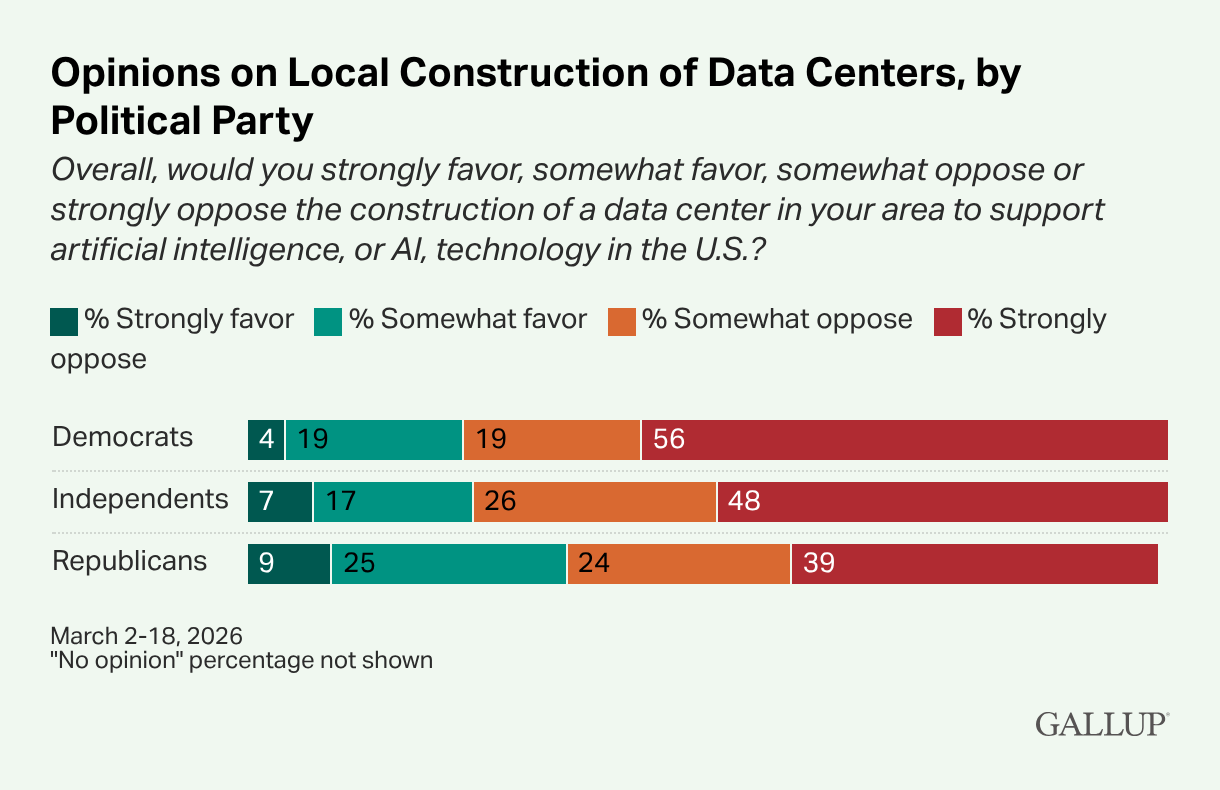
We should also consider the fact that most people don’t want to live near a data center.
It’s nearly impossible to get Democrats and Republicans to agree on anything these days.
However, opposition to data centers seems to be one issue that will bring them together.
Local residents forced Project Jupiter to change the power plant from gas turbines to the Bloom Energy fuel cells.
Its air permit has been held up by lawsuits that ended up in the New Mexico Supreme Court.
There still has to be a public hearing about it, where I’m sure there will be more local opposition.
This all points to the possibility that some portion of the data centers planned may take much longer to be built, or never be built at all.
If that ends up being the case, it’s another way that there could be massive oversupply in the AI buildout.
It’s possible that there are chips, memory, and supplies that have already been bought for data centers that will never be built.
Utility Companies Are Pushing Back
Utility companies are seeing huge spikes in requests for power for data centers.
But they’re worried that they’ll spend billions on generation and new transmission lines, only to get stuck with empty data centers.
To protect themselves, and residential ratepayers, they’re starting to demand upfront cash deposits (up to 50% of infrastructure costs in some cases) and 10 to 15 year take or pay contracts.
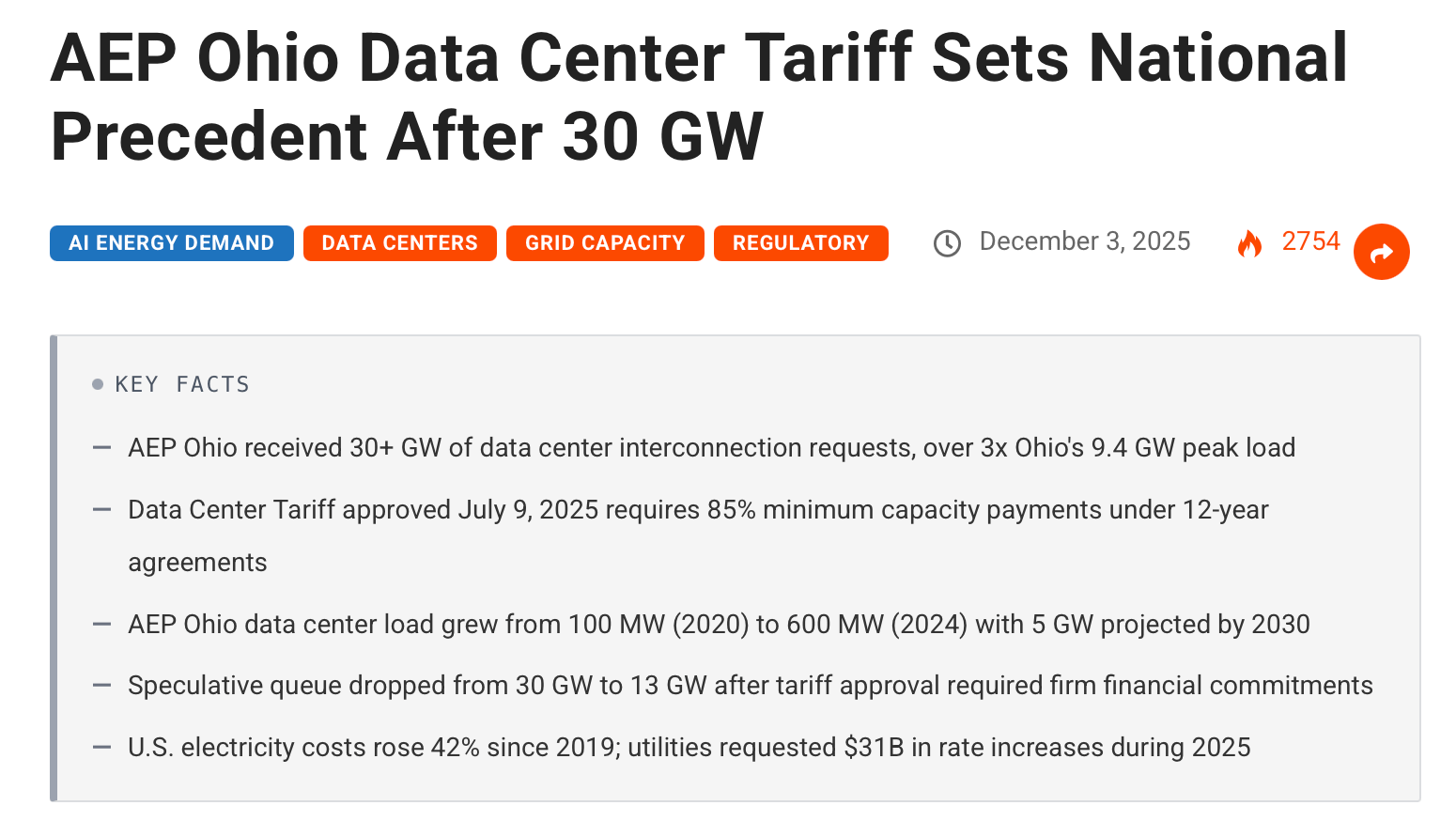
A good example is American Electric Power in Ohio.
They received requests to triple the current data center power supply
They implemented a data center tariff requiring 85% minimum capacity payments on 12 year contracts
The waiting list dropped by more than 50% when the tariffs required that commitment
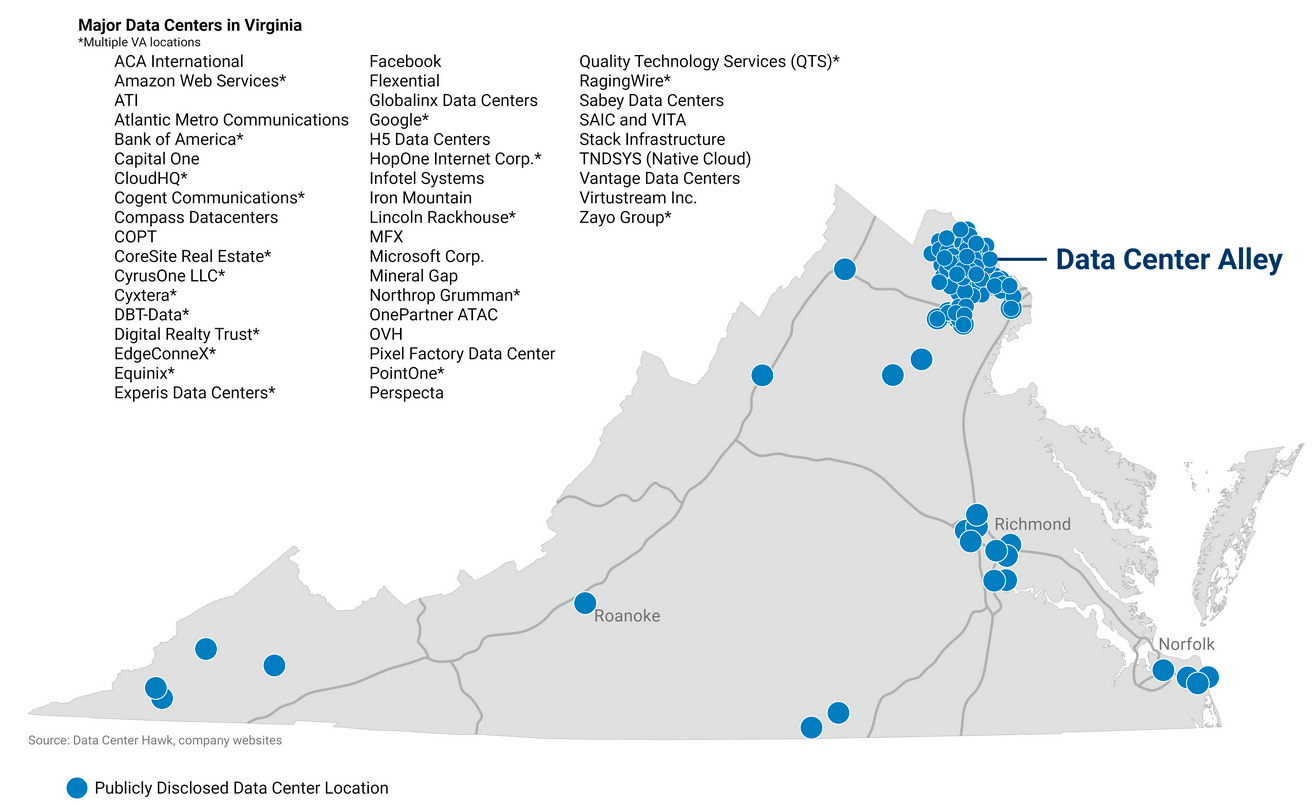
Virginia is the data center hub of the world.
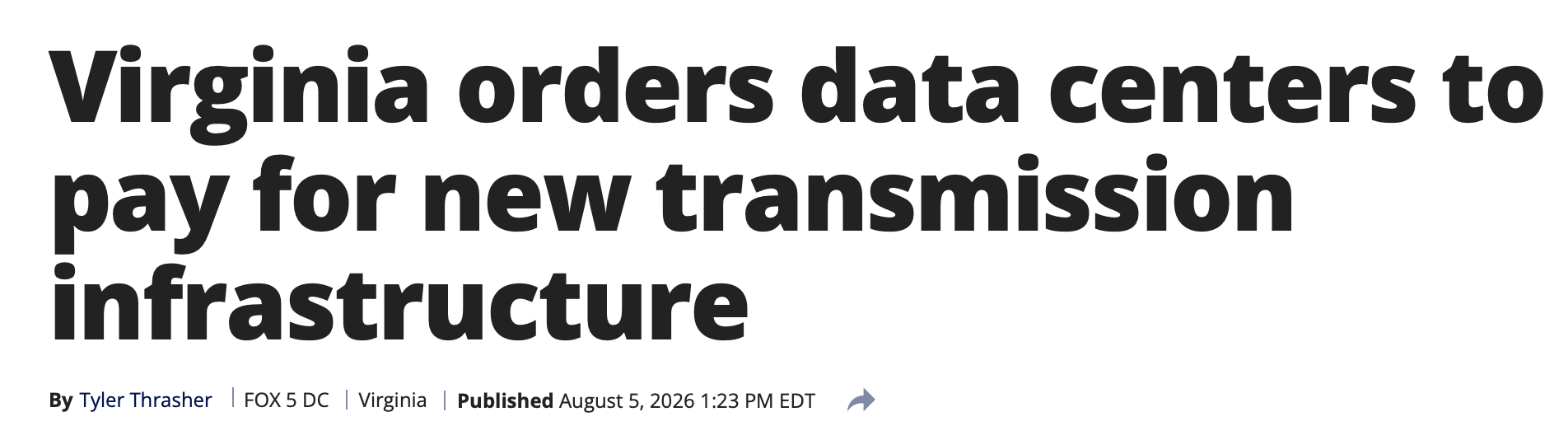
They have ordered data centers to pay for all their transmission infrastructure.
In addition, they’ve implemented an additional tax on power to data centers that’s about an additional 10% of their energy costs.
The debt payments combined with the required payments for infrastructure and power (whether the data center is running or not) mean these assets have high fixed costs.
Any delay in revenue (like Oracle’s force majeure notice) creates a big problem.
The Bond Market
Stock investors spend a lot of time thinking about what can go right.
Bond investors already know the best-case scenario, so they spend all their time thinking about what can go wrong.
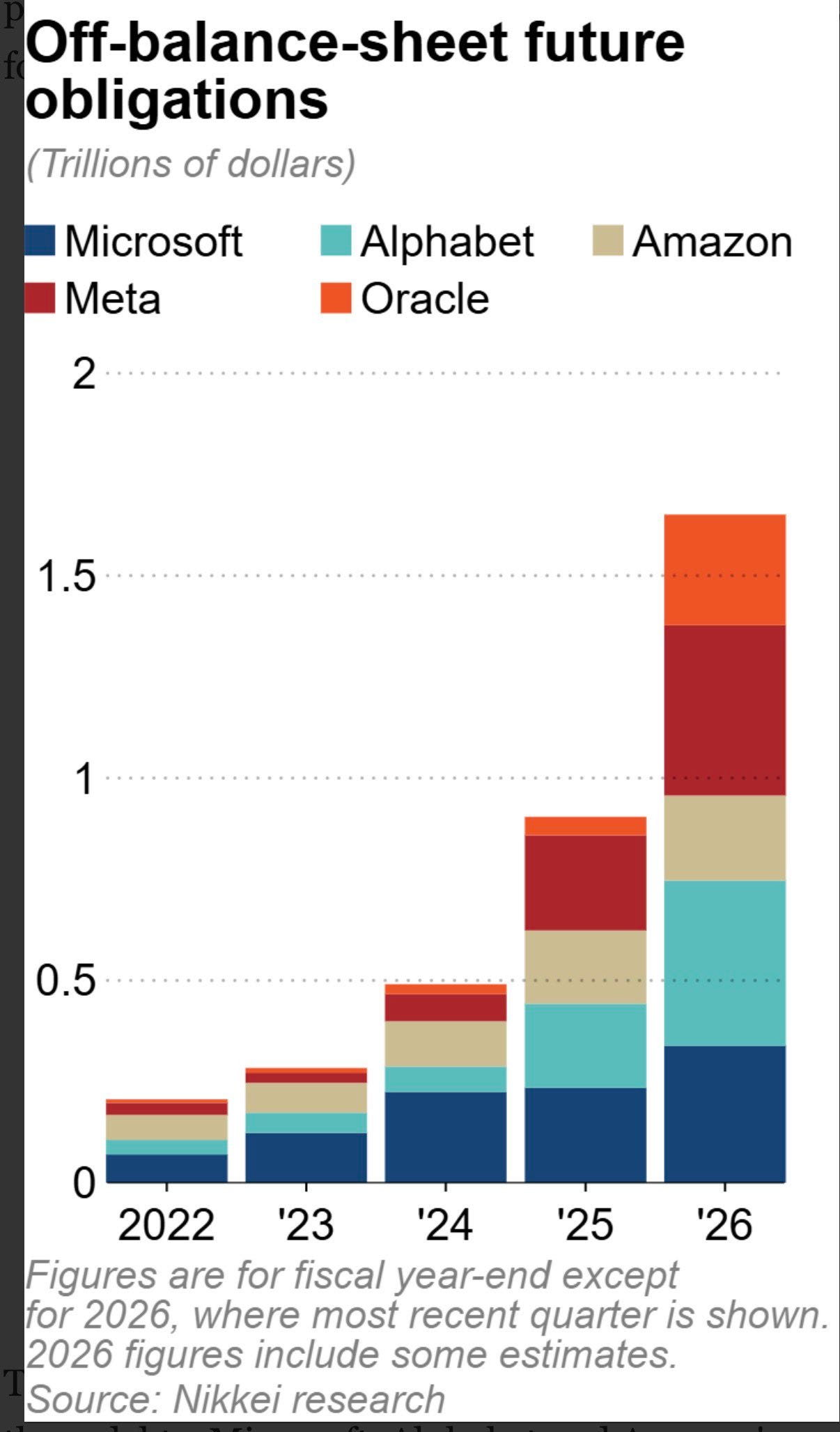
And between the bonds issued by the hyperscalers, and the bonds issued off balance sheet through their SPVs, there’s a lot of AI debt for bond investors to think about.
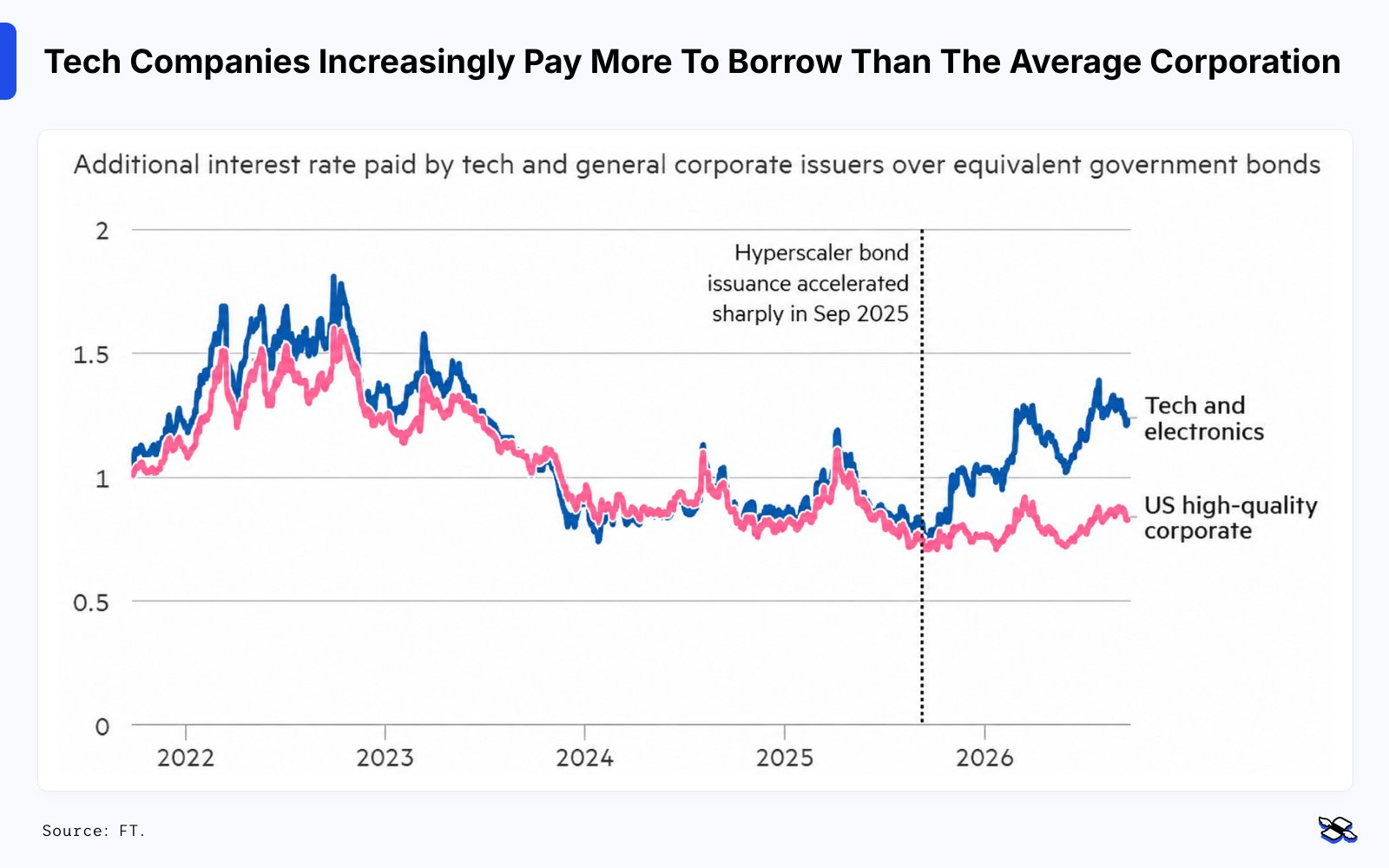
The bond market is starting to separate tech companies from other high-quality corporate borrowers, demanding higher interest rates from them.
A Credit Default Swap (CDS) is like an insurance policy on debt.
You pay up front for it, and the CDS pays out if the company defaults.
The market is also increasingly demanding more premium to insure hyperscaler debt.
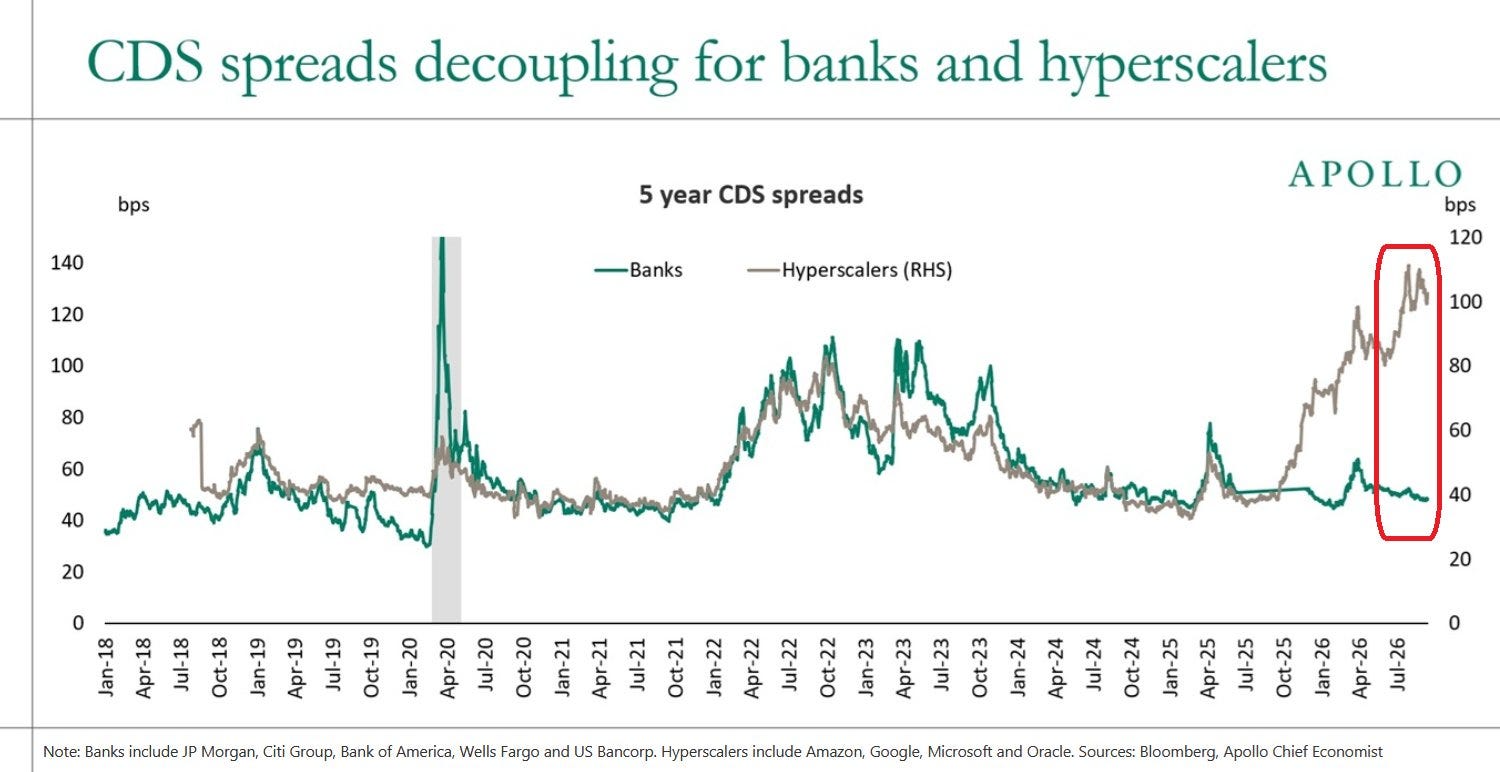
Apollo chose to compare CDS spreads of hyperscalers with those of banks, because if this were just routine hedging, bank CDS spreads would be rising as well.
They’re not.
You can see the divergence in 2025 as the hyperscalers really started ramping up their debt issuance.
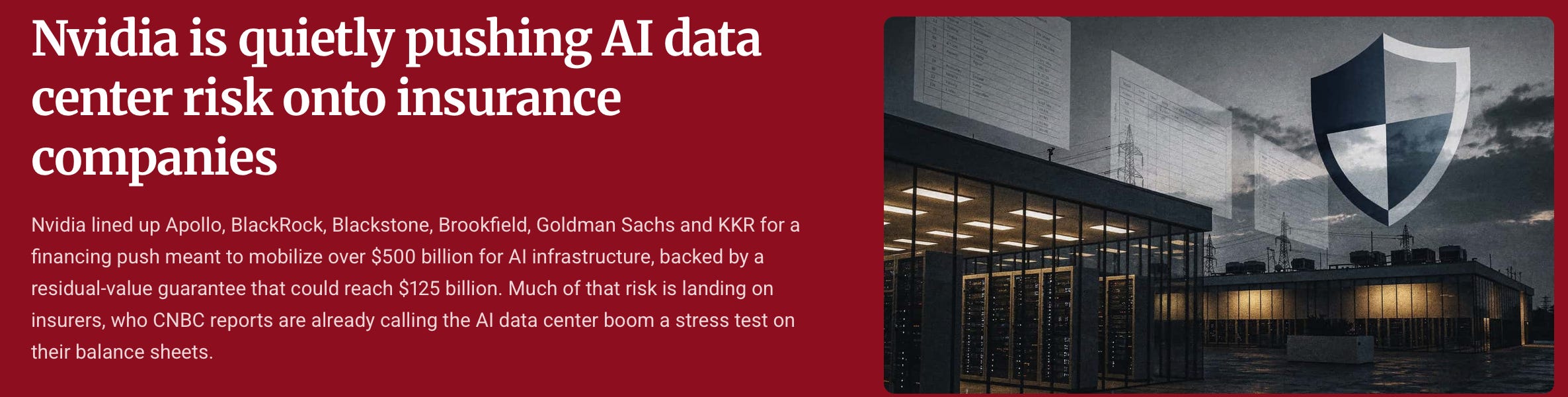
Bond investors aren’t the only people looking for insurance on AI-related debt though.
Non-investment grade companies are issuing debt using NVIDIA chips as collateral.
NVIDIA is now looking to work out deals with insurers to cover the risk in the event that these companies fail and the chips can’t be sold for as much as expected.
Conclusion
Oracle’s force majeure is proof that AI hasn’t eliminated the constraints of construction and permits in the physical world.
At the same time, the bond market is demanding higher bond yields to fund the AI build out.
These are coming together to increase the cost and decrease the speed of data center construction.
It’s also creating expensive fixed liabilities for data centers, while the price of AI falls quickly.
In the next part, we are going to look at how the AI trade is affecting the entire market, and what effects it could have if it unwinds.
One Dividend At A Time
-TJ
Used sources
Interactive Brokers: Portfolio data and executing all transactions
Fiscal.ai: Financial data
Disclaimer
As a reader of Compounding Dividends, you agree with our disclaimer. You can read the full disclaimer here.