

Nike is all over social media.
And not for good reasons - the stock is down 76% over the past 5 years.
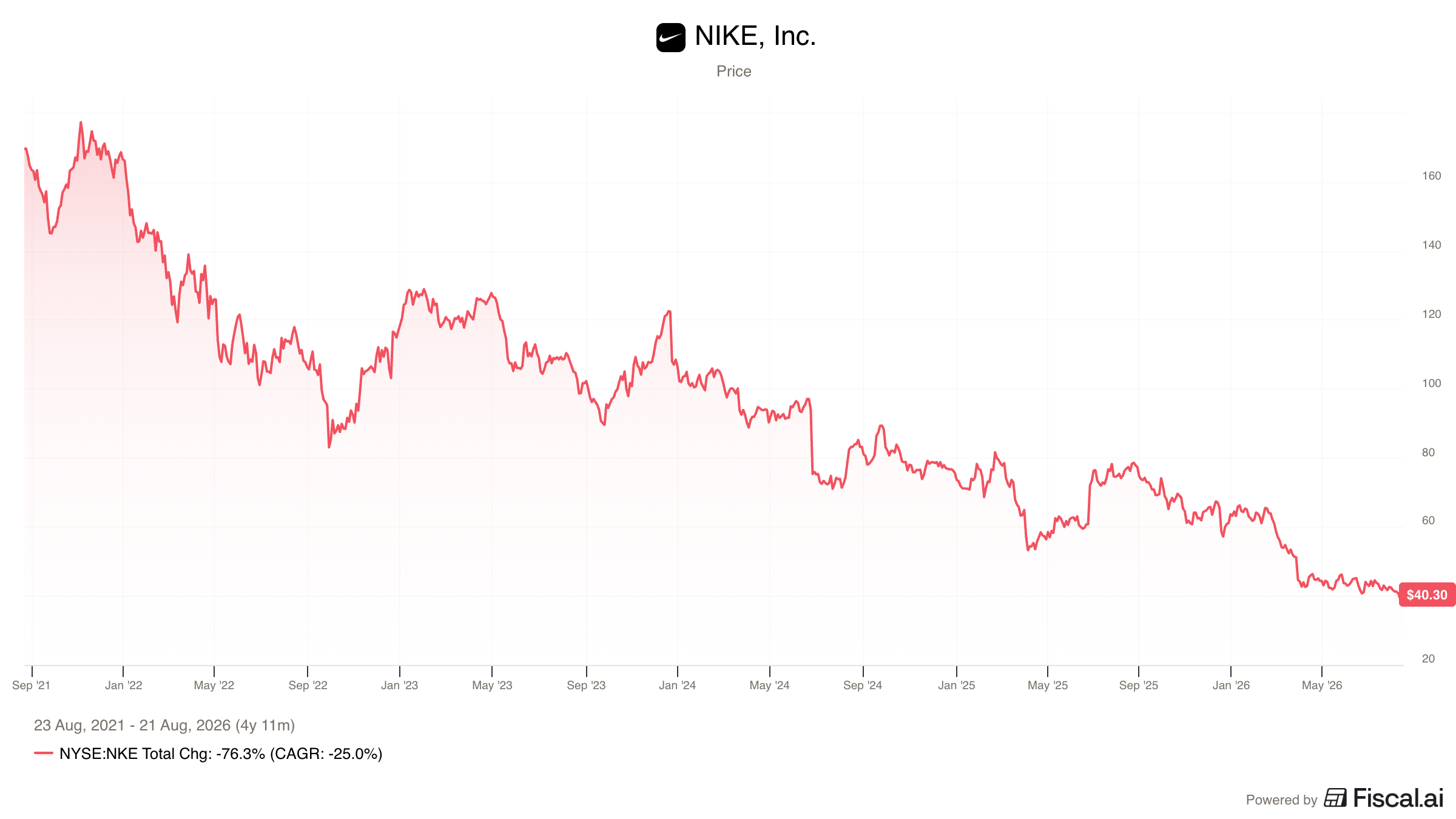
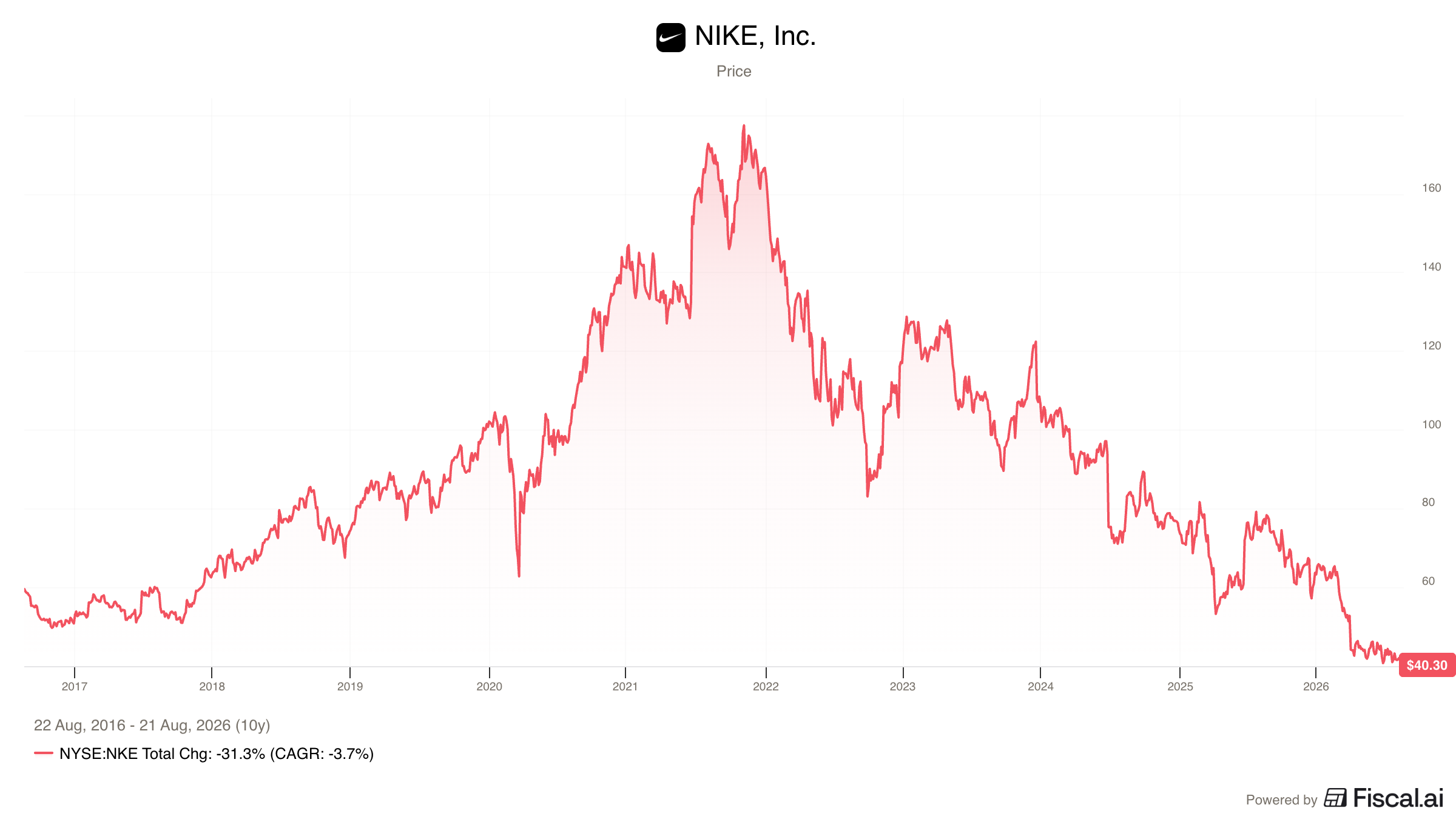
Even being a long-term holder hasn’t saved you - it’s down more than 31% in the past decade.
Of course, fingers are being pointed all over the place.
Some claim management destroyed the brand:
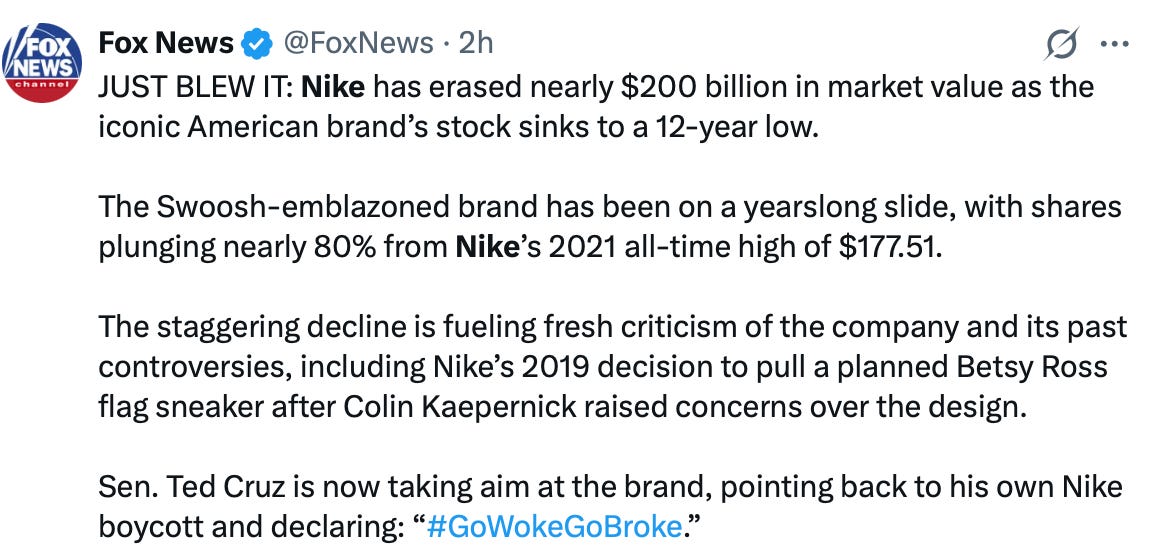
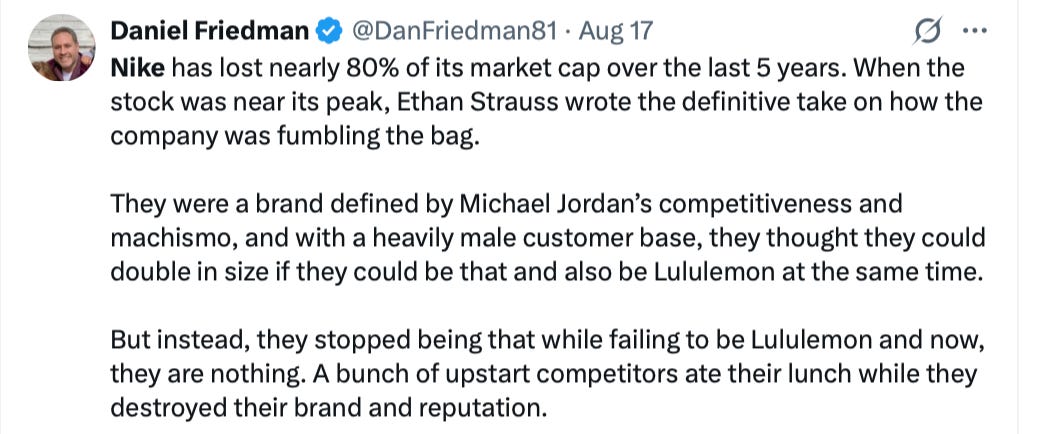
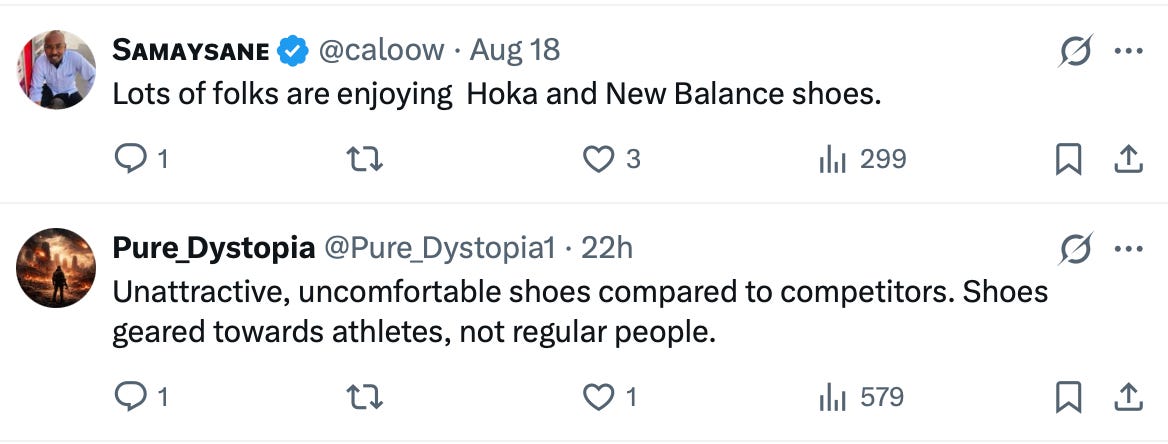
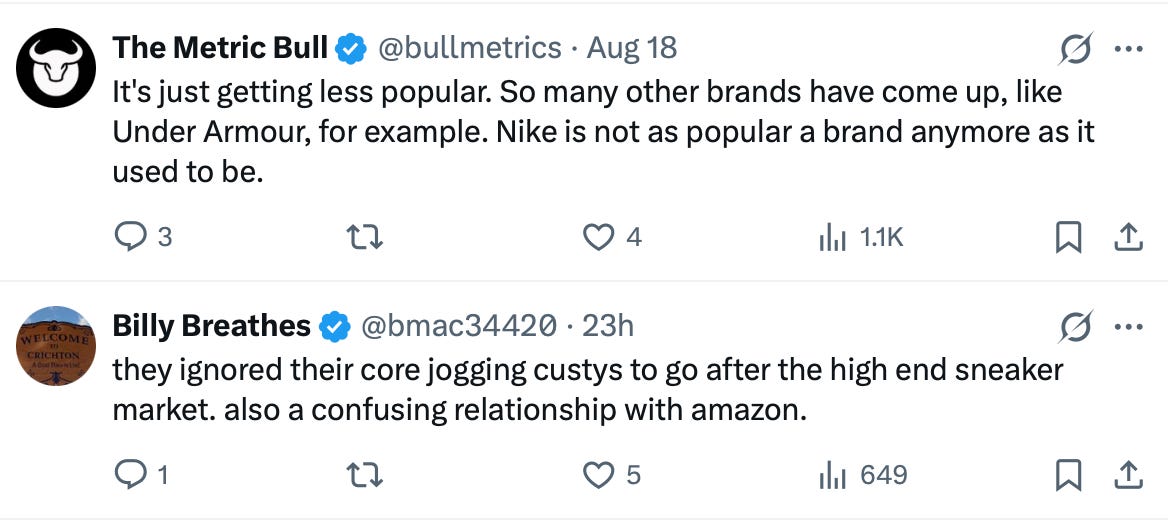
Some people blame it on competition, declining quality, or Nike getting greedy with high-end, limited releases.
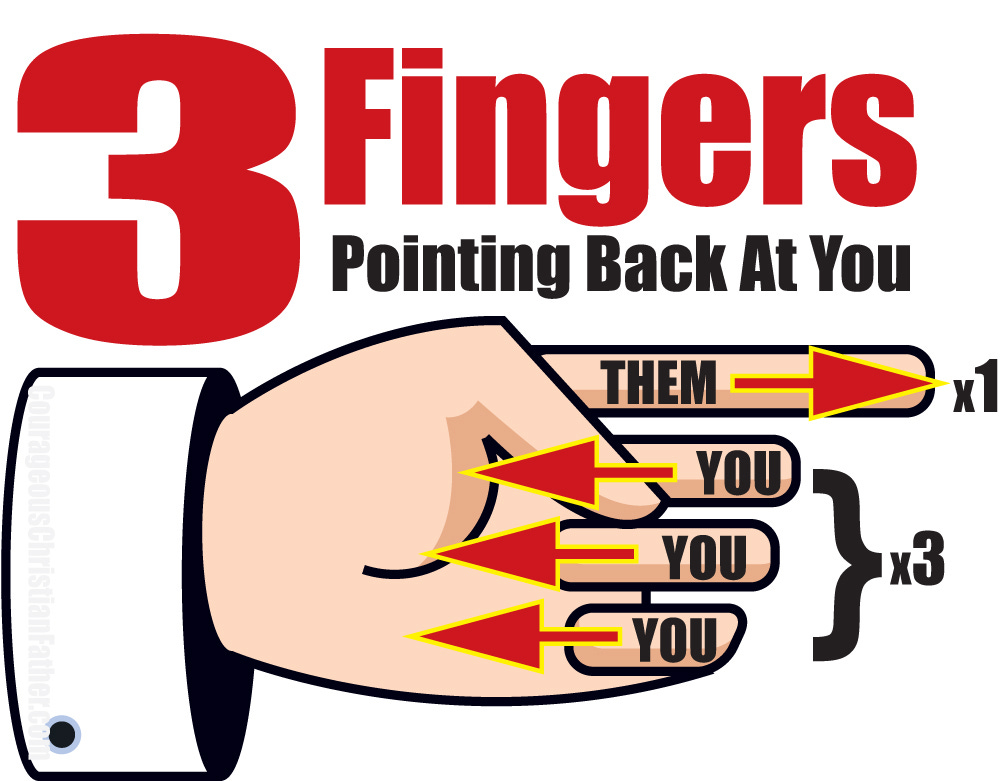
But as the saying goes, when you point one finger, three more are pointing back at you.
Let me tell you why Nike is really down, and why investors should be looking to blame themselves.
Nike in 2020
Let’s assume you were looking to buy Nike in late 2019 or early 2020, before the pandemic.
Here’s what a long-term view of Revenue and Net Income would have looked like:
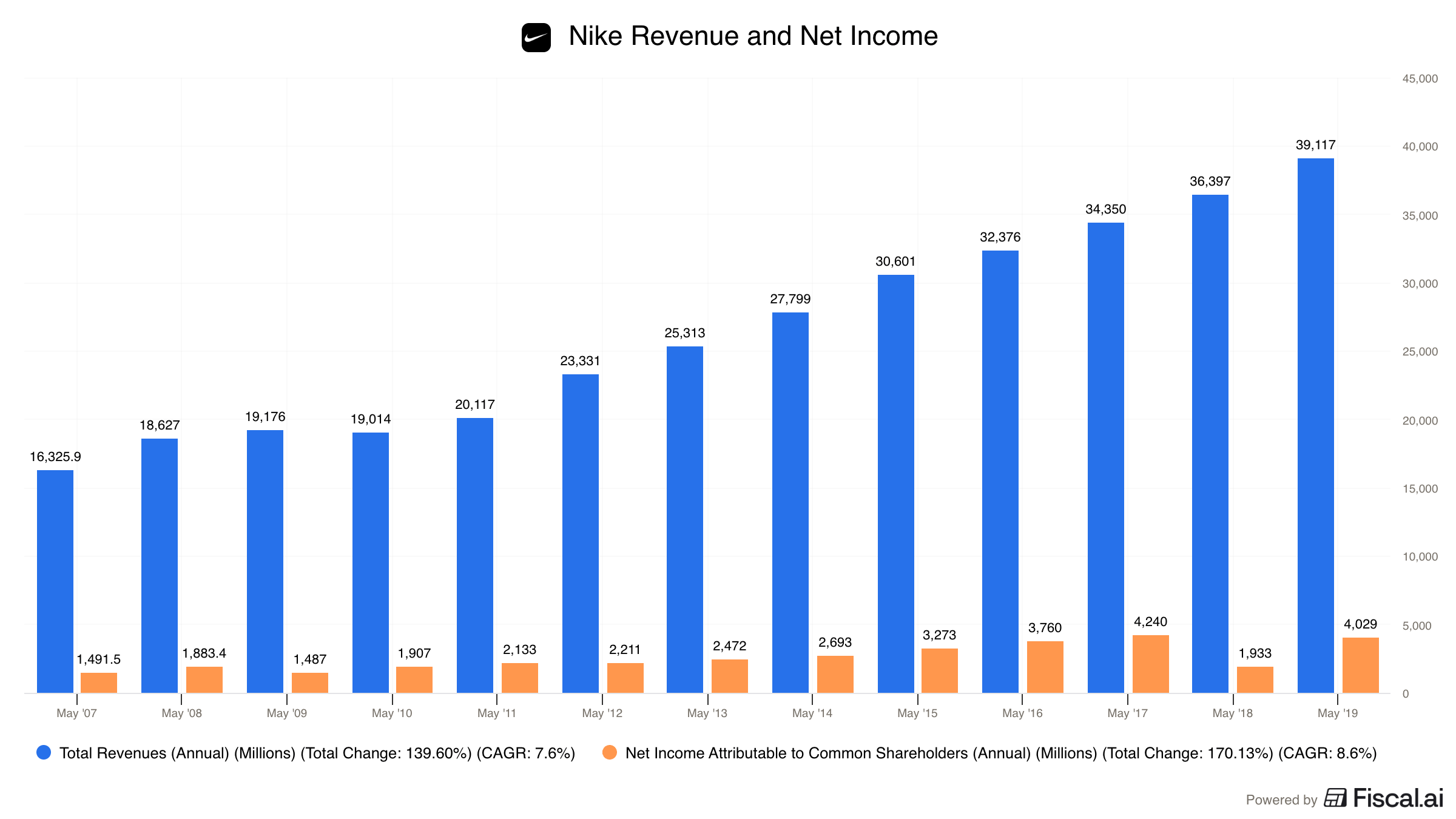
Revenue growth is fairly steady, Net income has some down years, but overall both are growing.
Revenue has grown at 7.6% per year
Net Income has grown at 8.6% per year
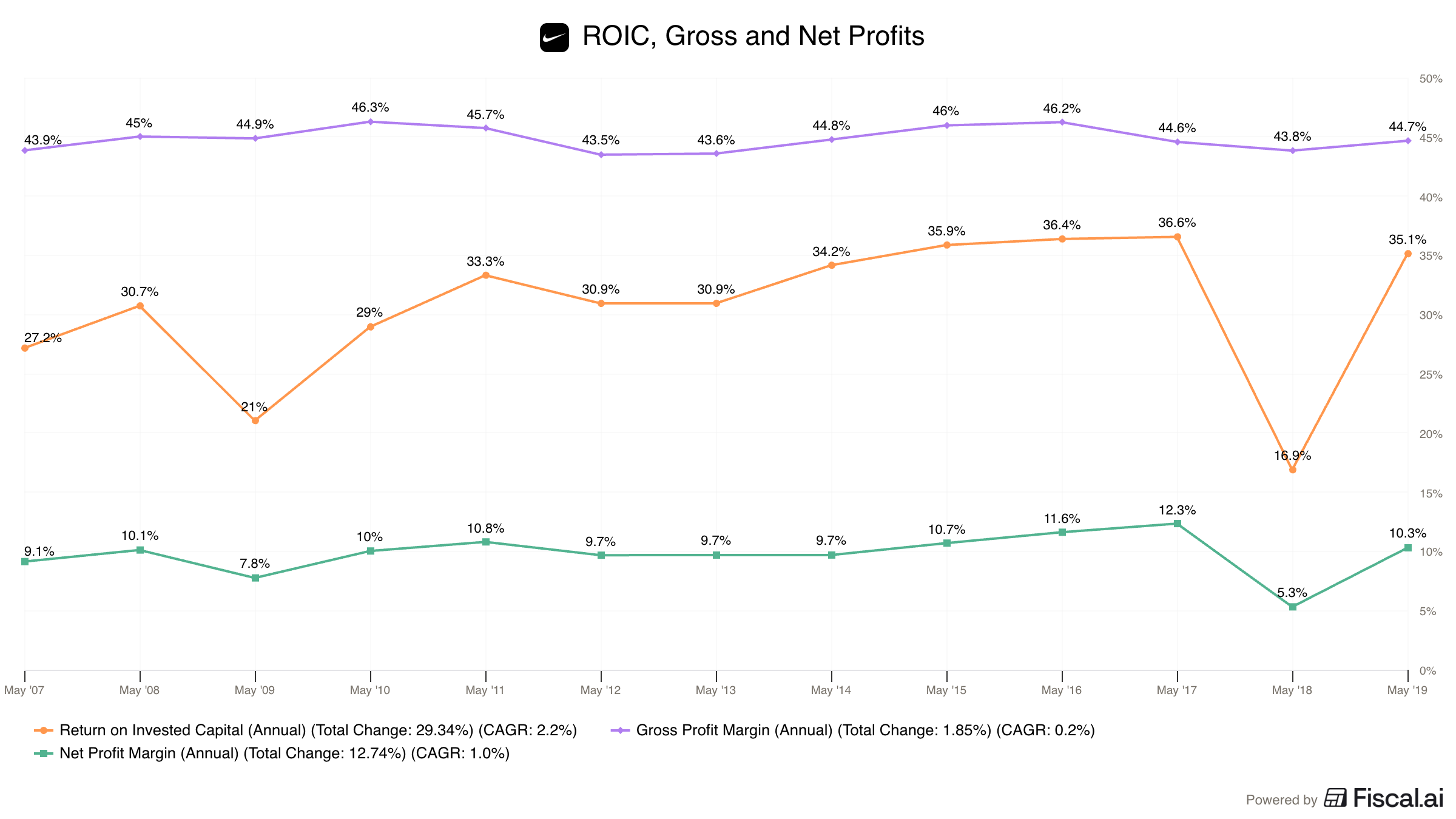
Nike has had high ROIC, and maintained attractive Gross and Net Profit Margins.
Obviously they have a strong brand, global distribution, etc.
Things are looking good.
What would you pay for such a business?
If you were buying in the time frame I’ve been showing you, Mr. Market was offering up Nike at anywhere from 30x to 36x earnings.
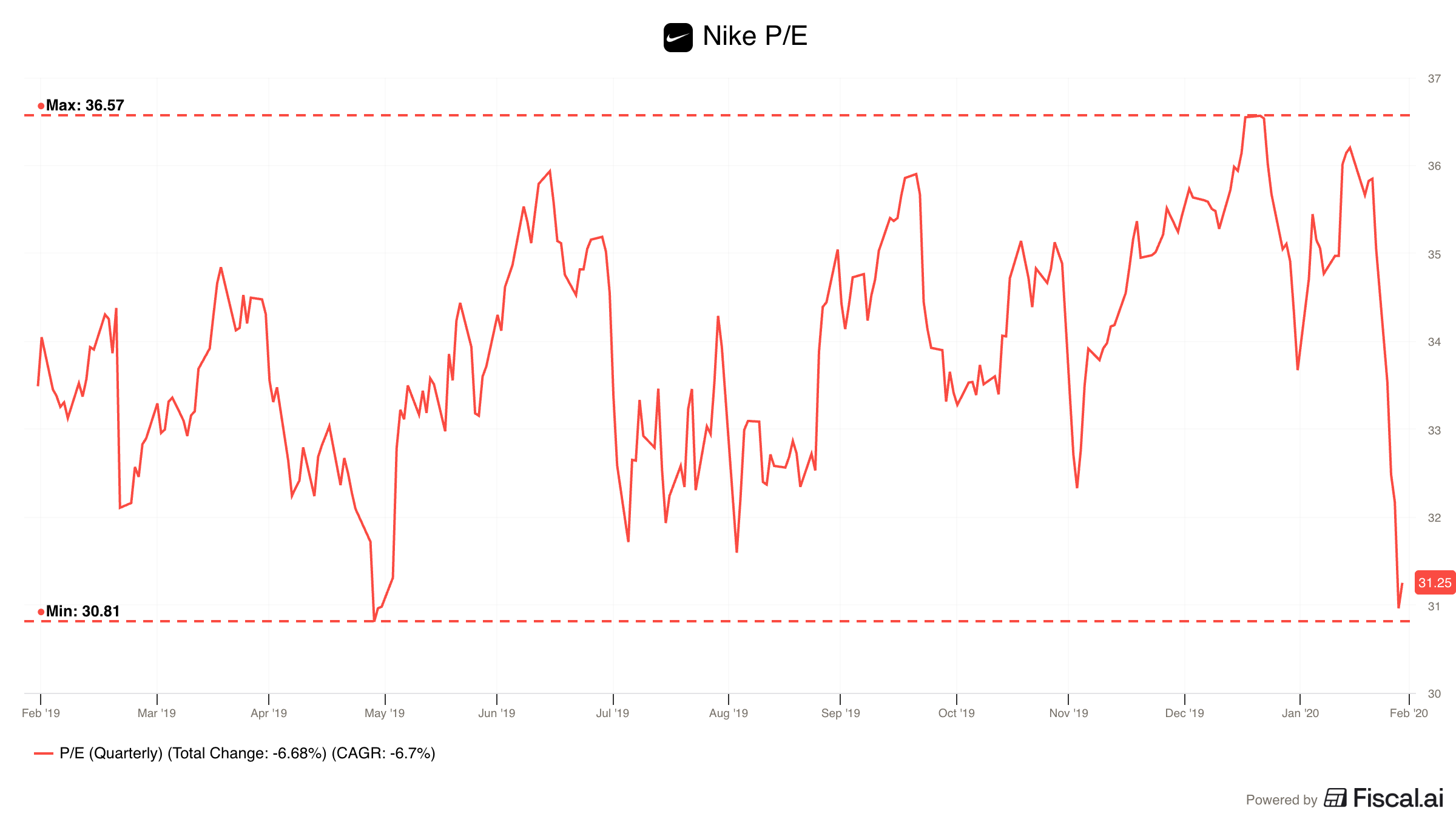
Personally, I wouldn’t pay 30x earnings for a business growing at 8%, but obviously plenty of people did.
And they did OK… for a while.
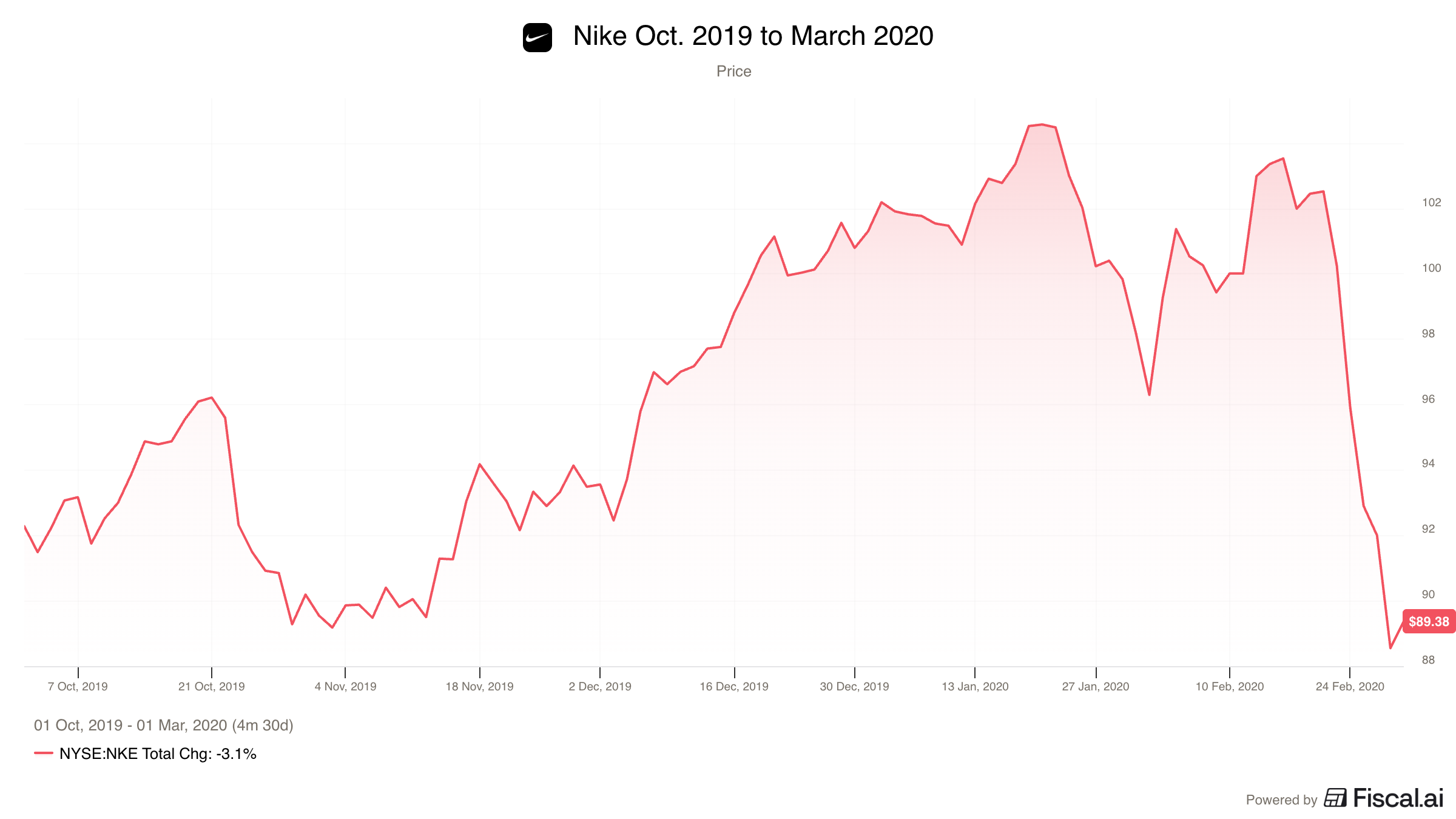
Between October 2019 and March of 2020, Nike traded between $89 and $105 a share.
By the beginning of 2022 it had run up to $160 or $170 a share.
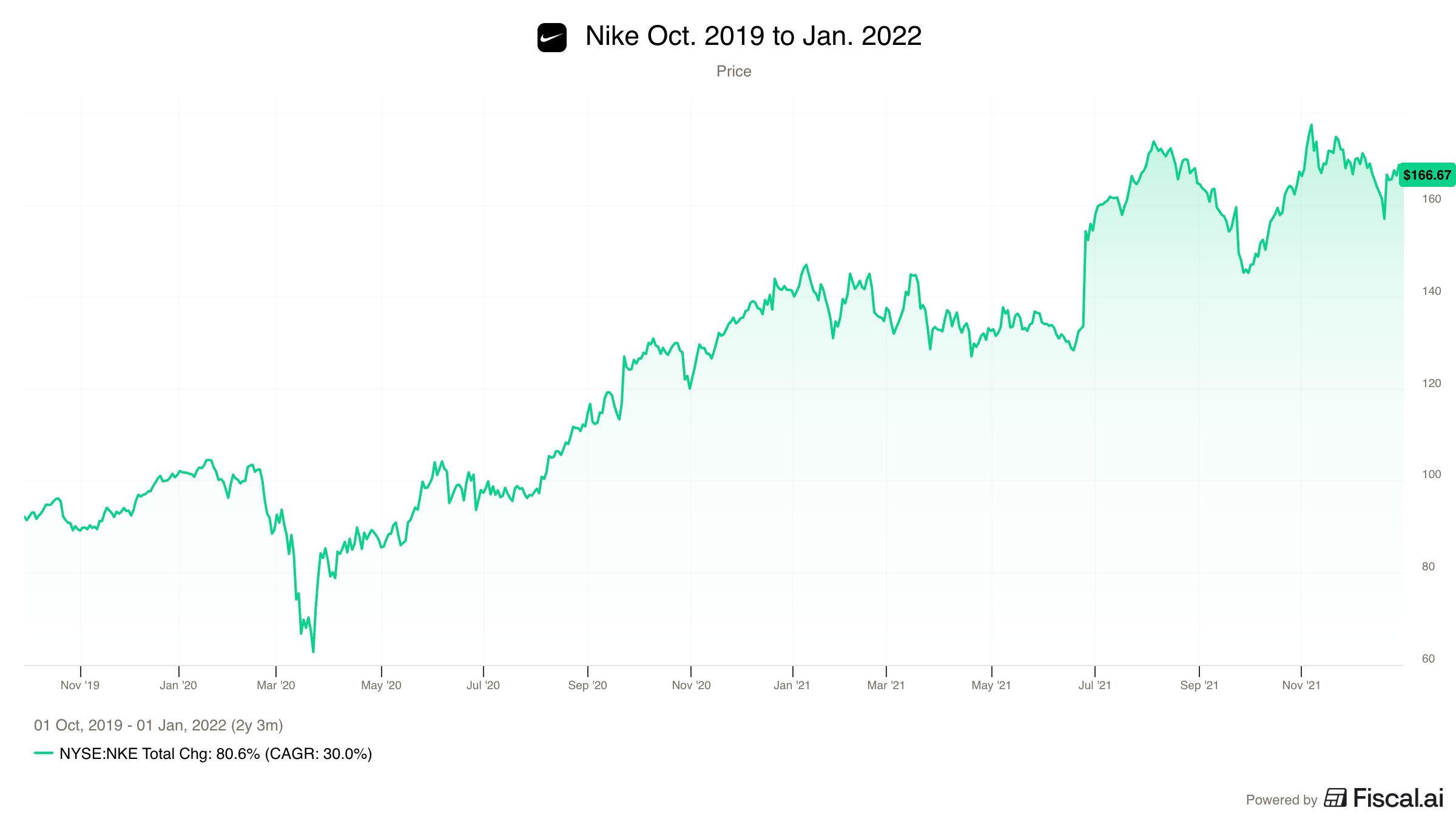
Did the business get way better?
Nope. It got way more expensive.
It ran up to 80x earnings on (on depressed 2020 sales), but for much of 2021 and 2022 it was still trading between 40x and 60x earnings.
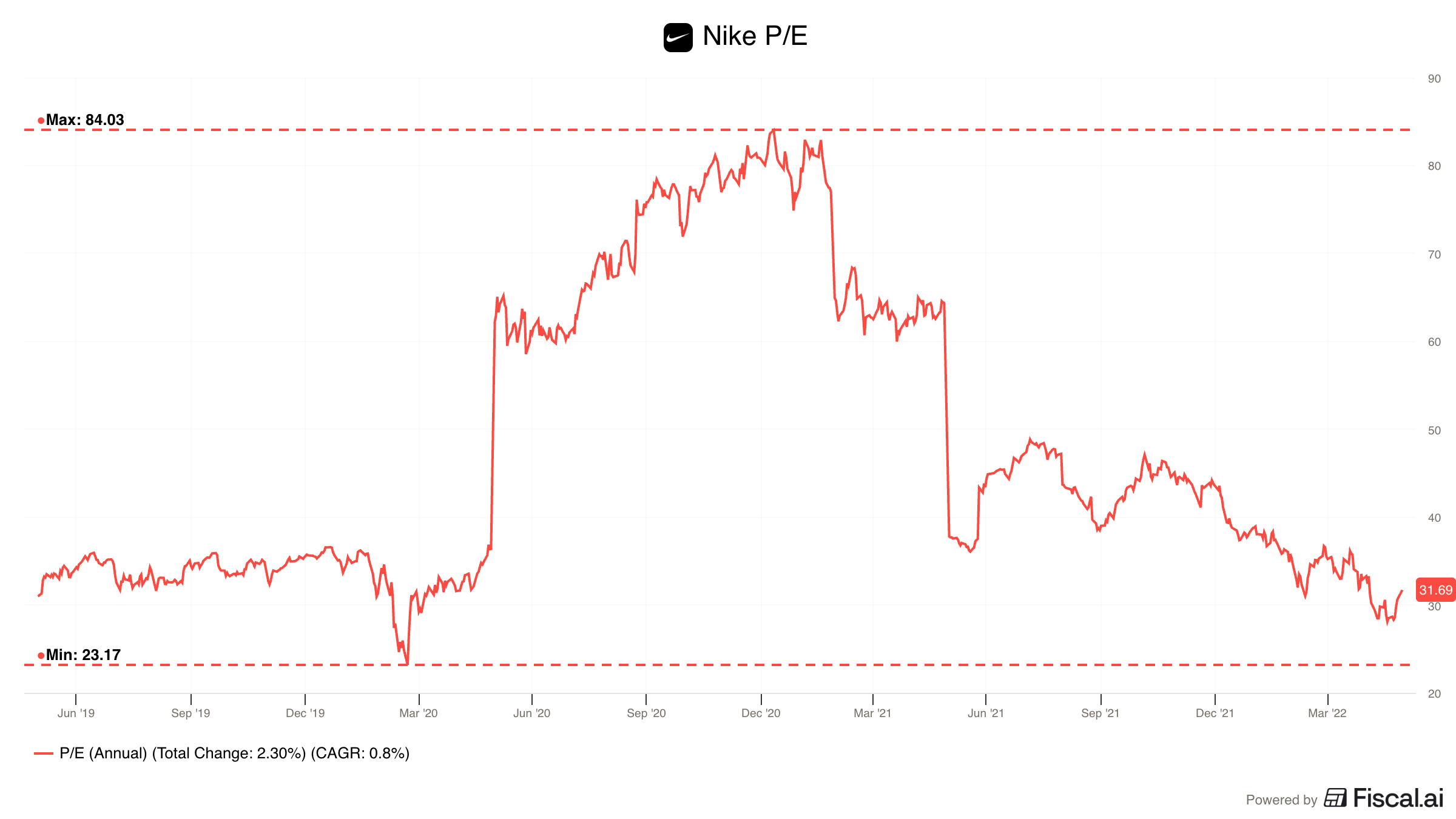
When you pay 50x earnings, the expectations implied by that price are very high.
Even if the business continues to grow, if the multiple compresses, it’s a huge headwind.
Nike’s revenue and profits declined and the multiple compressed down to 19x.
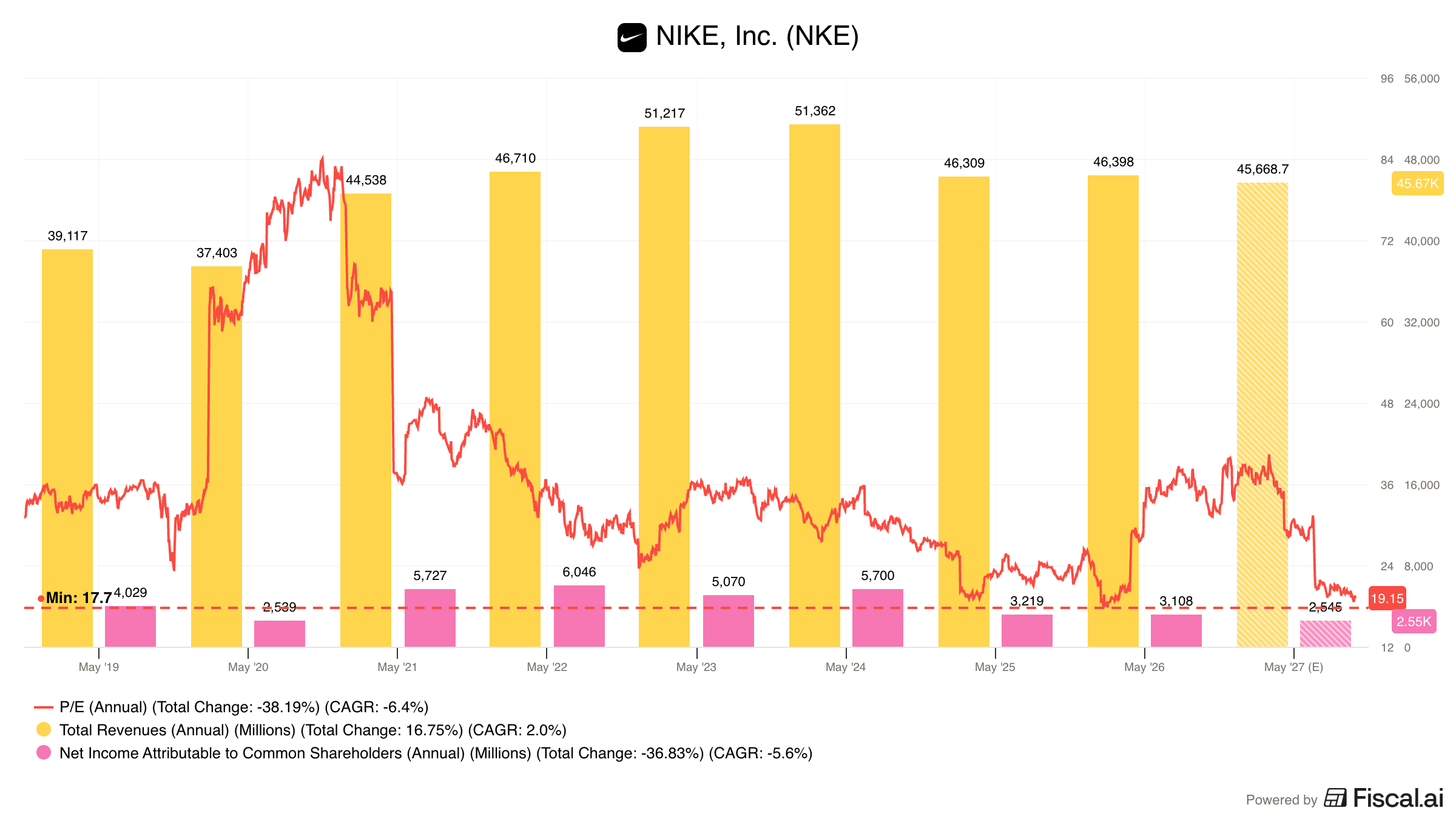
The lesson here is that it’s not enough to buy a great business.
You have to buy it at a reasonable price.
Yes, Nike’s revenue and earnings fell.
Yes, management made mistakes.
But I think investors should take a hard look at themselves and ask why they were willing to pay 40x or 50x earnings for a business that had been growing at 8% in the first place.
Want another example?
Rollins.
The stock is down almost 45% since February.
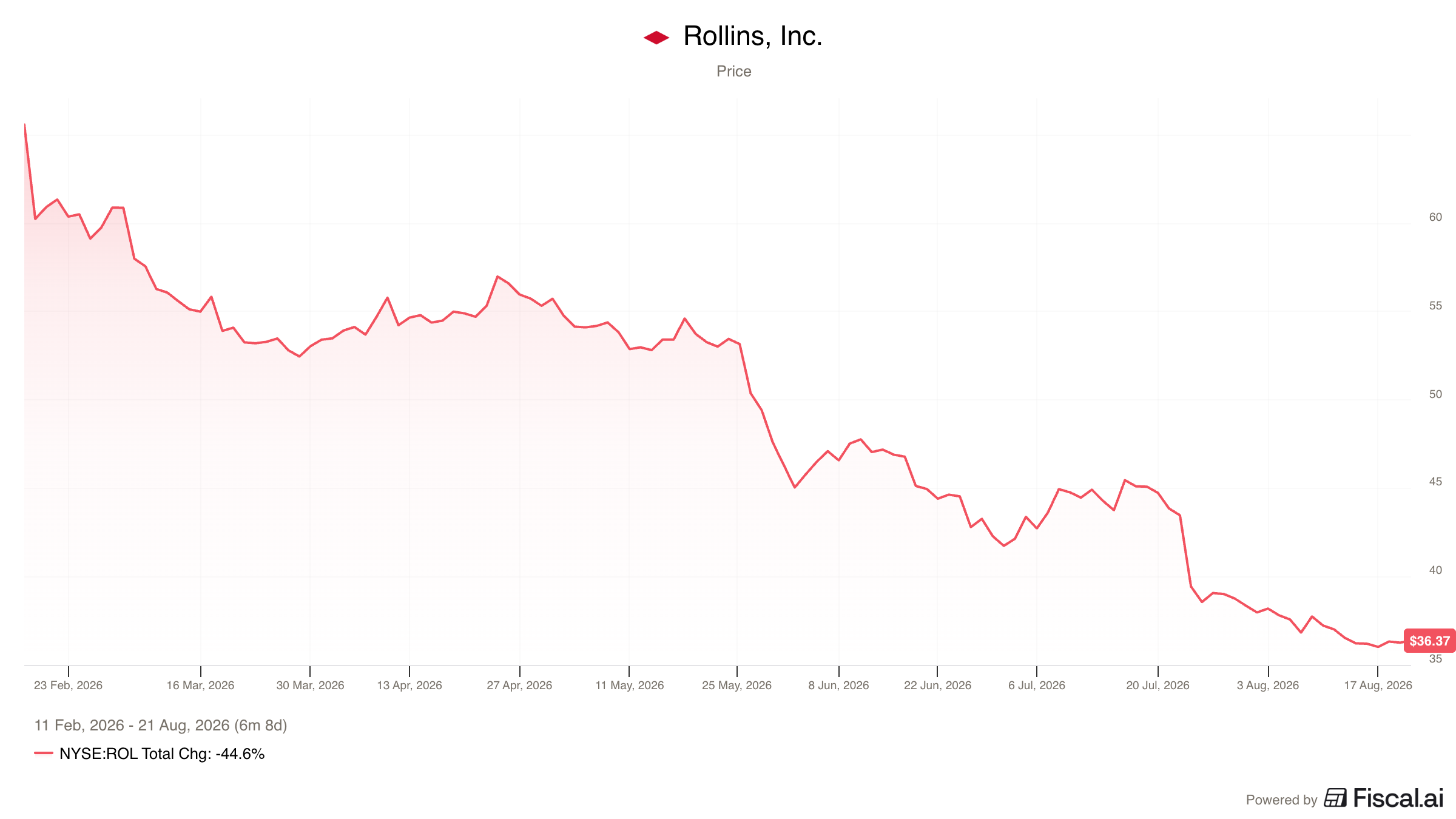
The multiple has gone from 60x earnings to 43x.
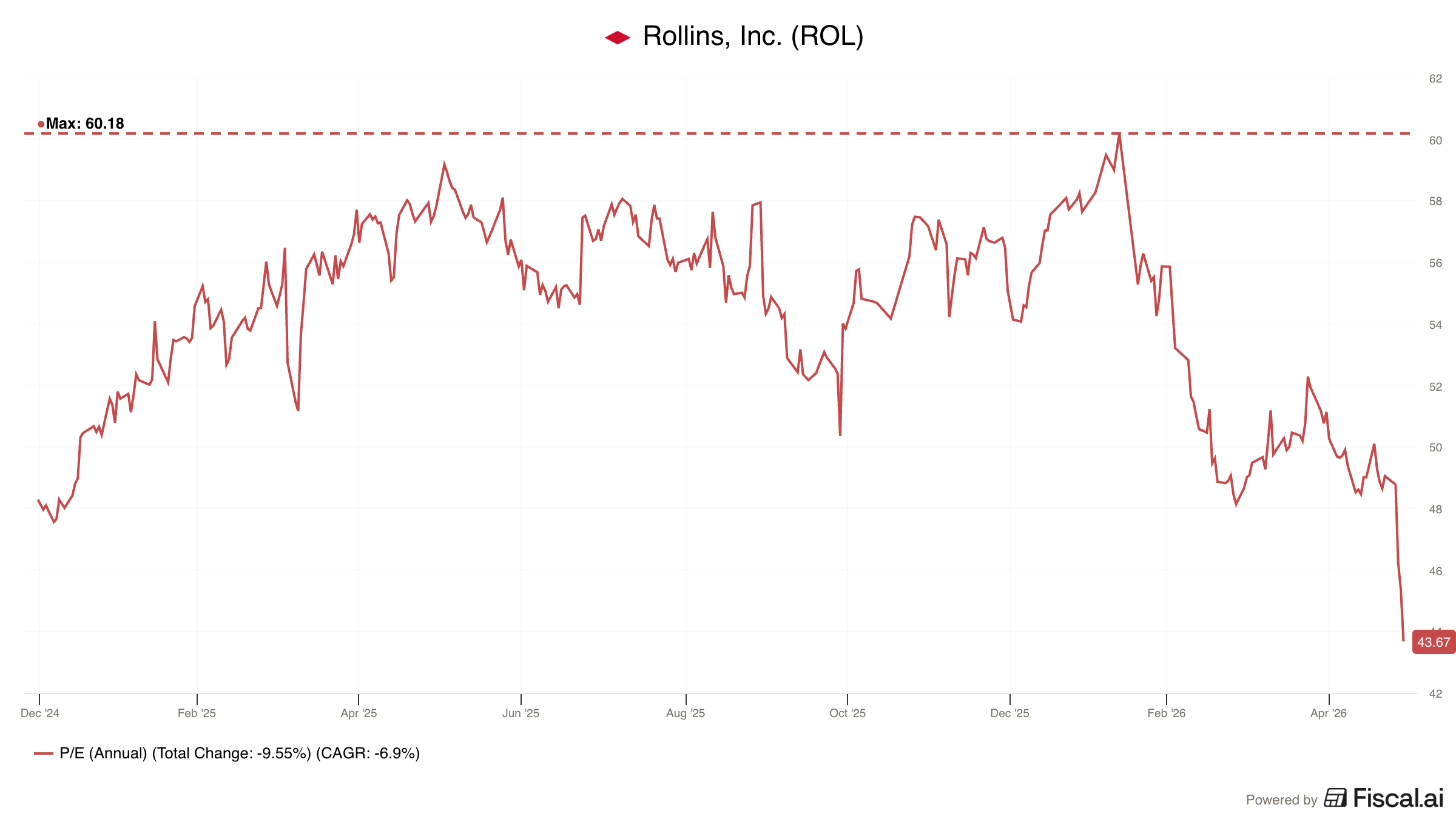
Underlying business growth rate?
9% for Revenue
12% for Net Income
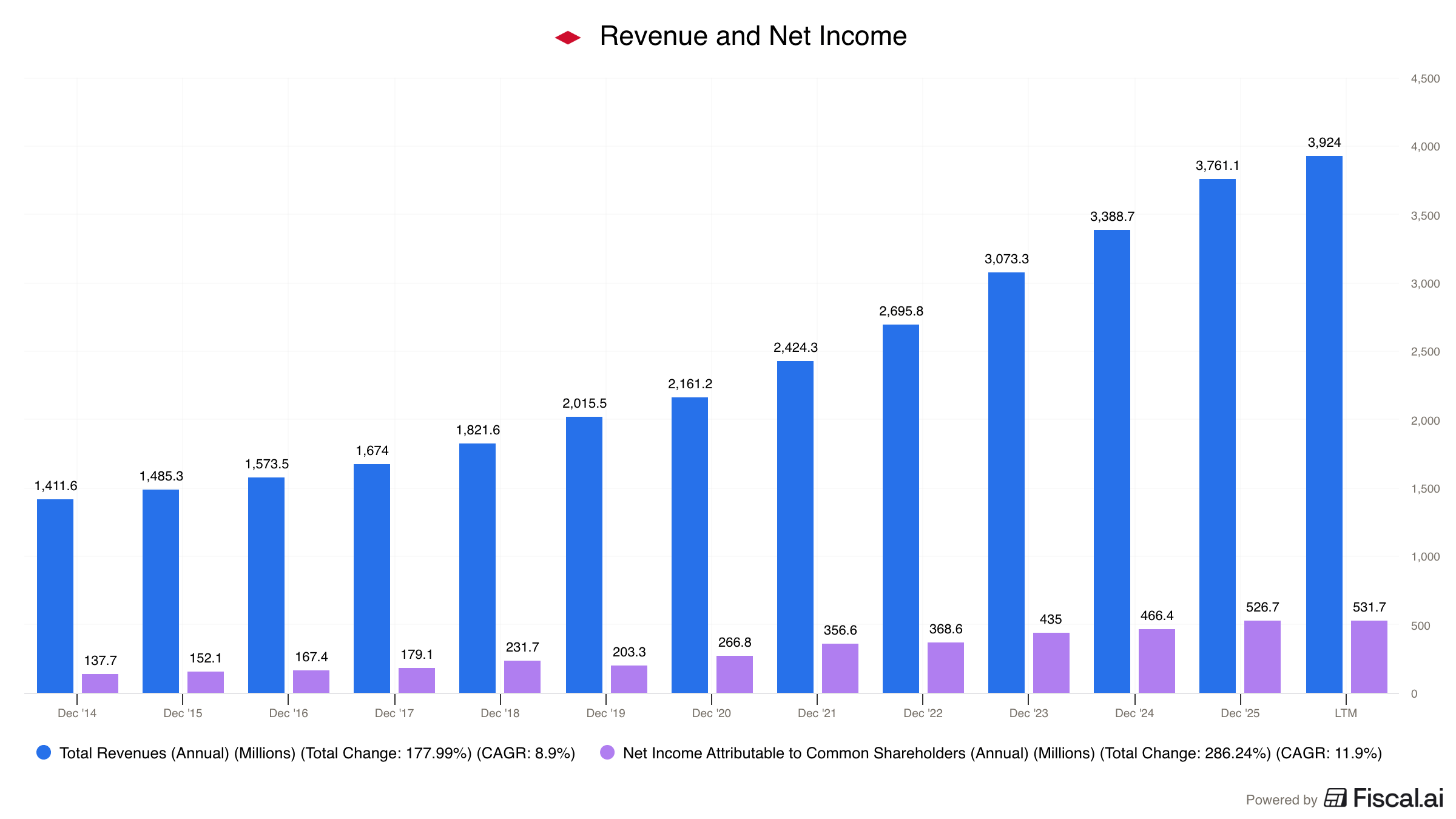
Rollins is a great, durable business that I’d love to own someday.
But am I going to pay 42x earnings for it?
Nope.
Valuation matters.
Conclusion
The market has more Nikes and Rollins out there.
There are incredible businesses with strong moats, currently trading at valuations that price in decades of strong (likely unrealistic) growth.
They might keep going up for a while.
But eventually the gravity of basic economics pulls everything back down to earth.
Next time you find a business you love, remember:
Price is what you pay. Value is what you get.
One Dividend At A Time,
-TJ
Used sources
Interactive Brokers: Portfolio data and executing all transactions
Fiscal.ai: Financial data
Make Nike Great Again? Nope! You can hope it will happen, but I am not optimistic for the following reasons 1) They are selling a commodity. Sneakers are easy to copy and hard to meaningfully differentiate. Early on, Nike had a differentiated product based on the shoe’s performance for runners. This has been completely competed away. 2) Nike’s other source of differentiation was the magic of Mike and the superstar athlete brand association. This has also eroded and now Nike must compete with other brands to sign the superstars and the star athlete lifestyle association is no longer unique. So at this point Nike is a turnaround story where at best they out-execute competitors long enough to get a couple good quarters and temporary price pop. The only long term tailwind is that eventually people will begin to realize how ridiculous Hokas look no matter how well built you are. Bottom line Nike is at best a trading vehicle.
We have an anything but Nike motto when shopping for clothes and shoes. They destroyed their brand with their woke ambitions. A company cannot call Americans bigots or racists then expect Americans to buy your brand. Nike, Disney and Bud Light suffered the same consequences because they chose to attack their own customers and because they each have competitors that are an easy replacement. Target did it too, but they learned their lesson and they walked away from the woke swimsuits and their stock is recovering and their customers started coming back. These companies might think they only have to cater to coastal elites and hedge fund owners, but all the rest of the country has their vote in what they do and don’t buy.